
Freezer Trailer Rentals in Albuquerque, NM: Built for Film Sets, the I-25/I-40 Crossroads & the 505
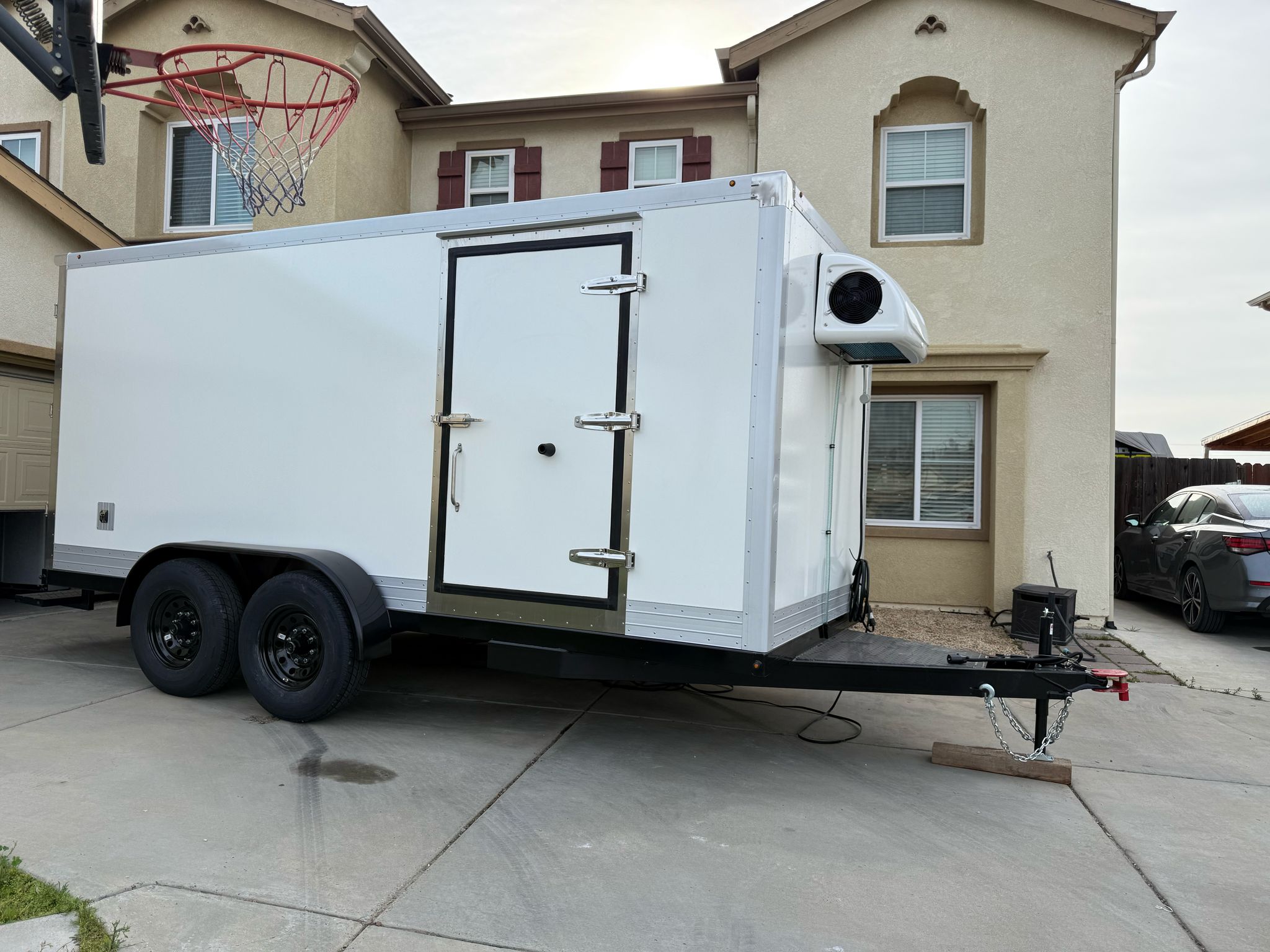
Mobile cold storage that shows up where Albuquerque actually needs it, a craft-services trailer behind a Mesa del Sol soundstage, a reefer at a Westside distribution dock, a freezer unit holding a restaurant through a roasting-season rush. We own and run the largest dual-purpose freezer and refrigeration fleet on the road, every trailer is NSF-approved, and our line answers at 2 a.m. when a walk-in quits in the middle of a shoot.
Albuquerque’s Direct Operator for Refrigerated & Freezer Trailer Rentals
Cold storage in this city tends to get decided on the worst possible timeline, a producer who needs a cold trailer at base camp by call time tomorrow, a grocer whose dairy case died on a Saturday, a caterer who underestimated how fast platters warm at altitude. Albuquerque businesses don’t have a day to wait, and that’s the whole reason we keep refrigerated and freezer trailers parked and ready in the metro rather than promising to truck one in from somewhere else.
What separates us from the cheap quote you’ll find online is simple: we’re the actual operator, not a broker reselling a stranger’s equipment. The person who picks up the phone owns the trailer, services it, and dispatches it. You won’t get a markup buried in the middle, and you won’t hear “let me check with my supplier” while a load of frozen protein climbs toward the danger zone. One number, one accountable crew, from the quote to the pickup.
Craft Services & Set Cold Storage for the 505’s Film Productions
No city this size leans on film the way Albuquerque does, and few cold-storage problems are as unforgiving as a production with hundreds of crew to feed and a clock that costs thousands of dollars a minute.
The numbers behind the 505’s screen industry are staggering. New Mexico’s film incentive has driven roughly five-billion dollars in production output over recent years, and Albuquerque sits at the center of it: Netflix’s Mesa del Sol campus has grown from its original footprint to more than a hundred acres of soundstages, NBCUniversal runs a sprawling purpose-built facility here too, and the crew base (thousands of skilled locals, not imported hires) keeps several productions rolling at once. This is the city Breaking Bad and Better Call Saul made famous, and the business never really cooled off after.
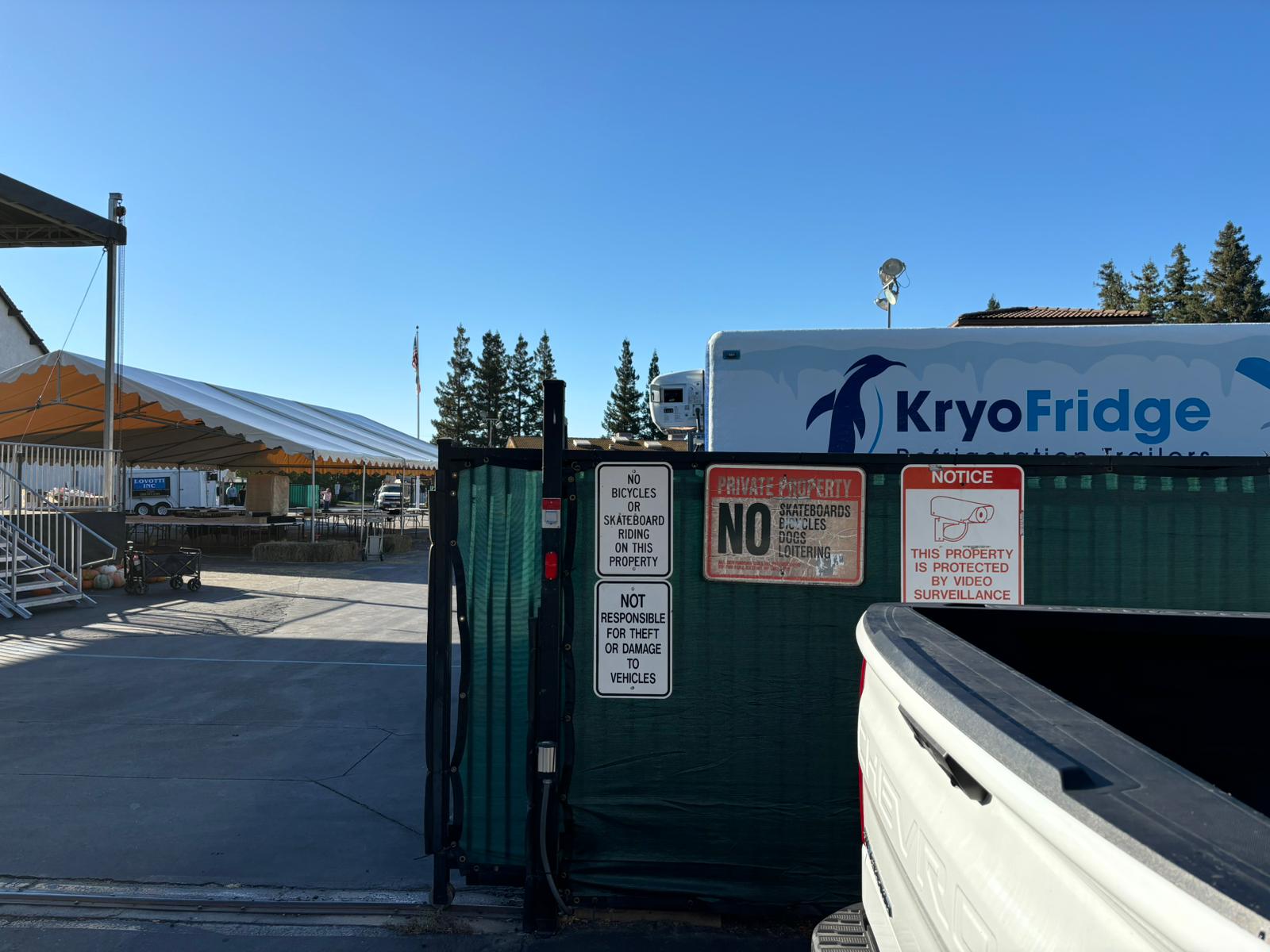
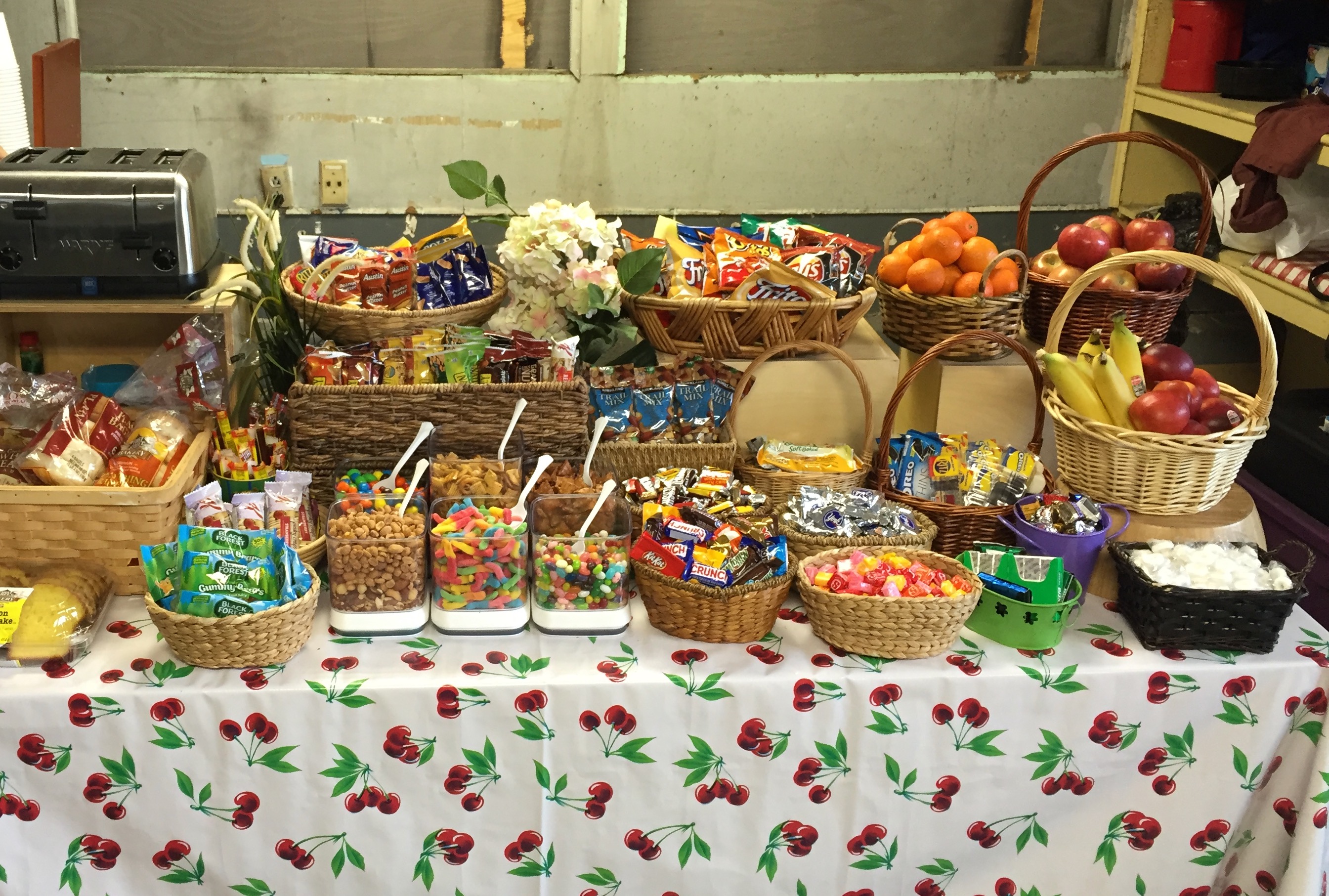
Every one of those shoots eats. Base camp runs craft services and a full caterer feeding cast and crew for twelve-hour days, often on a remote location with no building power and no walk-in within miles. A reefer trailer parked at base camp is how a catering team holds proteins, dairy, produce and frozen desserts at a documented temperature from pre-dawn call to wrap, quietly, on a generator, lockable overnight for a multi-day setup.
We understand the rhythm of a production schedule because it doesn’t forgive late equipment. When a unit production manager calls, we size the trailer to head count and shoot length, confirm generator power for the location, and have it on the truck route before the first scene blocks. A 6×12 covers a typical feature’s craft and catering hold. A 6×16 or a paired setup handles a large episodic crew or a multi-week stage build where the kitchen needs walk-in-equivalent space on site.
The City Behind the Demand: Albuquerque, Top to Bottom
A high-desert city of roughly 562,000 people anchoring a metro near a million, sitting a mile above sea level where the only two interstates that cross between Texas and Colorado meet. Cold storage here isn’t a niche, it’s plumbed into how the whole place runs.
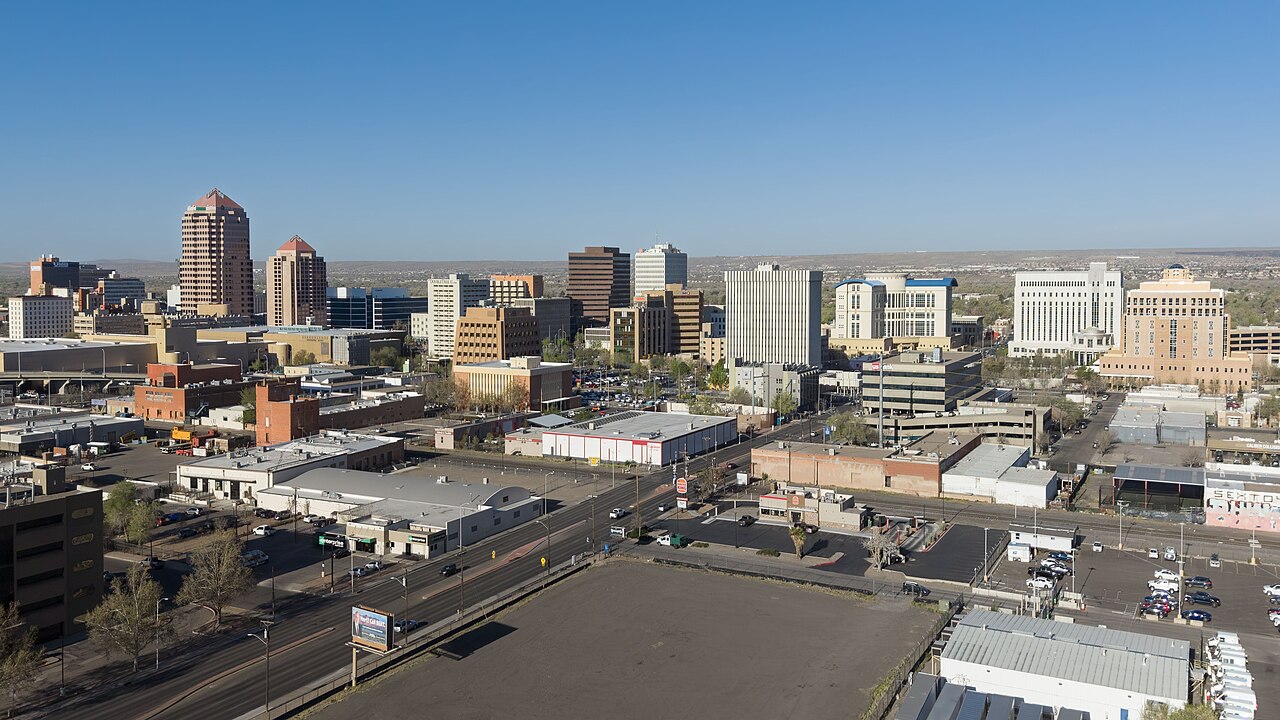
Albuquerque earned its shape from movement. The old Route 66 corridor still cuts through it as Central Avenue, and the city grew up around being the place travelers, freight and supply lines had to pass through. That role only hardened when the interstates arrived, I-25 running north-south from El Paso to Denver, I-40 running east-west from Amarillo to Flagstaff, crossing right here at the Big I. There is no other point between Texas and Colorado where two major interstate corridors intersect, and that single fact built the city’s modern economy.
Layer on top of that a defense-and-science backbone unusual for a city this size, Sandia National Laboratories and Kirtland Air Force Base together employ tens of thousands. Plus a food culture built on green chile, a tourism calendar that peaks with the world’s largest balloon festival, and a screen industry that turned the metro into a permanent production hub. Every one of those threads, in some quiet way, depends on holding temperature.
Downtown Albuquerque under the high-desert sun. The Route 66 and interstate access that made the city a crossroads now drives the distribution, food-service and production economy, and every link in those chains runs on reliable cold.
The Brands the Country’s Biggest Names Keep on Speed Dial
You don’t get trusted with a national chain’s cold chain by being the cheapest line item. Over the years KryoFridge has supplied mobile refrigeration to names like McDonald’s, Chick-fil-A, and Dutch Bros, operations that audit their suppliers hard and won’t accept a trailer that drifts a few degrees out of spec. The standard those accounts set is the same one we bring to a single taquería off Central or a production base camp at Mesa del Sol.
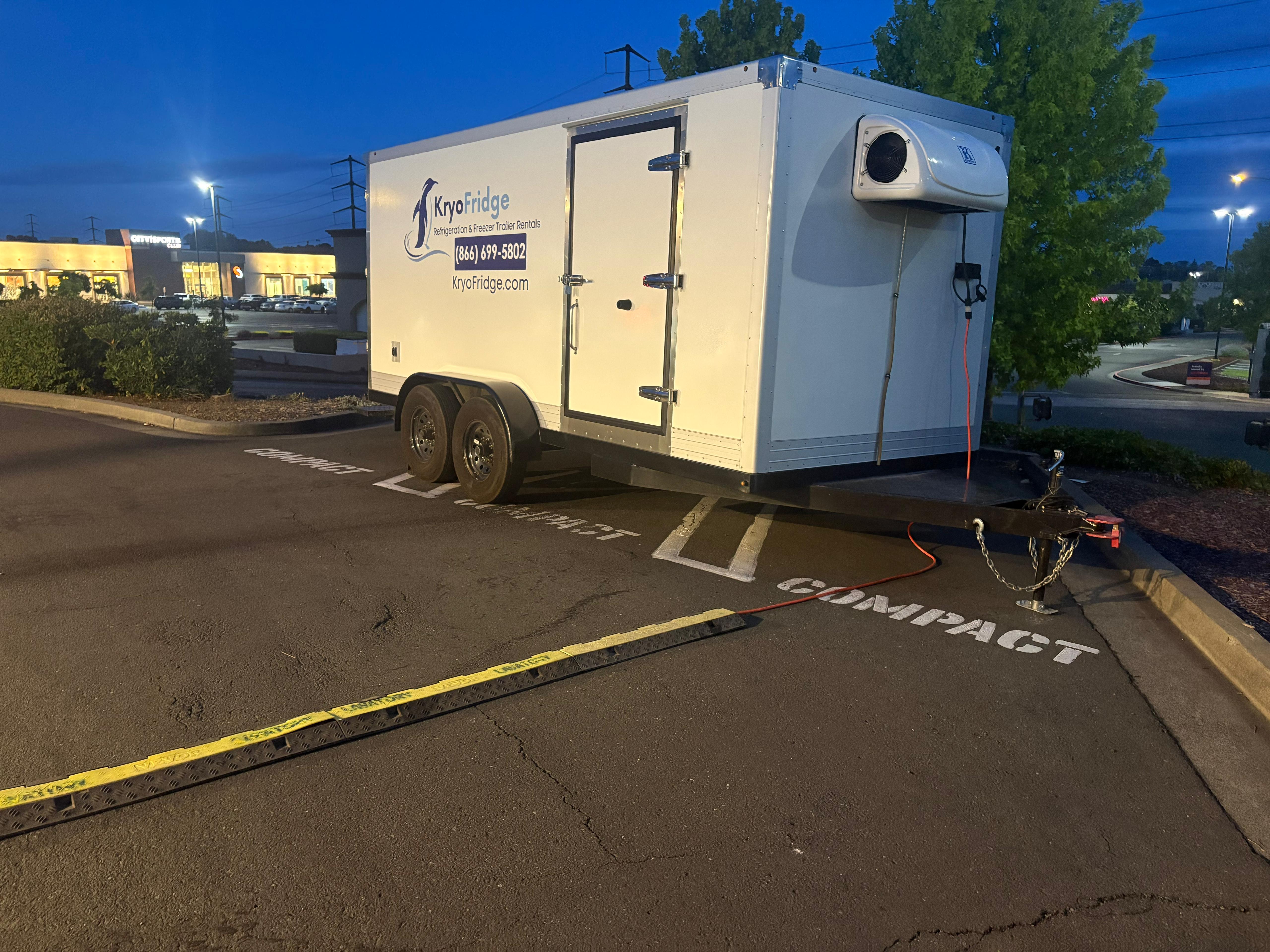
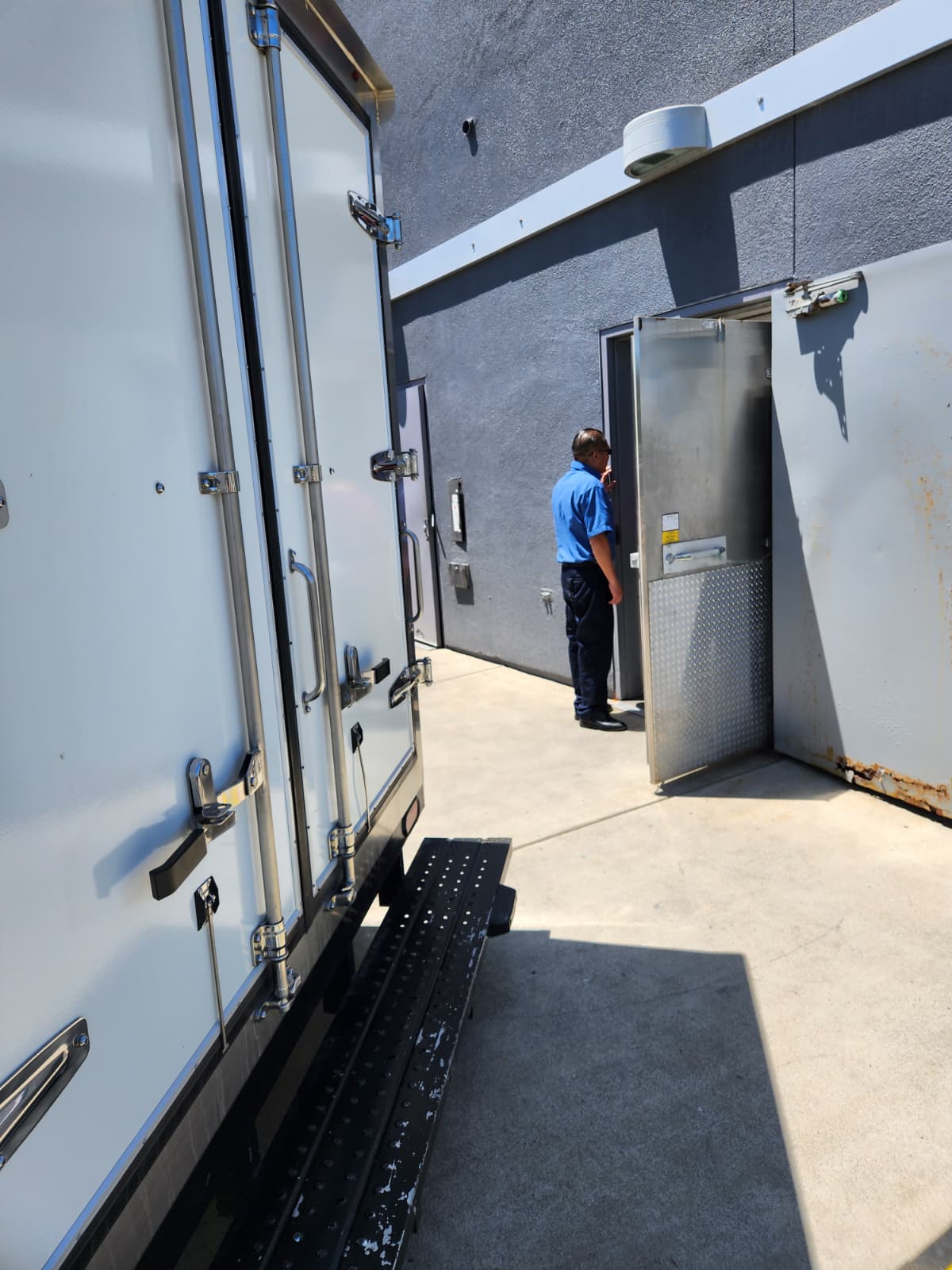
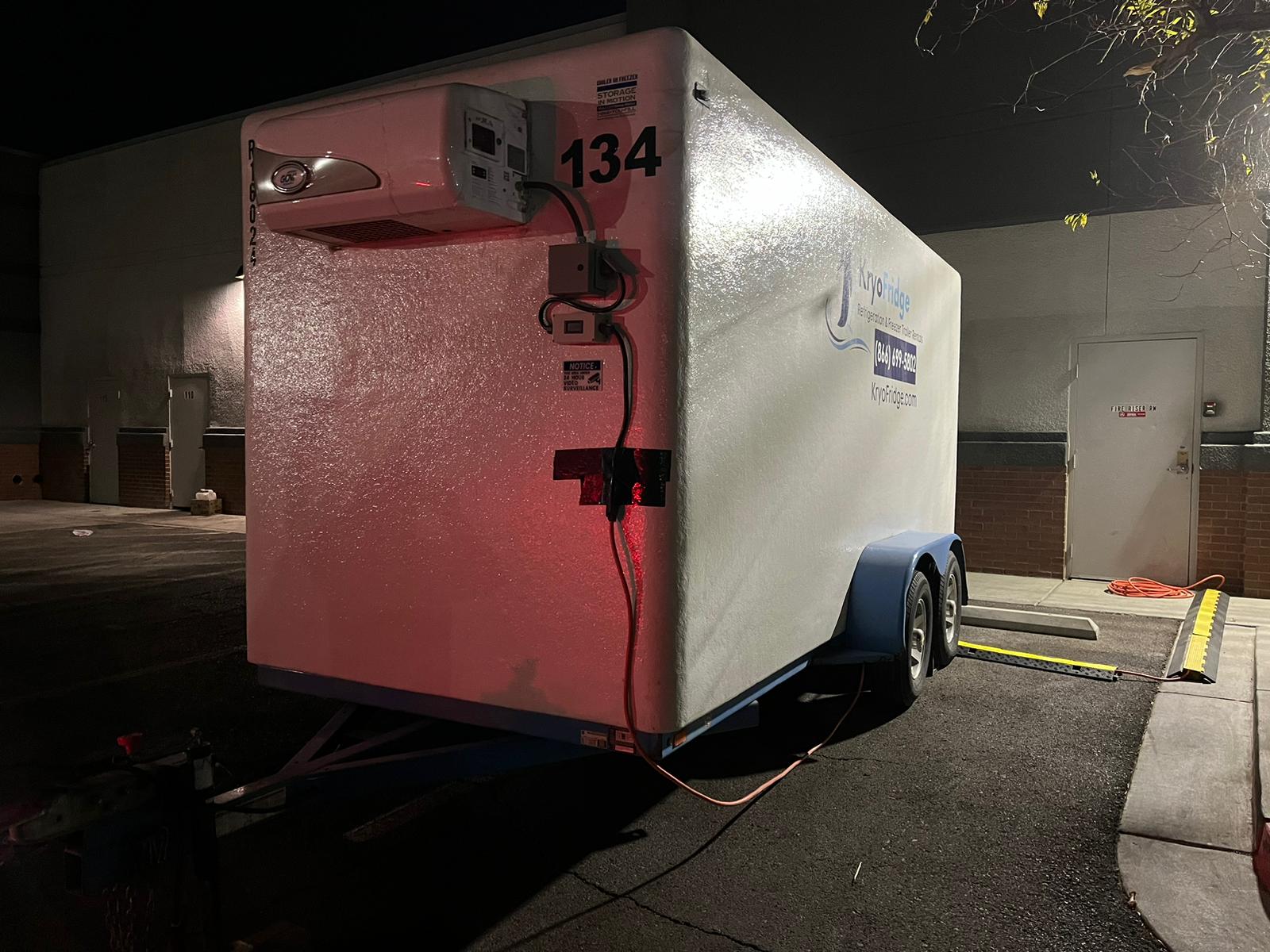
A couple of stories tell it better than a spec sheet. When a Chick-fil-A walk-in failed in the middle of peak service, we had a freezer trailer on site and pulling temperature in 34 minutes, fast enough that the line never stopped. When a restaurant group needed extra cold space for a Mother’s Day rush, we staged a three-trailer setup overnight and had every unit cold before the first ticket printed. Those aren’t marketing numbers. They’re the kind of response that only happens when you own the fleet and answer your own phone.
What Albuquerque Calls Us For
Most cold-storage demand here never makes it onto a calendar, it lands as a dead compressor, a remodel, a shoot that ran long, or a festival that out-grew its ice chests. These are the calls that come in most across the 505, each paired with a real photo of the kind of operation behind it.
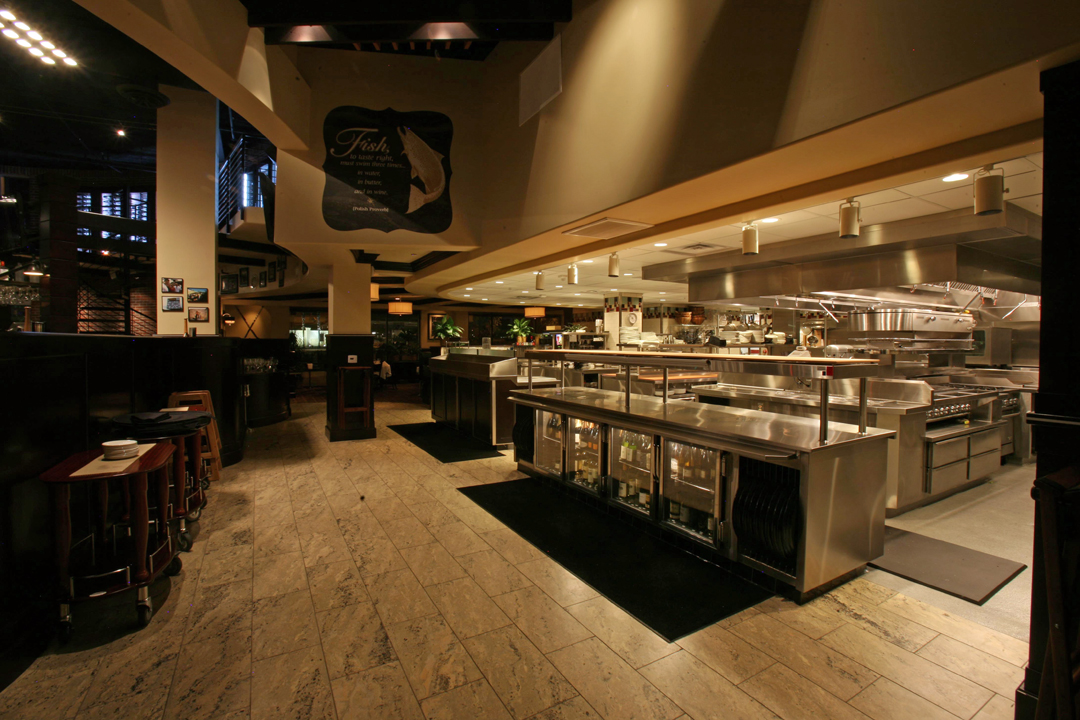
? Restaurants & Kitchens
Compressor failures, remodels, and green-chile-season volume around Nob Hill, the Downtown core, and the Northeast Heights.
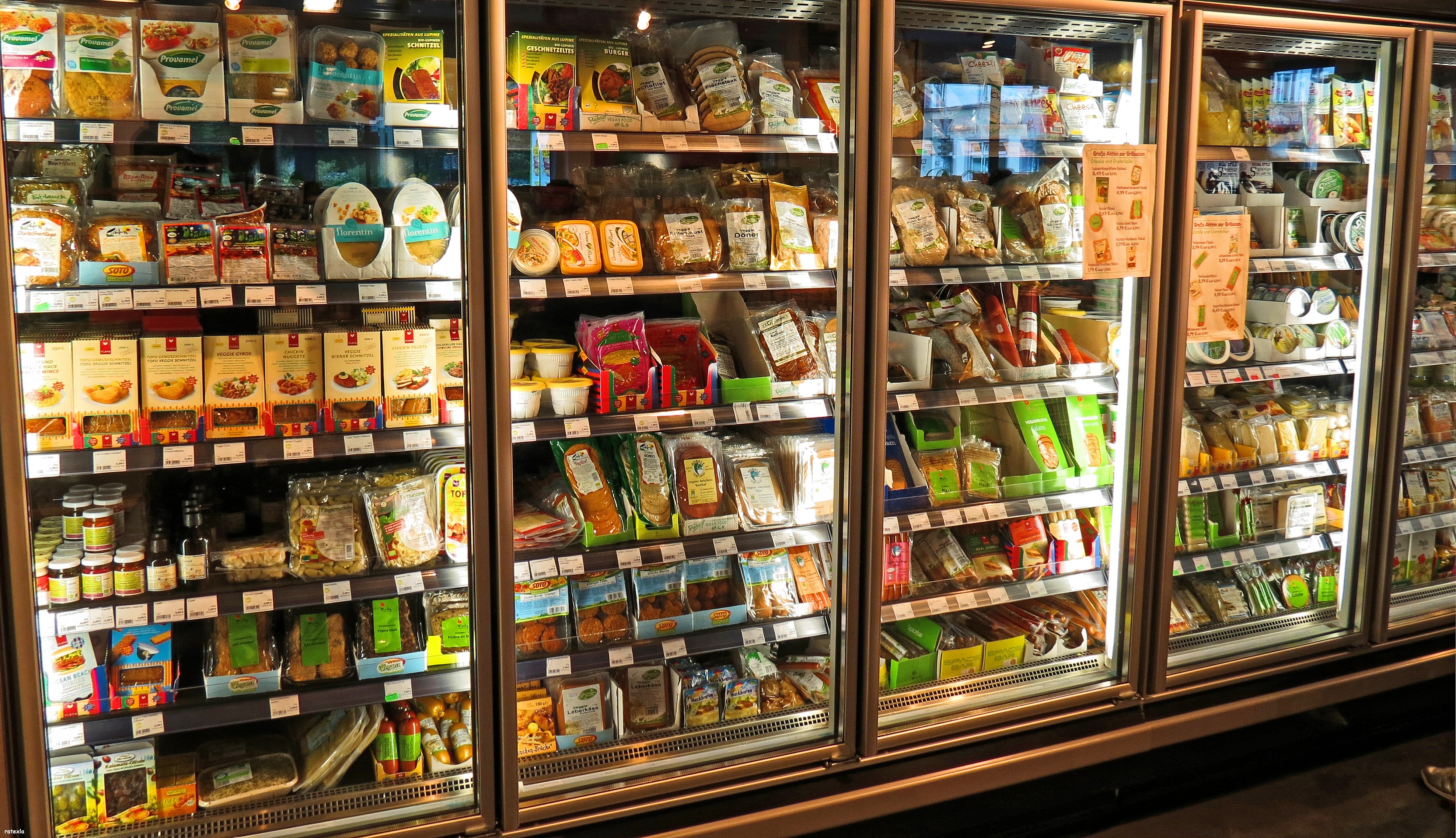
? Grocers & Markets
Stop-gap refrigeration when a case or rack goes down, during a store reset, or through a holiday inventory surge.
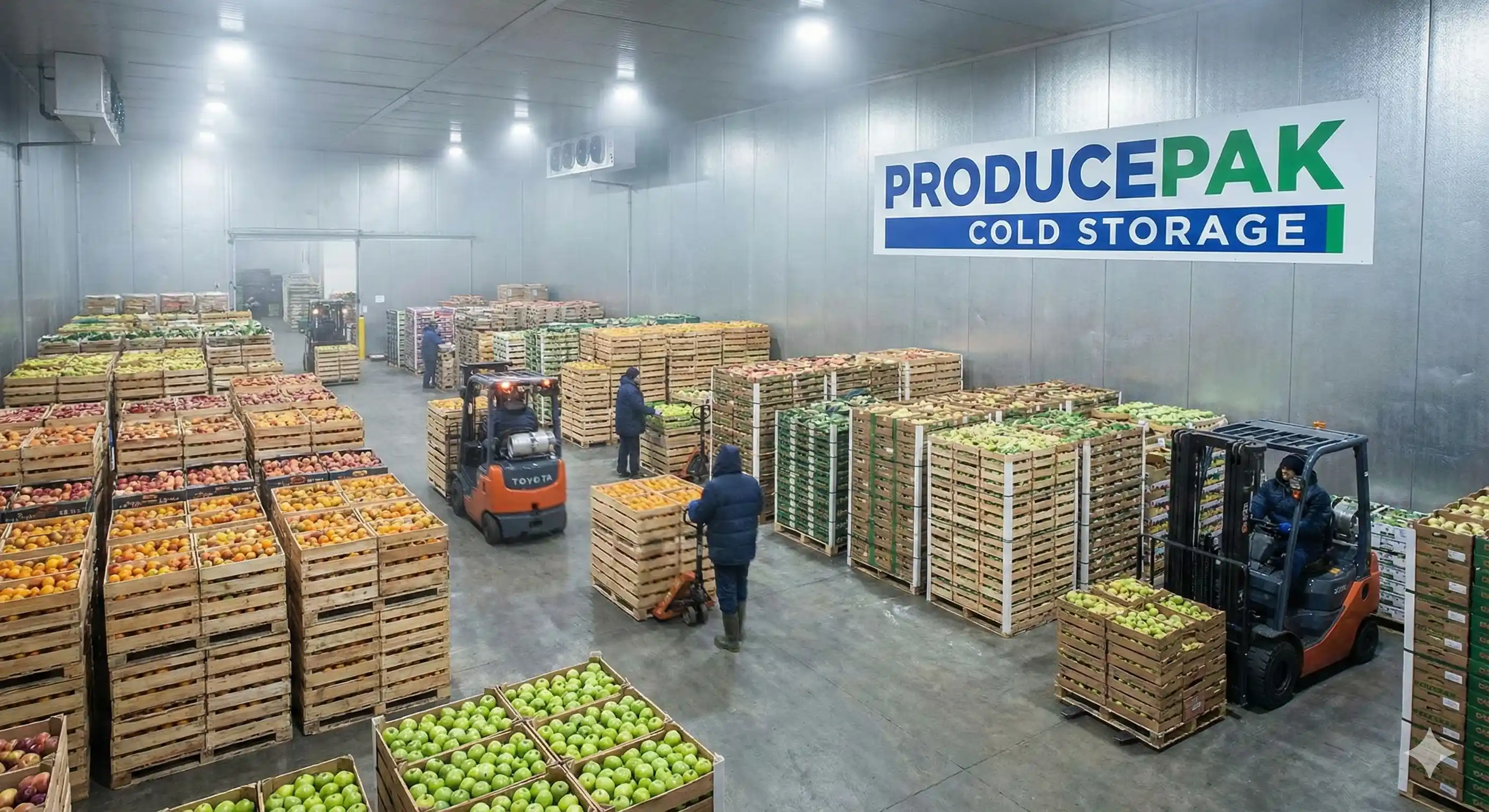
? Distribution & Freight
Temporary reefer capacity for the warehouses off I-25 and I-40 when a cold zone fails or volume spikes past the racks.
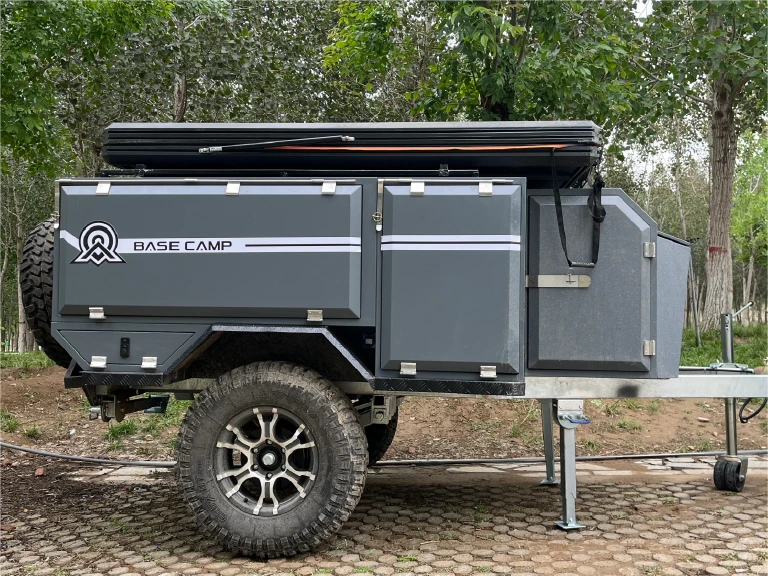
? Film & Craft Services
On-set cold for base camp and catering at Mesa del Sol soundstages and remote location shoots across the metro.
? Events & Catering
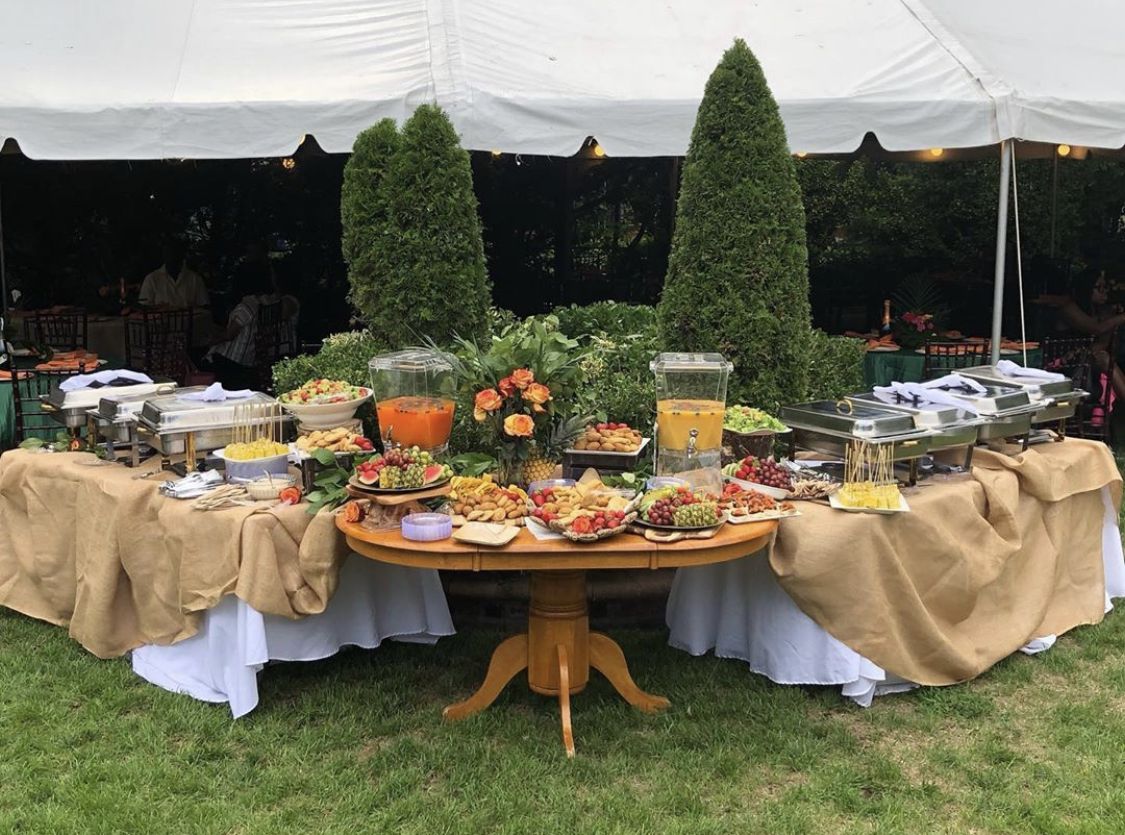
Walk-in-grade cold for weddings, Balloon Fiesta vendor rows, and large catered events around the metro.
? Emergency & Disaster
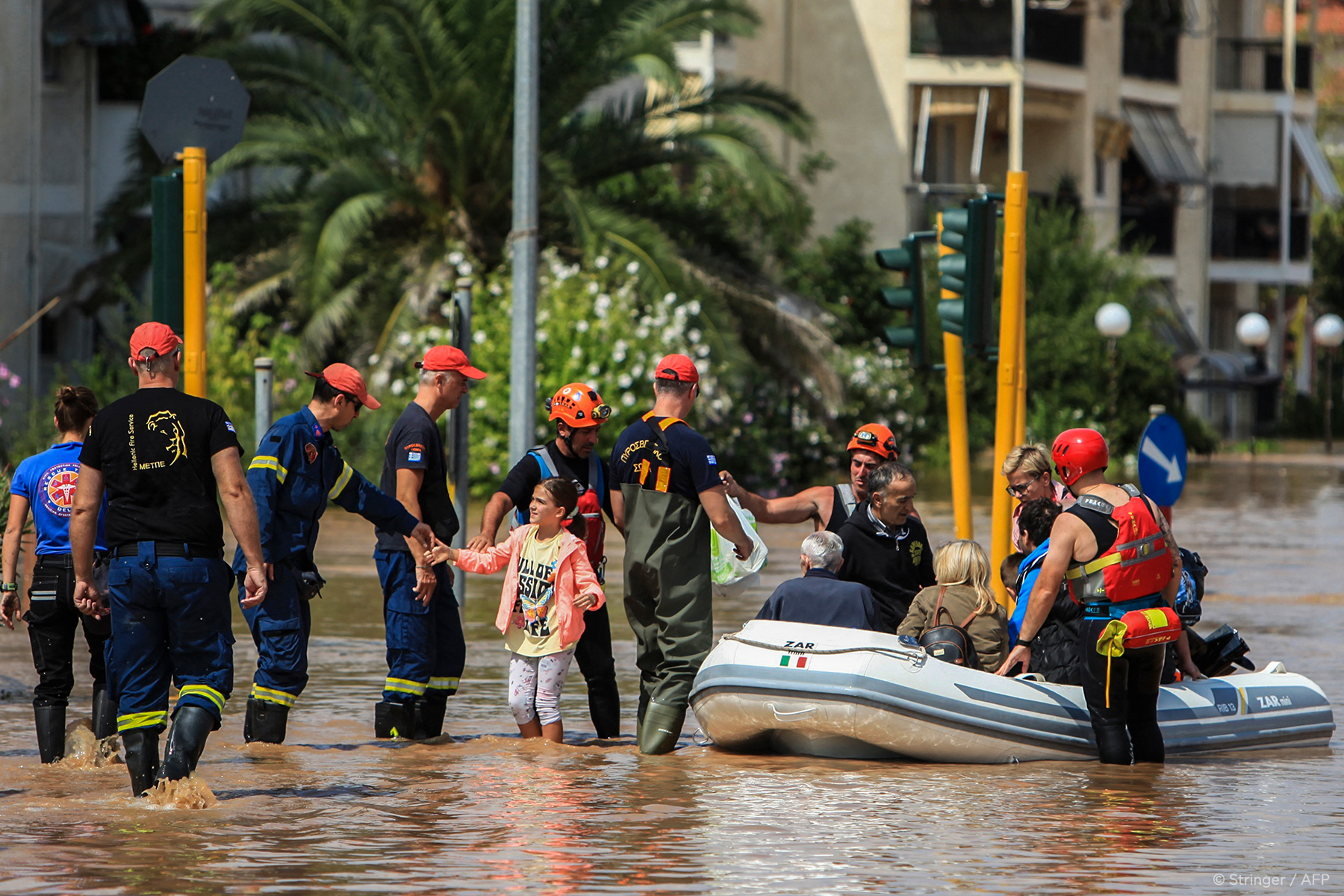
24/7 deployment for PNM power shutoffs, equipment failures, recalls, and disaster-relief cold chain.
The thread running through all of it is urgency. Almost nobody schedules a freezer trailer weeks ahead, they need it the morning a compressor dies, the day a remodel starts, or the night a producer realizes base camp has no walk-in. Because we keep units staged in town, “can you get one here today?” is an ordinary request in Albuquerque, not a stretch.
KryoFridge Units, Out on Real 505 Jobs
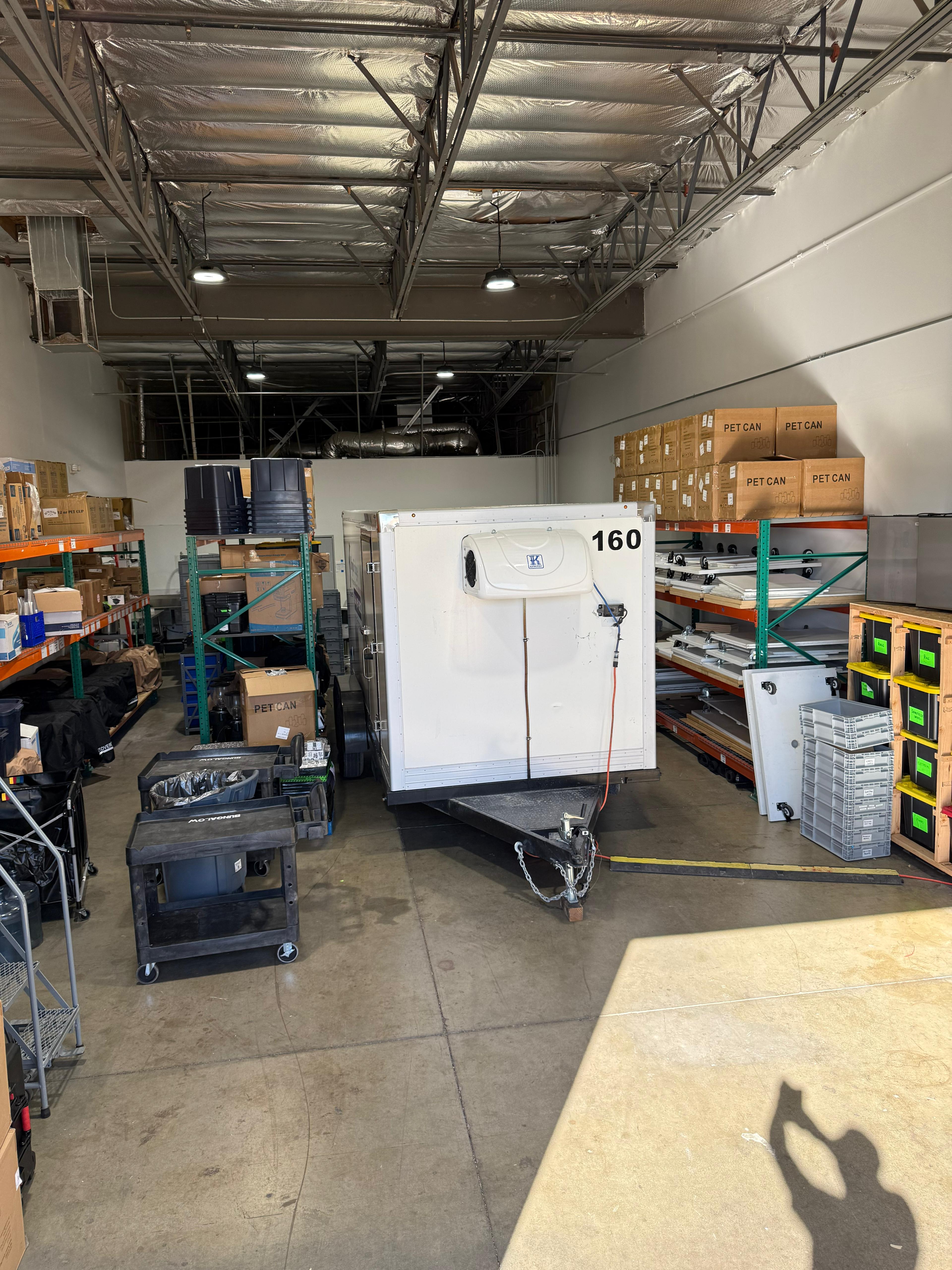
Actual trailers on actual work, back lots, loading docks, set base camps, and late-night emergency calls across the metro and out along the interstates.
Cold Storage for a Crossroads Economy: Freight, Labs & Food
Sitting where it does, Albuquerque works as a regional control point for Southwest distribution. From a dock here, a driver reaches Denver in about six and a half hours, Dallas in nine, El Paso in under four, Los Angeles in eleven, two-day ground coverage across most of the western states and into Texas. That’s why fulfillment and cold-chain operators stage here, and why projects like the I-40 TradePort hub are building out customs-bonded and cold-storage capacity around the corridor. When one of those facilities loses a freezer zone, staging a row of 6×16 reefers on the lot beats scrambling for outside truck space at peak rates.
The science-and-defense side runs on temperature too, just less visibly. Sandia National Laboratories and Kirtland Air Force Base anchor a deep bench of suppliers and contractors, and the city’s growing health and bioscience sector adds another layer of cold-chain demand, vaccines, reagents, and temperature-sensitive material that can’t tolerate a gap. A staged refrigerated trailer is the bridge that keeps that product in-spec through a facility outage or a capacity crunch.
Retail and restaurants carry the same exposure on a tighter margin. The kitchens and markets along Central Avenue, through Nob Hill, around Uptown and out across the Northeast Heights run lean cold chains, and a single failed walk-in on a Friday can erase a weekend’s product. Because we own the fleet, we right-size the answer, a compact unit for a corner kitchen, a multi-trailer setup for a warehouse. And we move on it the same day.
High-Desert Heat, Thin Air & Why Refrigeration Buckles in an Albuquerque Summer
Albuquerque’s heat is deceptive. Summer highs sit in the low-to-mid 90s through July and August, modest on paper next to the low deserts. But the city sits above 5,000 feet, where thin, dry air and relentless high-desert sun load a cooling system harder than the thermometer suggests. An aging walk-in compressor that limped through spring can quit on a 96° July afternoon simply because it never gets a cool night to recover, and at altitude the equipment works closer to its limit the whole time.
Then the monsoon arrives. From July into September, sudden afternoon storms spike humidity and dump water into the arroyos, and the swings between bone-dry heat and saturated storm air put extra strain on refrigeration that was already running flat out. Two things happen at once: existing equipment fails more often, and your reaction window shrinks, because frozen product climbs toward the 40° danger threshold fast once a unit goes dark in that heat.
Our reefer units are spec’d for that reality, not for a mild test bay. A trailer staged in an open Westside lot in August holds its set-point the same as one parked in the shade in October, because the refrigeration is sized with headroom for worst-case high-desert ambient. When you’re planning for the season, or reacting to it at 3 p.m. on the hottest day of the year. That margin is the entire point.
Wildfire, Monsoon Floods & PNM Shutoffs: Emergency Cold When the Grid Drops
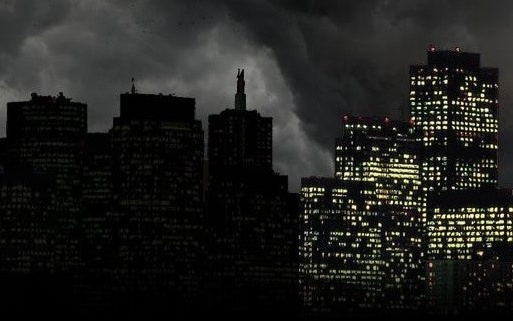
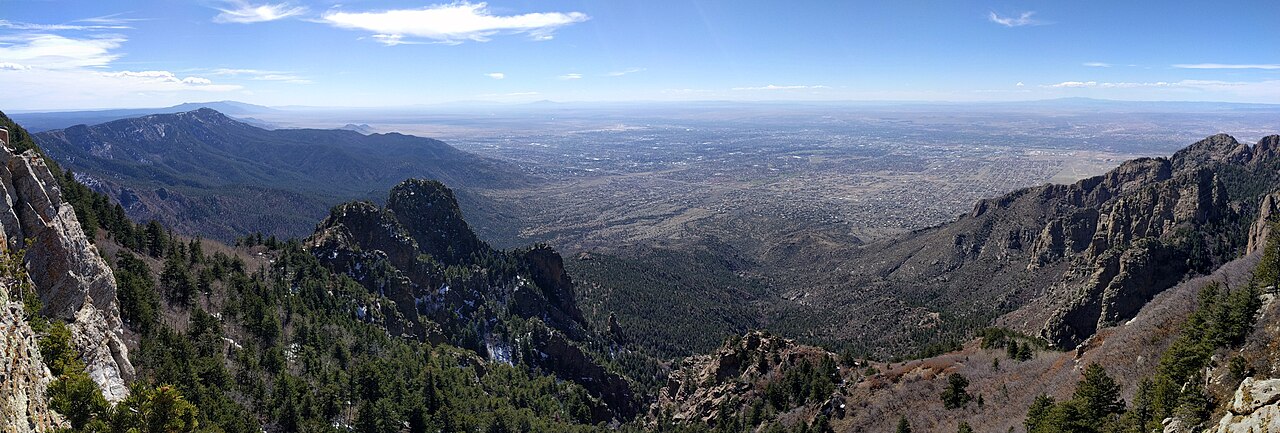
Three hazards put cold storage on the critical list around here, and they often stack. Spring brings extreme fire danger to the Sandia foothills, the West Mesa, and the forests ringing the metro, a majority of the city’s buildings sit in some wildfire risk zone. When dry wind spikes that danger, PNM can call a public-safety power shutoff across designated high-risk areas like the Sandia Mountains east of the city, and every walk-in and reach-in on that grid goes dark at the same moment. Come summer, monsoon flash floods knock out power a different way.
That’s the exact moment a generator-fed trailer pays for itself. A business uses it to keep inventory locked at temperature clean through a multi-day blackout. Emergency managers, recall teams, and relief crews use a line of staged reefers as rolling cold-chain infrastructure, holding food, water, and medical stock in-spec for shelters and responders while the fixed grid stays dead. The reason we keep dispatch staffed around the clock is precisely this: so we can roll when the grid itself is the casualty.
Because we own the fleet, we scale the response to the event, one unit for a single storefront riding out a shutoff, several staged together for a coordinated relief operation. When the power itself is what went down, cold storage that runs independent of the grid isn’t a nice-to-have. It’s the only thing still working.
Sizing the Trailer to the Job: From a Corner Kitchen to a Stage Build
Three footprints cover everything from a one-unit overflow to a full production or disaster setup. Each holds a precise digital set-point from deep-freeze to fresh-cold and runs on a dedicated circuit or a generator.
| Trailer | Best suited to | Temp range |
|---|---|---|
| 6×8 | Tight lots, single kitchens, short overflow | -10°F to 50°F |
| 6×12 | Grocers, caterers, feature-film craft | Deep-freeze capable |
| 6×16 | Distribution, episodic crews, disaster | Heavy-duty reefer |
Each unit holds a precise digital set-point and runs on a dedicated 120V/20A circuit or a generator.
6×8 refrigerated, the one that fits where others can’t
Figure on eight pallet spots in a footprint slim enough to thread into the cramped pads behind older Downtown and Nob Hill buildings that defeat a longer trailer. Most single-kitchen outages and brief overflow stretches live here. The corner café or the small grocer whose walk-in just quit is exactly who this unit was built for, and it’s the one we lean toward when the lot is tight.
6×12 freezer / reefer, our most-asked-for size
Call it fourteen pallet spots, fully deep-freeze rated, and the footprint that leaves the yard more than any other. Reach for it when a grocer needs a backup, a caterer is covering several days, or a feature production wants its craft and catering held in one place. There’s enough room that nobody’s playing Tetris with the shelves, yet it still tucks into a standard back lot or a base-camp pad.
6×16 freezer / reefer, the one for serious volume
Roughly twenty pallet spots paired with a heavy reefer system engineered to keep deep-freeze locked in even when the ambient is brutal. Bring it in to hold frozen pallets when a warehouse zone drops near the freight corridors, to carry a large episodic crew through a stage build, or to anchor a relief operation’s cold chain. The broad yards out toward I-40 swallow this footprint and still leave maneuvering room.
Not sure which fits? Tell us roughly what you’re holding and for how long, and we’ll size it honestly rather than upsell you into a box bigger than the job needs.
Set It Right: A Working Temperature Reference for Your Load
There’s no one “cold” setting, a digital controller earns its keep precisely because each kind of product has its own safe window. Up at altitude and into the summer heat, slipping out of the correct window is how a whole load disappears. Below is the chart customers lean on when they’re picking a size.
| On the manifest | Hold it at | Run the unit as |
|---|---|---|
| Ice cream & frozen dessert | -10°F to 0°F | Deep freeze |
| Frozen protein, seafood, prepped meals | 0°F or colder | Freezer |
| Raw meat & poultry, brief hold | 28°F to 32°F | Refrigerated |
| Dairy, deli, cut produce, roasted chile | 34°F to 38°F | Refrigerated |
| Drinks, florals, plated catering | 38°F to 45°F | Refrigerated |
One threshold outranks every band in that table: 40°F. Cross it, and you’re inside the 40-to-140° stretch that food-safety guidance flags as the danger zone, the range where bacteria on perishable food take off, and where most refrigerated product is considered unsafe once it has spent about four cumulative hours. Spell that out and a failed walk-in at 3 p.m. on a 95° day stops being a headache and becomes a clock you’re racing. It’s the reason we don’t spec our reefers for a comfortable showroom. We build them to claw a set-point back down and hold it in genuine high-desert conditions.
Easiest way to get it right: when you book, name the coldest item you’re carrying and we’ll dial the trailer to that. A lone freezer load fits one unit without fuss. Stack deep-freeze desserts next to fresh produce for a shoot or a reception, though, and we’ll generally float a split arrangement or a second box so neither one has to give.
Power, Generators & Finding a Drop Spot in Albuquerque
Power is a two-option question for every trailer: either a dedicated 120-volt, 20-amp circuit sitting within roughly 100 feet of the parking spot, or a generator. None of the units take standard 208-240V building service, so a quick check of what you’ve got, it takes half a minute. Is what stops the truck from rolling up to a spot it has no way to plug into.
- Have a dedicated outlet close by? Most established restaurants and markets in town do, we plug in, the unit starts pulling temperature, done.
- On a set, a field, or a raw lot? A generator runs the trailer anywhere, a Mesa del Sol backlot, a Balloon Fiesta Park vendor row, a Westside warehouse yard with no spare circuit in reach.
- Bracing for a shutoff? Albuquerque is on PNM, and the fire-prone foothills can see public-safety power shutoffs in wind season. A trailer on a generator keeps your cold chain alive while the grid is dark.
As for where it sits: the trailer wants a fairly level patch with enough clearance for the delivery truck to back it in and square it up, plus a reach to power or room to set a generator. We settle the precise spot with you before the rig ever leaves the yard, and the drivers running these routes know the city cold, from the cramped lots tucked behind Old Town to the open industrial pads strung along the interstates.
Balloon Fiesta, Weddings & Festival Cold: Events That Run on Reliable Refrigeration
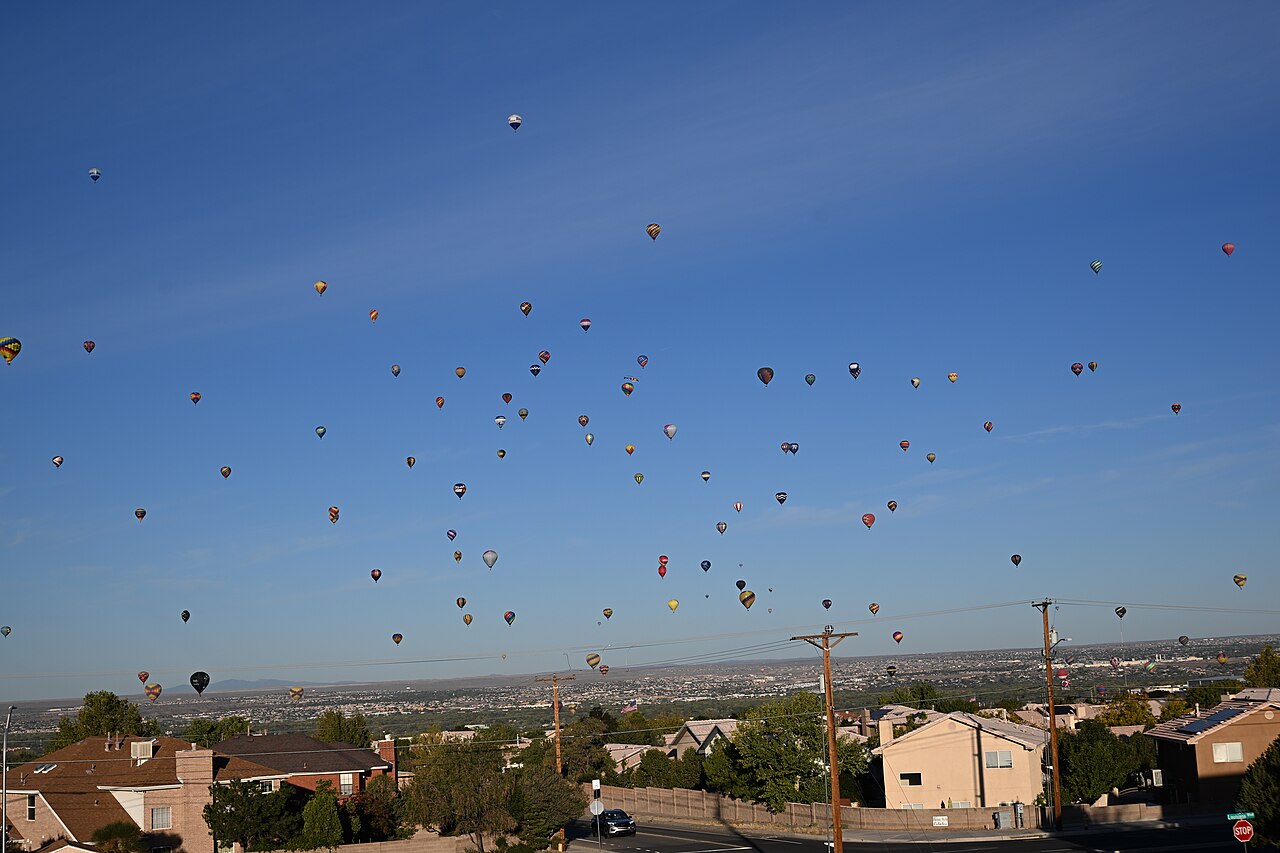
Nothing defines the Albuquerque calendar like the International Balloon Fiesta. Nine days each early October, more than 500 balloons, and a crowd that pushed past 800,000 visits in a recent year, the vast majority traveling in from out of state. Generating better than 200-million dollars of impact across the metro. Behind that spectacle is a vendor city: food rows, hospitality tents, and caterers feeding crowds from a dawn mass ascension into the night glow, all of it needing far more cold and freezer space than a stack of ice chests can hold once the sun is up.
The same is true at the city’s wedding venues, its hotel ballrooms, and the festivals that fill the warmer months. A KryoFridge trailer gives an event team a walk-in’s worth of capacity right on the grounds, holding frozen desserts, fresh produce, proteins and beverages at a steady set-point through a long high-desert day. It’s quiet enough to sit near a guest area, lockable for an overnight multi-day run, and big enough that the kitchen never has to ration.
Planning the whole footprint? Round it out with water station rentals in Albuquerque to keep crews and guests hydrated through the dry heat, and restroom trailer rentals in Albuquerque for guest comfort, one call can cover the site. (cross-brand links. Auto-wired into the wheel on publish)
Food Permits for Albuquerque Events: Where a Trailer Fits the Paperwork
Serve food at a public event in the metro and the cold chain becomes a permitting question as much as an operational one. Knowing how Albuquerque handles it ahead of time keeps your booth from getting flagged on the day.
Worth knowing up front: the New Mexico Environment Department’s food program does not have jurisdiction inside Albuquerque and Bernalillo County, they run their own programs. A vendor preparing, selling, or handing out food at a special event generally needs a Temporary Food Establishment permit, handled locally through the City of Albuquerque’s Environmental Health Department and the Bernalillo County Health Protection Office. The county asks for the application at least five days before the event so there’s time to process it, and booths have to meet basic build requirements. Overhead cover, proper flooring, and walls depending on what you’re serving.
This is exactly where the trailer slots into that paperwork. Any booth that clears a permit has to demonstrate it can keep cold and frozen items at a safe, recorded temperature for as long as the gates are open. A digitally-controlled, NSF-approved trailer is the piece of gear that carries that proof through a baking afternoon at Balloon Fiesta Park or on a downtown plaza, the grade of equipment an inspector wants to see behind a real food operation. Our part is the food-safe, temperature-holding box. Filing the permit stays on your side with the city or county, and we’ll gladly pass along the unit’s specs so your application has the numbers it needs.
The Finer Points of Renting Cold Storage in Albuquerque
The questions that surface once the basics are settled. Tap any topic to open it.
Freezer trailer, portable walk-in, or reefer truck, which one do you actually want?
Portable walk-in cooler: cheap and small, sure, but a cooler is just that, not a freezer, and it rides entirely on your building’s power holding and the surrounding air staying gentle. Through an Albuquerque summer an undersized one can’t really get down to deep-freeze, and the instant the building goes dark. Or PNM pulls the plug for fire weather, the cooler goes warm right along with it.
Reefer (refrigerated) truck: its whole design is about carrying product down the road, not parking and holding it. Leave one idling and it eats fuel, drones loudly next to a storefront or a quiet set, and pins down a tractor and a driver you might have no other use for. Handy for a few hours in a pinch. Awkward and pricey once you’re talking days or weeks in one place.
Freezer trailer (our lane): designed from the ground up to be set down and left to hold for days or weeks running, rated to deep-freeze, NSF-approved, quiet enough for a storefront, lockable, and run off nothing more than a single circuit or a generator. You get more usable room than a walk-in and far less expense and fuss than a truck, in a box tuned for precisely the conditions that defeat the first two.
NSF construction & how Albuquerque inspects food storage
Temporary cold storage still has to satisfy the local food-safety authorities, the City of Albuquerque’s Environmental Health Department and the Bernalillo County Health Protection Office, not the state program. An inspector who finds a unit that can’t document a holding temperature, or that isn’t built for food contact, can shut a booth or a kitchen down on the spot.
Each trailer in our fleet carries NSF approval, with food-grade interior surfaces, real drainage, and a digital controller that puts the set-point in plain sight. Here’s the honest boundary: what we hand you is the food-safe box that holds temperature, not a continuous temperature-logging or alarm-monitoring service. If a compliance program on your end requires that ongoing record, line that vendor up on your own alongside the rental.
What a cold-storage failure actually costs you
Do the arithmetic the way a 505 kitchen does. One restaurant walk-in routinely sits on thousands of dollars of frozen and chilled stock. A grocery rack or a warehouse freezer bay holds a multiple of that. A production’s catering hold is feeding hundreds of crew. Drop power or a compressor on a 95° afternoon and all of it is in jeopardy inside a few hours, before you even count the sales lost while the line sits dark and the hours spent scrambling to rescue what you can.
Weighed against that, a trailer on standby is inexpensive cover, a fixed, predictable spend parked in front of a loss with no ceiling. That’s why the places that got caught once tape our number by the register: round two, they’re dialing before anything has had a chance to warm.
When demand peaks here, and why booking ahead pays off
Demand in Albuquerque is seasonal even when each individual emergency isn’t. Summer heat and altitude drive equipment failures from June through September. Green-chile and holiday volume push grocery and restaurant overflow. Balloon Fiesta concentrates a massive events spike into early October, and fire-season shutoffs spike outage calls in spring. For anything planned, a remodel, a known shoot, a festival booth. Booking ahead locks in the size you want. For everything unplanned, our 24/7 staging is the backstop.
Multi-trailer setups for productions, warehouses & relief
A single trailer answers most kitchens and markets. Warehouses, episodic shoots, big festivals, and relief work frequently want more, and since the fleet is ours, we can park several together and bring them online in stages as the job expands. That Mother’s Day three-trailer job is the template: grow the cold to match the operation rather than making the operation squeeze into one box.
Short emergency rentals vs. long-term & contract holds
Rentals stretch from a day or two for an emergency or a one-off event out to weeks or months for a remodel, a busy season, or a multi-week build, and onto a contract footing for outfits that just want cold capacity sitting in reserve. Give us the window and we’ll price it straight. “Honestly, not sure how long yet” costs you nothing, and there’s no middleman’s cut tucked into the figure.
Renting vs. building permanent cold storage
Pouring a permanent walk-in is a build job, you’re hiring a refrigeration contractor, running electrical, pulling a building permit, and waiting weeks before a single pallet goes in. That only earns its keep when the demand is constant and never lets up. Much of what Albuquerque calls about isn’t that. An overflow through summer, a gap during a remodel, a seasonal build, a one-and-done shoot or festival, a dead unit on backorder for parts. Each of those is a temporary gap, and standing up permanent infrastructure to plug a temporary gap is the long way around.
A rental rewrites that equation. You bring in precisely the cold you need, for precisely the window you need it, skipping the construction and the permit calendar entirely, the box shows up and is holding temperature the same week, frequently the same day, and the moment the need is over, so is the bill. For most callers, renting isn’t only the cheaper move across a short stretch. It’s the one sized to the actual problem.
How a reefer holds deep-freeze in 90°-plus high-desert heat
Three pieces do the work in concert. Start with the shell, thick insulated panels and sealed, gasketed doors that wall the desert heat out and keep the cold trapped, so the system never has to battle the sun through a flimsy skin. Add the refrigeration: a self-contained reefer condensing unit carrying spare capacity to keep shedding heat at 95° and a mile of elevation, rather than maxing out the way a too-small cooler would. Finish with a digital thermostat that locks onto your set-point and cycles the compressor to guard it.
Stack those together and a trailer baking in an open July lot acts the same as one tucked in a temperate warehouse, because it was specced for the hardest day, not the typical one. That’s also the reason power is our first question: the box can only deliver that cushion when it’s fed a steady draw from a dedicated circuit or a generator.
From First Call to Pickup: How an Albuquerque Rental Runs
Booking should be the easy part of a hard day. Four steps, straight pricing, one accountable contact.
1 · Tell us the load
Frozen or fresh, roughly how much, and for how long. A quick description is all we need to recommend a size.
2 · We lock size, power & spot
We match the trailer, confirm a dedicated circuit or a generator, and pin the drop point so delivery is one clean trip.
3 · Delivery & cool-down
We deliver across the metro on your timeline, same-day for emergencies. Set the unit, power it, and let it pull to temperature.
4 · You store, we stay on call
The trailer holds through the term and our line stays open the whole time. When you’re finished, we come pick it up.
Where We Run Cold Storage Across the Metro & Beyond
Our local staging means fast response across every corner of the city, from Downtown, Nob Hill, and the University area to the Northeast Heights, the North Valley and South Valley, the Westside and Ventana Ranch, plus the Sunport corridor and the soundstage cluster at Mesa del Sol. If you’re near Central, I-25, I-40, or Coors, we can have a trailer to you. Usually within the week, and inside about 45 minutes when it’s an emergency.
We reach the surrounding communities too: Rio Rancho, Bernalillo & Corrales, Los Lunas & Belen, Edgewood and the East Mountains, and we’ll run longer hauls down I-25 or out I-40 when a production or distribution account needs cold capacity past the metro line.
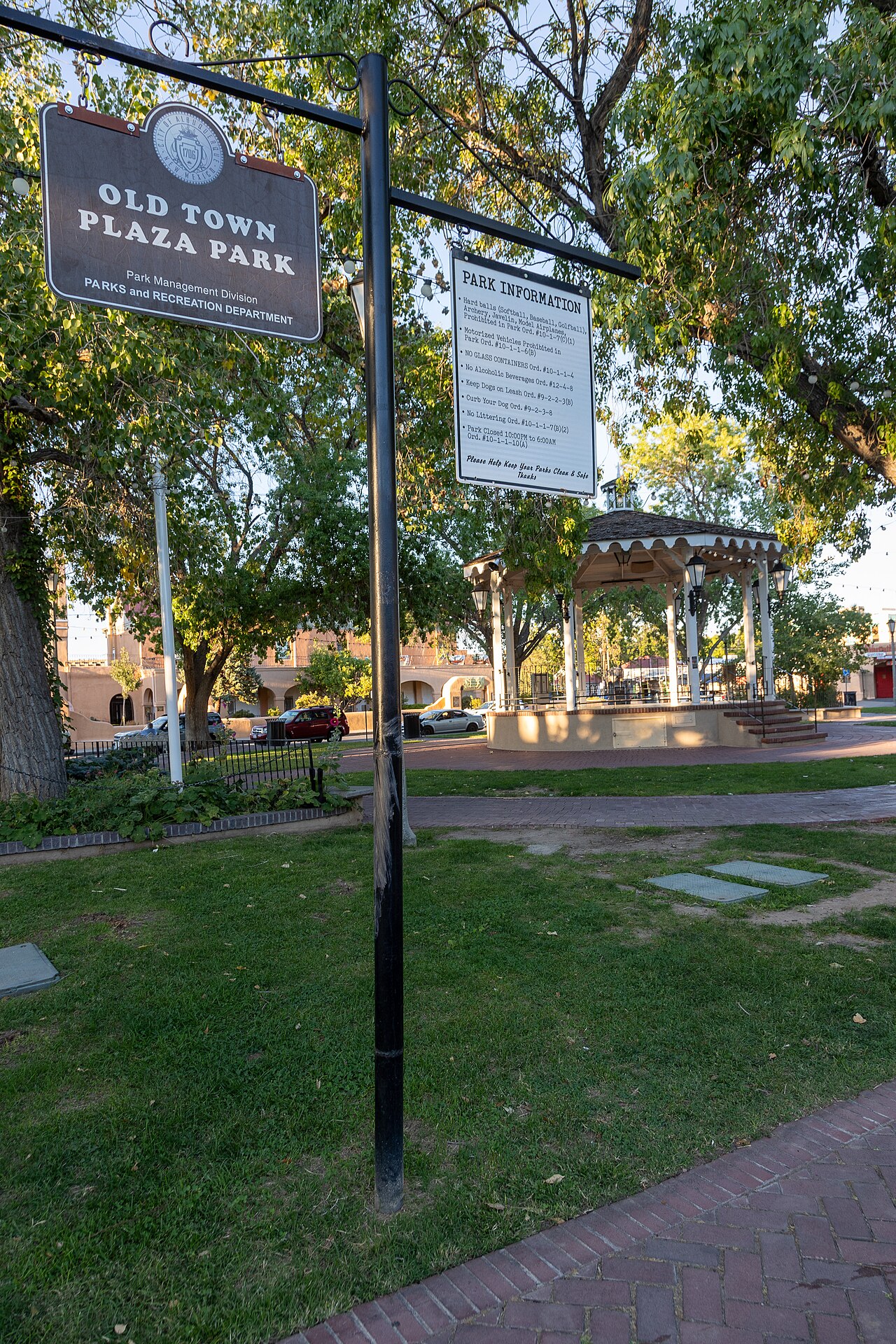
Old Town Plaza, one of the historic districts where the tighter lots call for a compact 6×8, while the wide pads out by the interstates take a 6×16 with room to spare.
What Albuquerque Kitchens, Crews & Event Teams Tell Us
“Our walk-in died mid-shift during chile season and we had a line out the door. KryoFridge had a freezer trailer in our lot off Central and pulling temp inside the hour, saved a wall of product and a brutal weekend.”
Restaurant owner · Albuquerque, NM“We needed cold for base camp on a multi-week shoot at short notice. They sized it to our crew, set it on a generator, and it never blinked through twelve-hour days. Exactly the kind of vendor a UPM wants on the list.”
Production coordinator · Mesa del Sol“Lost a freezer zone at our distribution facility off I-40. Two reefer trailers staged same-day kept everything in spec while we got the rack fixed. No drama, no broker runaround.”
Operations manager · Albuquerque, NM“Booked a unit for a Balloon Fiesta vendor row and it held everything cold from the morning ascension to the night glow. Clean trailer, on-time crew, and they actually answered the phone. Booking them again.”
Event caterer · Bernalillo CountyPlaceholder testimonials matched to real Albuquerque scenarios, swapped for verified Google reviews before publish.
Albuquerque Freezer & Refrigerated Trailer Rental: Common Questions
How quickly can you get a freezer trailer to my Albuquerque job site?
Because we keep units staged locally, a planned rental is usually scheduled within the week, and an emergency call can have a trailer on your lot and pulling temperature in roughly 45 minutes across the metro, Downtown and the Sunport corridor out to Mesa del Sol, the Westside, and Rio Rancho.
What temperatures will the trailers hold in summer heat at altitude?
Every unit runs on a digital thermostat from about minus-10°F deep freeze up to roughly 50°F fresh-cold, and the reefer systems are sized to defend that set-point through a 95-plus-degree July afternoon at 5,000 feet, not just in a mild test bay.
What power does a trailer need on a set or a lot?
One dedicated 120-volt, 20-amp circuit within about 100 feet, or a generator. The units aren’t wired for 208-240V building service, so we confirm the power source before the truck rolls, which is why a generator-fed trailer is the standard play on a Mesa del Sol backlot or a balloon-field vendor row.
Are the trailers NSF-approved and insured?
On both counts, yes. Each unit holds NSF approval for food contact, comes finished with food-safe surfaces and drainage, and every rental rides under full liability and equipment coverage.
How long can I keep a unit?
For as long as the work lasts, a day or two for an emergency or event, weeks or months for a remodel, a season, or a build, and onto a contract footing past that. We price the window that actually fits, with nothing padded into the figure.
Which areas around Albuquerque do you cover?
The whole metro and the corridors off it, Rio Rancho, Bernalillo, Corrales, Los Lunas, Belen, Edgewood and the East Mountains. Plus longer hauls down I-25 and out I-40 for production and distribution accounts that need cold beyond the city.
Are you a broker or the actual operator?
The direct operator. We own, maintain, and deliver the fleet ourselves, no markups, no middleman, and one accountable point of contact from the first quote to the final pickup.
Need a Freezer Trailer in Albuquerque Today?
Get a fast, straightforward quote, or call our 24/7 line for emergency cold storage anywhere across the 505 and the surrounding metro.