
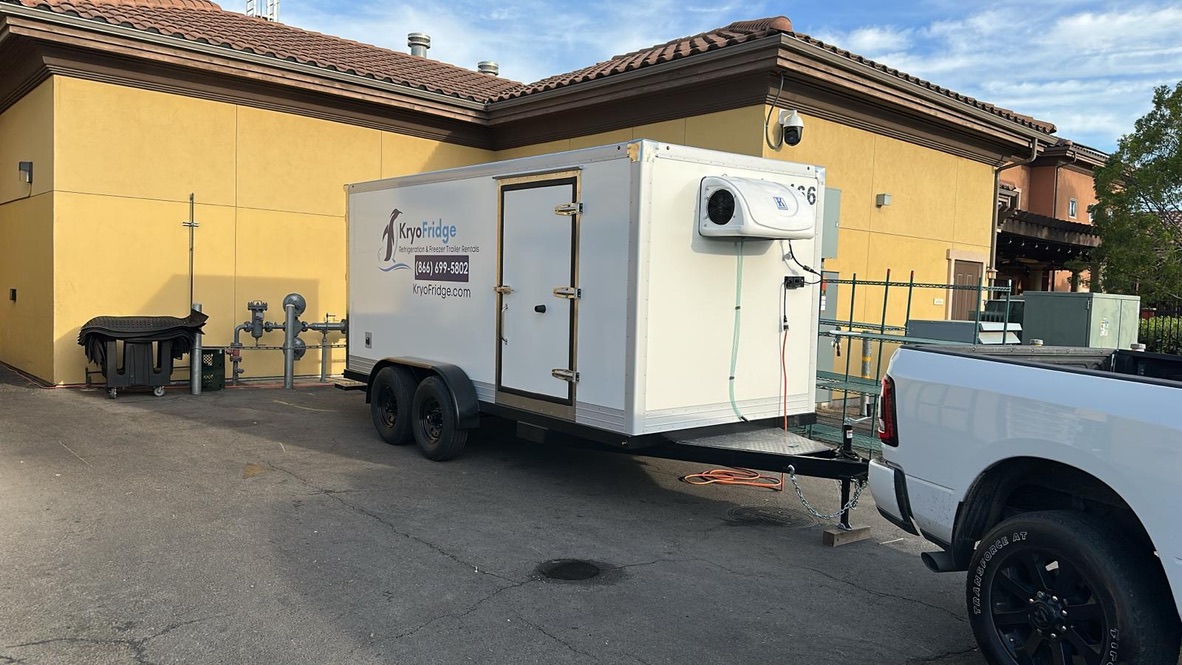


Receive Your Trailer
Our drivers will call 30 min prior to delivery. Be sure to have a power source close by
Our Freezer and Refrigerated Trailer Rentals
Every trailer we rent runs as either a cooler or a freezer, in three sizes, and we own all of them. If you already know what you need, call 866-699-5802 and we will tell you what is available and how fast it can be there. If you would rather send the details, request a quote and you will hear back the same day.
This page walks through what we actually have, how to pick a size, what each one needs on site, and how the rental works. No guesswork and no runaround.
Not sure which size fits your job? Tell us what you are storing and we will size it for you in about two minutes.
Call 866-699-5802 Request a QuoteCooler and freezer setpoints explained
This is the part most people do not expect. Our trailers are not fixed to one temperature range. Each unit adjusts from about fifty degrees down to ten below zero, so the same trailer can hold produce this week and frozen protein next week. You tell us what is going inside and we set it before it leaves our yard.
That matters more than it sounds. Renting a box that only freezes means you are stuck if your cooler is the thing that failed. Most restaurant emergencies are cooler emergencies, because the walk-in cooler runs hardest and gives out first.
Three sizes, and how to pick yours
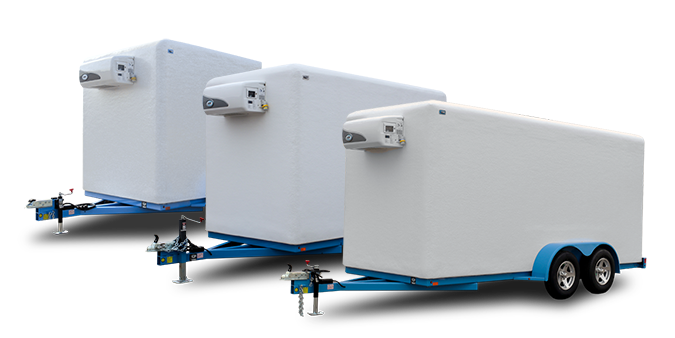
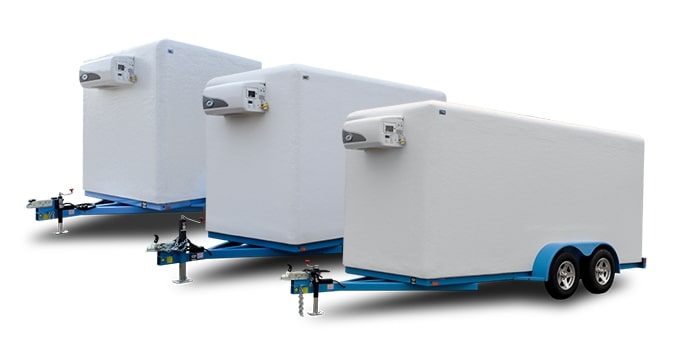
We run three trailer sizes. The right one is usually decided by two things: how much you are storing, and how much room you have to park it.
| Size | Best for | Typical use |
|---|---|---|
| 6x8 | Small kitchens, single-case failures, tight back lots | A cafe or single restaurant covering a failed reach-in or a portion of a walk-in. Fits where larger units cannot turn. |
| 6x12 | The most common pick | A full restaurant walk-in replacement, mid-size grocery overflow, most event bookings. If you are unsure, this is usually the answer. |
| 6x16 | High volume and long runs | Grocery, commissary, distribution, multi-week events, and anywhere a whole freezer room went down. |
A simple way to size it
Tell us the dimensions of the box you lost, or how many pallets or racks you need to hold. That is genuinely all we need. People routinely underestimate how much a walk-in holds, so if you are between two sizes, go up. Paying for a little extra space costs less than a second delivery.
Do not forget the parking
A 6x16 needs meaningfully more room to place and straighten than a 6x8, and tight alleys behind strip-center restaurants are where this becomes a problem. If you can send a photo of the spot, we can usually tell you in a minute whether it fits.
What each trailer needs on site
Two things, and there is no third option.
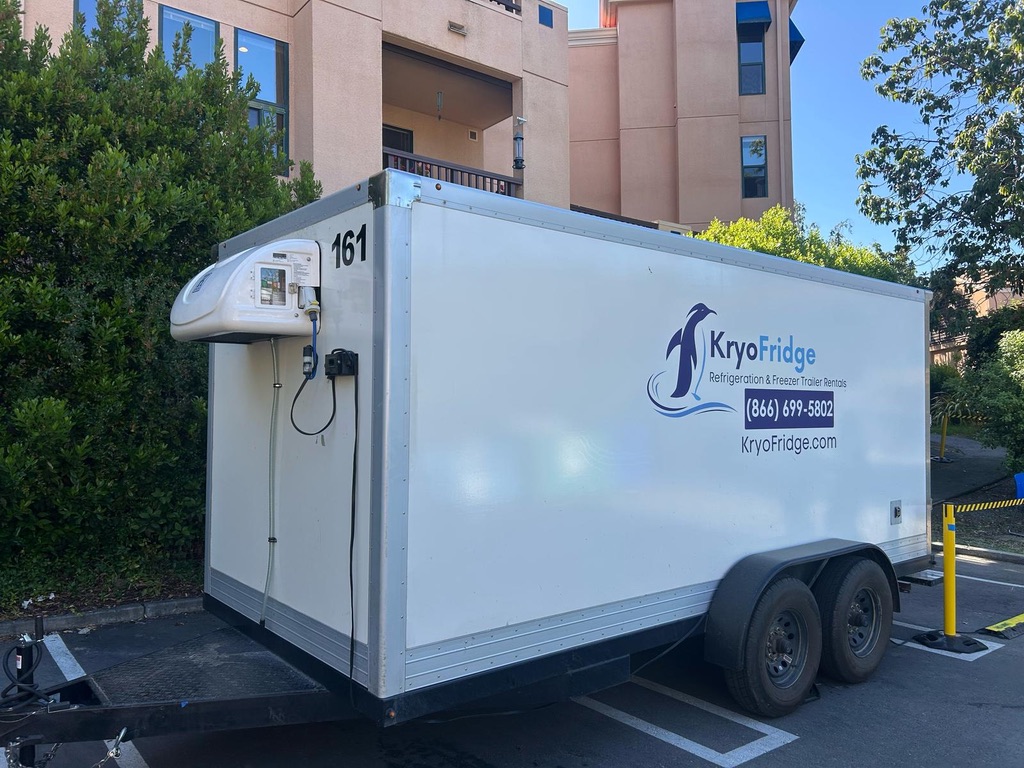
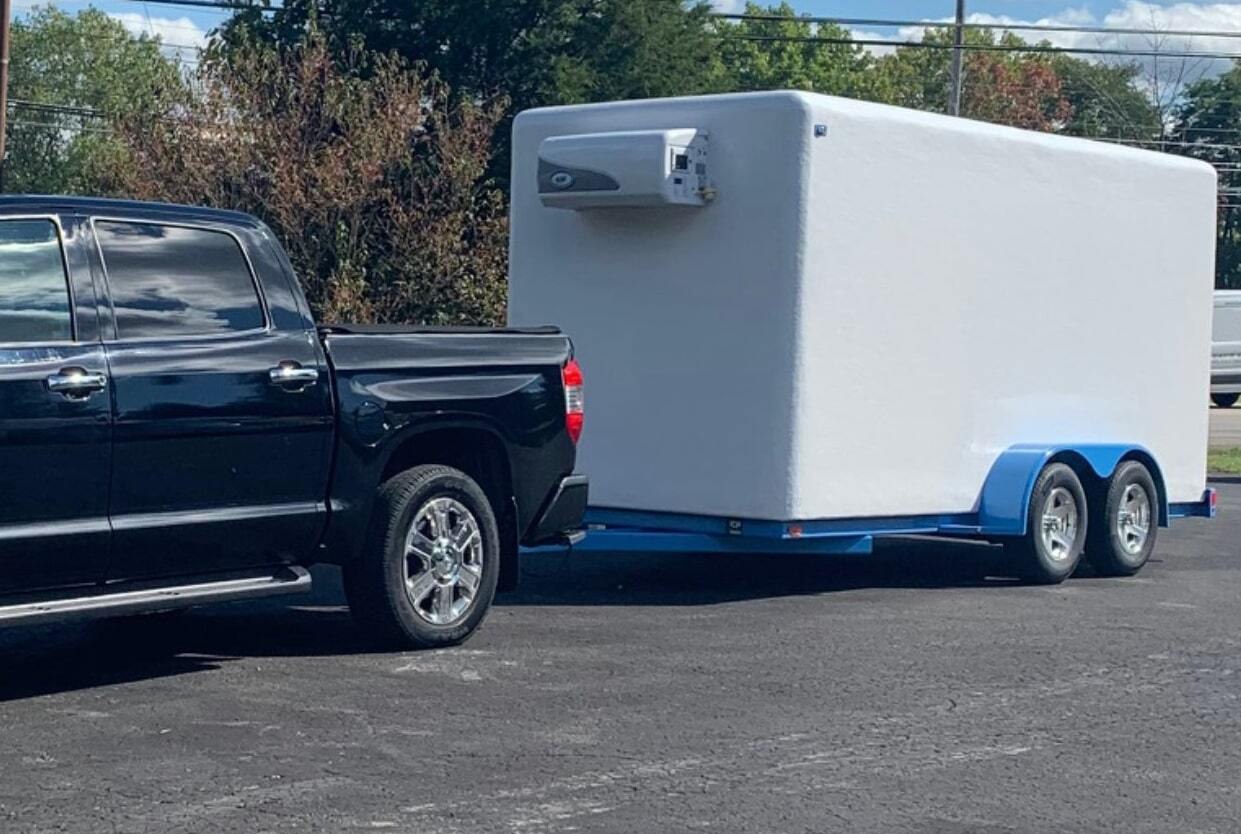
Placement: a reasonably flat spot with enough room for the delivery truck to get the trailer in and set it straight. Straight matters more than people expect, because the door and the drainage both depend on it.
Outdoor events almost always run on a generator. Back-of-house restaurant and grocery placements almost always run on a dedicated circuit. If you are not sure which you have, say so when you call and we will bring the generator rather than gamble on it.
What we do not do
We do not offer temperature monitoring or logging as a service. Each unit has digital setpoint control that you set and can see, and your team checks it the same way they check a walk-in. If a company tells you documented temperature records come with the rental, that is not a promise we make, and we would rather say so up front than have you discover it later.
Who rents which trailer
Restaurants
Usually a 6x12 covering a failed walk-in, or a 6x8 for a smaller kitchen. Remodels and holiday overflow are the planned versions.
Grocery and markets
Often a 6x16. Case failures, store resets, and buying ahead of a holiday when back-of-house cannot hold the volume.
Events and venues
6x12 or 6x16 depending on headcount and run length. Almost always generator powered with placement worked out against the site plan.
Construction and industrial
Longer bookings around plant shutdowns and commissary work. Site access is usually easier, so size is driven by volume alone.
Agriculture
Harvest surges and short-term holding when packing capacity runs out. Typically the larger units for a defined season.
Film and production
Short, precise, generator powered. Catering needs real refrigeration, and coolers packed with ice do not hold up on a long shoot.
How the rental actually works
1. Tell us what you are storing
Product type, rough volume, and how long you need it. That gets you a size and a temperature setting.
2. Confirm power and placement
Dedicated circuit or generator, and where the trailer will sit. This is the step that prevents delivery-day problems.
3. Delivery and set
The driver places the trailer, levels it, connects power, sets your temperature, and walks you through the controls. Let it pull down to temperature before you load it.
4. Extend or finish
If a repair runs long, extending a trailer already sitting on your lot is a phone call. When you are done, call and we schedule the pickup.
Loading for even cooling
Leave airflow space
Load it the way you would load a walk-in. Packing product wall to wall is the fastest way to end up with warm spots, and it is the most common mistake we see.
Let it pull down first
Give the unit time to reach temperature before product goes in. On a same-day emergency this is the step people skip, and it is worth the wait.
Mind the door
A propped door undoes a lot of work quickly, especially in summer heat. Assigning one person to the trailer during heavy prep stops it being an issue.
Park it in shade if you have the choice
It will not change whether the unit works, but it reduces how hard it has to run through a hot afternoon.
Trailer, container, or something else
| Option | Works well when | Runs into trouble when |
|---|---|---|
| Refrigerated trailer | You need it fast, it may need to move, and you want one unit that runs as a cooler or a freezer | Access is genuinely tight and a truck cannot place it |
| Cold storage container | It will sit for many months and never move | You need it this week, or you need it gone quickly |
| Extra reach-ins | You lost a small amount of capacity | You lost a walk-in, which holds far more than people estimate |
| Ice and coolers | A few hours outdoors | Heat, food safety, or anything longer than an afternoon |
What to ask before you rent from anyone
Do you own the trailer?
Brokers and ghost companies are common in equipment rental. If the company answering the phone does not own the unit, your emergency turns into a chain of phone calls. We own our fleet.
What exactly does it need for power?
A vague answer here causes failed deliveries. Ours is specific: a dedicated 120V 20-amp circuit within 100 feet, or a generator.
What temperature range does it hold?
Ask for numbers, not categories.
What happens if I need to extend?
Ask before you book. Repairs run long more often than they run short.
Are you licensed and insured?
Any legitimate company answers this immediately. We are.
Why people end up calling us
We are the refrigeration arm of a rental family that has been doing this for more than thirty years, and we run one of the largest refrigerated and freezer trailer fleets in the West. That is not a talking point on the week everyone needs a unit at once. It is the reason we can still say yes when smaller outfits are out of inventory by mid-morning.
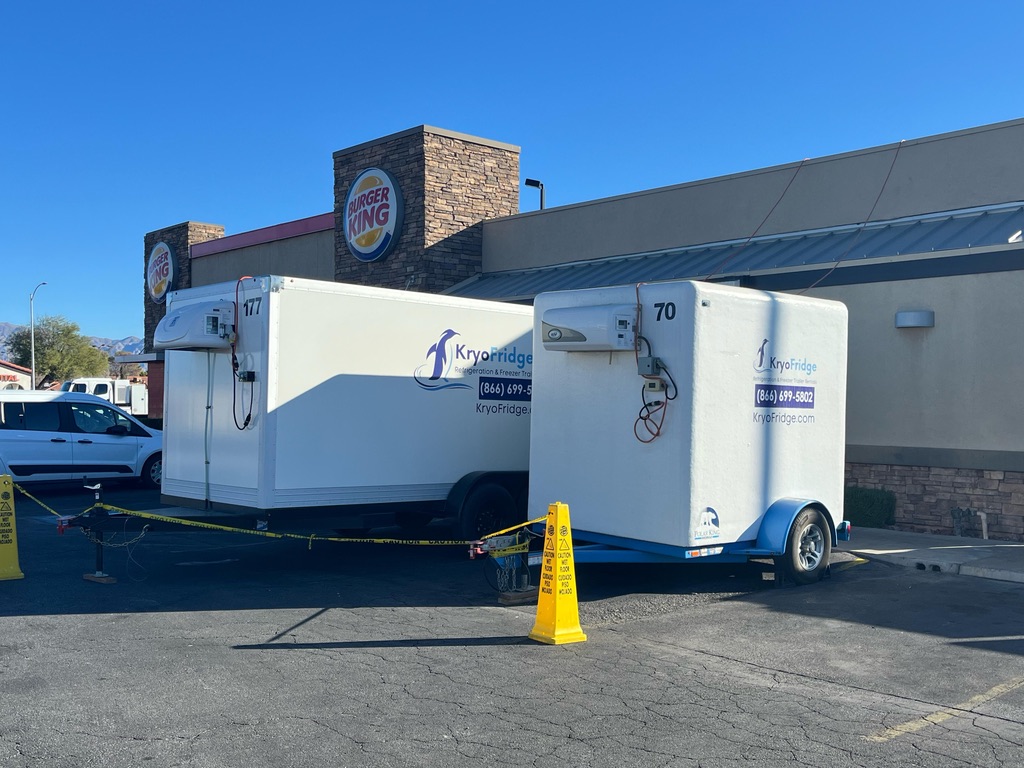
We are owner operated rather than a reseller, licensed and insured, and trusted by some of the most recognized restaurant and quick service brands in the country. You can see units on real jobs across our freezer trailer rental locations, including California refrigerated freezer trailer rentals and Las Vegas walk-in freezer and cooler trailer rental.
Food-safe construction and health-code compliance
The build matters more than most rental listings admit, because your health inspector treats a temporary unit the same way they treat your walk-in.
NSF approved, and why that is the line
Our trailers are NSF approved. That is the standard health departments actually recognize for food-contact equipment, and it is the difference between a unit you can legally hold product in and one that becomes a problem during an inspection. If a rental company cannot tell you whether their units are NSF approved, that is your answer.
Seamless fiberglass interior
The interior is a seamless fiberglass shell rather than panels with joints. Seams collect moisture and debris, and they are where sanitation problems start. A continuous surface wipes down completely, which makes a full clean-down between loads realistic instead of theoretical.
Four-inch insulated walls and keg-duty floors
Four inches of wall insulation is what lets the unit hold temperature through a hot afternoon without the compressor running constantly. The floors are rated for keg duty, so rolling heavy product in and out does not damage the surface or create low spots where water pools.
What your inspector will look for
Product at temperature, labeled and dated, organized so nothing sits on the floor, and a unit that is clean and in good repair. A trailer parked where it blocks an exit or creates a drainage problem gets flagged regardless of how good the equipment is, so plan placement before delivery rather than after.
Keep your own temperature records
Since we do not provide logging as a service, your team should check and record temperature on the same schedule you already use for the walk-in. Inspectors ask for the log, not for the brand of the trailer.
Common questions about our trailers
Can one trailer be a cooler and a freezer?
Yes. Each unit adjusts across roughly fifty degrees down to ten below zero. Tell us what you are storing and we set it before delivery.
Which size should I get?
6x12 covers most situations. Go 6x8 for small kitchens or tight access, 6x16 for grocery volume and long runs. If you are between two, go up.
How much does a walk-in hold compared to a trailer?
More than most people guess. Give us the box dimensions and what was in it and we will tell you what covers it rather than making you estimate.
Do I need a generator?
Only if you do not have a dedicated 120V 20-amp circuit within 100 feet. We supply generators when you need one, and most outdoor events use them.
Can it sit on dirt or gravel?
Usually, if the ground is reasonably firm and level. Soft ground after heavy rain is worth mentioning when you call.
How fast can you deliver?
Same day is normal for emergencies when a unit is staged and your site is ready. Call and we will give you a real window rather than a hopeful one.
Can I rent for a single weekend?
Yes. Short event rentals and long commercial contracts both work.
Do you provide temperature logs?
No. Digital setpoint control is on the unit and you manage it. We do not offer monitoring, logging or alarm service.
A closer look at each size
The 6x8: small footprint, real capacity
The 6x8 is the one people underestimate. It is the unit that fits behind a strip-center restaurant where a larger trailer simply cannot turn, and it still holds far more than a bank of reach-ins. Cafes, coffee operations, single-concept kitchens and small markets use it most.
It is also the size we most often deliver for a partial loss, where a walk-in is still running but a freezer section failed, or where a kitchen needs somewhere to stage product during a short equipment swap. If access is your constraint rather than volume, start here.
The 6x12: the default answer
If you call us and describe a failed restaurant walk-in, this is usually what we send. It holds a full kitchen's cold inventory with room to work, and it fits most commercial back lots without drama.
It is also the most common event booking. A 6x12 covers a weekend festival vendor row, a wedding with real catering, or a stadium concession stand through a busy stretch. When people tell us afterward that the size was right, this is almost always the unit they had.
The 6x16: volume and long runs
Grocery, commissary, distribution and multi-week projects. If a whole freezer room went down, or you are buying ahead of a holiday and your back-of-house cannot hold it, this is the one.
The trade is space. A 6x16 needs a genuine parking area and room for the truck to place and straighten it. On a tight site, two smaller units sometimes work better than one large one, and we will tell you if that is your situation rather than sending a trailer that cannot be placed.
Setting the temperature for what you are holding
Since every unit adjusts, the useful question is where to set it. This is the guidance we give over the phone.
| What you are storing | Where to set it | Worth knowing |
|---|---|---|
| Produce and floral | Cooler range, upper end | Airflow matters more than a colder setting. Do not pack it tight. |
| Dairy and prepped product | Cooler range, standard | The most common restaurant setting. Mirrors what your walk-in was doing. |
| Fresh protein | Cooler range, lower end | Keep it away from the door if the trailer is opened often. |
| Frozen protein and bulk | Freezer range | Let the unit pull down fully before loading, especially in summer. |
| Ice cream and frozen desserts | Freezer range, lower end | The least forgiving product. Door discipline is not optional. |
| A mix | Set for the most sensitive item | Or take two units and split it, which larger operations usually do. |
What happens between rentals
A trailer that shows up dirty or half working is worse than no trailer. Between every rental our units are cleaned, inspected and run before they go back out. The refrigeration unit gets checked, the door seals get checked, and anything that did not perform on the last job gets dealt with before the next one.
This is one of the practical arguments for renting from a company that owns its equipment. When the fleet is yours, a unit that is not right comes off the schedule. When the equipment is somebody else's, the incentive to pull it is weaker.
Emergencies: the first hour
Worth reading before you need it.
Move product to whatever cold space you have
Reach-ins, prep coolers, a neighboring location. Buy time before you start making calls.
Call for a trailer before you call for a repair estimate
Parts can take days. A trailer can be there the same day. Getting the temporary solution moving first is what protects the inventory.
Check your power while you wait
Find out whether you have a dedicated 120V 20-amp circuit within 100 feet of where a trailer could sit. If you do not, say so and we bring a generator.
Clear the spot
Dumpsters, pallets, vehicles. The single most common delay we see is a truck arriving to a blocked placement.
Multi-site and national accounts
If you run several locations, the useful move is to have your sites already known to us before anything breaks. When a call comes in from a location we have delivered to before, we already know the access, the power situation and where the trailer goes. That removes most of the delay on the day it matters.
Some of the most recognized restaurant and quick service brands in the country use our trailers, and coordinating several sites at once is routine for us rather than an exception.
How long people rent
There is no standard length, deliberately. Emergencies start as a few days and often extend because parts take longer than the repair company estimated. Remodels get booked for a planned window and frequently run past it. Events are the most predictable, usually a long weekend or a multi-week run.
Our honest advice: if the reason is a repair, book slightly longer than you think you need. Extending a trailer already on your lot is a phone call. Finding a new unit mid-week during a busy stretch is a harder problem, and in peak weeks availability genuinely tightens across every market.
Delivery and coverage
We deliver across California, Nevada and Utah with same-day and 24-hour emergency dispatch, and we serve Hawaii on advance booking. Coverage runs from our yards outward, which is why we stage units near the markets that use them most rather than running everything from one location.
You can see how that plays out by market on our Utah freezer and cold storage trailer rentals page and across the rest of our refrigerated trailer rental service areas.
Food safety and inspections
A temporary unit does not change what your health inspector expects. Product still has to be at temperature, labeled and organized. Two practical notes.
First, keep the trailer on the same monitoring habits as your walk-in. Since we do not provide logging as a service, your team should check and record temperature on the schedule you already use inside.
Second, placement matters for inspections. A trailer parked where it blocks a required exit or creates a sanitation problem will get flagged, and that is avoidable with a minute of planning before delivery.
Plain-English glossary
Reefer
Industry shorthand for a refrigerated trailer. Same thing, different word.
Pull down
The time a unit takes to reach your target temperature from the outside air temperature. Longer in summer, which is why we set units before they leave the yard when we can.
Setpoint
The temperature you tell the unit to hold. Digital and adjustable on ours.
Dedicated circuit
A circuit serving only this trailer. Sharing one is the usual cause of nuisance trips.
Ambient
The outside air temperature, and the number that makes everything harder in summer.
Why we stock three sizes and not a dozen
Some rental companies list a long menu of sizes. We run three on purpose, and it is worth explaining why, because it affects what you actually get.
A deep fleet of three sizes means we hold real quantity in each one. When the first heat run of the summer hits and every kitchen in a metro calls the same morning, the company with three sizes and many units of each can still say yes. The company with nine sizes and two of each cannot. Depth beats variety on the day it matters, and the day it matters is the only day anyone is calling.
It also keeps our service predictable. Our drivers place the same three trailers every day. They know how each one behaves on a tight lot, how long each takes to pull down, and what each needs for power. That consistency is why a delivery goes quickly instead of turning into a problem-solving session in your parking lot.
Seasonal demand, and when to book
Cold storage demand is not steady, and knowing the pattern saves you money and stress.
Late spring
The quietest window and the best time to service your own refrigeration. If a compressor is showing its age, deal with it before summer rather than during it. This is also the easiest time to find a technician.
Summer
The heaviest emergency season. Heat pushes tired equipment past its limit, and outages take refrigeration down with them. Availability tightens across every market in this window, sometimes within hours of a widespread outage.
Autumn
Fair season, festivals, and the beginning of holiday buying. Bookings shift from emergency to planned, and the larger units go first.
November and December
Holiday volume. Kitchens and stores that run fine all year simply run out of freezer space. Booking before Thanksgiving is the difference between having a unit and hoping for one.
Winter and early spring
Event season in warm markets, remodel season in others. Remodels are the most extendable bookings we handle, which is why we suggest padding the window.
Renting for an event versus renting for an emergency
They are different jobs and it helps to know which one you are doing.
Events
Lead time is your advantage. You know the date, so book it. Power is almost always a generator, and placement has to be worked out against a site plan rather than a parking lot. Think about where your staff will actually walk between the trailer and the serving line, because a unit parked somewhere inconvenient gets its door propped, and a propped door is how product gets warm.
Emergencies
Speed is everything and the details get decided on the phone. What matters is that someone at your location can confirm the power situation and clear the placement spot while we are loading. Those two answers are the difference between a delivery that takes twenty minutes and one that turns into an afternoon.
Questions we ask when you call
None of these are trick questions. They are how we get you the right unit the first time.
| What we ask | Why it matters |
|---|---|
| What are you storing? | Sets the temperature and tells us whether you need cooler or freezer range. |
| How much, roughly? | Drives the size. Box dimensions or pallet count both work. |
| How long do you need it? | Affects scheduling and whether we suggest padding the window. |
| Where will it park? | Access decides whether a 6x16 is even possible on your site. |
| What power do you have? | Dedicated circuit or generator. This one prevents failed deliveries. |
| When do you need it? | Tells us what is realistic today versus tomorrow. |
If you do not know the answers, that is fine. Describe the situation and we will work it out with you on the call.
Two units instead of one
Larger operations often take two trailers rather than one big one, and it is worth knowing when that is the better answer.
The clearest case is a mixed load. If you are holding produce and frozen protein at the same time, one unit forces you to set for the more sensitive item and accept that the rest is colder than it needs to be. Two units let you run one as a cooler and one as a freezer, which is exactly what your kitchen had before something broke.
The second case is access. A site that cannot take a 6x16 can often take two 6x8 units placed in different spots. That is a common answer for older commercial buildings and tight downtown lots where the constraint is turning room rather than total space.
The third is redundancy on a long booking. If a trailer is holding inventory that would be expensive to lose and the rental runs for months, some customers prefer two smaller units so a single fault never takes everything down at once.
When we will tell you not to rent
We would rather lose a booking than send the wrong unit, and there are situations where a trailer is not the right answer.
If you need cold storage in a fixed spot for a year or more and it will never move, a permanent walk-in or a cold storage container is usually the better economics. If you lost a single reach-in and nothing else, a replacement reach-in beats a trailer. If your access genuinely cannot take a trailer and there is no alternative placement, we will say so on the phone instead of sending a truck to find out.
Being straight about that is the whole reason customers call us back. Call 866-699-5802 and describe the situation, and you will get an honest read rather than a pitch.
Cold Storage Reference Library
Practical guides for picking and running a temporary unit.
Sizing a trailer from your walk-in dimensions
How to convert the box you lost into the trailer size that replaces it, using volume and your delivery schedule instead of guesswork.
Dedicated circuit or generator, and how to tell
A plain walkthrough of the 120V 20-amp requirement, when a generator makes more sense, and what to confirm with your electrician before delivery day.
Loading a refrigerated trailer without warm spots
Airflow, stacking, pull-down time and door discipline, and why packing wall to wall is the most common and most expensive mistake.
Cooler settings by product type
Where to set the unit for produce, dairy, protein, bakery and frozen goods, and what to do when you are holding a mix.
Planning cold storage around a kitchen remodel
How to book a window that survives a build running long, and why extending an existing trailer beats searching for a new one mid-project.
Broker or owner: how to tell who you are actually renting from
The questions that reveal whether the company on the phone owns the equipment, and why it matters most on the day something breaks.
Tell us what you are storing and we will size it for you.
Owner operated, licensed and insured, three sizes, cooler or freezer.