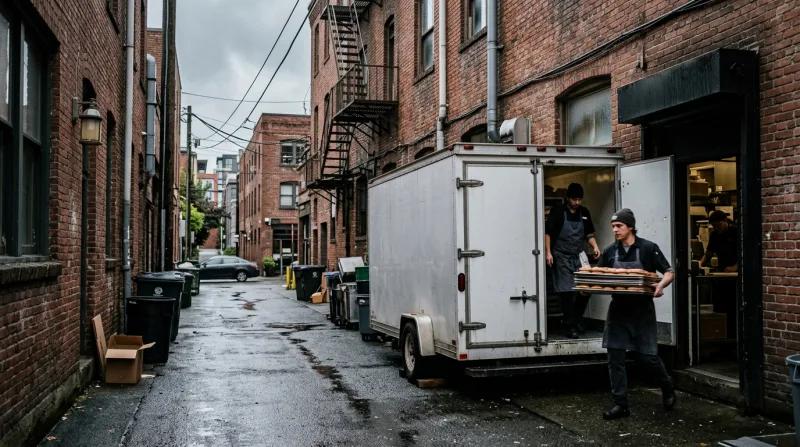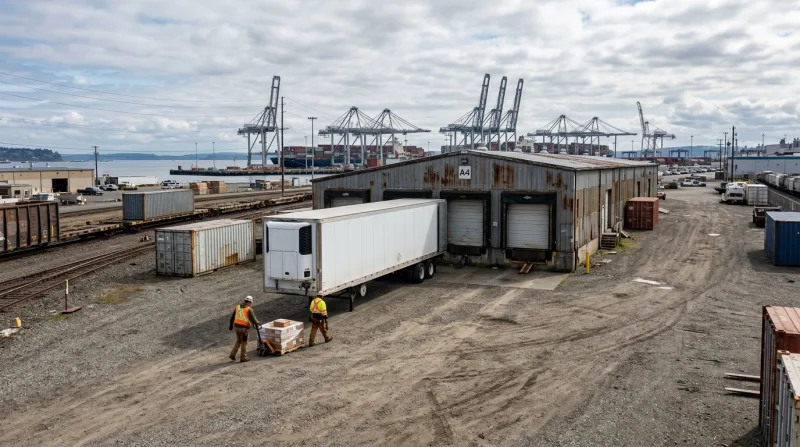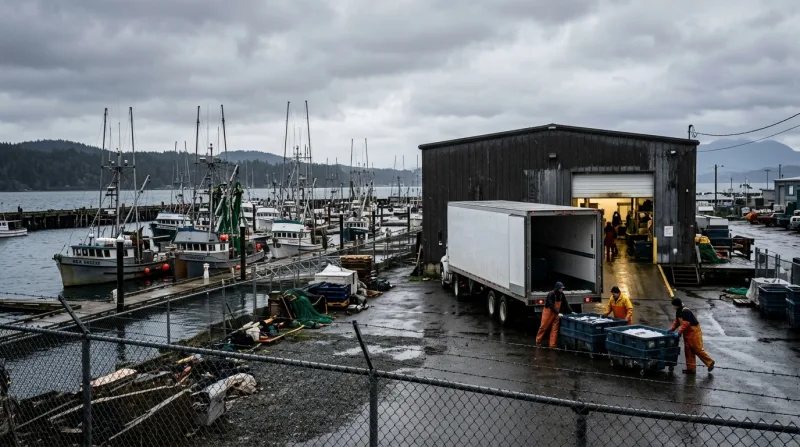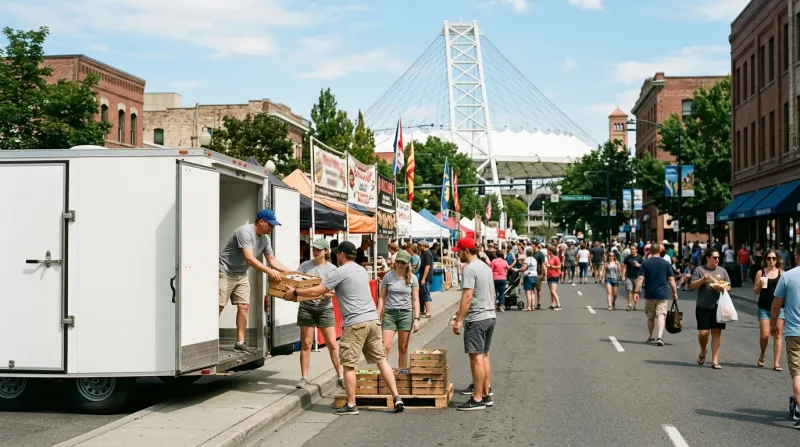

We are the freezer trailer team Washington businesses call when cold storage has to land ready and hold from the first hour. Our trailers arrive delivered, set up and already pulled down to temperature, whether the spot is a Ballard restaurant lot, a Wenatchee packing house yard or a vendor row at the Puyallup fairgrounds. Every unit works as a freezer or as a cooler, so one trailer covers frozen cases and chilled product on the same job. Call us or request a quote and we will confirm delivery dates for your site.
KryoFridge is the refrigeration arm of a family rental company with more than 30 years in the equipment and event rental business, and we run one of the largest freezer and refrigerated trailer fleets in the West. We own the trailers and we answer our own phones, so you deal with the company that owns the equipment instead of a broker shopping your job around. Every unit is licensed, insured and NSF ready, and dispatch picks up 24 hours a day. The fleet that keeps national restaurant and quick service brands running is the fleet that shows up for a seafood plant in Blaine or a grocery remodel in Spokane Valley. Call the number on this page or request a Washington freezer trailer quote and we will hold a delivery window for you.
Our trailers sit staged around Washington, fueled, pre-cooled, and maintained in-house, parked and waiting for the call rather than being sourced after it. That is why an emergency call usually puts a unit on your lot and pulling temperature in about 45 minutes.
The voice on the phone belongs to the same outfit that owns the trailer and sends the driver. No reseller in the middle quietly marking up somebody else's equipment while your inventory creeps past 40°F on the shelf.
Every unit is ours to own, service, and deliver, and each one swings between deep-freeze and fresh-cold on a precise digital set-point. So we can size the answer to your Washington job and turn it around the same day rather than putting you on next week's list.
National chains do not gamble on refrigeration. A drifting set-point during dinner rush can cost a brand a day of sales and a health-code headache, so the chains that scale fast vet a cold-storage partner the same careful way they vet a protein supplier. KryoFridge has held temperature for names like McDonald's, Chick-fil-A, and Dutch Bros, and earned the repeat call.
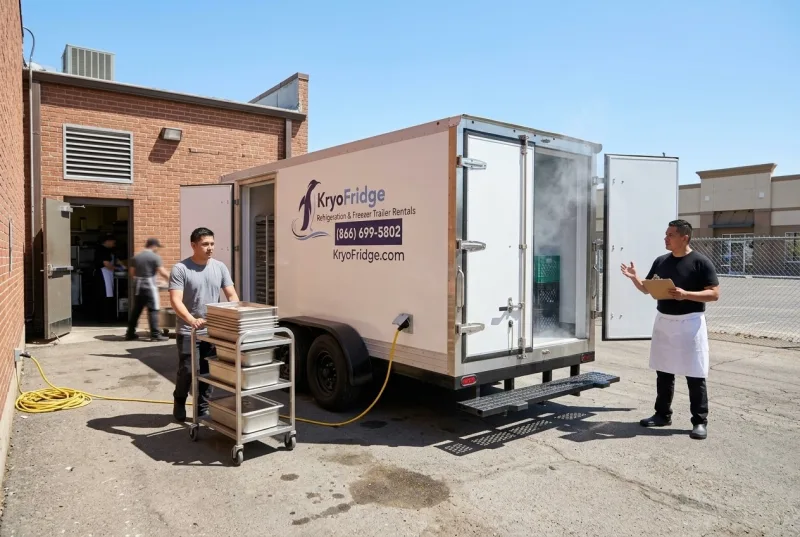
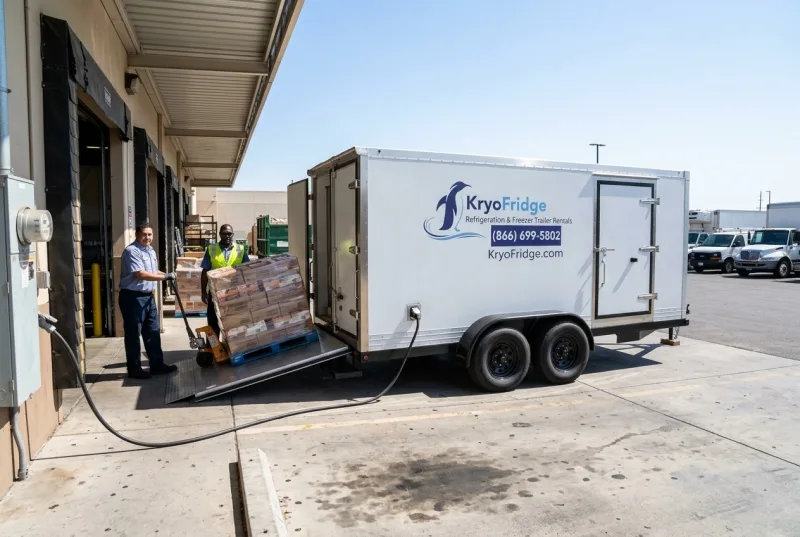
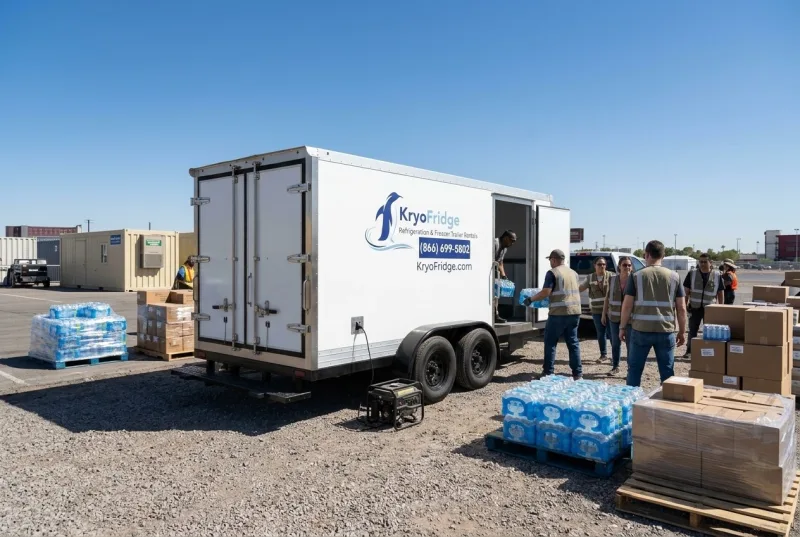
The stories behind that trust are the kind every restaurant owner recognizes. One Friday at 6:30 in the evening, a Chick-fil-A called in with a dead walk-in and a drive-through line already wrapped around the building. We prepped a trailer, dispatched it, and had it on their pad pulling temperature 34 minutes after the phone rang. The manager's first words when the driver pulled in were, "I cannot believe you are already here." That is the bar we hold ourselves to. Another year, an overnight outage shorted a cooler on the morning of a holiday rush, and our team staged three freezer trailers to hold every pie, every protein, and every prep tray so the kitchen served the rush without missing a ticket. The reason we hear some version of that line so often is the same every time: the equipment was already nearby, already cold, and owned by the people who answered the phone. That same standard travels to every Washington job, from a one-cook taqueria to a distribution floor.
"Our walk in quit on a Friday and I called expecting voicemail. Somebody picked up, asked two questions about the alley behind us, and we had a trailer in the loading zone before the dinner rush ended. We did not lose a case of product and we never closed the doors."
 Andrew C. · restaurant owner, Ballard, Seattle
"We re racked the entire frozen aisle and needed somewhere for three weeks of inventory. The trailer showed up the morning they said it would, held zero degrees the whole time without a hiccup, and the driver placed it exactly where our receiving door needed it. Easiest part of the remodel."
 Yarelii E. · grocery store manager, Spokane Valley
"Cherry week ran ahead of plan and we were out of staging room by Tuesday. They had two units in our yard by Thursday and we kept receiving fruit instead of calling growers to slow down. When the block was finished they picked them up the same week."
 mark m. · packing house supervisor, Wenatchee
Set points run from about 50 degrees down to minus 10 degrees, so the same unit that holds crab at a Westport plant in January can hold produce and dairy at 38 degrees for a Bellevue caterer in June. Look at our mobile cold storage lineup for sizes, then tell us the tightest corner of your lot and we will plan the placement with you before the truck leaves.
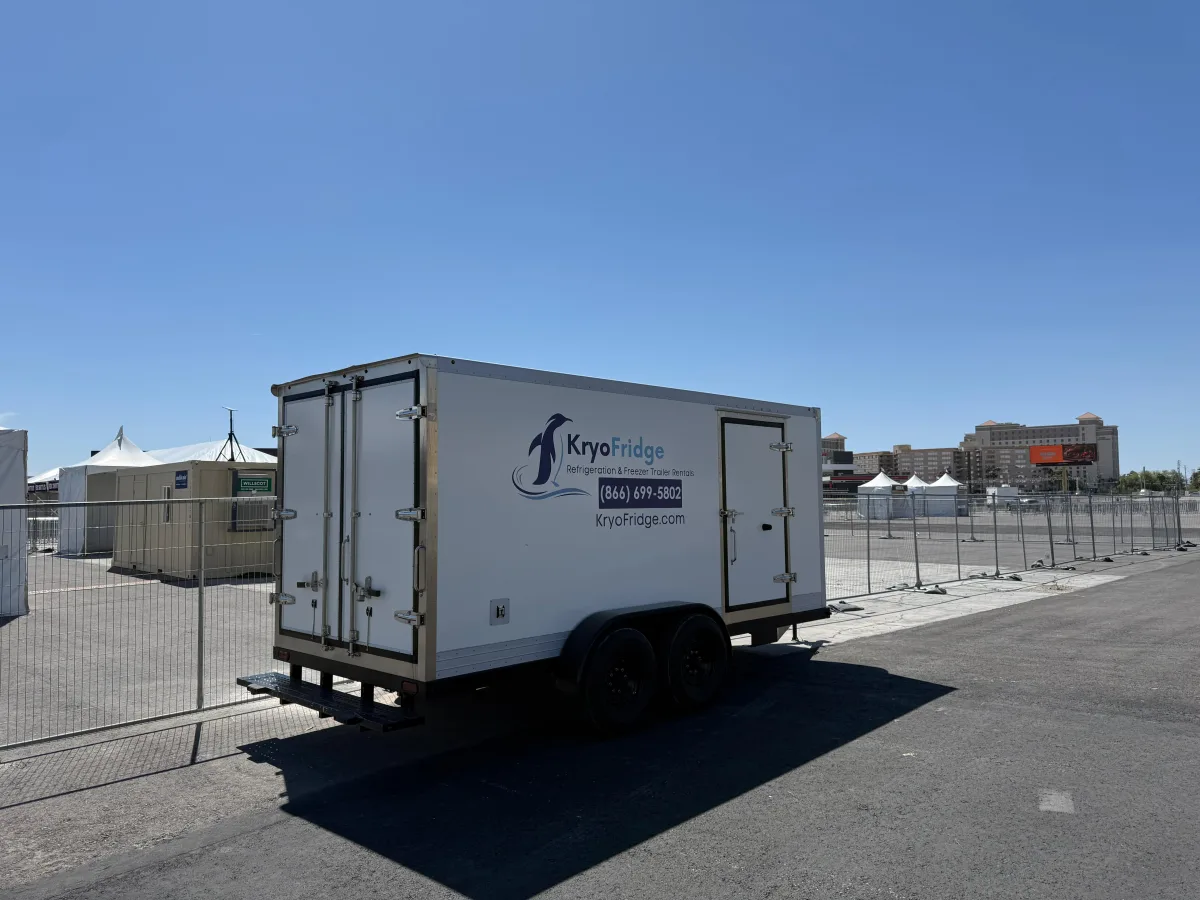
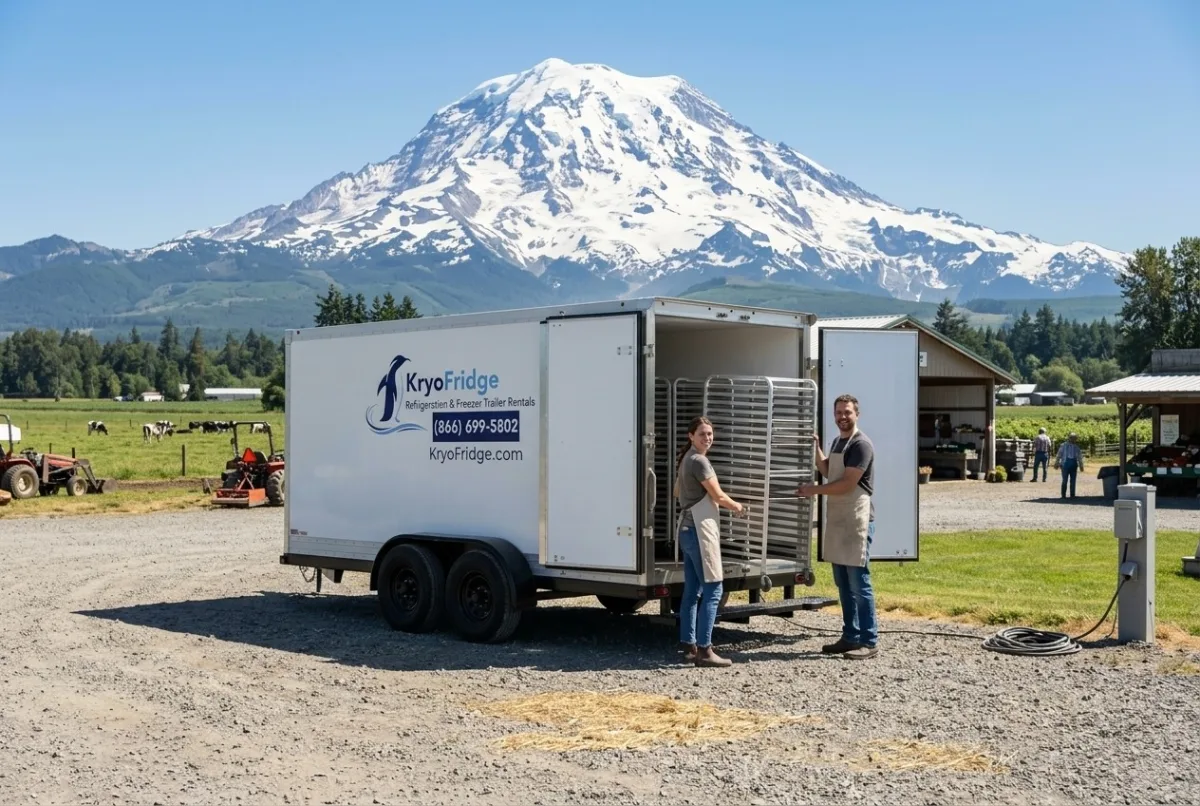
When the stakes are real, the 16' Utility is what we send. Sixteen feet of insulated, NSF-approved box on a tandem axle, running one precise digital set-point that covers deep freeze at -10°F all the way up to a 50°F cooler. The rear double doors handle pallet work off a dock, and the side utility door means a cook can pull one tray without letting the heat in.
The trailer that shows up is one of ours, prepped in our own shop, fueled and pre-cooled before it leaves the yard. It takes a dedicated 120V, 20-amp circuit or the generator we provide, and it will hold that set-point through a triple-digit stretch without drama.
| Spec | What you get |
|---|---|
| Temperature range | Roughly -10°F deep-freeze up to about 50°F fresh-cold |
| Mode | Dual-purpose: freezer or refrigerator on one precise digital set-point |
| Power | A dedicated 120V, 20-amp circuit within about 100 feet, or a generator we supply |
| Food safety | NSF-approved for direct food contact, food-safe surfaces, proper drainage |
| Footprints | 6x8, 6x12, and 6x16, from a tight retail lot to distribution scale |
| Backing | Owned in-house, fully licensed and insured, with 24/7 emergency dispatch |
Each unit holds a precise digital set-point and runs on a dedicated 120V/20A circuit or a generator. The trailers are not wired for 208 to 240V building service, so we confirm your hookup before the truck rolls.
We schedule deliveries to every corner of Washington, from the Bellingham waterfront to the Walla Walla wine district and out to the coast at Westport and Ocean Shores. Our nationwide freezer trailer rentals mean a Washington customer books off the same fleet as our home markets, on a confirmed date, with the same 24/7 dispatch behind it. Tell us the city, the surface and the power situation and we will size the job on the first call. Neighboring stops include Portland reefer trailer rentals and Oregon reefer trailer rentals.
Neighborhoods and towns we cover include Seattle, Spokane, Tacoma, Vancouver, Bellevue, Everett, Kent, Renton, Yakima, Bellingham, Kennewick, Pasco, Richland, Olympia, Auburn, Federal Way, Puyallup, Wenatchee, Mount Vernon, Longview, Walla Walla, Bremerton, Moses Lake, Ellensburg.
Every part of the Washington area rents cold storage for its own reasons. We know each one, and we deliver to all of them. City pages for this state: Seattle freezer trailer rentals.
One call sizes the trailer, sets the delivery window, and locks your quote for Washington. Call now, or send the quick quote request and we will call you.
Three parts of the Washington economy buy cold storage the same way, in a hurry and for a fixed window. Seafood landings on the coast and the north Sound, harvest in the Columbia Basin and the Yakima Valley, and an outdoor event season on both sides of the Cascades. Here is what each one looks like when a trailer shows up, and why a call two weeks early beats a call at midnight.
The walk in is where proteins, dairy, produce and prepped mise all live, so a failure stops service instead of slowing it. A trailer in the back lot becomes the walk in until the repair is finished. Call the moment you know, because the first hour is the one that saves product.
Refrigeration is usually the longest lead item in a remodel, and nobody wants to close for it. We hold frozen and chilled inventory on site for two to eight weeks while cases get replaced or a frozen aisle gets re racked, and the store keeps selling.
Western Washington outages are long as often as they are wide, because tree cover and steep terrain slow restoration. A trailer with a generator holds temperature whether or not the grid is back, which turns a multi day outage into an inconvenience instead of a total loss.
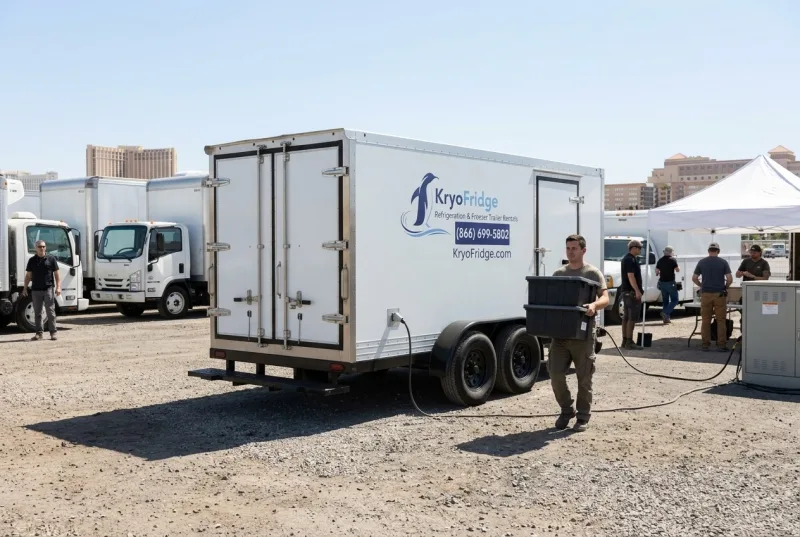
More than 300,000 acres burned in Washington in 2024, and base camps, shelters and feeding operations get stood up on ground with no infrastructure. We deliver to gravel, dirt and grass, and the unit works off generator power from the first hour.
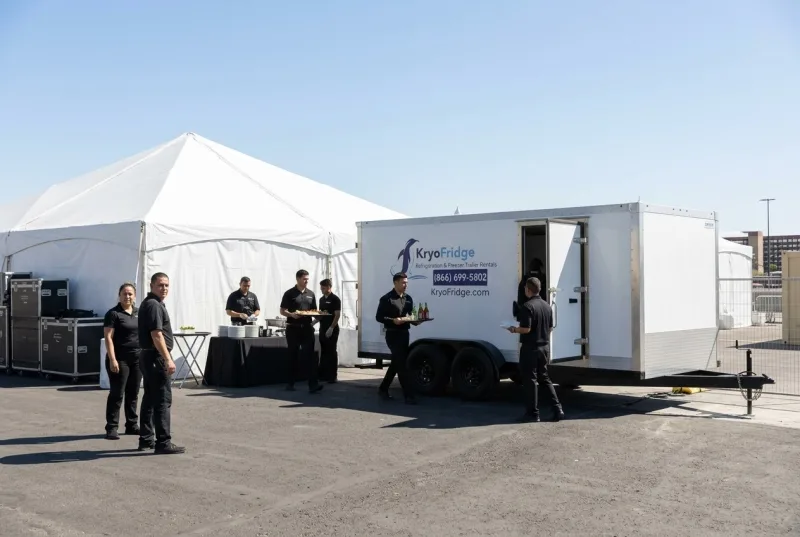
Seattle is the largest Alaska cruise homeport in the country, and the 2026 season is booked for 330 vessel calls. Provisioning, downtown hotel banquets and convention catering all peak between May and October, and rented cold space absorbs the weeks the house coolers cannot.
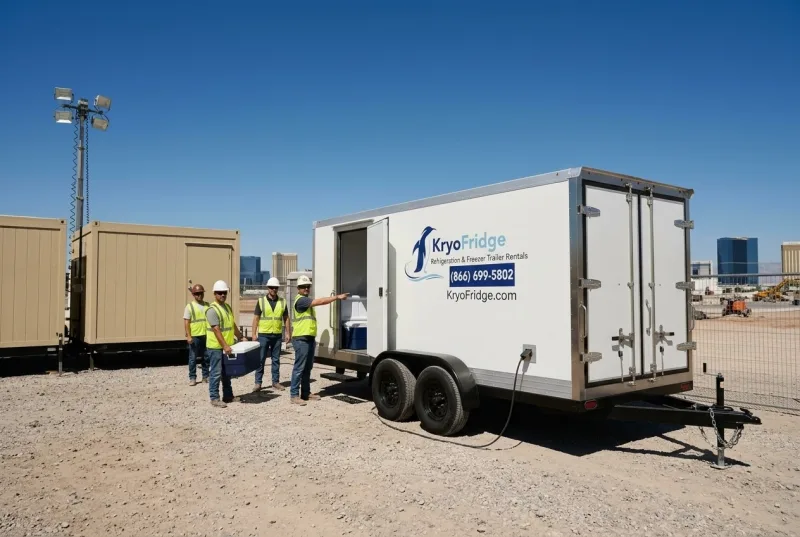
Refinery turnarounds at Ferndale and Anacortes, light rail work around Federal Way, and pass projects on I-90 all put large crews on site for weeks. Cold food and cold water on the job is a daily problem, and a refrigerated trailer solves it in one delivery.
What ties these together is the clock. Nobody budgets a freezer trailer into next quarter. They reach for one the hour a compressor quits, or the evening before a party when the stack of rented ice chests suddenly looks laughably undersized. Since our units sit staged around Washington instead of a couple counties down the freeway, "can I get it today" is an ordinary ask here, not a stretch.
Add it up the way an owner in Washington has to. One restaurant walk-in routinely sits on a small fortune in proteins, dairy, and prepped product. Scale that to a grocery rack or a warehouse freezer bay and the exposure balloons. Now knock the power or the compressor out on a triple-digit afternoon, and that whole inventory is in jeopardy inside a few hours. Then stack on the sales you lose while the line sits dark and the wages you burn paying staff to triage what can still be saved.
Hold a pre-staged trailer up against that risk and it reads like cheap insurance, a fixed, predictable expense parked in front of a loss with no ceiling. That is exactly why the businesses that got stung once tape our number by the phone. There is never a second scramble, because the next time they dial before the product has a chance to warm. Owning every trailer ourselves means we can scale the answer to fit. A single compact box suits a corner cafe. A clustered setup covers a warehouse floor. Either turns around the same day.
The June 2021 heat dome is still the reference point. Seattle hit 102 degrees on June 26, 104 on June 27 and 108 on June 28, an all time record, and Hanford in the Columbia Basin reached 120 degrees on June 29, the hottest temperature ever officially recorded in the state. Roads buckled, power cables melted and more than 250 people across the Pacific Northwest died. Refrigeration equipment specified for mild marine air does not hold capacity in that kind of heat, and a lot of walk in coolers in this state discovered their real limits that week.
Winter is the other half of the story, and it is the half that costs food businesses the most. The bomb cyclone of November 19 and 20 in 2024 cut power to more than 600,000 customers in western Washington, with over 400,000 in Puget Sound Energy territory, about 73,000 at Snohomish County PUD and nearly 60,000 at Seattle City Light, on gusts that reached 75 mph. More than 200,000 customers were still dark two days later. Heavy tree cover and steep ground make restoration slow, so an outage here is measured in days rather than hours.
East of the Cascades the pressure is simply summer. Yakima, the Tri Cities, Moses Lake and Walla Walla spend long stretches of July and August in the 90s and into triple digits, and a rooftop condenser loses capacity fast in that air while a packing house is at its fullest. West of the mountains the enemy is humidity, which loads evaporators year round and drives icing and drain problems in older walk ins.
Washington is one of the few places where the cold chain is the business, not a support function. Bellingham Cold Storage grew into one of the largest cold storage operations in North America, and in April 2025 Lineage acquired three of its warehouses totaling roughly 24 million cubic feet and about 85,000 pallet positions. The Port of Bellingham has also signed a 50 year lease extension on that waterfront. None of that permanent capacity changes the basic problem during a landing week, which is that product arrives faster than a plant can move it.
Westport is the biggest commercial fishing port on the Washington coast, working Dungeness crab, albacore tuna, pink shrimp and groundfish, and Westport Seafood holds product in a cold storage building of about 14,700 square feet. A crab opening does not spread itself out politely across a month. Boats run when the weather allows and the plant fills in days. A trailer in the yard buys a processor the room to keep buying instead of turning boats away, and it is a rental that ends when the season does.
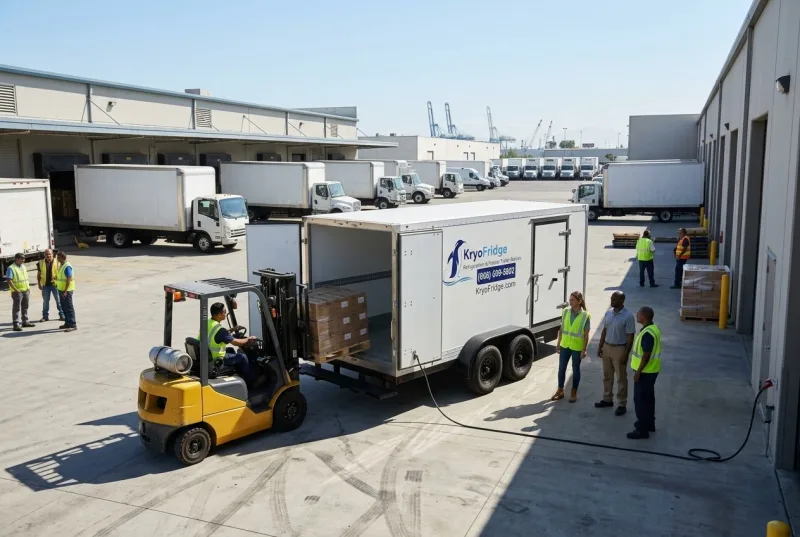
The same pattern repeats at Blaine Harbor and Drayton Harbor in the far northwest corner, at Anacortes on Fidalgo Bay, at Ilwaco and Chinook near the mouth of the Columbia, and at Fishermen's Terminal on Salmon Bay in Seattle, where much of the North Pacific fleet winters, refits and crews up before running north. Whatcom County's yards even built the Hannah for Northline Seafoods, a 400 foot freezer barge that headed for Bristol Bay in spring 2025 as a floating buying and freezing plant. Washington builds and services Alaska's cold chain along with its own.
What a plant supervisor actually needs from us is simple. A unit that holds hard frozen without argument and a delivery that fits a pier apron or a plant yard. Then a phone number that gets answered at four in the morning when the freezer alarm goes off. Tell us the landing window and the volume and we will schedule the drop ahead of it. If you are already full and the boats are still coming, call and we will tell you the soonest date we can put a trailer in your yard.
Washington holds the largest controlled atmosphere storage capacity of any growing region in the world, and it is still not enough during peak weeks. As of May 2025 the state held about 14.59 million bushels in regular storage alongside about 46.87 million bushels in controlled atmosphere rooms, and the 2025 and 2026 crop came in near 180 million bushels. Those rooms cluster around Wenatchee, the Yakima Valley and the Columbia Basin. When a packing house is loading a room, every pallet that cannot go in yet has to go somewhere, and that somewhere is usually a trailer in the yard.
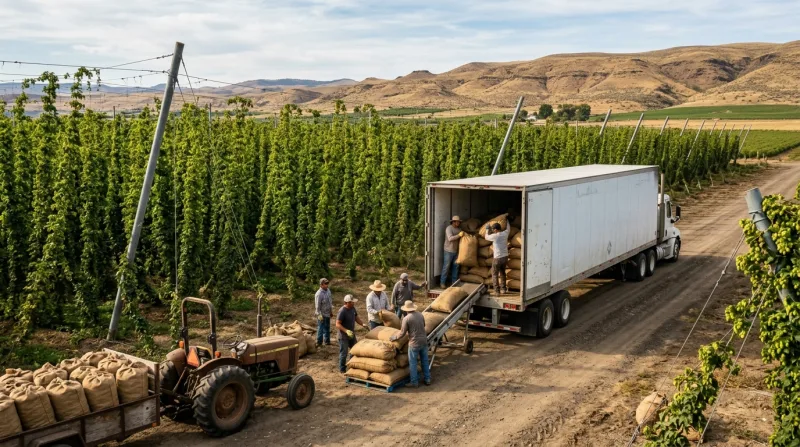
Cherries are the least forgiving cold chain in the state. Fruit is picked, hydro cooled within hours and shipped within days from June into August, so a cooling shortfall during a cherry week is a loss, not a delay. Hops are close behind. Roughly 75 percent of the nation's hops grow in the Yakima Valley, USDA put the 2025 Washington harvest near 62 million pounds, and just over 42,000 acres were strung that year. Picking, kilning and baling run from mid August into late September on a clock, because hop oils give up quality in heat.
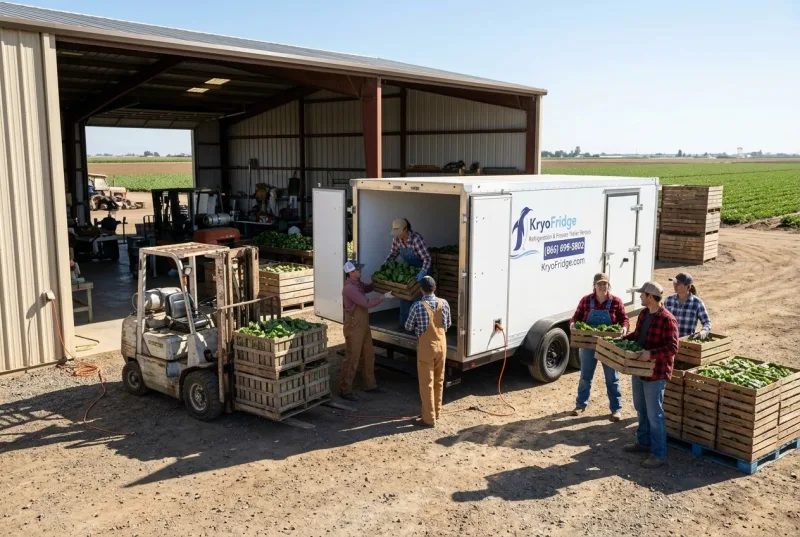
The Columbia Basin adds a second layer. Grant County claims the title of the nation's leading potato producing county, and processors like Lamb Weston sit right in the middle of that crop around Quincy, Warden, Connell and Pasco. Dairy is bigger than most people outside the state realize. Darigold began taking milk at its new Pasco plant in June 2025, processing up to 8 million pounds a day from more than 100 regional farms, part of the largest wave of dairy investment Washington has seen in a generation. Plants that size schedule shutdowns, and a shutdown needs somewhere for product to live.
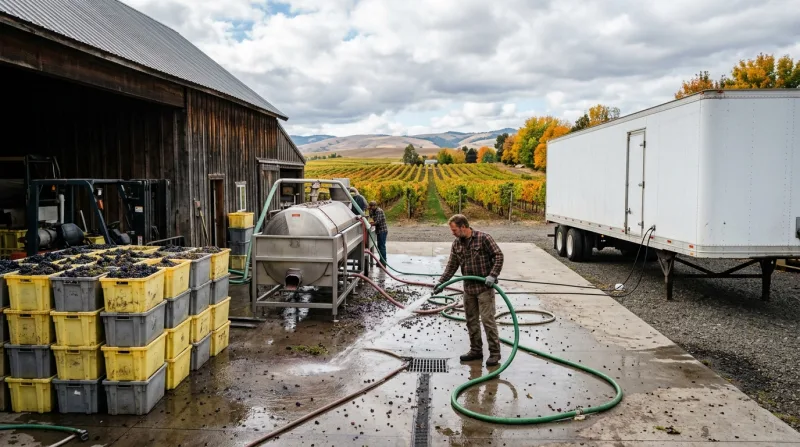
Wine harvest overlaps all of it. Crush runs late August into October across the Yakima Valley, Red Mountain, Prosser, the Horse Heaven Hills and Walla Walla, and fruit that comes in warm has to be chilled before it goes to the press. We rent to growers, packers, co ops, processors and wineries on scheduled multi week holds, which is the easiest kind of rental to plan. Give us your first pick date and we will build the delivery around it.
The Washington State Fair in Puyallup ran August 29 through September 21 in 2025 for its 125th year, and about 912,000 people came through in 2024. Hundreds of food vendors work that midway with almost no permanent cold storage behind them. Bumbershoot returned to Seattle Center over Labor Day weekend, Seafair ran from June 20 through August 3 with Fleet Week at the end of July, and Capitol Hill Block Party took over two July days on Pike and Pine. Every one of those events has the same back of house problem, which is that the food shows up before the room to keep it does.
East of the mountains the venues get bigger and the shade disappears. Watershed filled the Gorge Amphitheatre at George on August 1 through 3 in 2025, and the Gorge also carries Beyond Wonderland and the long standing Labor Day run. Hoopfest turns downtown Spokane into the largest three on three basketball tournament in the world every June, and Pig Out in the Park spends Labor Day week in Riverfront Park as a pure food vendor event. Add the Central Washington State Fair in Yakima, the Benton Franklin Fair in Kennewick and the Clark County Fair near Ridgefield and the calendar barely takes a breath.
Health rules make this concrete rather than optional. Washington's retail food code requires time and temperature control foods to be cold held at 41 degrees or below, and a temporary food establishment has to hold product in prechilled mechanical cold holding equipment or another approved method. One trailer parked behind a vendor row is the cheapest way for an event producer to satisfy that for everyone at once, and it doubles as the ice and beverage hold when the afternoon gets warm.
Film and television work has come back to Washington on the strength of a rebuilt incentive. The state more than quadrupled annual funding for the Motion Picture Competitiveness Program in 2022 and expanded eligibility for commercials again in 2025, with tiered minimum spends for film, television and commercials and stacked rates that reach 30 percent on resident payroll, up to 35 percent for episodic series of six or more episodes, and an uplift for shooting in rural counties. A location shoot in the San Juans, the Methow or the Olympic Peninsula puts 60 to 200 people somewhere with no kitchen and no walk in. Craft services and catering need real cold storage for the length of the shoot, and we rent by the week.
"Cold" is not one number. Different product stays safe inside different temperature windows, which is the entire reason a precise digital set-point matters, and in the middle of a heat wave in Washington, a load that slips out of its window is a load you write off. Use the chart below as the reference our customers lean on when they size a rental.
| Product | Target holding band | Trailer mode |
|---|---|---|
| Ice cream and frozen desserts | -10°F to 0°F | Deep freeze |
| Frozen proteins, seafood, prepared meals | 0°F or below | Freezer |
| Fresh meat and poultry (short hold) | 28°F to 32°F | Refrigerated |
| Dairy, deli, packaged produce | 34°F to 38°F | Refrigerated |
| Beverages, florals, catering trays | 38°F to 45°F | Refrigerated |
One figure outranks everything in that chart, and it is not listed there: 40°F. Food-safety guidance treats the band between 40°F and 140°F as the zone where bacteria thrive, and the clock on perishable product starts ticking the moment it crosses 40 on the way up. Roughly four cumulative hours above that line and most refrigerated inventory is no longer safe to serve. Picture that countdown running on a 100-degree afternoon in Washington with the walk-in dark, and the urgency of a quick trailer drop stops being abstract.
Tell us the single coldest item you are holding when you call, and we dial the trailer to that. One unit carries a straight freezer load with no fuss. But when your list mixes deep-freeze desserts with fresh-cold produce for the same remodel or event, we will usually point you toward a split setup or a second box so neither side of the load has to settle for the wrong temperature.
Powering one of our trailers is refreshingly simple, and there are precisely two ways to do it. Either you have a dedicated 120-volt, 20-amp circuit reachable within roughly 100 feet of the parking spot, or we bring a generator. What the units will not accept is standard 208 to 240V building service, so a quick question about your outlet before dispatch heads off any surprise on delivery day.
On placement, all the unit really asks for is a fairly flat patch with enough room for the delivery truck to maneuver it in and set it straight, plus either a power source in reach or space for a generator. We lock down the exact drop point before dispatch, and our drivers know the Washington layout cold, so the delivery is one clean trip instead of a guessing game on the property.
A compressor died in a basement walk in on a Friday afternoon with a full book for the weekend and a private buyout on Sunday. Roughly 900 pounds of protein and every prepped item for three services were at risk. A trailer went into the loading zone behind the building, product moved across in about two hours, and the restaurant never posted a closure. The unit stayed eleven days while the compressor was sourced and installed.
Cherry volume came in ahead of forecast in the second week and the house ran out of room to stage fruit between hydro cooling and loading. Two trailers went into the yard on a scheduled drop and held staged pallets at 34 degrees through the peak. The crew kept receiving instead of turning growers away, and both units went home when the last block was picked.
A nine day event with more than 40 food vendors had no shared cold storage plan two weeks out, and the health permit required mechanical cold holding. One trailer behind the vendor row became the cold room for the whole midway, with each vendor assigned a shelf and a pull time. The producer has scheduled the same setup every year since.
One fleet, one company, from the West Coast to your Washington yard. We are a direct owner operated rental company, not a broker, so the trailer that arrives in Bellingham or Kennewick comes off the same fleet and gets the same service as our home markets. The trucks that handle California cold storage trailer rentals run north on scheduled deliveries, which means a Washington customer books real equipment on a real date instead of a subcontractor's maybe. Tell us your window and we will tell you exactly what we can do.
On a bad day, booking should be the part that does not add stress. Four steps, an upfront number, and a single person who owns the whole thing.
Tell us whether it is freezer or fridge product, a ballpark volume, and your rough window. That is enough for us to call the right size.
We pair you with a unit, confirm whether you have a dedicated circuit or need a generator, and pin the exact drop point so the truck makes one trip.
We arrive on your schedule, about 45 minutes for a true emergency, set the trailer, energize it, and let it drive down to your number.
It holds the set-point for your entire term while our line stays live the whole way through. Wrap up, and we swing back for the pickup.
Washington's outdoor heat exposure rule, WAC 296-62-095 through 296-62-09560, became permanent on July 17, 2023 and now applies year round instead of only from May through September. The action level for most outdoor work is 80 degrees, lowered from 89, with escalating protections at 52, 80 and 90 degrees depending on clothing and work intensity. At 90 degrees employers owe paid cool down periods of at least 10 minutes every two hours, and they also have to supply enough drinking water for a quart per worker per hour, provide shade, train the crew and keep a written safety program. Cold water and cold food on site are part of how a supervisor actually meets that.
On the food side, the Washington State Retail Food Code, chapter 246-215 WAC, sets the number an inspector checks. Time and temperature control foods are cold held at 41 degrees or below. A temporary food establishment operates at a single location with a fixed menu for fewer than 21 days, or up to three days a week for an approved recurring event, and the person in charge has to keep product at 41 degrees or less during transport and hold it in prechilled mechanical cold holding equipment or another approved method. Our trailers hold well under that number and give a vendor row one place to prove it.
Permits are local and the deadlines are real. Public Health for Seattle and King County lets an event coordinator pull a blanket temporary food permit covering every vendor instead of each booth pulling its own, and that application and fee are due 30 days before the event. Equipment set in a Seattle public right of way generally needs a street use permit, and fire code rules govern generator clearance and fuel, which is why most placements go in a private lot. At the federal level, the heat standard OSHA is writing is still a proposed rule, so plan against the Washington rule already in force.
One caveat we always state plainly: we supply the food-safe, temperature-holding hardware itself, but we are not a temperature-logging or alarm-monitoring service. If your program requires continuous written records, line that vendor up on your own.
Our signature 16 foot Utility series leads the fleet. It is the trailer we send on most jobs, and crews like it for the side utility access door. We build three footprints in all, so a single kitchen holding overflow stock has a fit and so does a distribution floor in a disaster. Every unit is dual purpose by design: one adjustable system swings between freezer and refrigerator on a digital set point. Each trailer runs on a dedicated circuit or on a generator.
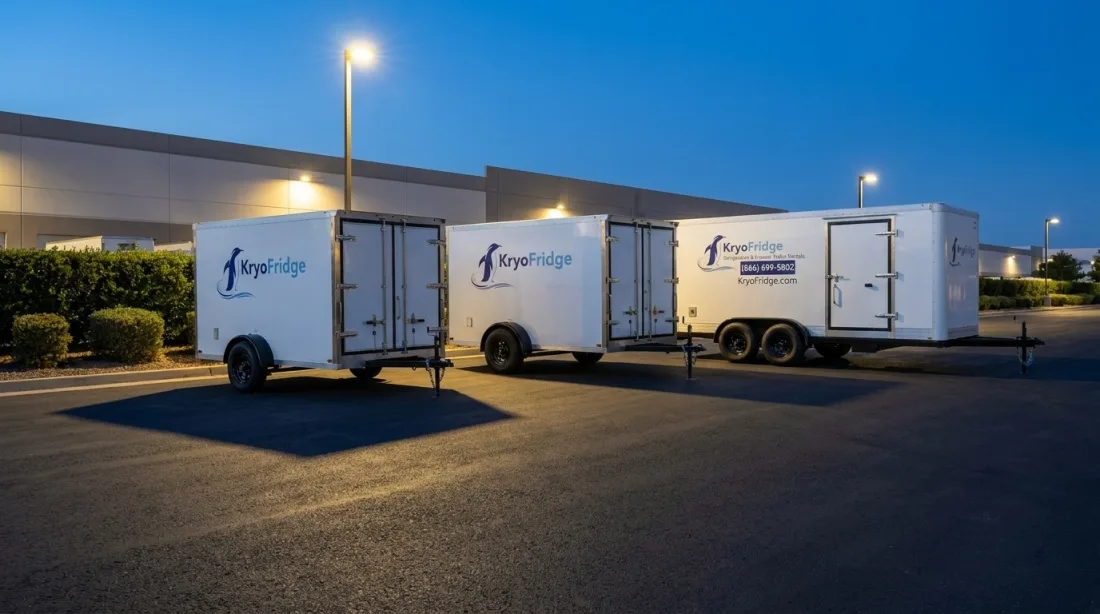
| Trailer | Best for | Temp range |
|---|---|---|
| 6x16 Utility ⭐ | Our signature series: distribution, large events, disaster response, side utility door | Heavy-duty reefer |
| 6x12 | Grocers, caterers, mid-size events | Deep-freeze capable |
| 6x8 | Tight lots, small kitchens, short overflow | -10°F to 50°F |
Each unit holds a precise digital set-point and runs on a dedicated 120V/20A circuit or a generator.
Think eight or so pallet spots, and the unit to grab when square footage is the whole problem. It slips into the pinched service yards and cramped back-of-house corners that a larger box cannot even swing into. One cafe or small-market walk-in goes down, and this is almost always enough cold to cover it, plus the simplest unit to set in a small space.
Call it fourteen pallet spots, deep-freeze rated, and far and away the size people ask for most. It lands right in the middle: roomy enough for a multi-day catering job or a restaurant that needs true walk-in-equivalent room while the kitchen is torn up. Roomy enough that nobody is playing Tetris with shelves, yet still small enough to set in most commercial back lots without a site survey.
Roughly twenty pallet spots paired with a heavy-duty reefer plant engineered to keep deep-freeze locked in even when the ambient air is merciless. Reach for it when a warehouse bay drops, when a large festival needs an anchor, or when a relief operation is carrying its own cold chain.
Not sure which size fits? Most customers land on the 16 foot Utility, and we will tell you honestly if a smaller footprint covers your job. Tell us roughly what you are storing and for how long, and we will spec it for you.
The questions that surface once the basics are settled. Tap any topic to open it.
The pop-up walk-in cooler. Cheap to rent and easy to set up, but it chills, it does not freeze, and it draws every watt it needs from your building while depending on a calm ambient temperature around it. The second your building loses power, your cooler loses it too.
The refrigerated box truck. Designed to haul product on the interstate, not to sit in a lot and babysit it. Parked, it idles fuel all day, broadcasts compressor noise across a storefront or an event lawn, and pins down a tractor plus a driver you probably do not need.
The freezer trailer we deliver. Built from the ground up to be dropped on a pad and to defend a temperature for as long as the job runs. It freezes deep, carries NSF approval, locks, stays quiet near guests, and lives on nothing more than one dedicated circuit or a generator.
Even a rented box has to satisfy the county environmental health office that licenses and inspects every food facility. Show an inspector a unit that cannot document its temperature or was not built for food contact, and they have the authority to halt service immediately.
That is a bar each of our trailers clears: NSF-approved throughout, food-safe interior surfaces, proper drainage, and a digital controller that puts the set-point in plain view. We supply the food-safe, temperature-holding hardware itself, but we are not a temperature-logging or alarm-monitoring service.
For a typical kitchen or market, one box does the job. Distribution floors, big fairs, and full-scale disaster response routinely need more, and because the fleet is ours, we can cluster several units and bring them online in waves as the work expands. Match the cold capacity to the operation rather than make the operation squeeze itself into one box.
The clock is yours to set. Some jobs are a handful of days for an emergency or a single event. Others stretch across weeks or months for a remodel or a seasonal swell, and a few become standing contracts for businesses that want capacity parked on standby. Name your window and you will get a clean quote, no penalty for an honest "not sure yet."
Building permanent cold storage is a capital project in every sense: you hire a refrigeration contractor, schedule the electrical, pull a building permit, and wait weeks before a single pallet goes inside. A rental turns that equation on its head. You bring in precisely the cold you need, for precisely the stretch you need it, and the trailer is holding temperature that same week, frequently that same day, with the commitment ending the moment your need is over.
Three engineered elements carry the load. Thick insulated panels and tightly gasketed doors lock the sun outside and the cold inside. A self-contained reefer condensing system specified with surplus capacity keeps stripping heat out of the box even when the air outside is brutal. And a digital thermostat locks onto your chosen number and cycles the compressor to hold the line. Run those three together and a trailer baking on open asphalt behaves like one tucked in a cool warehouse. That is also why power is the first thing we ask about: the design delivers its safety margin only on steady, uninterrupted power.
"Forty plus food vendors and no shared cold storage plan. One trailer behind the vendor row solved the permit question and the logistics question at the same time. We assigned shelves and pull times and the health inspector had nothing to write up."
 Carol H. · event producer, Puyallup
"Crab opening filled us up faster than the freezer could keep up with. Their unit held hard frozen through the entire run and nobody had to babysit it. Dispatch answered every time I called, including once at four in the morning."
 DEJAY O. · plant supervisor, Westport
"We stage a lot of banquet product for convention work and the venue cold room is never big enough. Having a cooler trailer on site for the week means we prep on our own schedule instead of the building's. It has become part of how we bid the big jobs."
 Jadan R. · catering director, Bellevue
"Fresh hop season is a week of chaos and cold hops are the whole point. The trailer let us take delivery straight off the farm and hold everything cold until the brewhouse was ready. Set point was rock solid the entire time."
 Kj H. · brewery owner, Yakima
"Summer freezer replacement across two school kitchens meant moving a lot of frozen inventory with nowhere to put it. One trailer covered both sites over five weeks and we did not throw away a single case. They walked us through power before we signed anything."
 John H. · nutrition services director, Vancouver
"We were 90 minutes from the nearest grocery store with a crew of 70 and no kitchen anywhere near us. The trailer ran off our production generator and gave catering an actual cold room for three weeks. It made the location possible."
 Shannon B. · line producer, Olympic Peninsula shoot
"Our blast freezer went down during a landing and we could not stop taking product. They had a trailer at our door and it held everything we moved into it. Honestly the fastest anyone in this industry has ever answered my call."
 Randi P. · operations lead, Bellingham seafood processor
Sample reviews written to mirror genuine Washington situations, to be replaced with verified Google reviews ahead of launch.
Yes. We schedule deliveries statewide, from Bellingham and the north Sound down the I-5 corridor to Vancouver, east over the passes to Spokane and the Columbia Basin, and out to the coast at Westport, Aberdeen and Ocean Shores. Because Washington sits outside our home yards, the honest answer is that scheduled deliveries work best here, so give us as much notice as you can. Call us with your city and your date and we will confirm the earliest window we can hold.
There are exactly two options. The trailer runs on a generator that we supply, or on a dedicated 120 volt 20 amp circuit within 100 feet of where the unit sits. That circuit has to be dedicated, meaning nothing else is sharing it, and 100 feet is the working limit. On event sites and remote shoots the generator is usually the simpler answer, and on a restaurant or grocery lot the dedicated circuit is often already there.
Set points run from about 50 degrees at the warm end down to minus 10 degrees at the cold end. That covers chilled produce and dairy, standard frozen storage at zero, and hard frozen product like seafood and ice cream. You set the temperature you need on the digital control and the unit holds it. We do not sell temperature logging or alarm monitoring as a service, so if your food safety plan requires documented records, plan for your own monitoring the way you would in any rented space.
Yes, and this is one of the real advantages of our fleet. Every unit is dual purpose, so the same trailer that held hard frozen cases last month can run at 38 degrees for produce, dairy and prepped food this month. You can also change the set point during a rental if your needs shift, for example holding frozen product during a remodel and then switching to chilled for a catering push.
Dispatch answers 24 hours a day and we will tell you straight what is possible for your address and the hour you are calling. In our home markets we have put trailers on site inside an hour of the phone ringing, including a Chick-fil-A that called at 6:30 on a Friday evening and had a unit on site in 34 minutes. Washington deliveries are scheduled from our fleet, so call the moment you know you have a problem and we will give you a real window instead of a guess.
The trailer itself is equipment, but the food service around it is permitted. Public Health for Seattle and King County issues temporary food establishment permits, and an event coordinator can pull a blanket permit covering every vendor rather than each booth applying separately, with the application and fee due 30 days before the event. Other counties run their own version of the same thing. If the unit will sit in a public right of way rather than a private lot, expect a street use permit as well.
Under the Washington State Retail Food Code, time and temperature control foods have to be cold held at 41 degrees or below. Temporary food establishments must keep product at 41 degrees or less during transport and hold it in prechilled mechanical cold holding equipment or another approved method, with temperatures verified by stem thermometer or thermocouple. A trailer set at 36 to 38 degrees gives a whole vendor row a comfortable margin under that number.
That is one of the strongest reasons Washington businesses rent one. The November 2024 bomb cyclone cut power to more than 600,000 customers in western Washington and left over 200,000 still dark two days later. A trailer on generator power does not care what the grid is doing, so your frozen and chilled inventory keeps holding while the utility works its way down the line. If a storm is in the forecast and you have inventory you cannot replace, call before it lands rather than after.
Anywhere from a few days to many months. Emergency rentals often run one to three weeks while a compressor is sourced and installed, remodels usually run two to eight weeks, harvest and season rentals run the length of the crop, and film and construction projects sometimes keep a unit for a full production or build. Long rentals are the easiest kind for us to plan around, so tell us the honest end date and we will build the schedule to match.
Call and ask. Most of what people want to know comes down to power, placement, temperature and dates, and five minutes on the phone usually settles all four. You can also read through our common cold storage trailer questions for the short answers, then request a quote when you are ready and we will confirm what we can deliver and when.
Deeper reading for local businesses, from the failure-hour playbook to compliance and seasonal planning. Tap any guide to open it.
Washington runs one of the more developed heat safety rules in the country, and it has been tightened twice in recent years. The Department of Labor and Industries filed permanent rulemaking on June 27, 2023 for WAC 296-62-095 through 296-62-09560, effective July 17, 2023. The most important structural change is that the rule now applies year round to outdoor work. The older version only ran from May through September, which left spring and fall heat events uncovered.
The action level for most outdoor work is now 80 degrees, lowered from 89 degrees. Protections escalate at 52, 80 and 90 degrees depending on how heavy the clothing is and how hard the work is, so a crew in non breathable protective gear hits requirements at a much lower temperature than a crew in normal work clothes. At 90 degrees the rule requires paid cool down periods of at least 10 minutes every two hours.
Washington agriculture does not need cold storage evenly through the year. It needs an enormous amount of it during a handful of compressed windows, in places where every permanent room is already committed. Understanding that calendar is the difference between a planned rental and a panicked one.
Cherries open the season. The Washington crop runs roughly June into August, and it is the least forgiving cold chain in the state. Fruit is picked, hydro cooled within hours and shipped within days. There is no version of a cherry program where product waits comfortably. When volume runs ahead of forecast, and it often does, the shortfall shows up as staging space between the cooler and the truck rather than as a lack of cooling capacity itself.
Northwest Horticultural Council, controlled atmosphere storage
Ask a Washington restaurant owner about their worst refrigeration week and most of them will not describe a compressor failure. They will describe a windstorm. The reason is simple: a failed compressor takes out one box, while a windstorm takes out the whole block for days.
The benchmark event is recent. On November 19 and 20, 2024 a bomb cyclone off the Washington coast cut power to more than 600,000 customers in western Washington. Puget Sound Energy carried over 400,000 of those, Snohomish County PUD about 73,000 and Seattle City Light nearly 60,000. Gusts reached 75 mph. Two days later more than 200,000 customers were still without power, and one person was killed by a falling tree.
Washington runs one of the busiest outdoor event calendars in the West, and almost none of the venues carry permanent cold storage sized for the crowd. The Washington State Fair in Puyallup ran August 29 through September 21 in 2025 and drew about 912,000 people the year before. Bumbershoot takes Seattle Center over Labor Day weekend, Watershed puts three days on the Gorge at George, Hoopfest closes downtown Spokane and Pig Out in the Park is a food vendor event from end to end. Every one of them has the same back of house question.
Start with the rule the permit is written against. Under the Washington State Retail Food Code, chapter 246-215 WAC, time and temperature control foods must be cold held at 41 degrees or below. A temporary food establishment is one that operates at a single location with a fixed menu for fewer than 21 days, or up to three days a week for an approved recurring event. The person in charge is responsible for keeping product at 41 degrees or less during transport and for holding it in prechilled mechanical cold holding equipment or another approved method.
Washington State Department of Health, temporary food events
Grab a quick, no-runaround quote, or ring our round-the-clock line for emergency cold storage anywhere across Washington and the surrounding area.
We added these Washington cities to the delivery map. The trailers, the temperature logging and the crew on the phone are the same ones the rest of the state already relies on.