
Portable Refrigerated Freezer & Refrigeration Trailer Rentals in Boulder City, NV
A walk-in quits in the July heat. A festival needs bulk cold storage on open park ground with no cooler in sight. Both are the same call to us. KryoFridge rolls a mobile freezer trailer into Boulder City that runs cold the minute it lands, and one dial takes the same unit from a cooler's chill down to a deep freeze. We dispatch across Southern Nevada around the clock.
Boulder City's Refrigerated Trailer Team, Trusted Year After Year
For years we have kept cold storage running across Boulder City and the wider Southern Nevada corridor. Think of the family diners on Nevada Way, the festival grounds at Bicentennial Park, and the solar crews out in the Eldorado Valley. We have parked trailers at all of them. KryoFridge is backed by more than 30 years in the event and equipment rental industry, and we run one of the largest refrigerated and freezer trailer fleets in the West, more units than any competitor in our markets. We own that fleet and dispatch it ourselves. We are not a reseller and not a broker, so when you call about Boulder City you reach the people who own the trailers. We are licensed and insured. Our trailers have kept some of the most recognized names in America running, from McDonald's to Chick-fil-A to Dutch Bros Coffee. Boulder City gets that same crew on every job.
We own every trailer we send
KryoFridge is the direct owner-operator, not a reseller. The trailer at your Boulder City curb is ours, dispatched by our own team. There is no third party to phone and no middleman markup.
One dial, cooler or deep freeze
Every unit we bring is a single adjustable trailer. Turn the dial, and it holds anywhere from a cooler's chill down to a hard freeze. One trailer covers produce today and frozen protein tomorrow.
One of the largest fleets in the West
We run more refrigerated and freezer trailers than any competitor in our markets. So a downtown walk-in emergency and a 100,000-person festival can both get served the same weekend, with no wait on someone else's equipment.
Self-powered for open ground
Out at a marina lot or a solar staging area, there is no wall to plug into. Our trailers run on a generator we bring, so cold storage lands wherever the job is. A dedicated 120 volt, 20 amp circuit within 100 feet works too.
Answered around the clock
A compressor does not quit on a schedule. We run 24/7 emergency dispatch, and Boulder City sits right on the Interstate 11 freight corridor, so a trailer can reach a dinner-service failure the same evening.
Trusted by national names
Backed by more than 30 years in the event and equipment rental industry, licensed and insured, our trailers have kept McDonald's, Chick-fil-A, and Dutch Bros Coffee running. Boulder City gets that same track record.
We own the fleet you are calling. Plenty of cold-storage listings in Southern Nevada are resellers. They broker someone else's trailer and slip a layer between you and the equipment. KryoFridge is the direct owner-operator. In a Boulder City emergency, that means no middleman relaying your call and no wait on a third party to confirm a unit. Just our own trailers and our own dispatch team, moving the minute you call.
The Cold-Storage Name America's Biggest Brands Keep on Speed Dial
National chains do not gamble on refrigeration. A drifting set-point during dinner rush can cost a brand a day of sales and a health-code headache, so the chains that scale fast vet a cold-storage partner the same careful way they vet a protein supplier. KryoFridge has held temperature for names like McDonald's, Chick-fil-A, and Dutch Bros, and earned the repeat call.
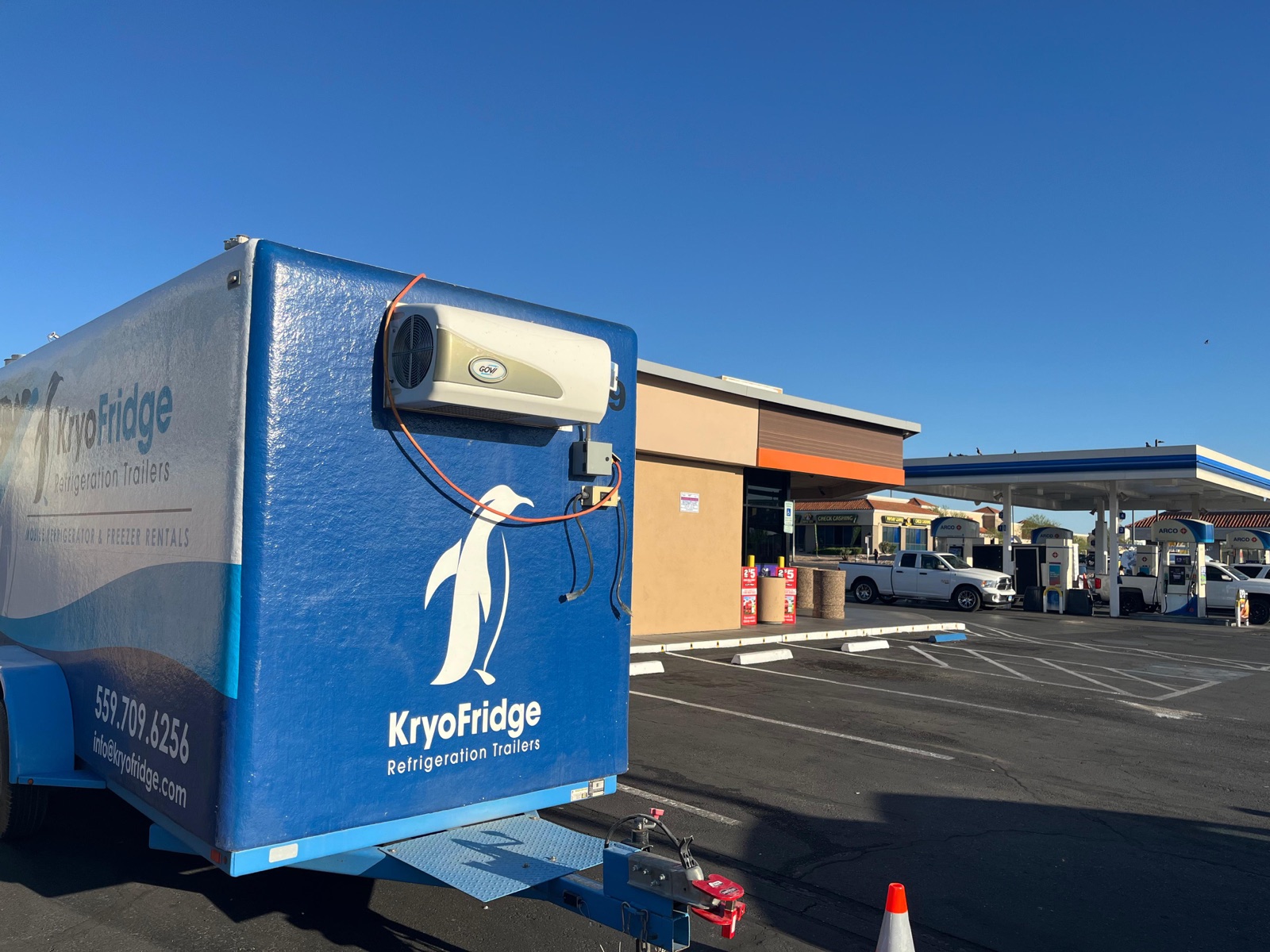
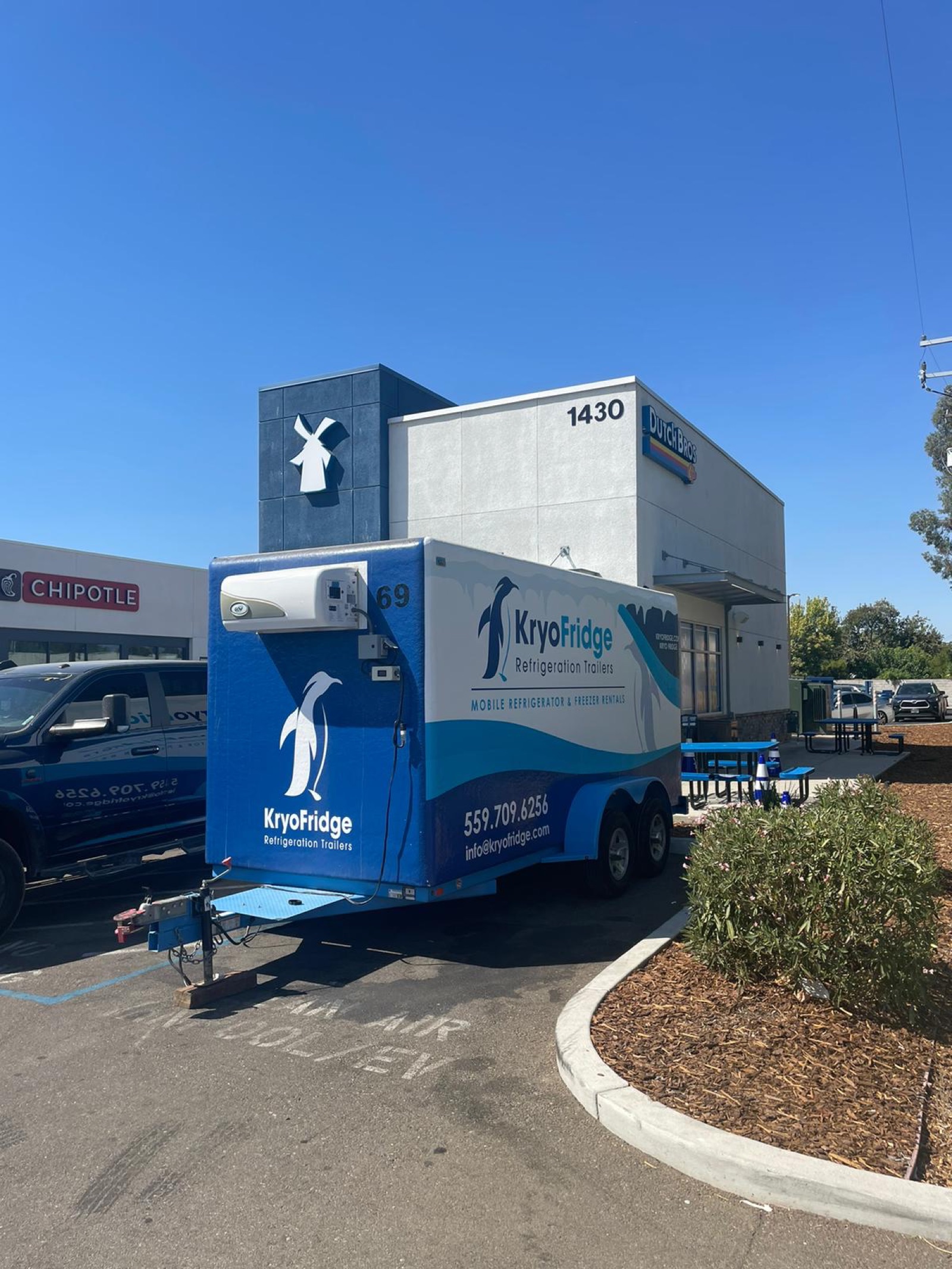
The stories behind that trust are the kind every restaurant owner recognizes. One Friday at 6:30 in the evening, the worst possible hour, a Chick-fil-A called with a dead walk-in and a drive-through line wrapped around the building. We prepped a trailer, dispatched it, and had it on their pad pulling temperature 34 minutes after the phone rang. That is the bar we hold ourselves to. Another year, an overnight outage shorted a cooler on the morning of a holiday rush, and our team staged three freezer trailers to hold every pie, every protein, and every prep tray and got the kitchen through the rush. What made both of those calls work: the equipment was already nearby, already cold, and owned by the people who answered the phone. That same standard travels to every Boulder City job, from a one-cook taqueria to a distribution floor.
Refrigerated Trailers That Keep Boulder City Kitchens Open
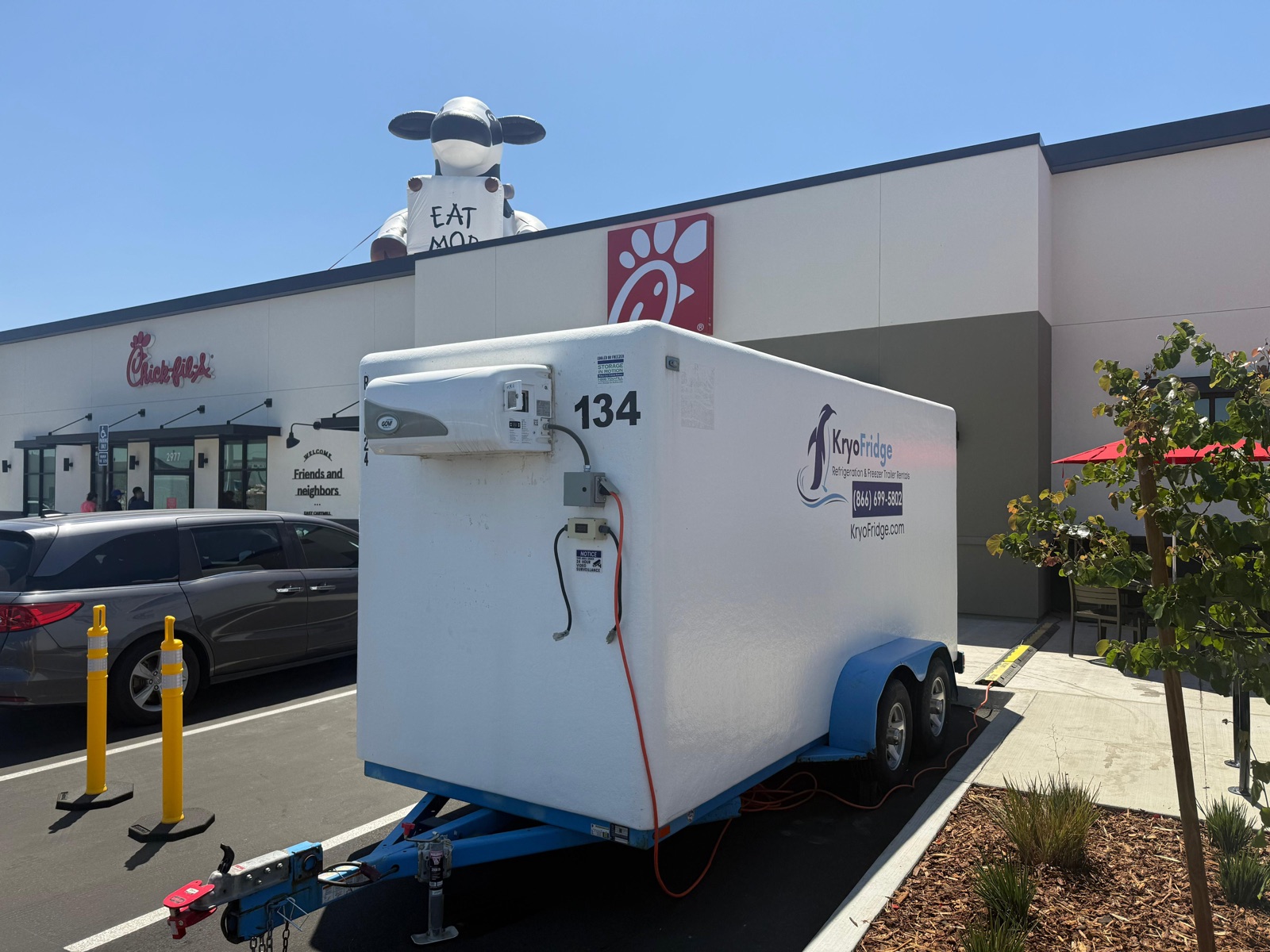
Every KryoFridge trailer we send to Boulder City is one adjustable unit. It runs as a refrigerator or a freezer, holding steady from roughly +50 degrees down to -10 degrees. That is the flexibility a town of independent kitchens and open-air festivals needs when the desert is working every compressor overtime.
The walk-in cooler is the heart of any back-of-house. It holds the proteins and the produce. It holds the dairy, the dressings, and every prepped item the line runs on. When it fails, and in this desert it is when, not if, the kitchen stops cold. Boulder City packs more than 45 restaurants and eateries into a town of under 16,000 people. That is a dense food scene, fed by the millions of tourists rolling toward Hoover Dam and Lake Mead. Almost all of them are owner-run kitchens in original 1930s buildings, with older refrigeration, tight space, and no second walk-in to fall back on.
The historic district is the heart of it. Take the Coffee Cup Cafe, family-owned since 1994 and made famous by the very first episode of Diners, Drive-Ins and Dives. Its owners say about half their business walks in from people visiting Hoover Dam and the Grand Canyon. The Dillinger has served gourmet burgers out of the old Bank of Nevada building since 2011. Jack's Place holds down 544 Nevada Way, and Milo's Cellar has anchored the district for years. So when one of these kitchens loses its cooler on a busy Saturday, there is no corporate maintenance line to call.
| Spec | What you get |
|---|---|
| Temperature range | Roughly -10°F deep-freeze up to about 50°F fresh-cold |
| Mode | Dual-purpose: freezer or refrigerator on one precise digital set-point |
| Power | A dedicated 120V, 20-amp circuit within about 100 feet, or a generator we supply |
| Food safety | NSF-approved for direct food contact, food-safe surfaces, proper drainage |
| Footprints | 6x8, 6x12, and 6x16, from a tight retail lot to distribution scale |
| Backing | Owned in-house, fully licensed and insured, with 24/7 emergency dispatch |
Each unit holds a precise digital set-point and runs on a dedicated 120V/20A circuit or a generator. The trailers are not wired for 208 to 240V building service, so we confirm your hookup before the truck rolls.
That call comes to us. We prep a refrigerated trailer, dispatch it, and get it on site running cold so the kitchen never has to close. Curb access on Nevada Way keeps downtown drops simple. And because Boulder City sits right on the Interstate 11 freight corridor, a trailer can reach a dinner-service emergency the same evening. We have spent years as the number these kitchens keep by the phone.
Every trailer runs off one of two power sources, and we sort out which one before we arrive. Option one is a generator we bring. Option two is a standard 120 volt, 20 amp dedicated circuit within 100 feet of the unit. There is no wait on a special hookup and no guesswork. The trailer shows up ready to hold temperature, and your inventory is safe from the moment we pull in.
One Trailer That Is a Refrigerator and a Freezer
Here is what actually shows up. Every KryoFridge trailer we send to Boulder City is one adjustable unit. It runs as a refrigerator or a freezer, and you choose with a dial.
The range runs from roughly +50 degrees down to -10 degrees. Keep it high for produce, dairy, and prepped trays. Drop it low for proteins and frozen product. Same trailer, either job.
That flexibility is the whole point in a town of independent kitchens and open-air festivals. When the desert is working every compressor overtime, you do not want to guess between a cooler and a freezer. You get both in one unit.
Cold Storage for Every Corner of the Local Economy
Boulder City is a small, independent, tourism-fed food economy. It has a heavy solar corridor on one side and a national recreation area on the other. The businesses here rarely keep a backup walk-in or an in-house engineer, and most of the town's events happen on park ground with no permanent refrigeration at all. We have placed units at these exact kinds of sites for years. We know where the cold chain breaks, and we know what it takes to keep it whole.
🍽 Grocery and market overflow
Bulk buys, holiday overstock, and a cold-case failure at a local market all need backup space fast. We park a full walk-in's worth of cold room right in the lot. Nothing gets dumped when the built-in cases run short.
🛒 Catering and weddings
Big plated dinners at Cascata, Boulder Creek, and the town's banquet halls routinely outrun built-in refrigeration in summer. A trailer takes the overflow. The food goes out cold and safe.
📦 Kitchen remodels
A historic-building kitchen can rebuild its cold room and never stop serving. A refrigerated trailer stands in for the walk-in for the length of the job. No lost revenue, no closed doors.
🎪 Holiday and tourist surge
Spring break, the Damboree, and peak lake season stack extra covers onto small kitchens. Temporary cold storage scales you up for the rush. It comes right back down when the crowd thins.
🚨 Fishing tournaments
Striped-bass tournaments out of Hemenway Harbor bring fleets of boats and hundreds of anglers to shoreline weigh-ins with no cold room in sight. A mobile, self-powered trailer holds catch, vendor product, and event food right at the water.
🏭 Film and hospitality events
The Dam Short Film Festival and the event trains at the Nevada State Railroad Museum run receptions on grounds with no commercial cold storage. We supply it, even in the cooler months.
What ties these together is the clock. Nobody budgets a freezer trailer into next quarter. They reach for one the hour a compressor quits, the morning a remodel begins, or the evening before a party when the stack of rented ice chests suddenly looks laughably undersized. Since our units sit staged around Boulder City instead of a couple counties down the freeway, "can I get it today" is an ordinary ask here, not a stretch.
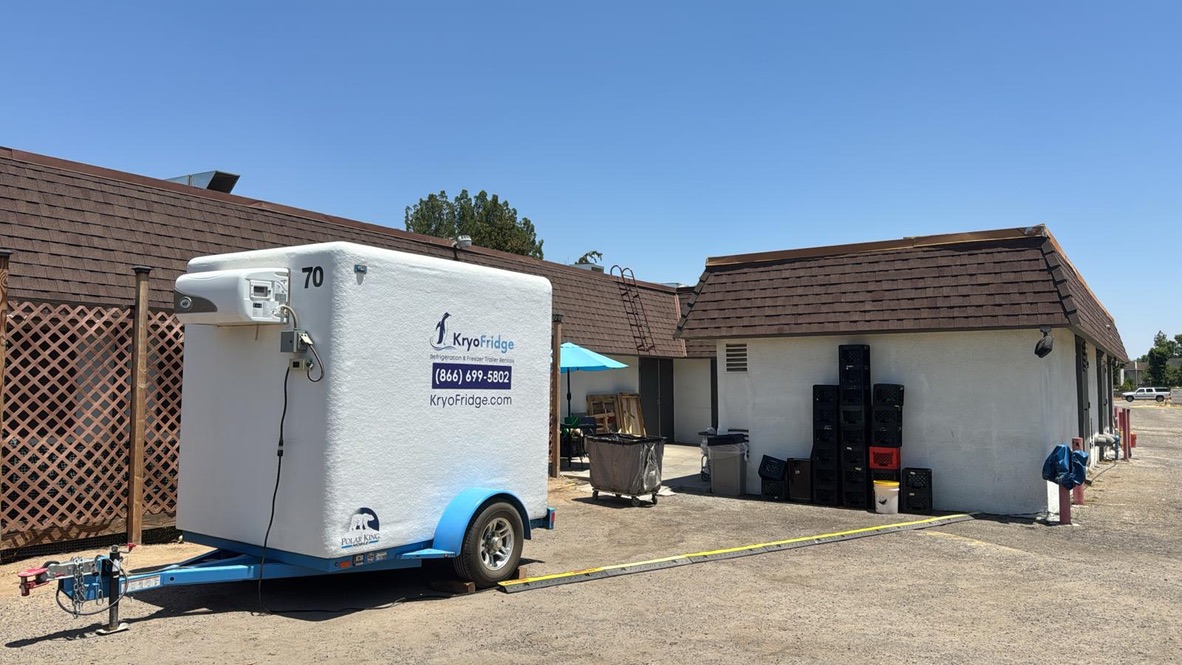
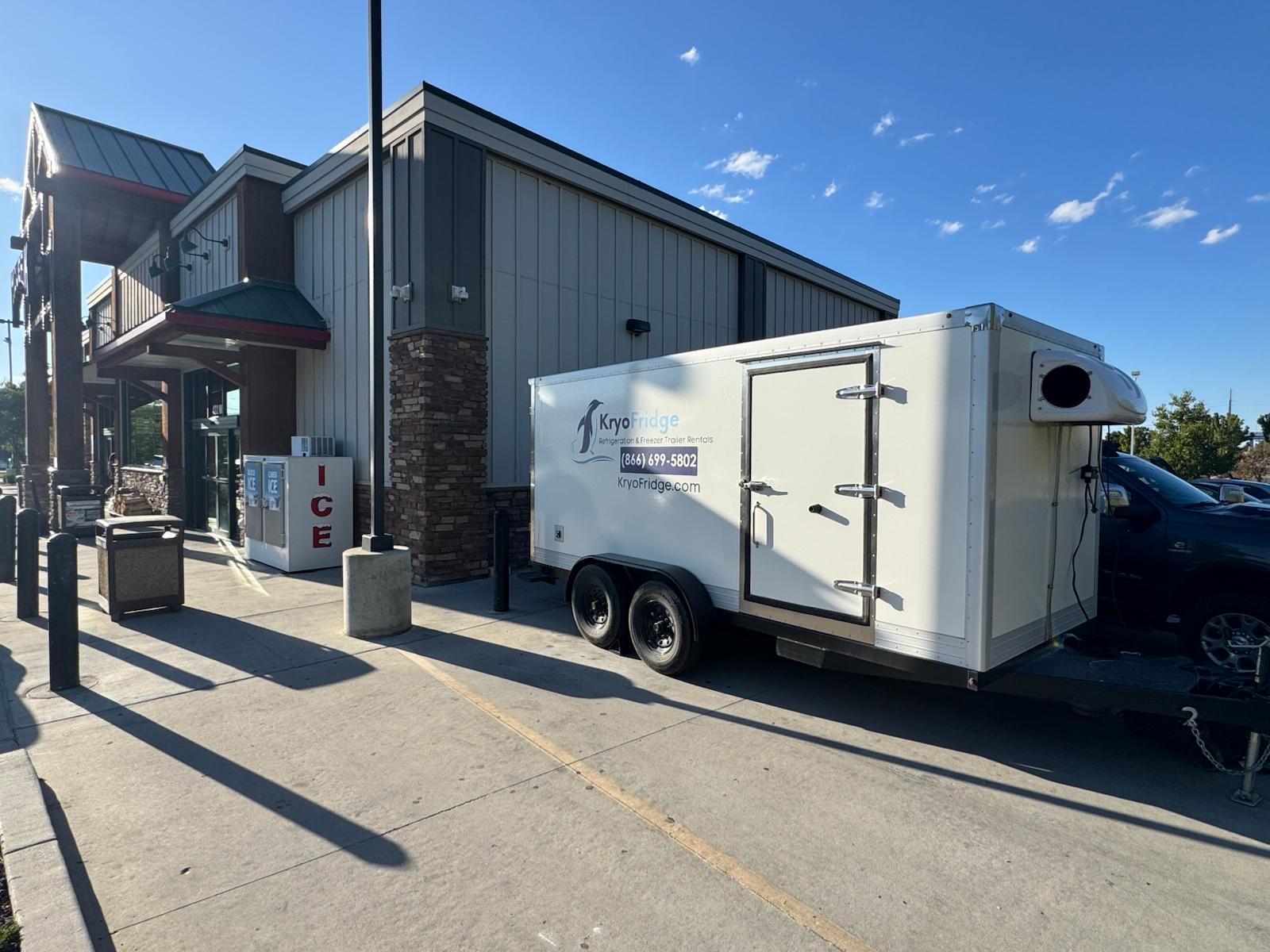
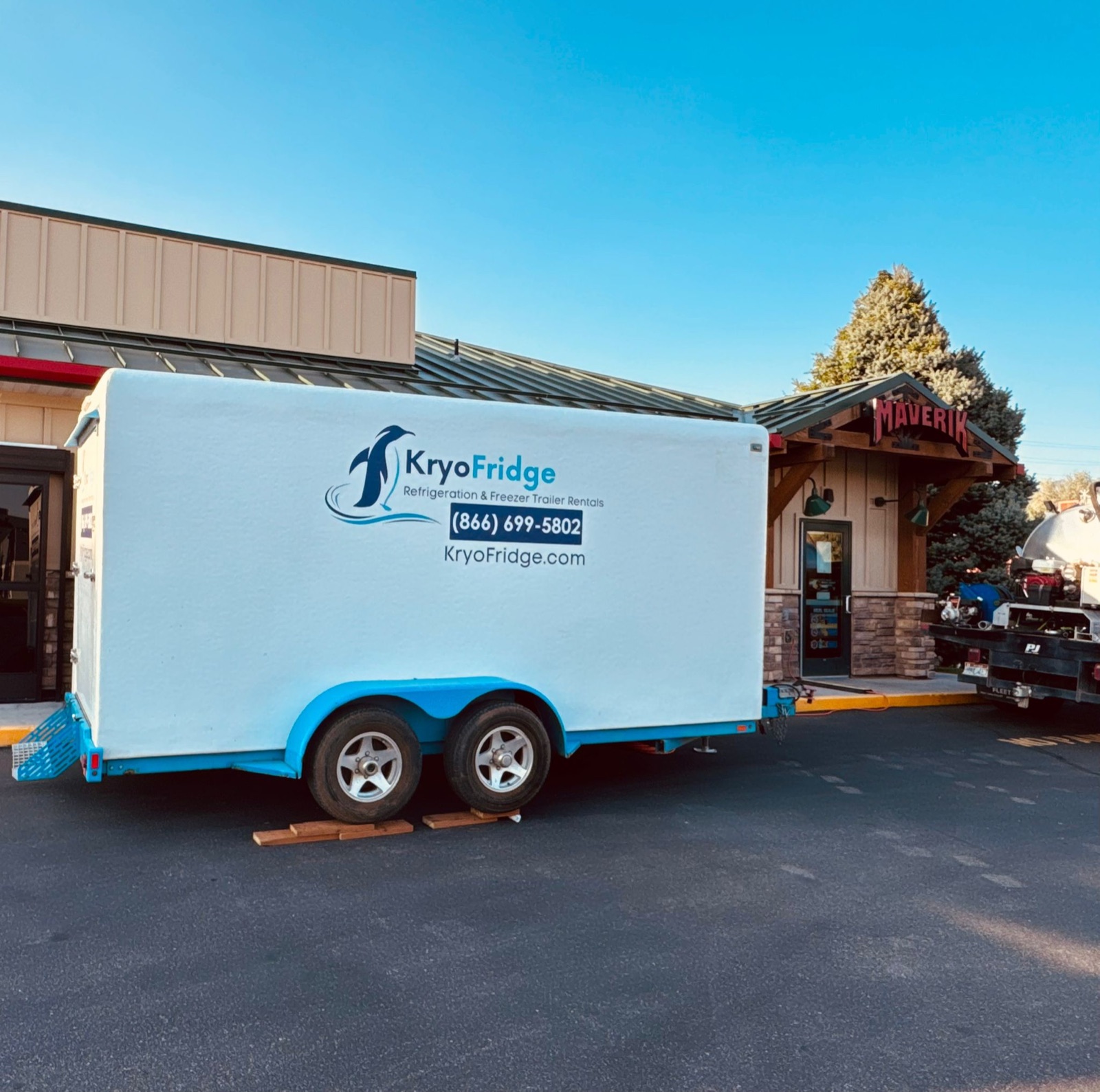
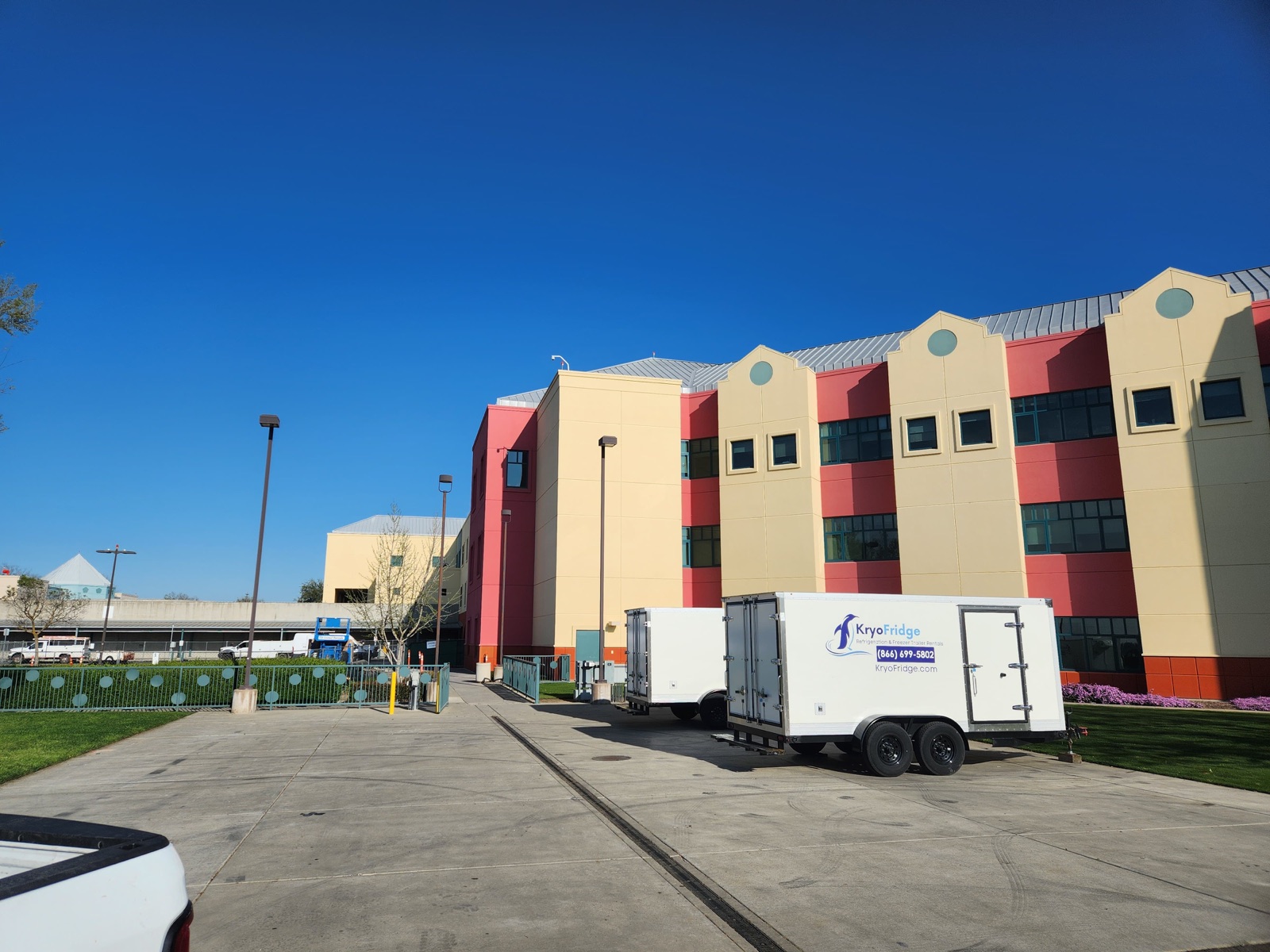
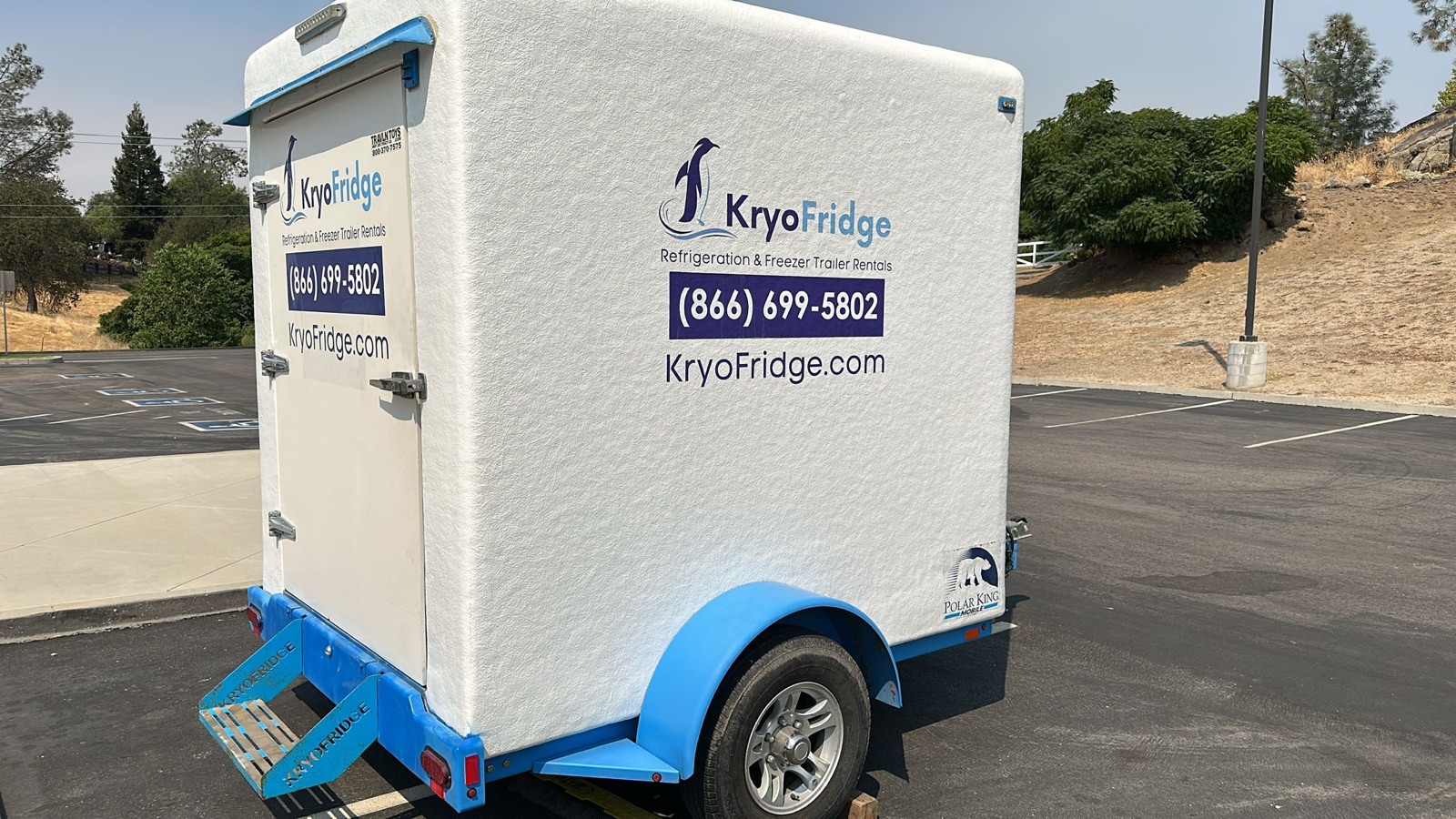
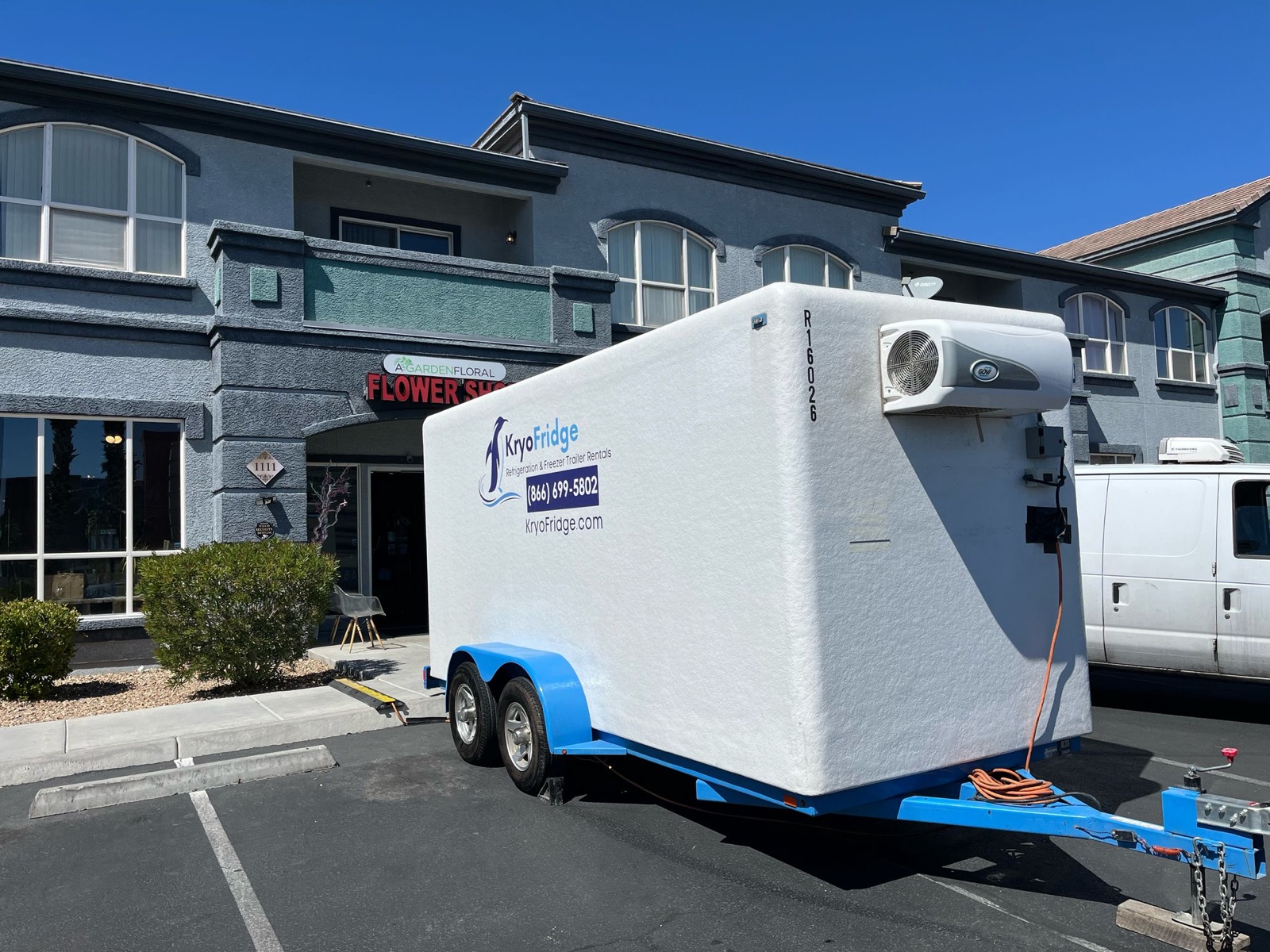
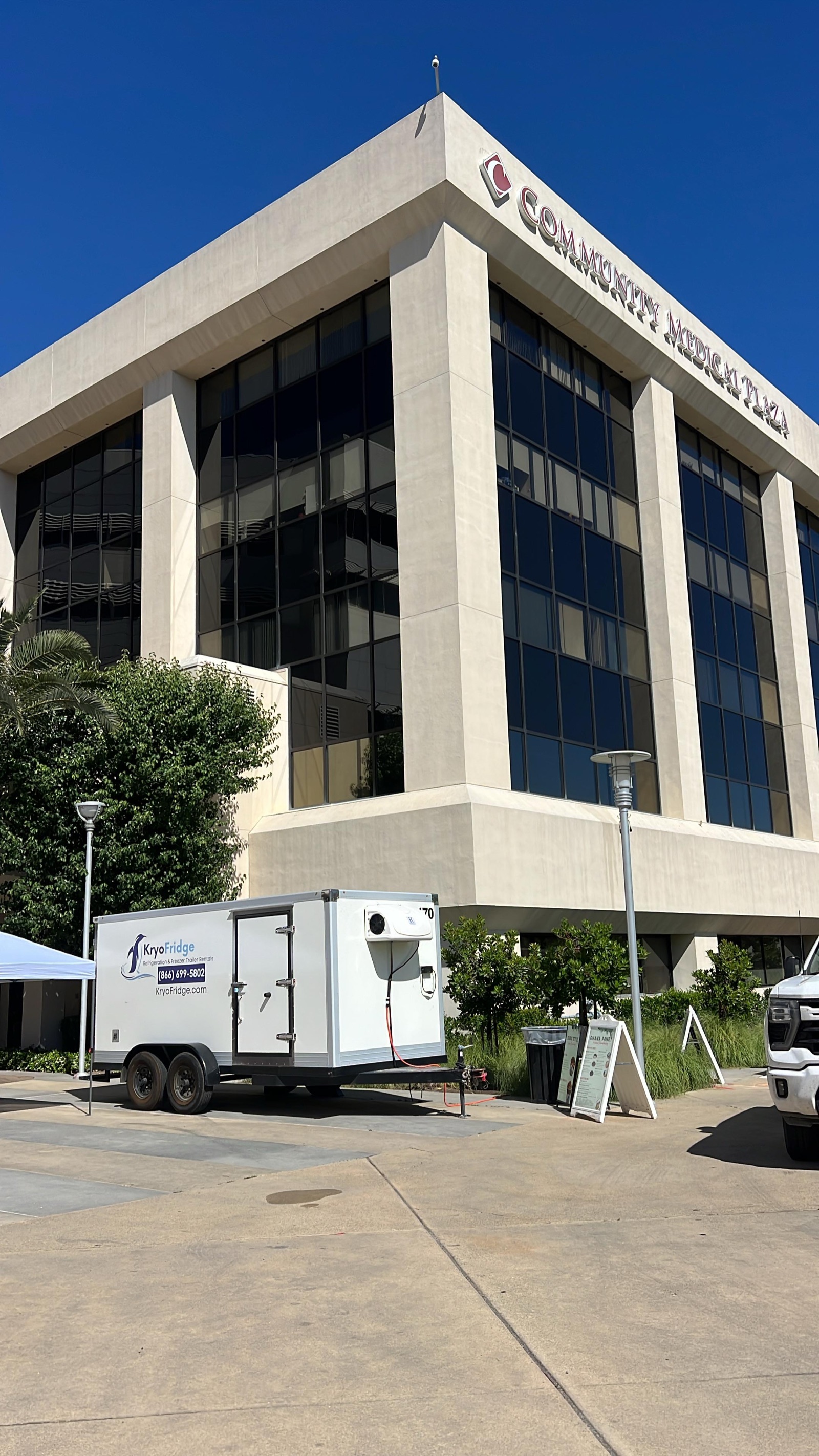
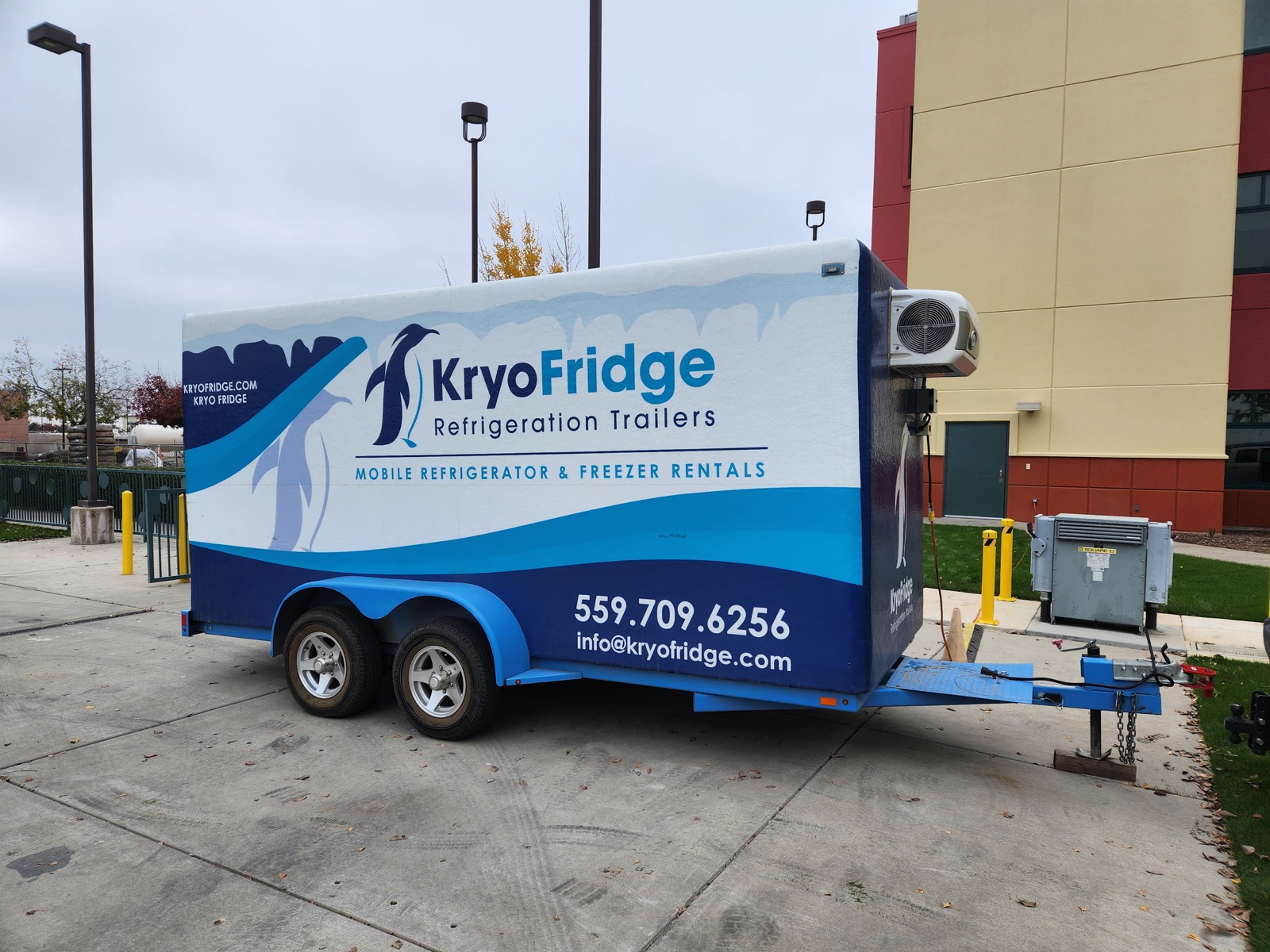
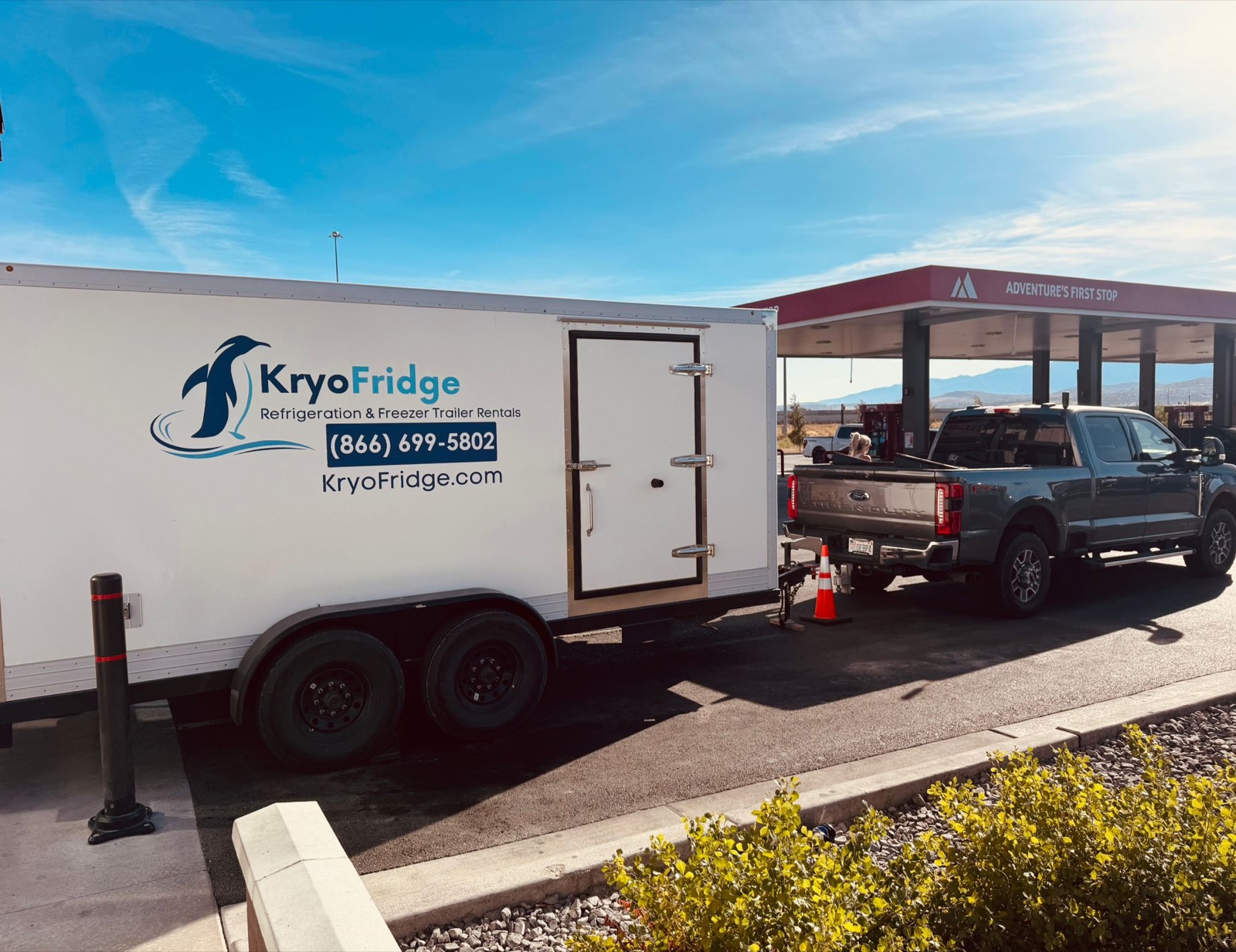
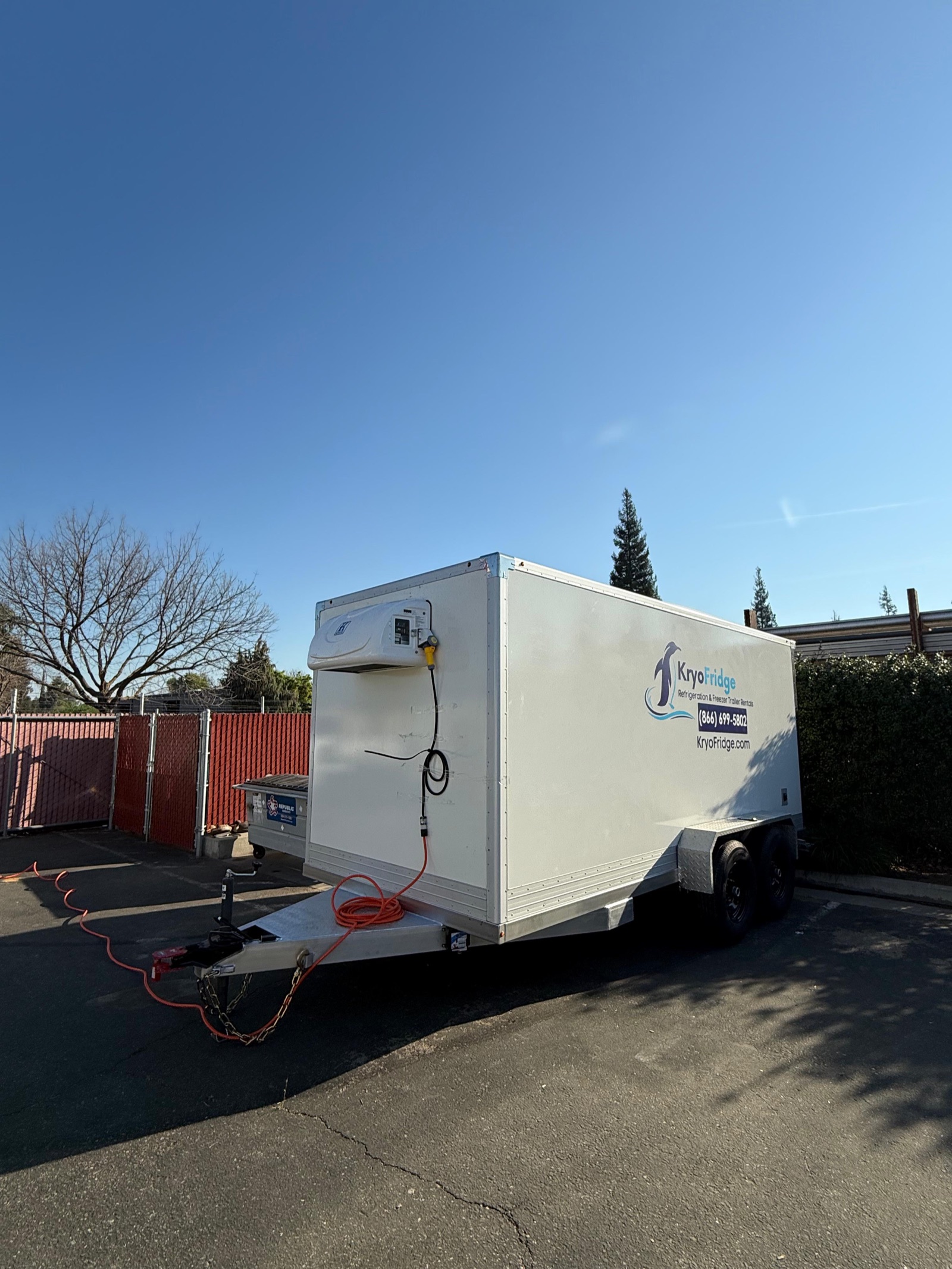
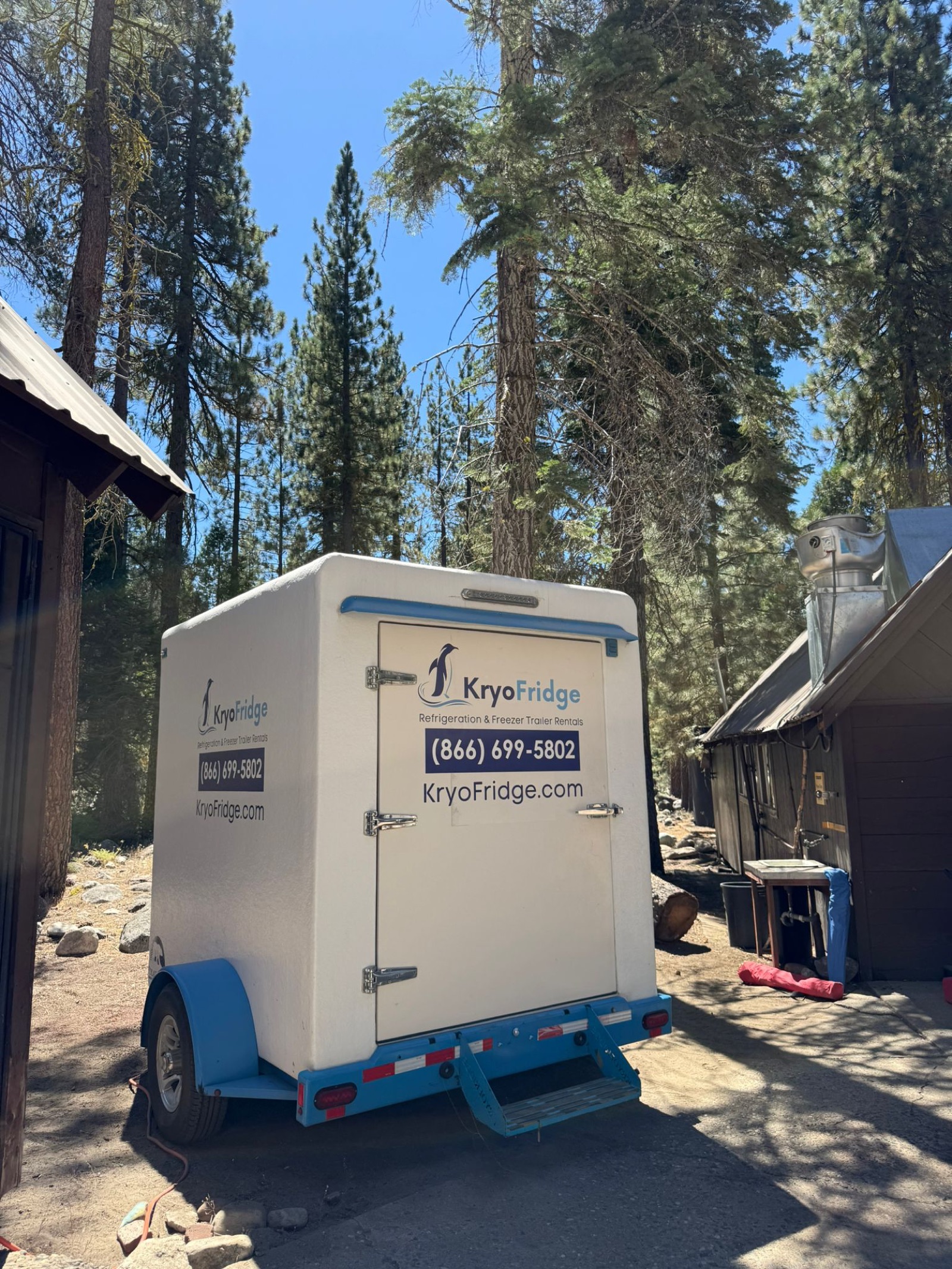
Our Trailers on Real Boulder City-Area Jobs
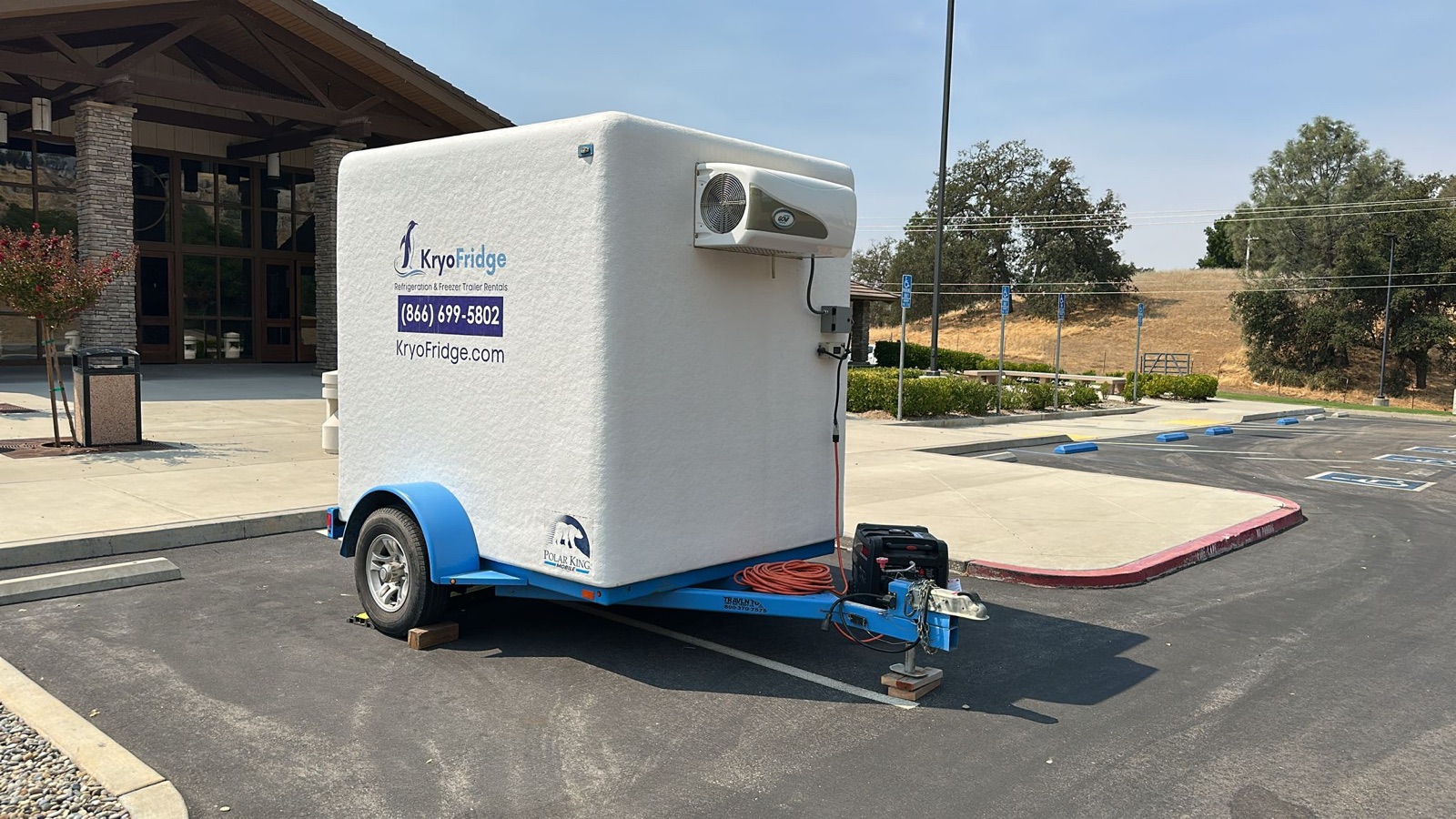
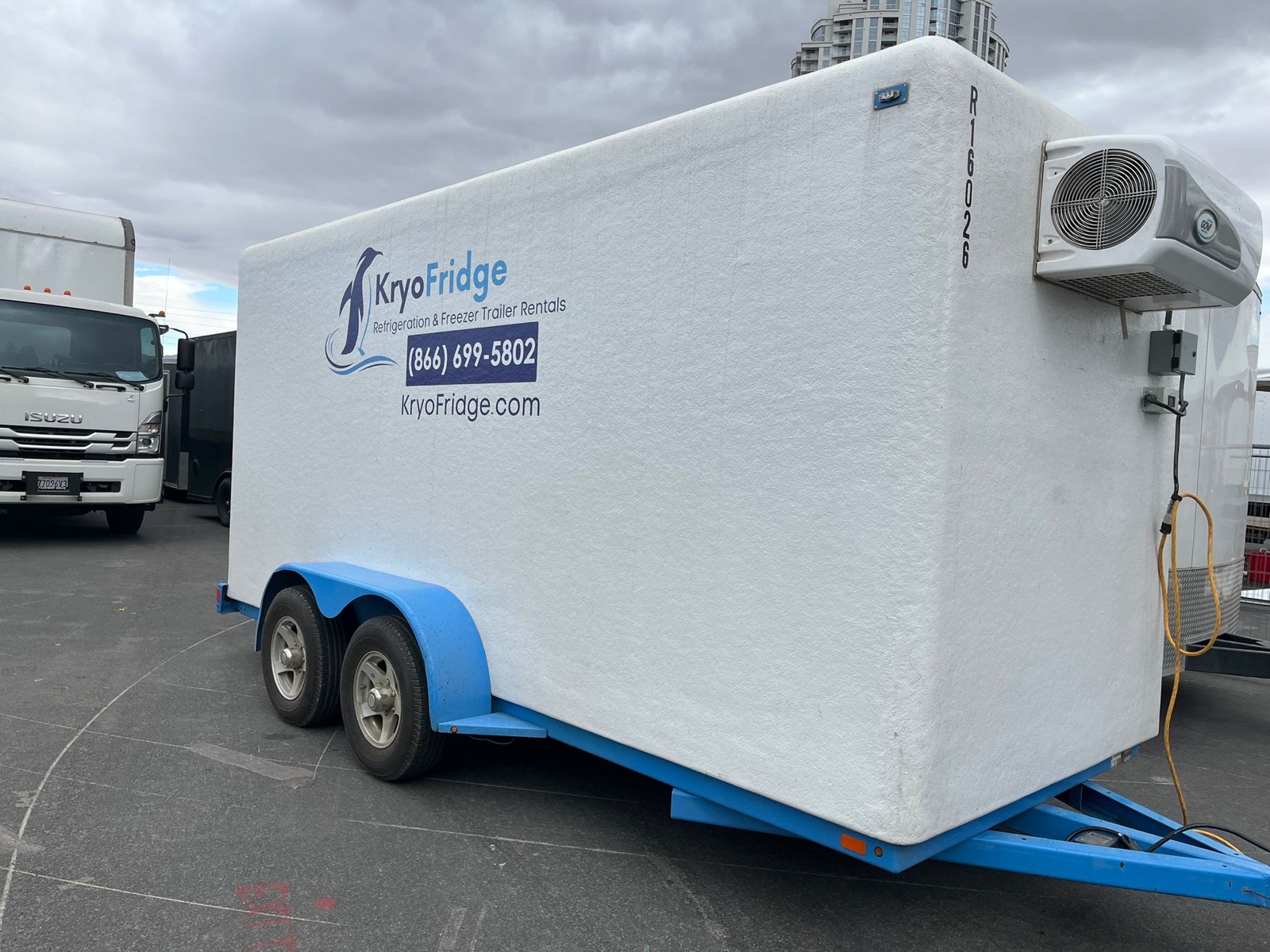
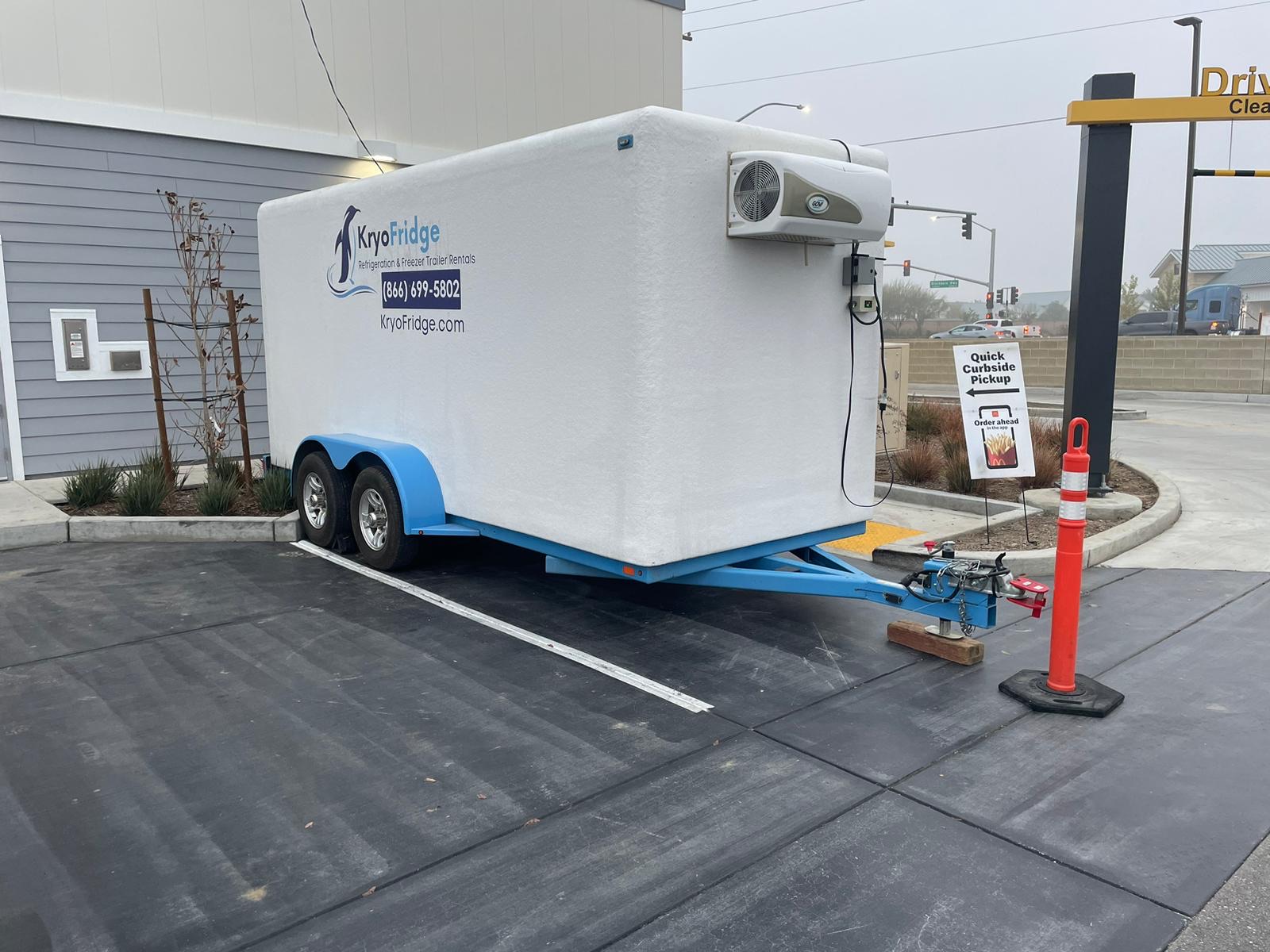
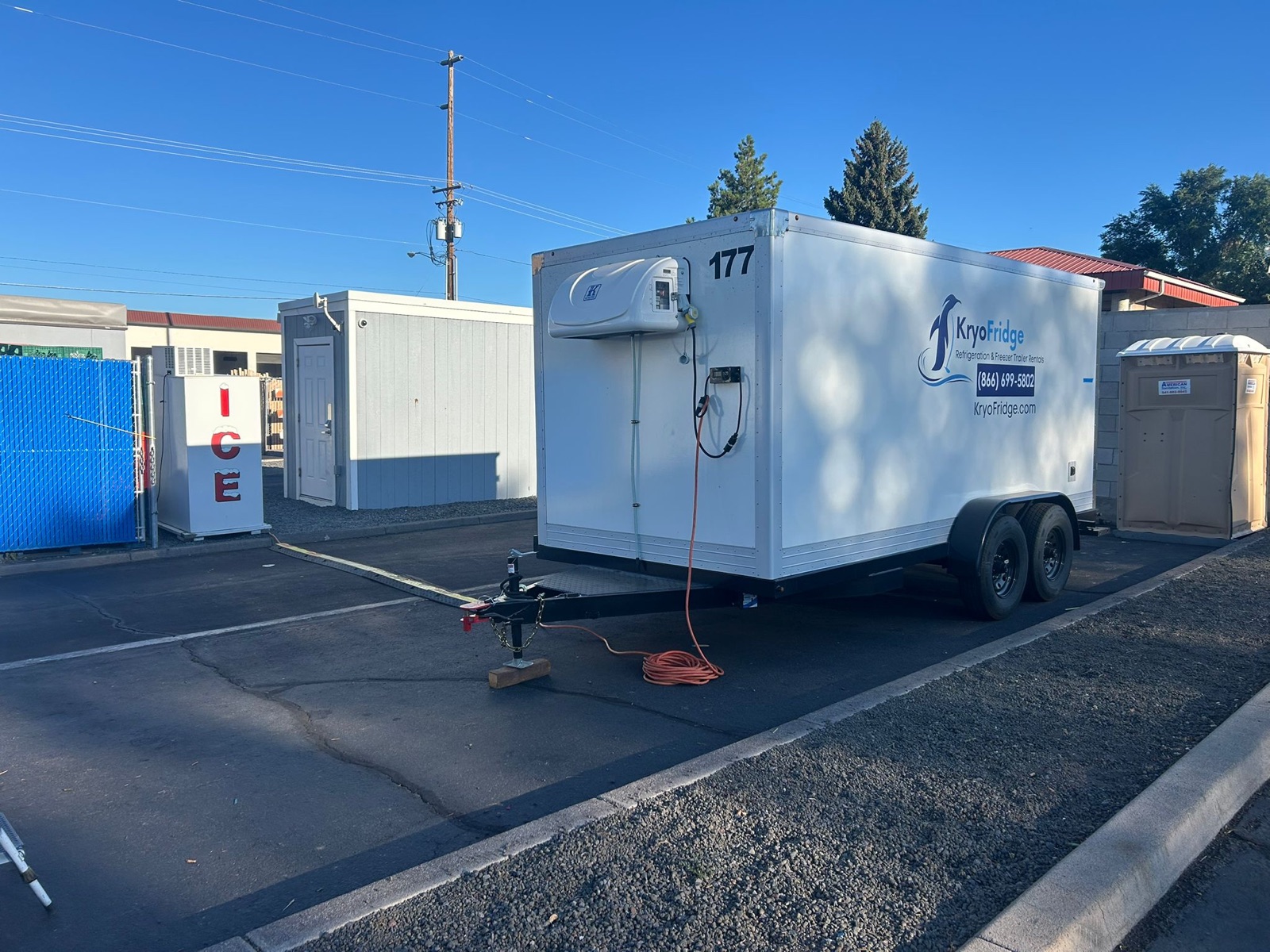
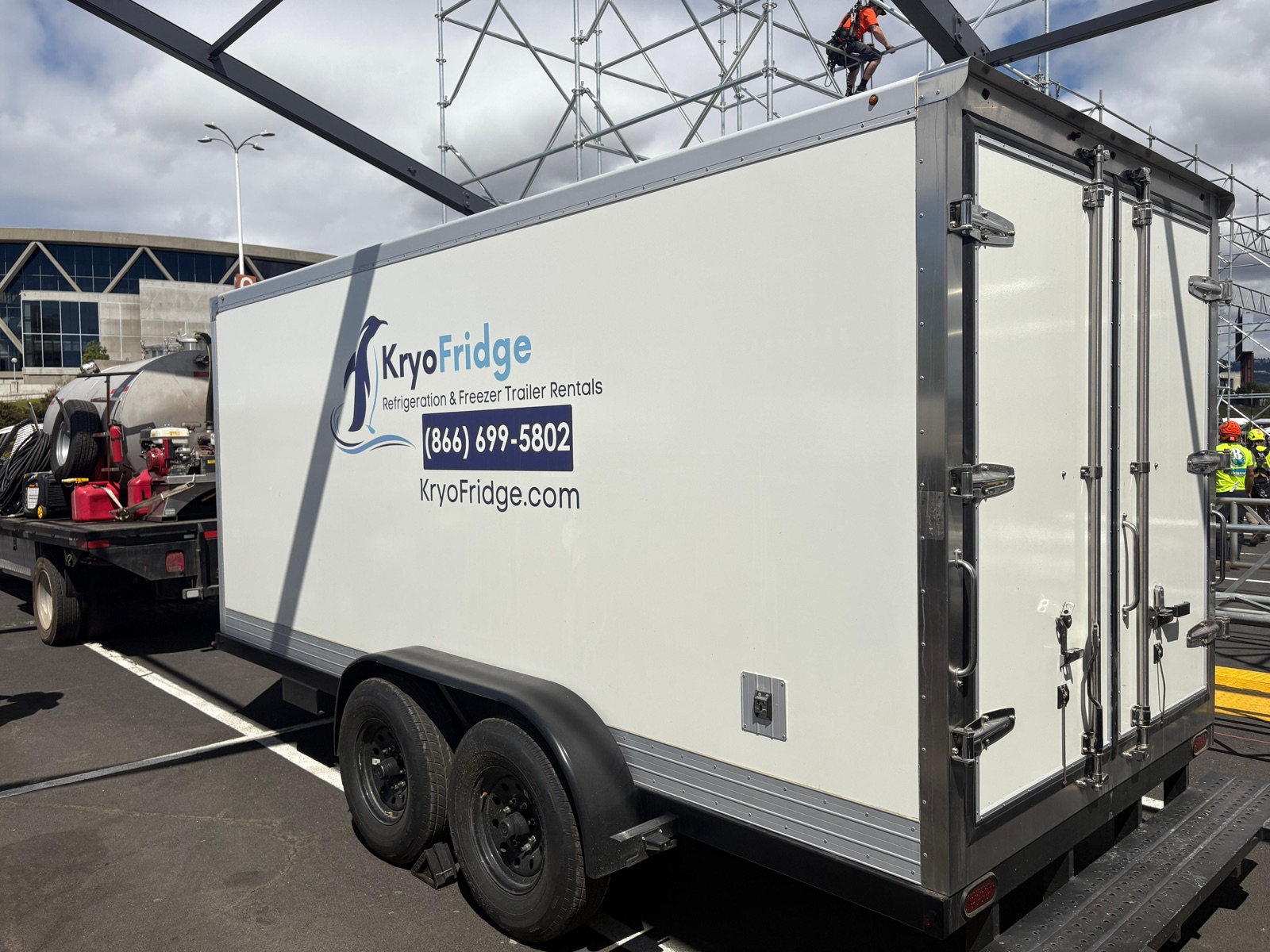
Actual KryoFridge units on actual work. Retail back lots, distribution yards, event grounds, and the late-night emergencies that do not wait for morning.
What a Cold-Storage Failure Actually Costs a Boulder City Operation
Add it up the way a Boulder City owner has to. One restaurant walk-in routinely sits on a small fortune in proteins, dairy, and prepped product. Scale that to a grocery rack or a warehouse freezer bay and the exposure balloons. Now knock the power or the compressor out on a triple-digit afternoon, and that whole inventory is in jeopardy inside a few hours. Then stack on the sales you lose while the line sits dark and the wages you burn paying staff to triage what can still be saved.
Hold a pre-staged trailer up against that risk and it reads like cheap insurance, a fixed, predictable expense parked in front of a loss with no ceiling. That is exactly why the businesses that got stung once tape our number by the phone. There is never a second scramble, because the next time they dial before the product has a chance to warm. Owning every trailer ourselves means we can scale the answer to fit, a single compact box for a corner cafe or a clustered setup for a warehouse floor, and turn it around the same day.
Boulder City Heat Is the Reason the Cold Chain Breaks
Boulder City is honestly one of the hottest small towns in the country. The all-time record high is 119 degrees, set on June 16, 2021. Typical summer afternoons push well past 100. In 2024 the wider Southern Nevada region logged its hottest summer on record, averaging a high of 107.6 degrees, with a record run of days over 110. That heat goes straight at refrigeration. Every compressor in town works harder, and aging walk-ins tend to quit at the exact moment they are pushed hardest, right in the summer tourist and event peak.
The heat also raises the stakes on any gap in the cold chain. Perishable food spoils fast here. A failed cooler or an under-chilled event stall goes from a problem to an emergency in minutes. The record heat of recent summers has even thinned tourist foot traffic. So the businesses that stay busy are running lean, and they cannot eat a single lost day of cold storage.
Power stress makes it worse. Extreme heat pushes Nevada's grid toward its limits, straining electrical gear and feeding into peak demand and plant outages. A summer power outage is the single most common trigger for an emergency cold-storage call. The walk-in goes dark, the building has no power to run a repair, and the only real fix is a self-powered trailer that shows up already cold. We staff and stage for exactly this, because the hottest days are the days the phone rings.
Refrigerated Trailers for Festivals on Open Ground
Boulder City punches far above its weight on festivals. Nearly all of them land in city parks, where there is no walk-in cooler anywhere on site. Art in the Park is one of the largest outdoor juried art festivals in the Southwest, and it is the single biggest fundraiser for the Boulder City Hospital Foundation. It draws more than 100,000 visitors and 300 artists across several parks over two days. Put a crowd that size in a town of 15,000, and the food-and-drink vendor row becomes a serious bulk cold-storage problem.
The calendar barely lets up. The Damboree lands every July 4th, one of the oldest Independence Day celebrations of its kind. It opens with the Rotary Pancake Breakfast at Bicentennial Park and runs vendors and a beer wagon at Broadbent Park through the hottest week of the year. The Wurst Festival grills more than 4,000 brats and sausages in a single September day at Bicentennial Park. The Boulder City Beer Fest sets up 30 breweries and 8 food trucks in Wilbur Park each March. Then comes the Best Dam Barbecue Challenge over Memorial Day weekend, with competition teams holding big volumes of raw protein in late-May heat.
All of this sits under the Southern Nevada Health District. A temporary food establishment at a special event has to carry listed refrigeration with an approved power source. Every temporary permit gets inspected the day of the event, and it can be denied right there on the spot. A refrigerated trailer with a proper power source is exactly what the district wants to see. So it is what lets an organizer or a vendor pass inspection instead of getting turned away at the gate.
We treat a two-day, six-figure-attendance festival the way we treat a temporary restaurant. We stage cold storage on site before the gates open, not after the coolers are already full. Park it at Bicentennial or Broadbent, run it off our generator, and dozens of vendors get compliant cold holding through a desert weekend. We have worked this town's event grounds for years. By now we read the Boulder City calendar the way a caterer reads a booking sheet, where every date is a cold-storage deadline.
Cold Storage Where There Is No Kitchen at All
Some of the toughest cold-storage jobs in Boulder City sit far from any building. Lake Mead National Recreation Area pulls in millions of visitors a year. More than three million enter through Boulder Beach, Lakeshore Drive, and the Lake Mead Overlook just outside town. The marinas at Hemenway Harbor and Lake Mead Marina serve thousands of boaters on a single summer weekend. And the lake's striped-bass tournaments draw fleets of boats to shoreline weigh-ins with nowhere near a commercial kitchen.
South of town, the Eldorado Valley holds one of the densest clusters of utility-scale solar in the West. The Copper Mountain, Techren, Boulder Solar, and El Dorado Energy sites are part of nine solar plants in the valley. Construction has put well over 1,700 workers on open desert ground at peak. Feeding a crew that size takes refrigeration you can truck to the site and run off a generator. There is no building, no shade, and no permanent kitchen out there to lean on.
This is the work a self-contained refrigerated trailer is built for. It arrives running. It holds temperature in triple-digit heat, and it needs only the generator we bring or a dedicated 120 volt, 20 amp circuit within 100 feet. Marina restaurant overflow, a tournament weigh-in, a shoreline concession, a solar crew's daily meals, it does not matter. The trailer is self-sufficient from the moment it lands.
We have supported outdoor operators across Southern Nevada for years. So the first thing we plan for is simple. There is no wall to plug into and no shade to park in. We size the unit and the power source to the site, not the other way around. The cold chain holds whether you are at the water's edge or out in the valley under a July sun.
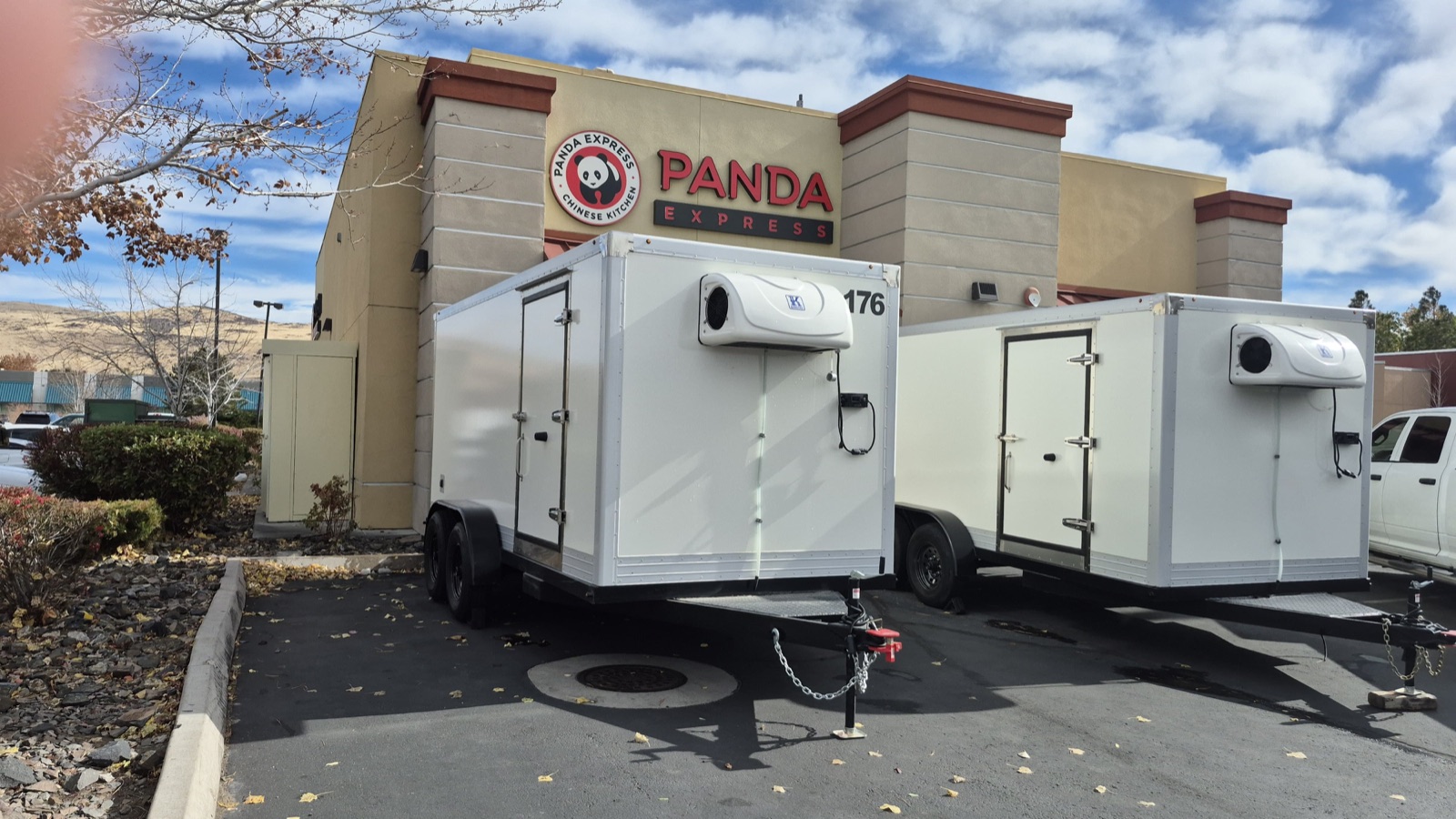
Setting the Right Temperature for What You're Holding
"Cold" is not one number. Different product stays safe inside different temperature windows, which is the entire reason a precise digital set-point matters, and in the middle of a Boulder City heat wave, a load that slips out of its window is a load you write off. Use the chart below as the reference our customers lean on when they size a rental.
| Product | Target holding band | Trailer mode |
|---|---|---|
| Ice cream and frozen desserts | -10°F to 0°F | Deep freeze |
| Frozen proteins, seafood, prepared meals | 0°F or below | Freezer |
| Fresh meat and poultry (short hold) | 28°F to 32°F | Refrigerated |
| Dairy, deli, packaged produce | 34°F to 38°F | Refrigerated |
| Beverages, florals, catering trays | 38°F to 45°F | Refrigerated |
One figure outranks everything in that chart, and it is not listed there: 40°F. Food-safety guidance treats the band between 40°F and 140°F as the zone where bacteria thrive, and the clock on perishable product starts ticking the moment it crosses 40 on the way up. Roughly four cumulative hours above that line and most refrigerated inventory is no longer safe to serve. Picture that countdown running on a 100-degree afternoon in Boulder City with the walk-in dark, and the urgency of a quick trailer drop stops being abstract.
Tell us the single coldest item you are holding when you call, and we dial the trailer to that. One unit carries a straight freezer load with no fuss. But when your list mixes deep-freeze desserts with fresh-cold produce for the same remodel or event, we will usually point you toward a split setup or a second box so neither side of the load has to settle for the wrong temperature.
Power and Placement on a Boulder City Site
Powering one of our trailers is refreshingly simple, and there are precisely two ways to do it. Either you have a dedicated 120-volt, 20-amp circuit reachable within roughly 100 feet of the parking spot, or we bring a generator. What the units will not accept is standard 208 to 240V building service, so a quick question about your outlet before dispatch heads off any surprise on delivery day.
- Dedicated outlet on hand? Most Boulder City kitchens and markets already have the right one, so we plug straight in and the unit begins pulling the temperature down.
- Open lot or event field? A generator keeps the trailer running anywhere, whether that is an event lawn or a warehouse yard.
- Worried about a shutoff? A unit on a generator keeps your cold chain alive when a fire-season power shutoff takes the surrounding grid down.
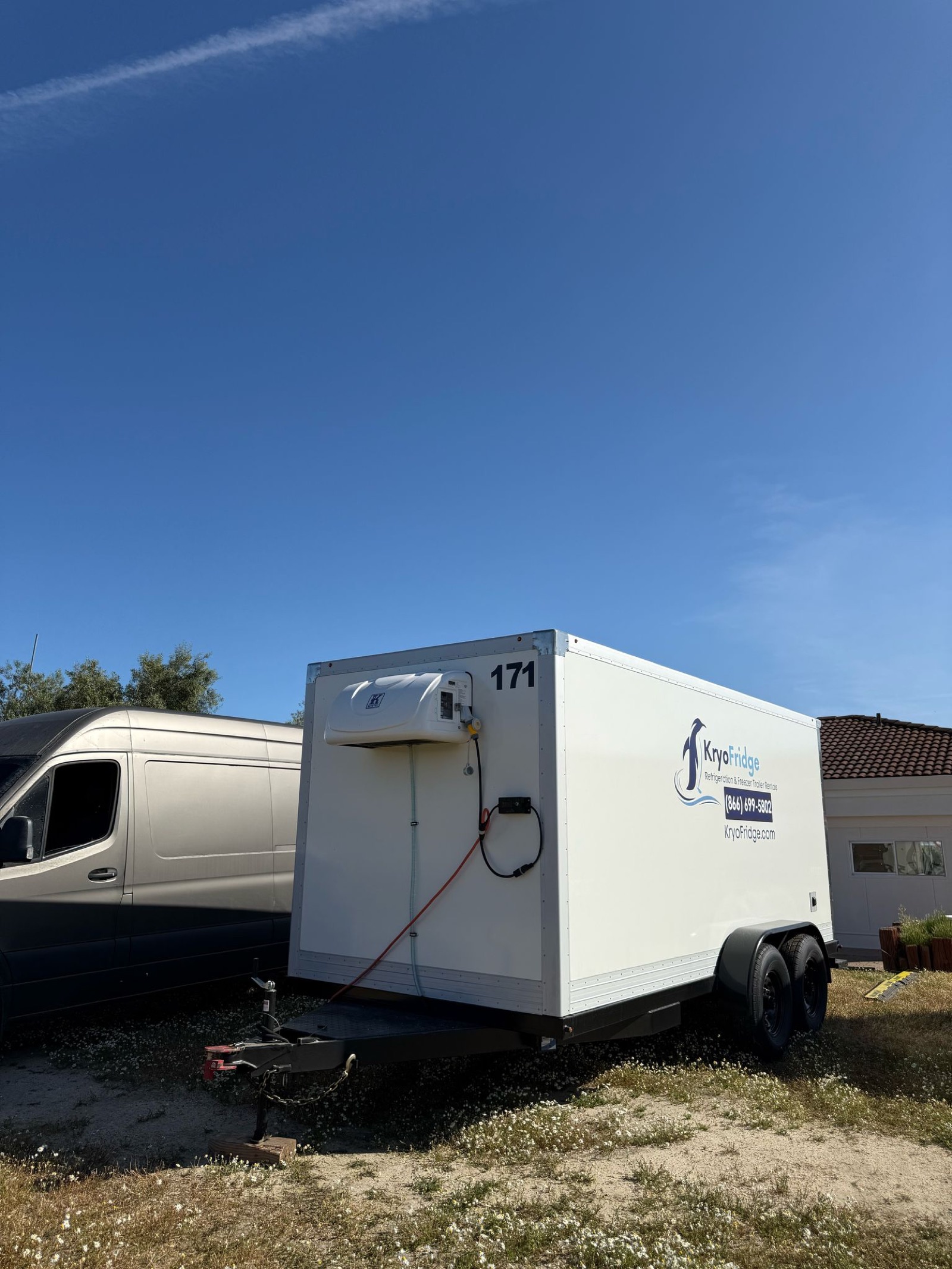
On placement, all the unit really asks for is a fairly flat patch with enough room for the delivery truck to maneuver it in and set it straight, plus either a power source in reach or space for a generator. We lock down the exact drop point before dispatch, and our drivers know the Boulder City layout cold, so the delivery is one clean trip instead of a guessing game on the property.
From the Field, Real Boulder City-Area Saves
Historic-district diner, walk-in down on a July Saturday
A family diner on Nevada Way lost its only walk-in on a Saturday morning in July. The lobby was full of Hoover Dam tourists. We took the call, prepped a refrigerated trailer, and had it on site running before the lunch rush peaked. The kitchen never closed, and not a tray of product was lost.
Art in the Park, cold storage for 100,000 guests
A two-day festival drawing more than 100,000 people needed compliant cold holding for dozens of food vendors spread across several parks. We staged trailers before the gates opened. Every vendor had listed refrigeration with an approved power source, and every one passed health-district inspection the morning of the event.
Eldorado Valley solar crew, no building for miles
A big construction crew on a solar site south of town needed safe cold storage for daily meals. There was no building, no shade, and no kitchen anywhere near. We set a self-contained trailer on the open ground, ran it off our generator, and kept the crew fed through weeks of triple-digit afternoons.
Renting a Freezer Trailer in Boulder City, Step by Step
On a bad day, booking should be the part that does not add stress. Four steps, an upfront number, and a single person who owns the whole thing.
1 · Describe the load
Tell us whether it is freezer or fridge product, a ballpark volume, and your rough window. That is enough for us to call the right size.
2 · We finalize size, power & spot
We pair you with a unit, confirm whether you have a dedicated circuit or need a generator, and pin the exact drop point so the truck makes one trip.
3 · Delivery and cold-down
We arrive on your schedule, about 45 minutes for a true emergency, set the trailer, energize it, and let it drive down to your number.
4 · Run it, reach us anytime
It holds the set-point for your entire term while our line stays live the whole way through. Wrap up, and we swing back for the pickup.
Health-District Cold Holding Is a Permit Condition, Not a Suggestion
Boulder City falls under the Southern Nevada Health District, which governs food safety for all of Clark County. Under district rules, a special event is any temporary public gathering with at least one temporary food establishment, a defined start and stop date, and a run of no more than 14 calendar days. Every temporary food establishment has to carry listed refrigeration or hot-holding equipment with an approved power source.
Timing matters here. Applications for temporary permits are due no later than 7 calendar days before the event start date, or late fees kick in. Every temporary permit gets inspected the day of the event. A stall operating outside the 2023 food regulations can be denied on the spot, and for an organizer that means losing a vendor, or a whole food program, on the morning of the show.
A refrigerated trailer with a proper power source is exactly the listed refrigeration with an approved power source the district looks for. So we plan power first on every event job. It is either a generator we bring or a standard 120 volt, 20 amp dedicated circuit within 100 feet, which keeps the unit inspection-ready wherever it parks. One food program passes at the gate. The other gets shut down.
What our trailers bring to a health-code inspection
- NSF-approved interior surfaces built for direct food contact.
- A digital controller that puts the set-point in plain view for the inspector.
- Proper drainage and a sealed, food-safe insulated box.
- Licensed and insured on every unit we put on the road.
One caveat we always state plainly: we supply the food-safe, temperature-holding hardware itself, but we are not a temperature-logging or alarm-monitoring service. If your program requires continuous written records, line that vendor up on your own.
Three Trailer Sizes, and How to Pick Yours
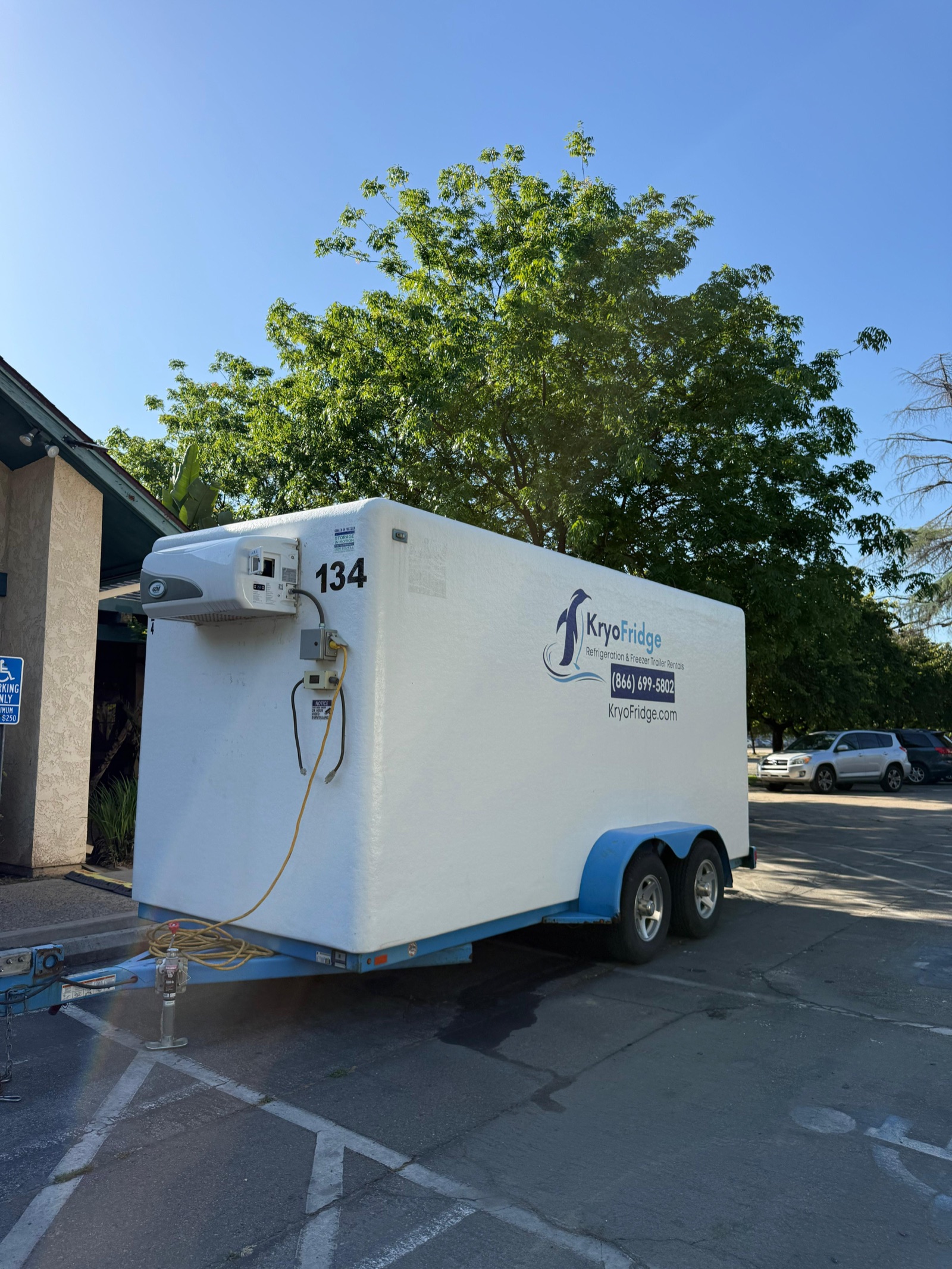
We stock three footprints, and together they stretch from a one-kitchen overflow all the way to distribution and disaster-scale capacity. Each one is dual-purpose by design, a single adjustable system that swings between freezer and refrigerator on a precise digital set-point, and each one lives on either a dedicated circuit or a generator.
| Trailer | Best for | Temp range |
|---|---|---|
| 6x8 | Tight lots, small kitchens, short overflow | -10°F to 50°F |
| 6x12 | Grocers, caterers, mid-size events | Deep-freeze capable |
| 6x16 | Distribution, large events, disaster | Heavy-duty reefer |
Each unit holds a precise digital set-point and runs on a dedicated 120V/20A circuit or a generator.
6x8, the compact pick for tight retail lots
Think eight or so pallet spots, and the unit to grab when square footage is the whole problem. It slips into the pinched service yards and cramped back-of-house corners that a larger box cannot even swing into. One cafe or small-market walk-in goes down, and this is almost always enough cold to cover it, plus the simplest unit to set in a small space.
6x12, the everyday pick for grocers and caterers
Call it fourteen pallet spots, deep-freeze rated, and far and away the size people ask for most. It lands right in the middle for a grocery backstop, a multi-day catering job, or a restaurant that needs true walk-in-equivalent room while the kitchen is torn up. Roomy enough that nobody is playing Tetris with shelves, yet still small enough to set in most commercial back lots without a site survey.
6x16, the heavy hauler for distribution and disaster
Roughly twenty pallet spots paired with a heavy-duty reefer plant engineered to keep deep-freeze locked in even when the ambient air is merciless. Reach for it when a warehouse bay drops, when a large festival needs an anchor, or when a relief operation is carrying its own cold chain.
Not sure which size fits? Tell us roughly what you are storing and for how long, and we will spec it for you rather than nudging you into a bigger unit than the job calls for.
Everything Else Boulder City Operators Ask Us
The questions that surface once the basics are settled. Tap any topic to open it.
Freezer trailer vs. portable walk-in vs. reefer truck. Which should you rent?
The pop-up walk-in cooler. Cheap to rent and easy to set up, but it chills, it does not freeze, and it draws every watt it needs from your building while depending on a calm ambient temperature around it. The second your building loses power, your cooler loses it too.
The refrigerated box truck. Designed to haul product on the interstate, not to sit in a lot and babysit it. Parked, it idles fuel all day, broadcasts compressor noise across a storefront or an event lawn, and pins down a tractor plus a driver you probably do not need.
The freezer trailer we deliver. Built from the ground up to be dropped on a pad and to defend a temperature for as long as the job runs. It freezes deep, carries NSF approval, locks, stays quiet near guests, and lives on nothing more than one dedicated circuit or a generator.
NSF build quality and health-code compliance
Even a rented box has to satisfy the county environmental health office that licenses and inspects every food facility. Show an inspector a unit that cannot document its temperature or was not built for food contact, and they have the authority to halt service immediately.
That is a bar each of our trailers clears: NSF-approved throughout, food-safe interior surfaces, proper drainage, and a digital controller that puts the set-point in plain view. We supply the food-safe, temperature-holding hardware itself, but we are not a temperature-logging or alarm-monitoring service.
Multi-trailer setups for distribution and large operations
For a typical kitchen or market, one box does the job. Distribution floors, big fairs, and full-scale disaster response routinely need more, and because the fleet is ours, we can cluster several units and bring them online in waves as the work expands. Match the cold capacity to the operation rather than make the operation squeeze itself into one box.
Short-term emergency vs. long-term and contract storage
The clock is yours to set. Some jobs are a handful of days for an emergency or a single event. Others stretch across weeks or months for a remodel or a seasonal swell, and a few become standing contracts for businesses that want capacity parked on standby. Name your window and you will get a clean quote, no penalty for an honest "not sure yet."
Renting vs. building permanent cold storage
Building permanent cold storage is a capital project in every sense: you hire a refrigeration contractor, schedule the electrical, pull a building permit, and wait weeks before a single pallet goes inside. A rental turns that equation on its head. You bring in precisely the cold you need, for precisely the stretch you need it, and the trailer is holding temperature that same week, frequently that same day, with the commitment ending the moment your need is over.
How a trailer holds deep-freeze in triple-digit heat
Three engineered elements carry the load. Thick insulated panels and tightly gasketed doors lock the sun outside and the cold inside. A self-contained reefer condensing system specified with surplus capacity keeps stripping heat out of the box even when the air outside is brutal. And a digital thermostat locks onto your chosen number and cycles the compressor to hold the line. Run those three together and a trailer baking on open asphalt behaves like one tucked in a cool warehouse. That is also why power is the first thing we ask about: the design delivers its safety margin only on steady, uninterrupted power.
Boulder City Neighborhoods and Districts We Serve
We dispatch refrigerated and freezer trailers to every corner of Boulder City. From there we run out along the Interstate 11 corridor to Henderson, the Lake Mead recreation zone, and the Eldorado Valley. Same-day and emergency service is realistic here, because the roads are built for freight and our fleet runs deep.
Neighborhoods and towns we cover include Historic District, Downtown Boulder City, Nevada Way, Nevada Highway, Bicentennial Park, Broadbent Park, Veterans Memorial Park, Wilbur Park, Lakeview Terrace, Lake Mead View Estates, Marina Highland Estates, Villa del Prado, Lake Mountain Estates, Bayview, Park View Estates, Eldorado Valley, Hemenway Harbor, Boulder Beach, Lakeshore Drive, Bootleg Canyon, Boulder Creek, Railroad Pass, Hoover Dam, Henderson.
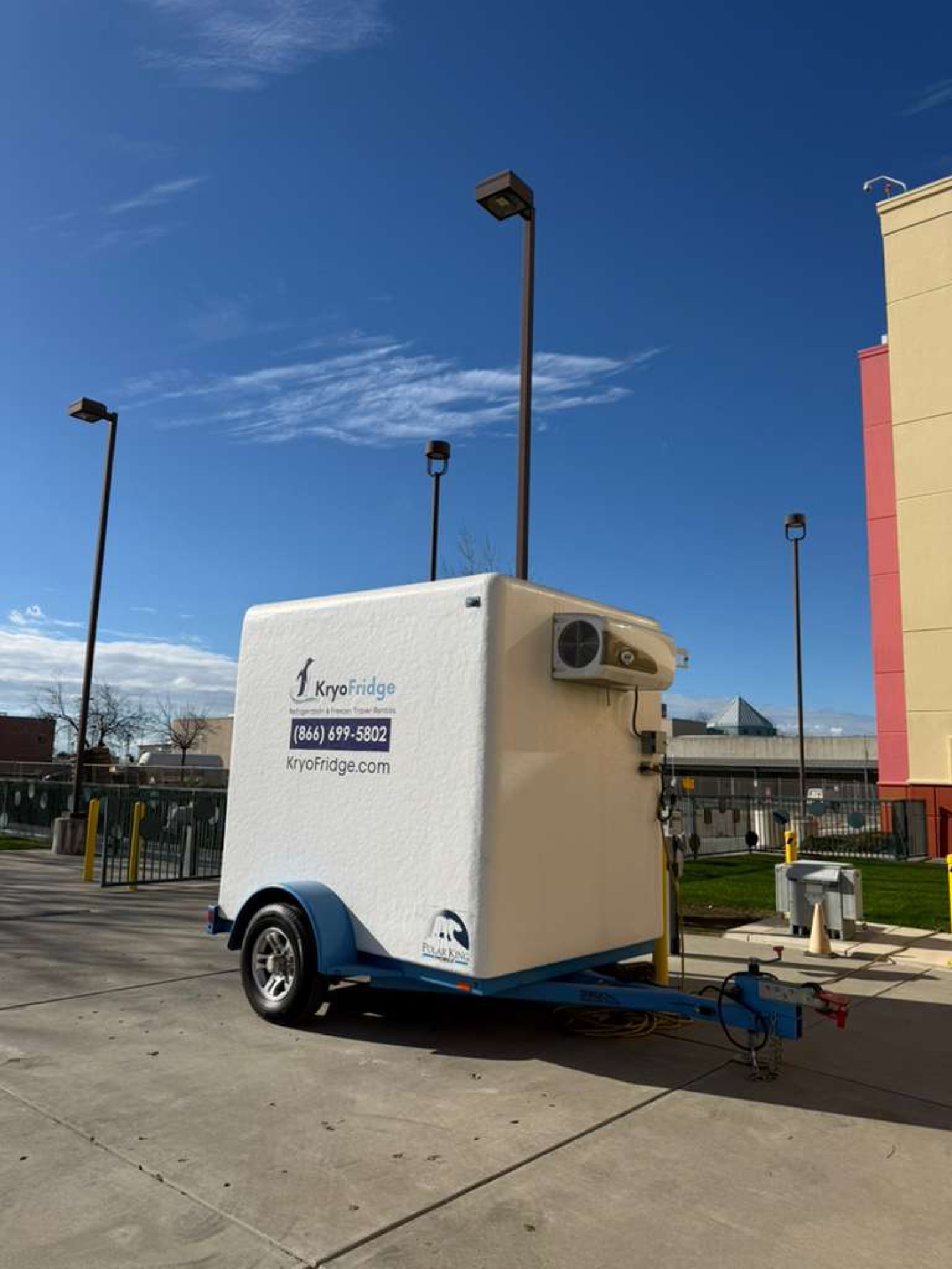
Historic District and Downtown. The dense core of family diners, cafes, and shops in original 1930s buildings along Nevada Way and Nevada Highway. Older refrigeration and tight kitchens meet constant tourist traffic, which makes this our busiest zone for restaurant emergencies. Curb access keeps trailer placement simple.
Bicentennial and Broadbent Parks. Boulder City's festival grounds. This is home to Art in the Park, the Damboree, the Wurst Festival, and Spring Jamboree. There is no permanent refrigeration on site, so every food and beverage vendor here needs trucked-in cold storage to hold product and pass inspection.
Lakeview Terrace and Lake Mead View Estates. Lake-oriented neighborhoods near the recreation zone. They feed marina concessions, shoreline events, and a growing base of vacation rentals. Group gatherings out here regularly outrun a home kitchen's refrigeration in the summer.
Eldorado Valley solar corridor. The heavy-industrial zone south of town, with nine solar plants and large construction and operations crews. Feeding a workforce this size on open desert ground takes self-powered refrigeration that arrives running and needs only a generator.
Hemenway Harbor and Lake Mead Marina. The launch ramps and marina restaurants that serve thousands of boaters, plus the lake's striped-bass tournaments. Cold storage here has to work at the water's edge, far from any building, through relentless summer sun.
Marina Highland Estates and Villa del Prado. Established residential subdivisions along the corridor toward the marina. They generate private-event and catering demand, and weddings and family gatherings here lean on trailer overflow when the heat and the guest count climb together.
Planned rentals are usually scheduled same-week, and a true emergency puts a trailer on your Boulder City lot in about 45 minutes.
What Boulder City Operators Say About Us
"Our walk-in died on a Saturday in July, the place packed with dam tourists. KryoFridge had a trailer at our back door running cold before the lunch rush was over. We never closed. These are the people you want on the other end of that call."
Danielle R. · diner owner, Historic District"We stage food vendors across two parks, and health-district inspection is no joke. They dropped trailers before the gates opened, and every vendor passed. I do not run an event-grounds season without them anymore."
Marcus T. · festival coordinator, Bicentennial Park"A summer wedding at a golf-course venue outran the built-in coolers. Their refrigerated trailer took the overflow, and the plated dinner went out cold and perfect. Booking was simple, and they knew exactly how to power it on site."
Priya S. · catering manager, Boulder City"Feeding a crew out in the valley with no building and no shade is a headache. They set a self-powered trailer on the ground, ran it off their own generator, and it held through weeks of brutal heat. Zero issues."
Grant H. · site supervisor, Eldorado Valley"A cold case failed right before a holiday overstock. Instead of dumping product, we parked one of their trailers in the lot and rode it out. Owner-operated, straight answers, no middleman. That matters when you are in a jam."
Lauren K. · market operator, Boulder CitySample reviews written to mirror genuine Boulder City situations, to be replaced with verified Google reviews ahead of launch.
Boulder City Freezer & Refrigerated Trailer Rental FAQ
How fast can you get a refrigerated trailer to Boulder City?
We run same-day and 24/7 emergency dispatch across Nevada. Boulder City sits right on the Interstate 11 freight corridor, so a trailer can reach a dinner-service emergency the same evening. When a walk-in fails on a busy weekend, we prep a unit and get it on site running cold as fast as the roads allow. Call, and we move.
Is a KryoFridge trailer a refrigerator or a freezer?
It is both. Every trailer we send is one adjustable unit that runs as either a refrigerator or a freezer, and it holds steady anywhere from roughly +50 degrees down to -10 degrees. Set it high for a cooler's chill on produce and dairy. Drop it low for a deep freeze on proteins and frozen product. Same trailer, your call.
How do you power a trailer at a Boulder City site with no special hookup?
There are two ways, and we sort it out before we arrive. Either we bring a generator, or the unit runs off a standard 120 volt, 20 amp dedicated circuit within 100 feet. There is no wait on a special electrical hookup. And out on open ground like the Eldorado Valley or a marina lot, the generator makes the trailer fully self-sufficient.
Can you supply cold storage for events at Bicentennial Park or Broadbent Park?
Yes, and it is a lot of what we do here. Those park venues have no permanent refrigeration, so festivals like Art in the Park, the Damboree, and the Wurst Festival lean on trucked-in trailers. We stage cold storage on site before the gates open. That way every food vendor carries listed refrigeration with an approved power source and passes health-district inspection.
Does a refrigerated trailer meet Southern Nevada Health District rules for events?
It does. The district requires temporary food establishments to carry listed refrigeration or hot-holding equipment with an approved power source, and permits get inspected the day of the event. A refrigerated trailer with a generator or a dedicated circuit is exactly that. So it is what lets an organizer or vendor pass inspection instead of getting shut down at the gate. Apply for your temporary permit at least 7 days ahead.
What size operations do you serve in Boulder City?
Everything. On the small end, a single historic-district diner that lost its walk-in. On the big end, a 100,000-person festival spread across several parks. We run one of the largest refrigerated and freezer trailer fleets in the West, so we can tuck one trailer behind a cafe or stage several at a major event, then scale back down when the rush passes.
Do you handle emergencies during a summer power outage?
Yes. A summer grid event in this heat is the most common reason we get an emergency call. When the power drops, the building cannot run a repair and the walk-in is dead. The fix is a self-powered trailer that shows up already running cold. We staff and stage for the hottest days on purpose, because that is when Boulder City needs us most.
Can you cover the Lake Mead marinas and fishing tournaments?
We do. Cold storage at Hemenway Harbor, Lake Mead Marina, and shoreline tournament weigh-ins has to work at the water's edge with no building nearby. A self-powered refrigerated trailer is built for exactly that. It holds catch, vendor product, and event food through the full summer sun.
Are you a broker or the actual trailer company?
We are the direct owner-operator. We own the fleet and dispatch it ourselves, so you never deal with a reseller relaying your call to a third party. In a Boulder City emergency that difference is everything, because there is no middleman between you and the equipment.
Can a trailer stand in during a kitchen remodel?
Absolutely. When a Boulder City kitchen rebuilds its cold room, a refrigerated trailer parks on site and stands in for the walk-in for as long as the work takes. The business keeps serving, with no lost revenue and no closed doors. It is one of the most common non-emergency ways local kitchens use us.
What areas around Boulder City do you cover?
We serve all of Boulder City, from the Historic District and the park venues to Lakeview Terrace, the Eldorado Valley, and the Lake Mead recreation zone. And we run the full corridor out to Henderson and the greater Las Vegas area along Interstate 11. If you are in Southern Nevada, we can reach you.
Who trusts KryoFridge with their cold storage?
Our trailers have kept some of the most recognized names in America running, from McDonald's to Chick-fil-A to Dutch Bros Coffee, along with many more national restaurant, grocery, and quick-service brands. We are backed by more than 30 years in the event and equipment rental industry, and we are fully licensed and insured. That track record stands behind every Boulder City job.
The Boulder City Cold-Storage Resource Library
Real situations from Boulder City kitchens, festivals, and worksites, with the honest advice we give when the phone rings.
What to Do the Hour Your Walk-In Fails in the Boulder City Heat
A walk-in cooler failure is one of the fastest-moving emergencies a Boulder City kitchen can face. In a town where summer afternoons push past 104 degrees, the clock runs faster than most owners expect. The moment the compressor quits, the insulated box starts climbing toward room temperature. And in this climate, room temperature is dangerous. What you do in the first hour is the difference between a bad afternoon and thousands of dollars of dumped product.
First, confirm it is actually a refrigeration failure and not a tripped breaker or a power issue. Check the circuit. Check the thermostat. Check whether the rest of the building still has power. If the unit lost power because the grid dropped, which happens in Boulder City during peak summer demand, the cooler itself may be fine, and a self-powered backup becomes the only real fix. But if the compressor is running and the box is still warm, you likely have a mechanical or refrigerant failure that will not fix itself.
FDA refrigerator and freezer storage guidance · FoodSafety.gov safe temperature charts
Planning Cold Storage for a Boulder City Park Festival
Boulder City hosts some of the largest outdoor festivals in Southern Nevada, and nearly all of them happen on park ground with no permanent refrigeration. Art in the Park alone draws more than 100,000 visitors and 300 artists across several parks. Events like the Damboree, the Wurst Festival, the Boulder City Beer Fest, and Spring Jamboree fill Bicentennial Park, Broadbent Park, and Wilbur Park with food and beverage vendors through the year. If you are organizing or vending at one of these, cold storage is not a loose end to tie up later. It is a permit condition.
The governing body is the Southern Nevada Health District, which regulates food safety for all of Clark County. Under its rules, a special event is a temporary public gathering with at least one temporary food establishment, a defined start and stop date, and a run of no more than 14 calendar days. Every temporary food establishment has to carry listed refrigeration or hot-holding equipment with an approved power source. And every permit gets inspected on the day of the event.
Southern Nevada Health District special events · SNHD temporary food equipment requirements
Feeding Crews on Open Ground in the Eldorado Valley
The Eldorado Valley south of Boulder City holds one of the densest clusters of utility-scale solar in the West. The Copper Mountain, Techren, Boulder Solar, and El Dorado Energy sites are part of a corridor of nine solar plants. Large construction projects have put well over 1,700 workers on the ground at peak. Feeding a workforce that size safely is a real logistical challenge, and it is one most people never think about.
The conditions are brutal by design. There is no building, no shade, and no permanent kitchen anywhere near a solar construction site. The desert ground can radiate heat well past the triple-digit air temperature. Any food brought on site, whether a catered lunch, a meal program, or vendor service, has to stay safe in that environment. A couple of coolers will not do it for hundreds of workers across a long shift.
FoodSafety.gov safe temperature charts · OSHA heat exposure guidance for outdoor work
Why Boulder City's Grid and Heat Make Backup Cold Storage a Necessity
Boulder City sits in one of the hottest corners of the country. Pair extreme heat with a stressed summer power grid, and backup cold storage stops being a nice-to-have. For any business that runs a walk-in, it is a basic risk-management call. Understanding why these two forces stack together explains why local kitchens, markets, and event operators keep a cold-storage provider on speed dial.
Start with the heat itself. The all-time record high in Boulder City is 119 degrees, set in June 2021, and typical summer afternoons climb past 100 for weeks at a stretch. In 2024 the wider Southern Nevada region recorded its hottest summer on record, averaging highs of 107.6 degrees with a record run of days over 110. Every degree of that heat is load on a refrigeration compressor. And aging equipment tends to fail when it is pushed hardest, which is right at the summer peak.
Ready.gov power outage preparedness · National Weather Service heat safety
Get a Refrigerated Trailer to Boulder City
Tell us the site and the timeline. We will size the unit, sort the power, and get a trailer running cold on your Boulder City lot, from a downtown curb to open ground in the Eldorado Valley. Call anytime, day or night.