

Escondido Freezer & Refrigerated Trailer Rentals: Cold Storage Built for North County
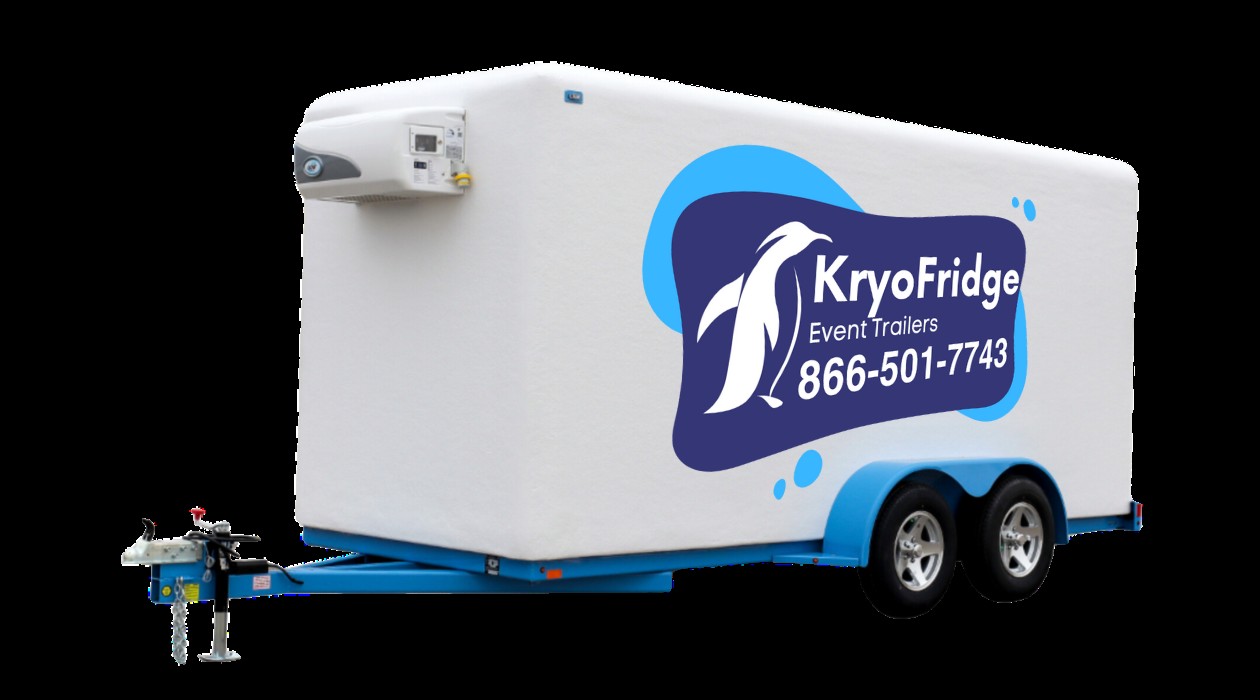
Mobile cold storage that hits its set-point and holds it, even on a 105° afternoon in the San Pasqual Valley. We stage NSF-approved freezer and reefer trailers right here in North County for Escondido’s growers, packhouses, breweries, kitchens and events, and when a walk-in quits mid-service our line answers and a trailer is rolling toward you in about 45 minutes.
Escondido’s Go-To Source for Freezer Trailer Rentals
Cold-storage trouble in Escondido almost never waits for business hours. A grove crew brings in more fruit than the packhouse cooler can hold, a brewery’s cold room gives out a week before a release party (always the worst possible week), a downtown kitchen off Grand Avenue loses its walk-in on a Friday night with a full reservation book. We built this operation for exactly those moments, trailers already parked in North County, ready to drop and pull temperature today, not in three days.
What sets us apart on the practical side is who you actually reach. KryoFridge is owner-operated, not a broker re-renting somebody else’s box. The person who picks up the phone owns the trailer, services it, and dispatches it, so you never sit on hold while a middleman “checks with their supplier” and your product climbs toward the danger zone. And you get one company, one trailer, one accountable contact, quote, delivery, pickup, all of it.
A Hidden Valley That Still Runs on Things That Have to Stay Cold
The name Escondido is Spanish for “hidden,” after the sheltered inland valley the town grew up in. About 150,000 people now live where I-15 and Highway 78 cross, but the valley’s oldest business. Growing and moving food that can’t get warm: is still very much alive in the groves and packhouses east of town.
Escondido’s first cash crop was the muscat grape, the reason the town has thrown a Grape Day festival since 1908 and still calls itself a birthplace of California winemaking. After Lake Wohlford’s dam went in around 1895, citrus took over, and by the 1960s avocados became the valley’s signature fruit. But that heritage isn’t a museum piece: North County San Diego and neighboring Temecula together grow roughly a third of all California avocados, and the belt running from Escondido and Vista up through Fallbrook accounts for a striking share of the entire U.S. avocado crop.
Layer modern Escondido on top of that farm base and you get a town that holds temperature in a hundred quiet ways, packhouses in the San Pasqual Valley, a national-scale bakery, one of America’s best-known breweries, and the restaurants, grocers and event venues that feed a steady stream of Safari Park and arts-center visitors. Cold storage here isn’t a luxury line item. It’s the thread that keeps a harvest, a brew batch, or a weekend’s revenue from spoiling.
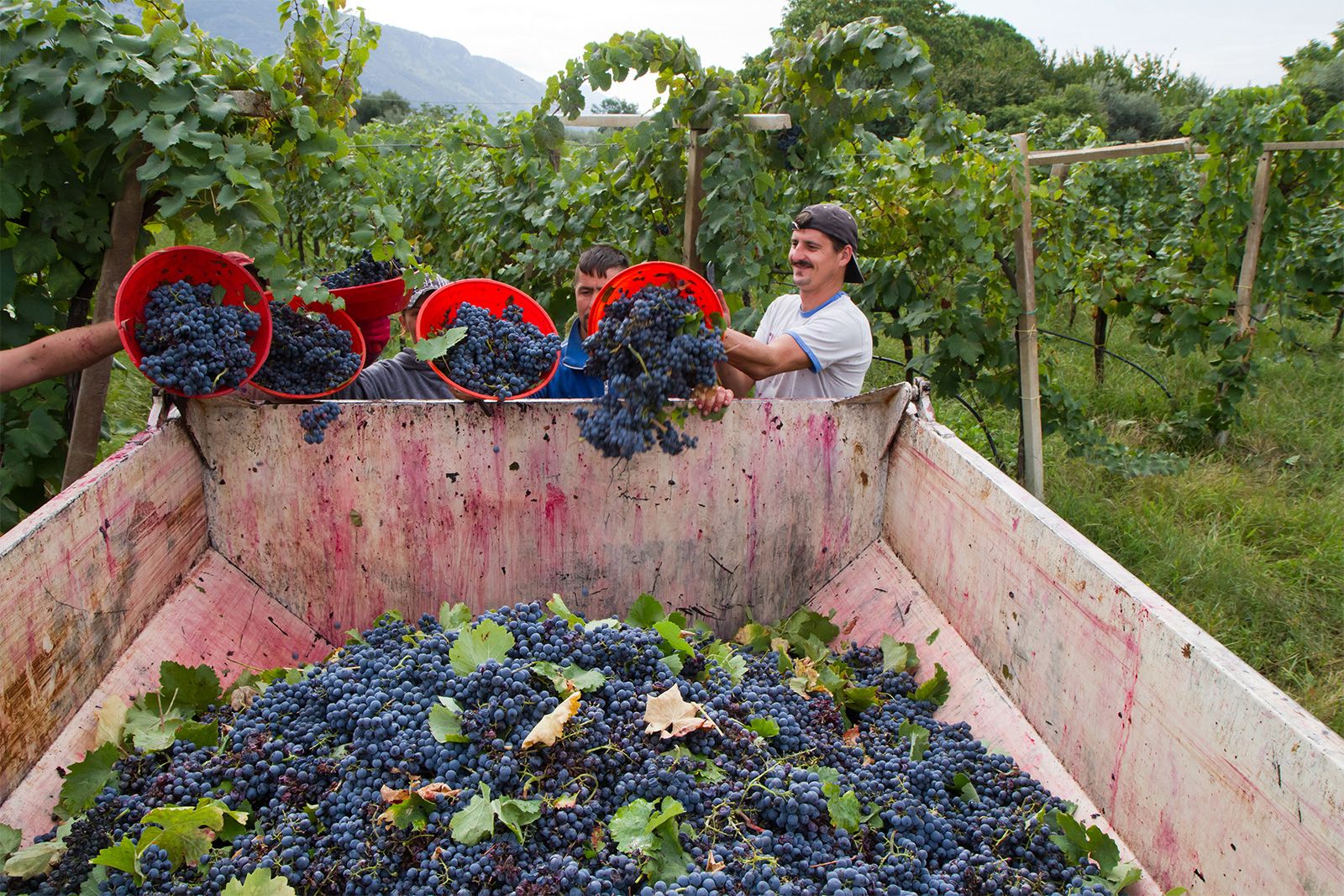
Harvested grapes bound for the crush, the crop that started Escondido’s Grape Day tradition. The same valley that grew muscat and citrus now leans on temporary cold storage to protect avocados, produce, beer and catered events through a hot inland season.
The Cold-Storage Name National Brands Already Trust
Holding temperature for a household-name chain is a different bar than backing up a single kitchen, there’s no room for a unit that drifts out of spec at the wrong hour. We’ve cleared that bar for some of the most recognized brands in the country, including McDonald’s, Chick-fil-A, and Dutch Bros Coffee, which vet a cold-storage partner the same careful way they vet a food supplier. That standard travels with every trailer we drop in Escondido.
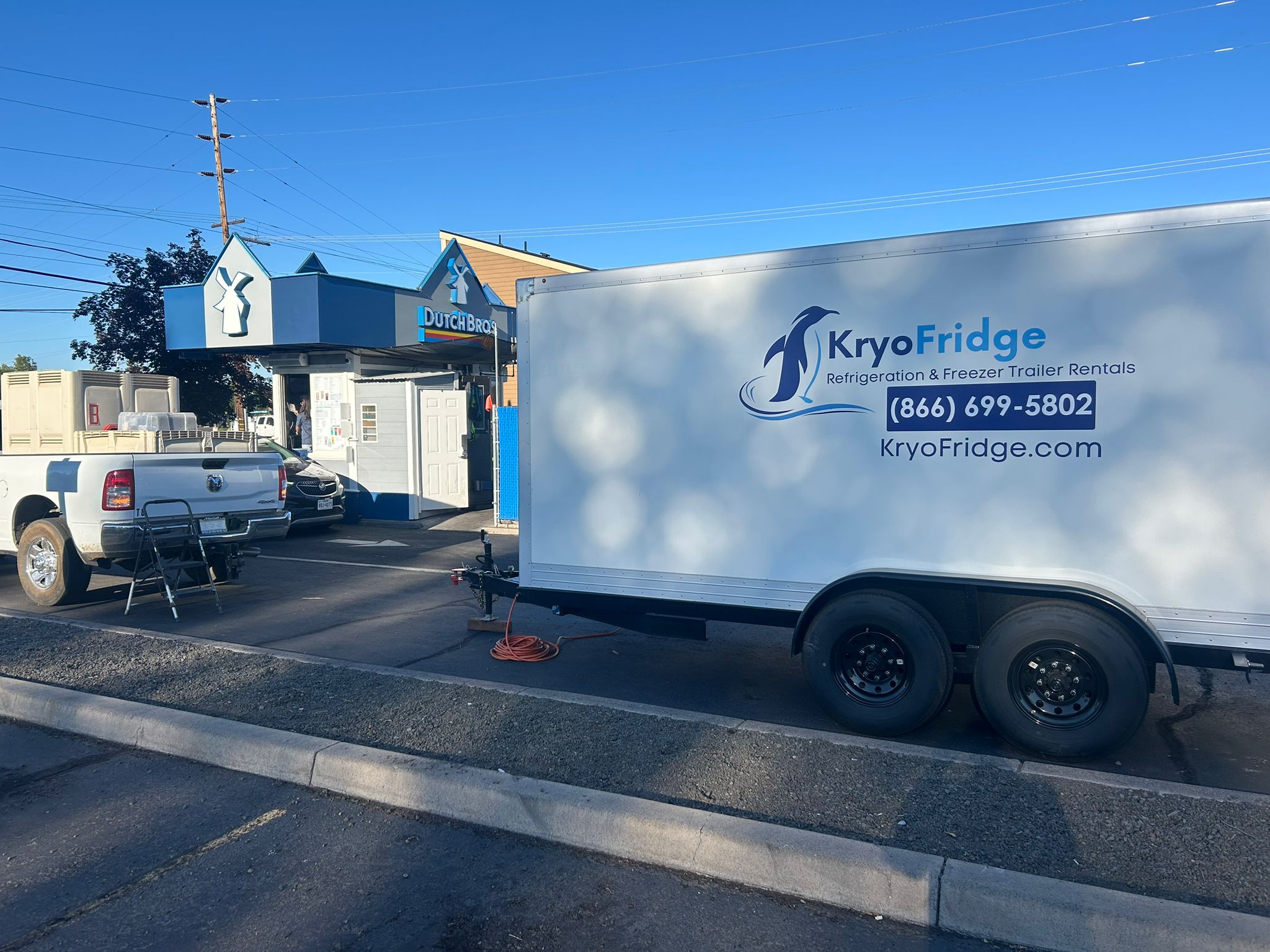
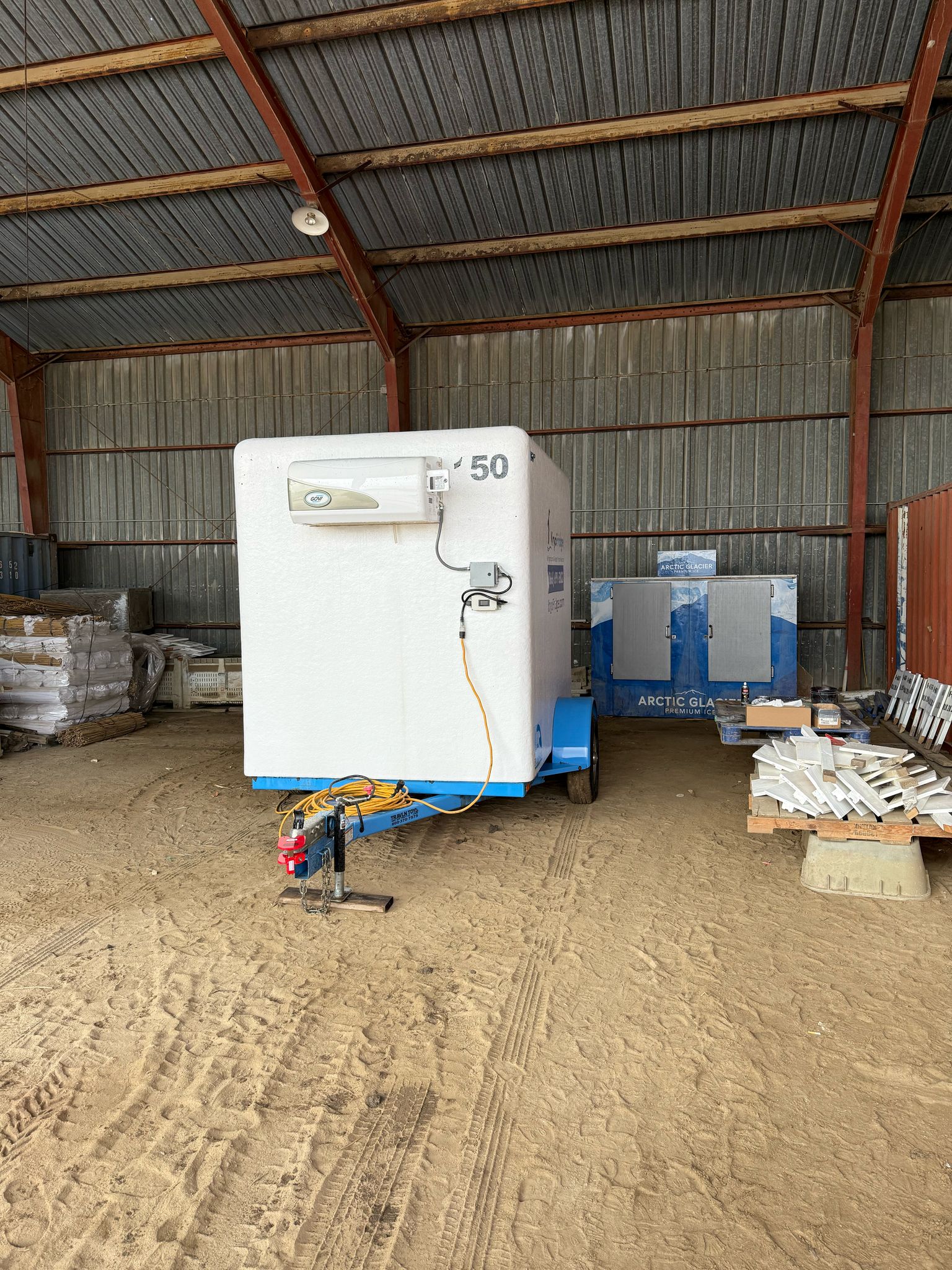
So the two stories our crew tells most start the same way, a phone ringing at the worst possible time. A Chick-fil-A lost its walk-in cooler at 6:30 on a Friday, dead in the middle of the dinner rush with cars wrapped around the building. We prepped a trailer, rolled, and had it on site pulling temperature 34 minutes after the call. A Denny’s blew the fuse on its walk-in overnight heading into Mother’s Day, one of the busiest mornings on their calendar, and our dispatch staged three freezer trailers in their lot to hold the pies, proteins and prep before the first ticket printed. The exact same playbook covers an Escondido taqueria on Grand Avenue or a San Pasqual packhouse: hit the set-point, hold it through the heat, and be clean enough to pass a county inspection.
Who Calls Us in Escondido, and Why
Cold-storage demand in North County rarely lands on a calendar. It shows up as a harvest that ran long, a compressor that died, or an event the ice chests can’t cover. These are the calls we field most across the valley, each paired with a real photo of the work it serves.
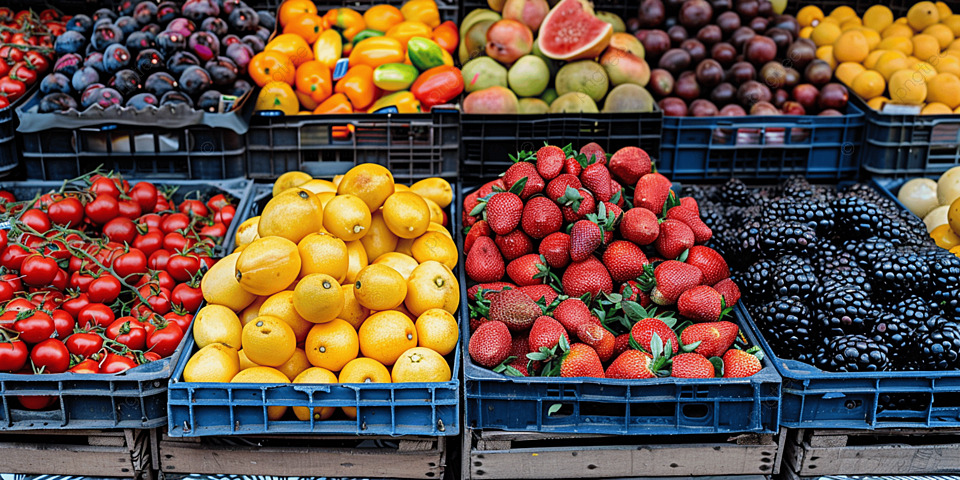
🥑 Growers & Packhouses
Harvest overflow and short-term holding for the avocado, citrus and produce operations across the San Pasqual Valley, Valley Center and Fallbrook.
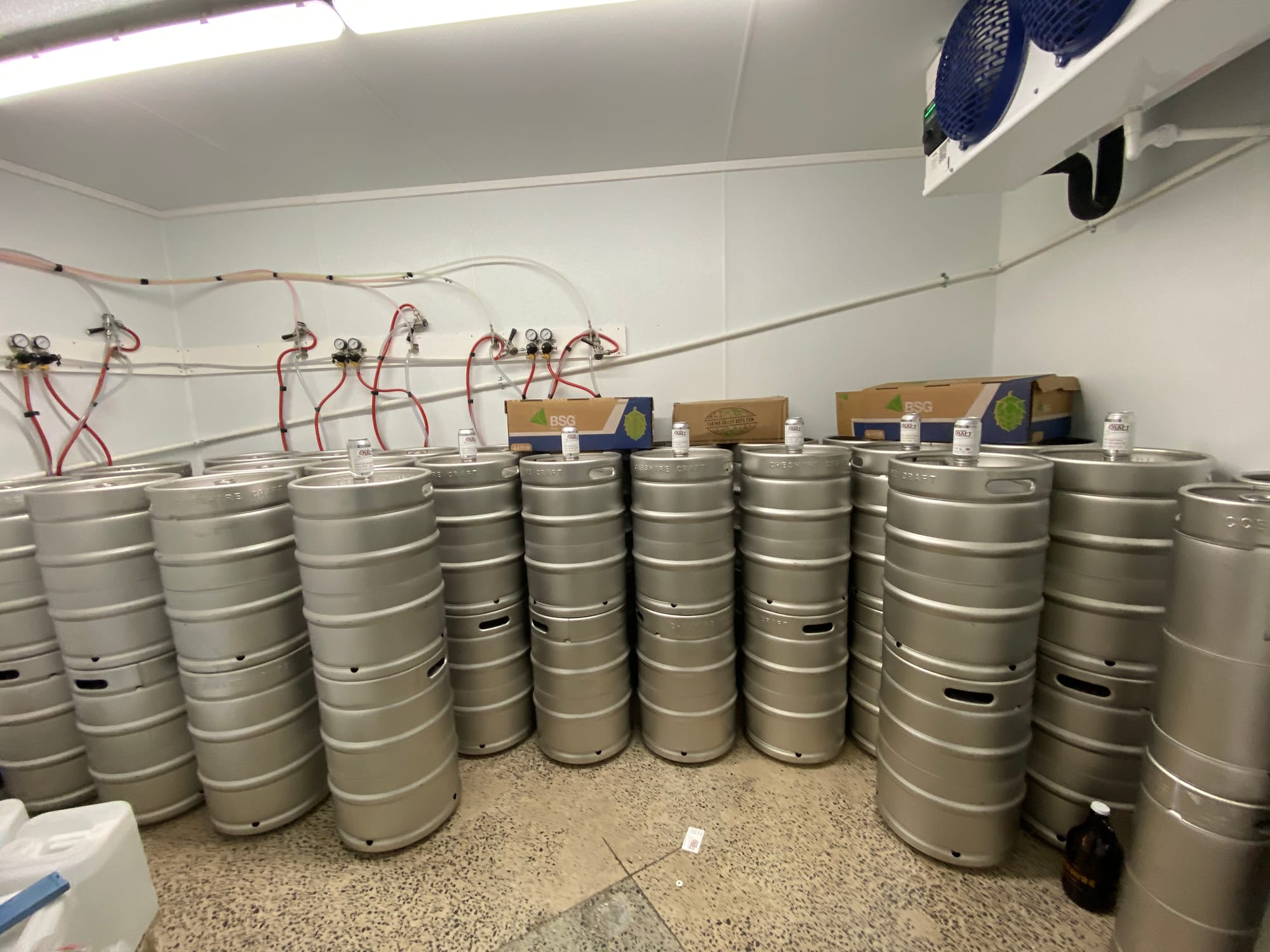
🍺 Breweries & Beverage
Cold-room overflow for kegs, hops and packaged beer when a release, a festival pour, or a chiller failure outpaces an Escondido brewery’s fixed capacity.
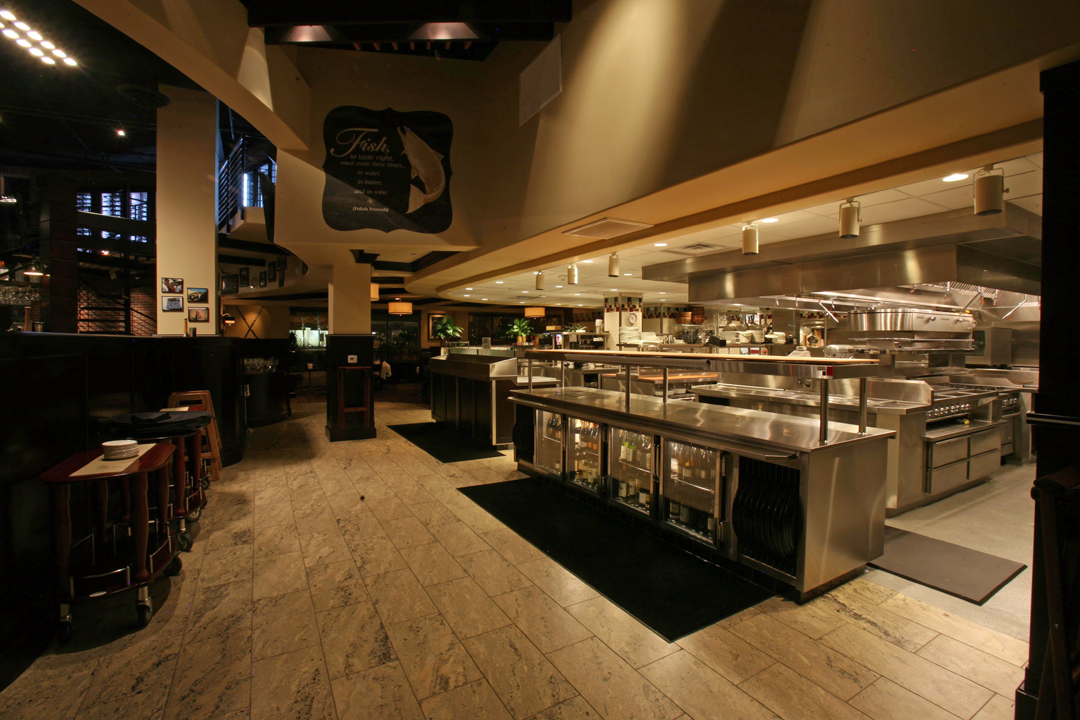
🍽 Restaurants & Kitchens
Walk-in failures, remodels and seasonal overflow for the kitchens along Grand Avenue, Centre City Parkway and the East Valley restaurant strip.
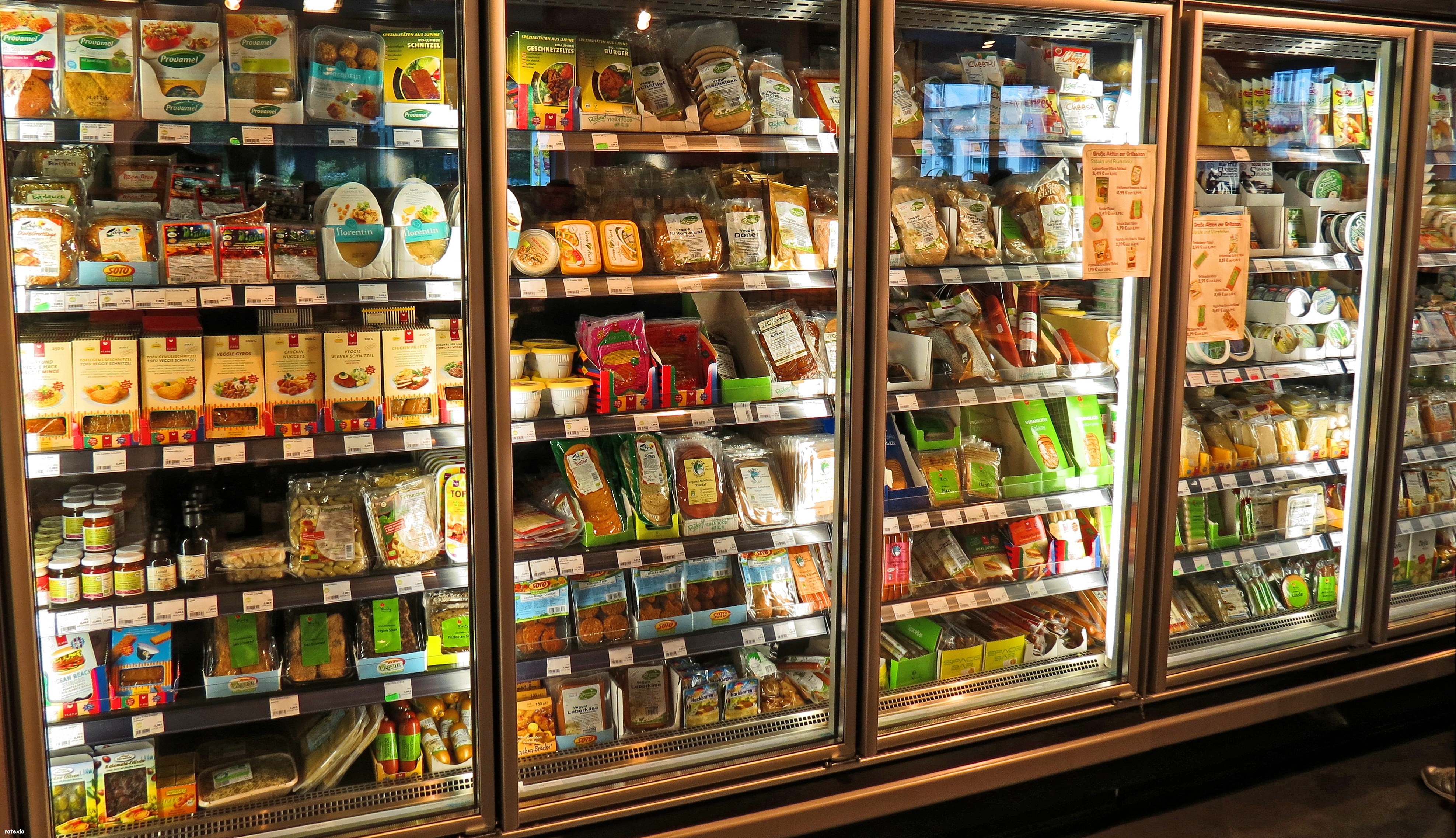
🛒 Grocers & Markets
Backup refrigeration when a case or compressor goes down, during a store reset, or through a holiday inventory surge.
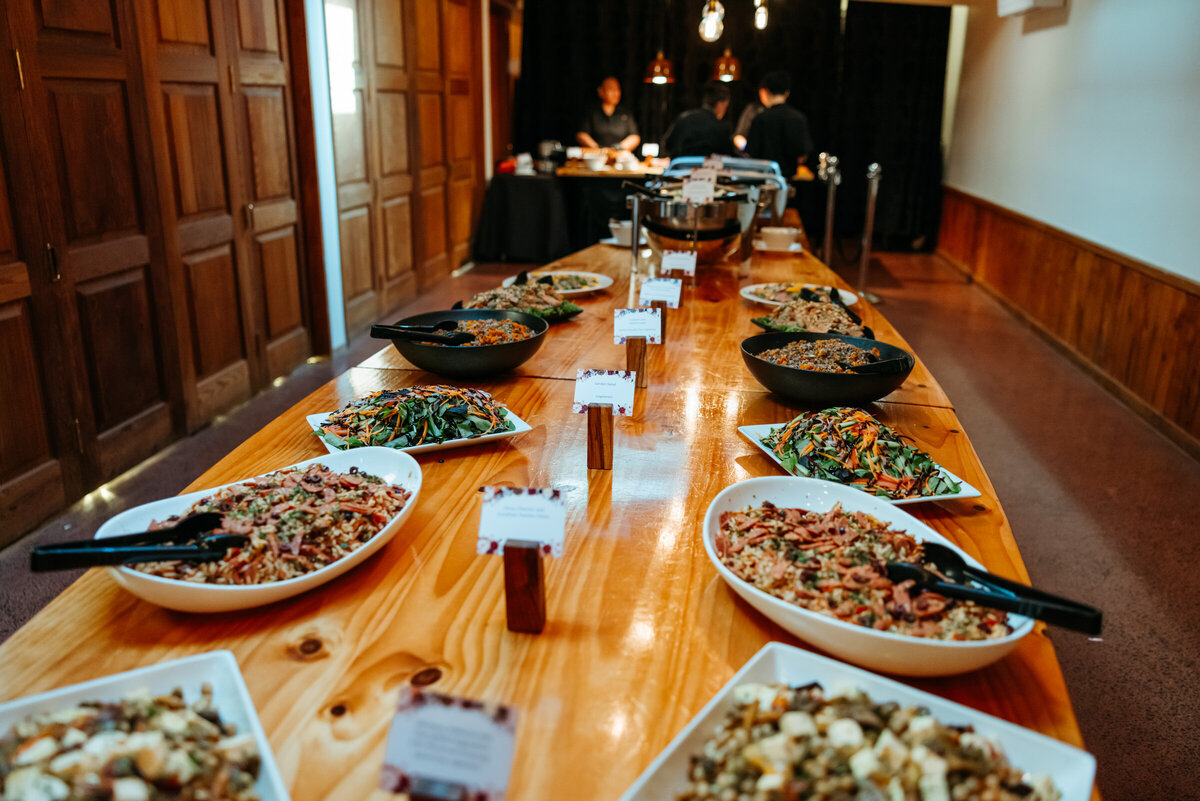
🎪 Events & Catering
On-site cold and freezer space for vineyard weddings, Grape Day Park festivals, and catered events near the California Center for the Arts and the Safari Park.
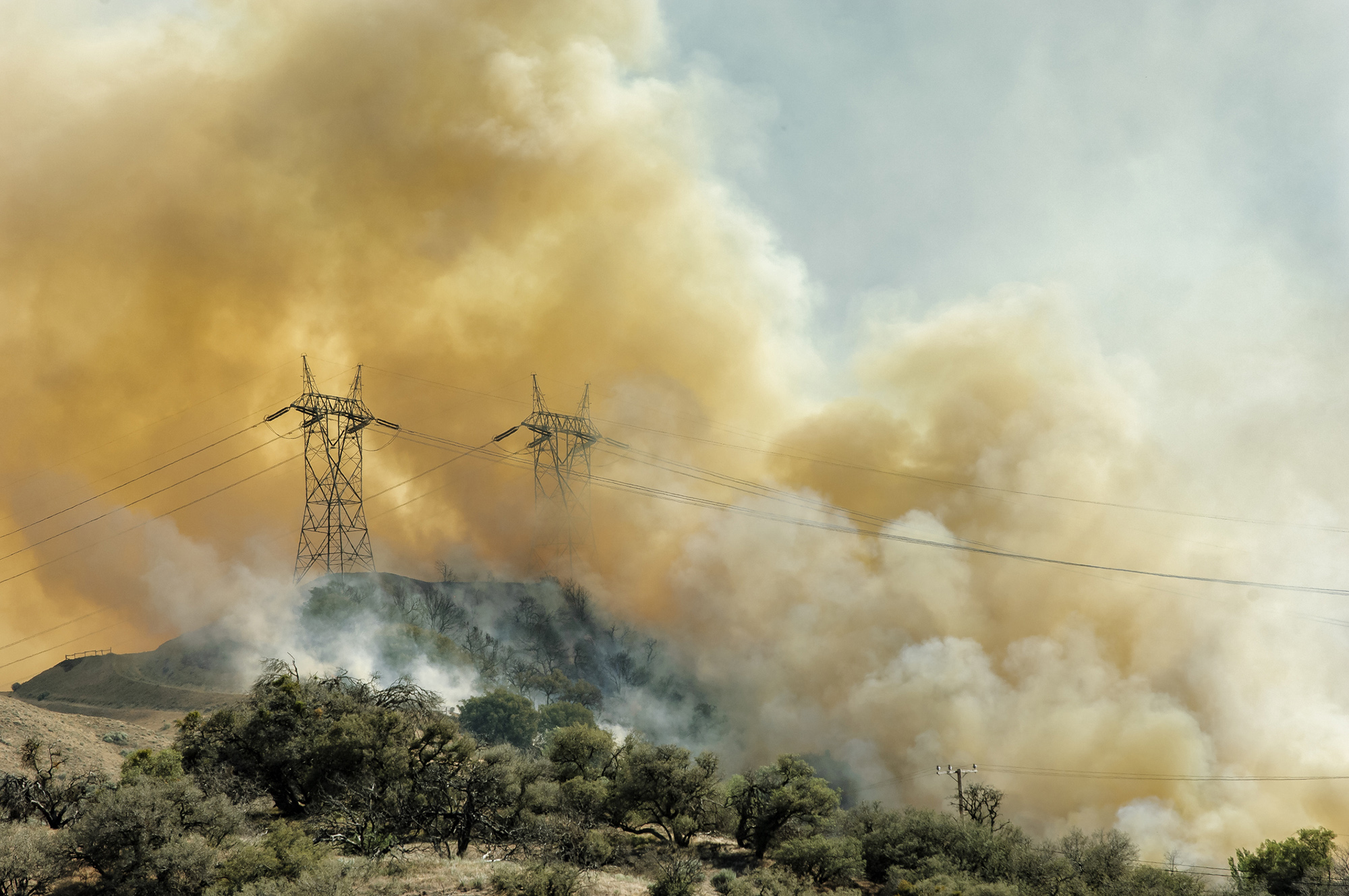
🚨 Emergency & Disaster
24/7 deployment for fire-season power shutoffs, equipment failures, recalls, and disaster-relief cold chains across North County.
The common thread is timing rather than budget. Almost nobody plans to need a freezer trailer, they need it the morning the picking crew brings in more than the packhouse can chill, the night a compressor quits, or the day before an event when the rented coolers suddenly look very small. Because our units are already staged in North County, “can I get one today?” is a normal Escondido request here, not a long shot.
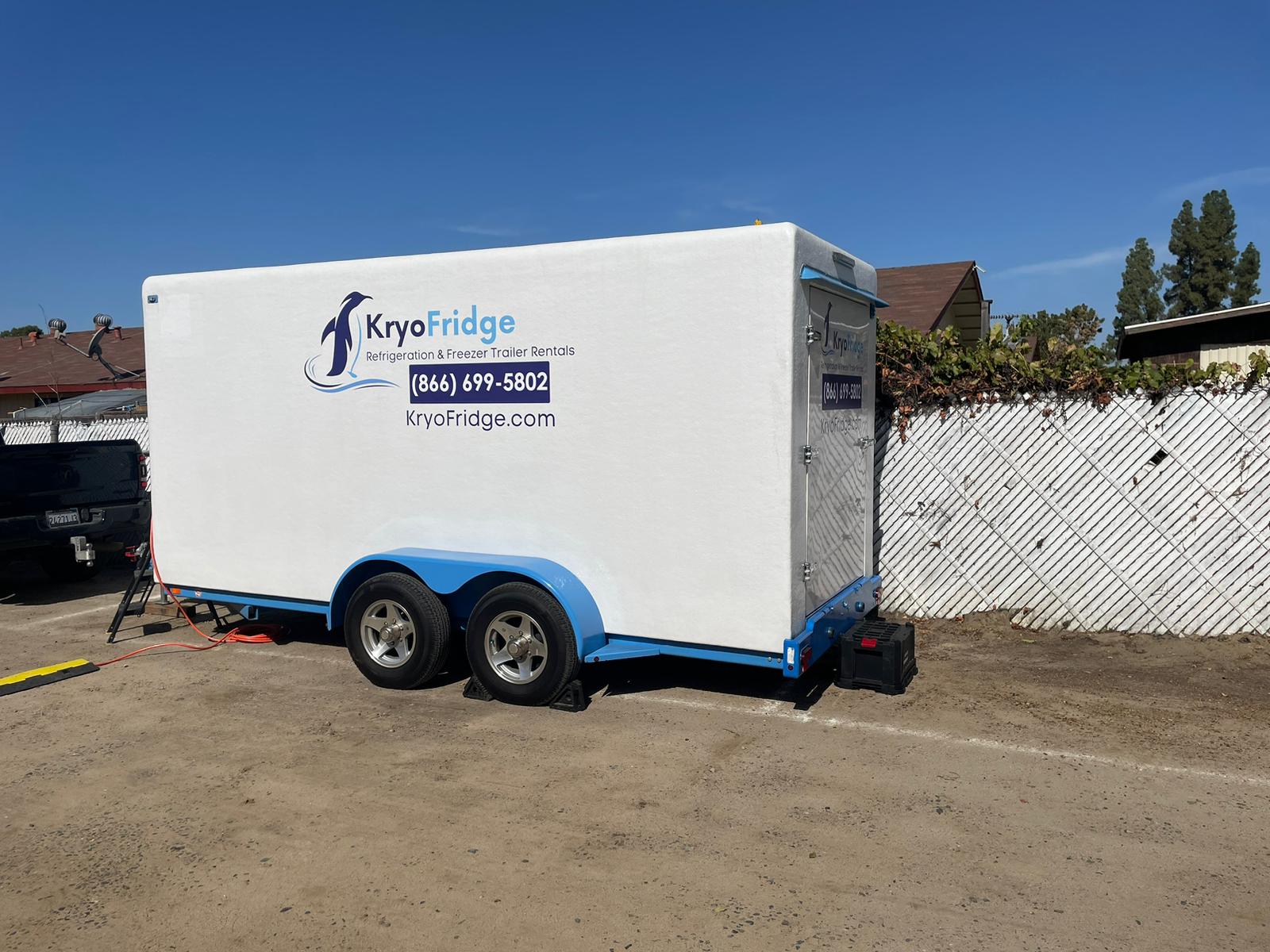
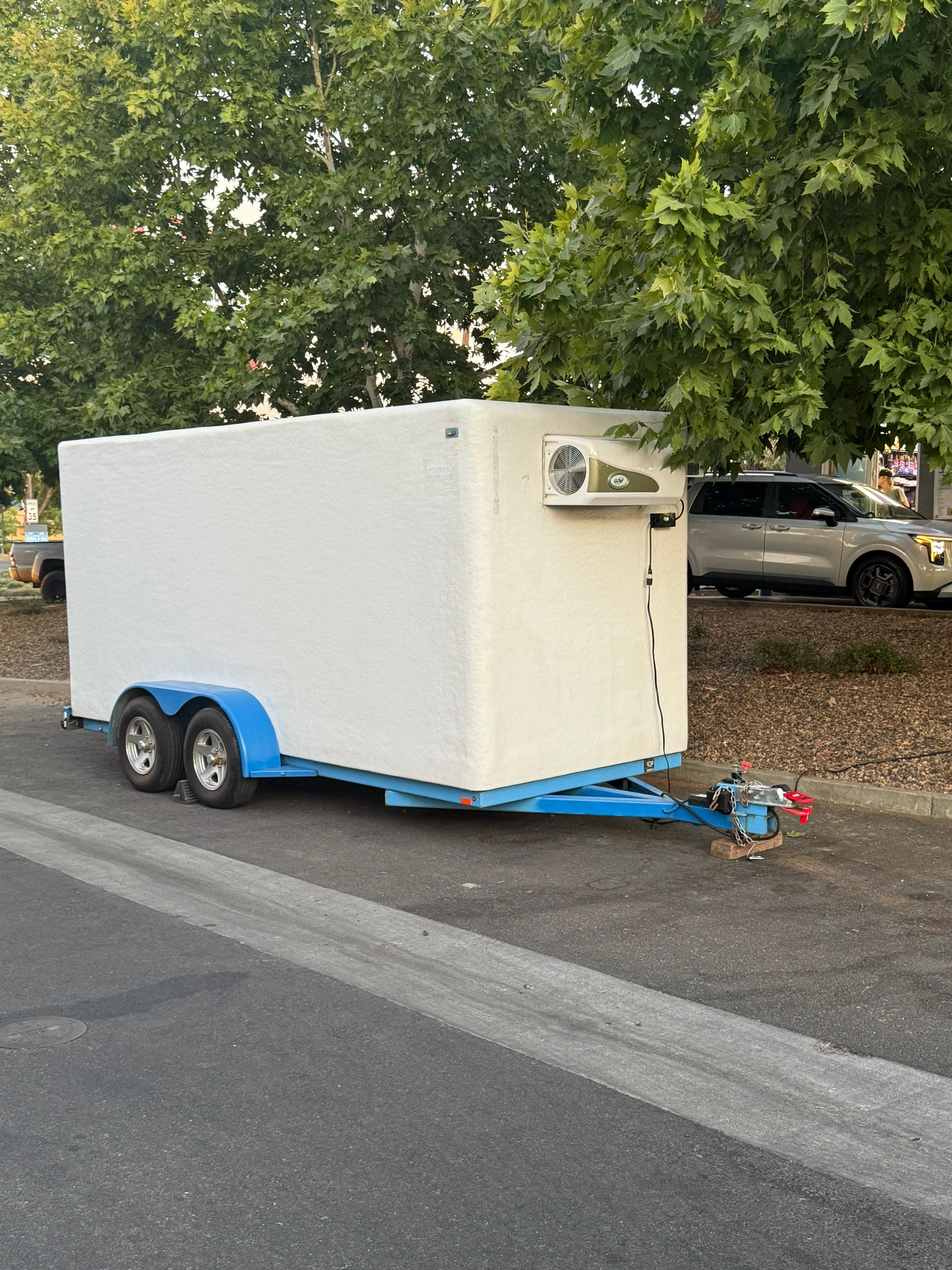
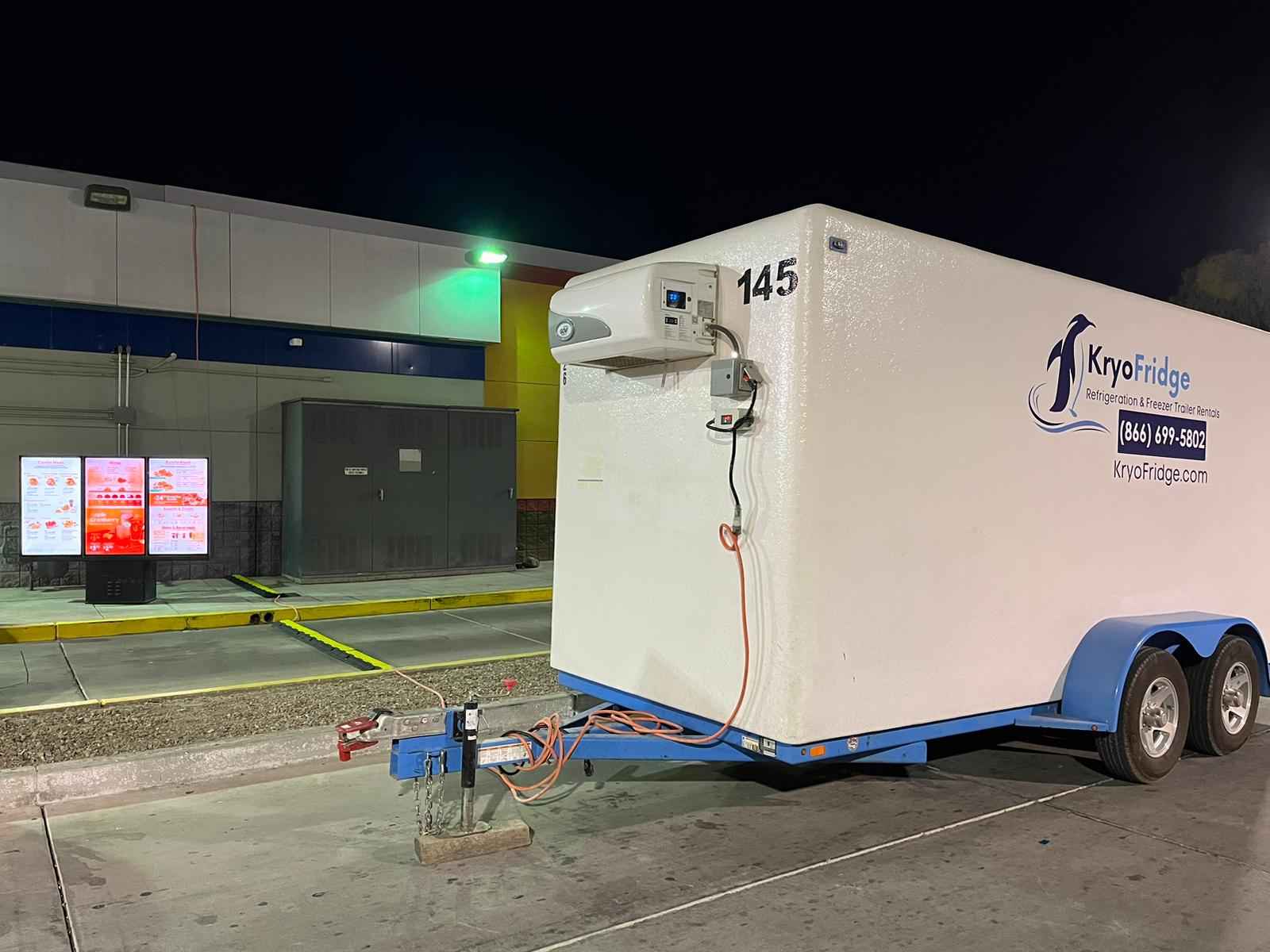
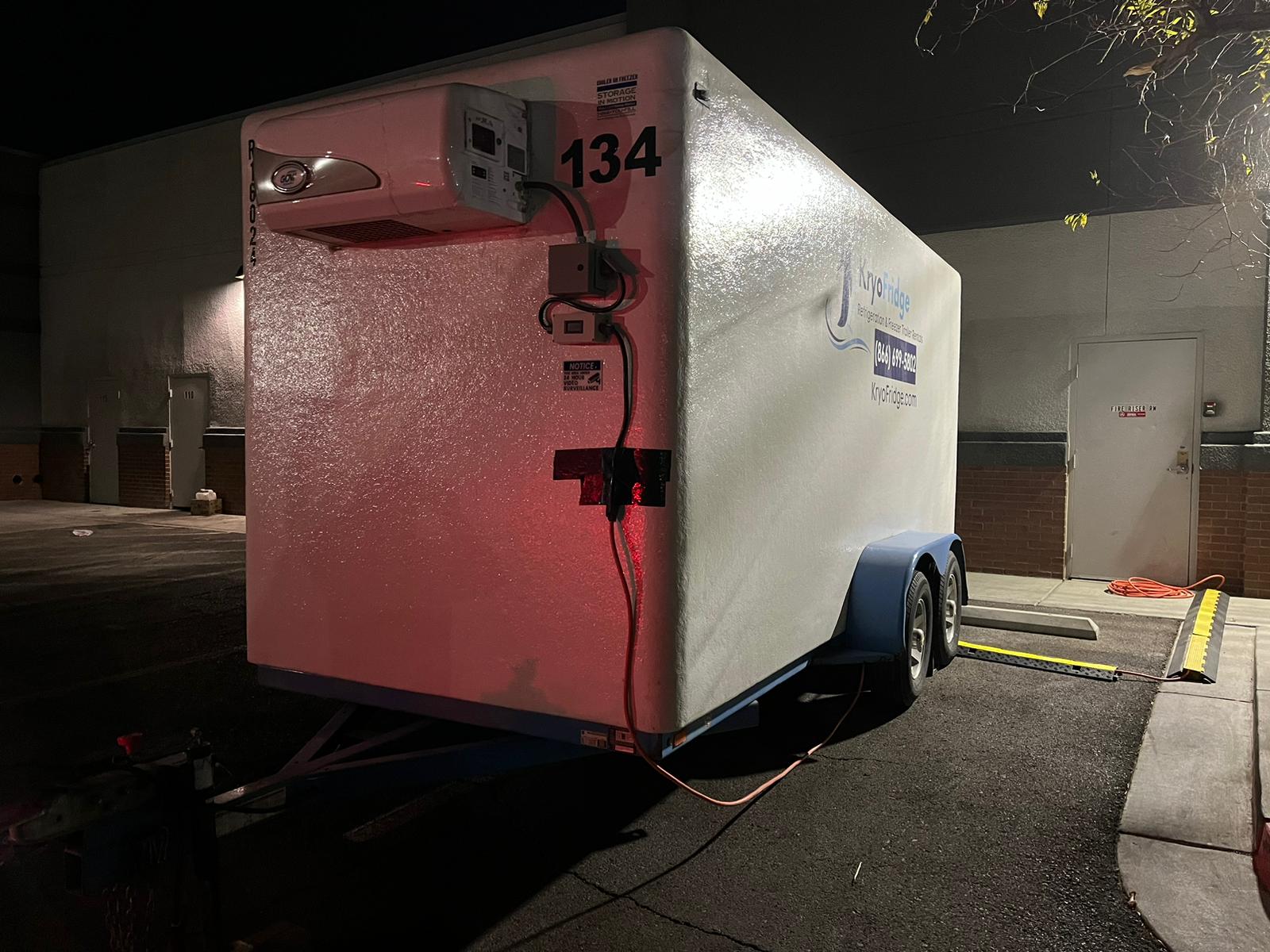
Our Trailers, Out on Real North County Jobs
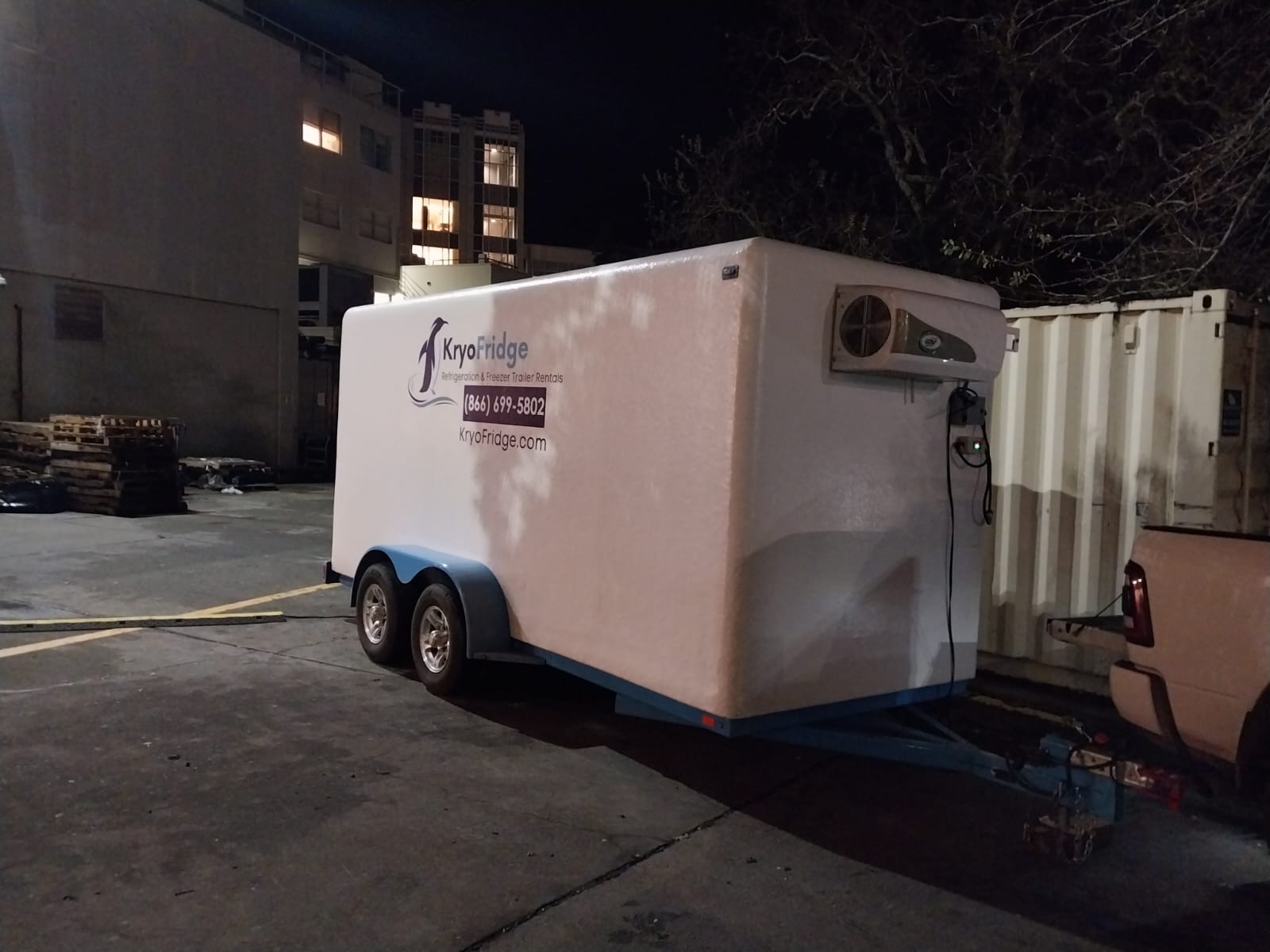
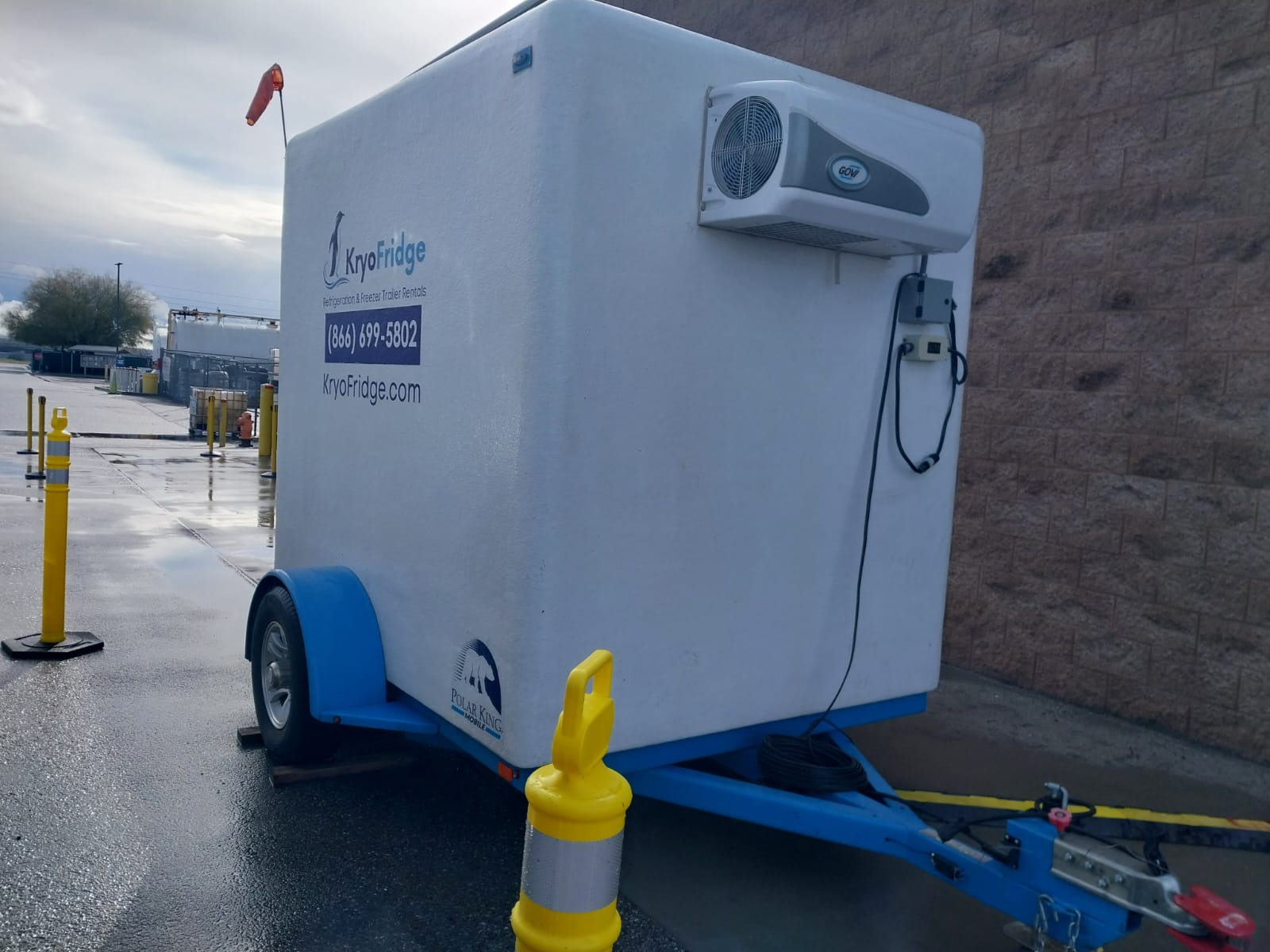
Actual KryoFridge units on actual deployments, packhouse yards, dock lines, brewery lots, and after-dark emergencies across the Escondido area.
Cold Storage for Escondido’s Working Economy, Groves, Packhouses & the Bakery Line
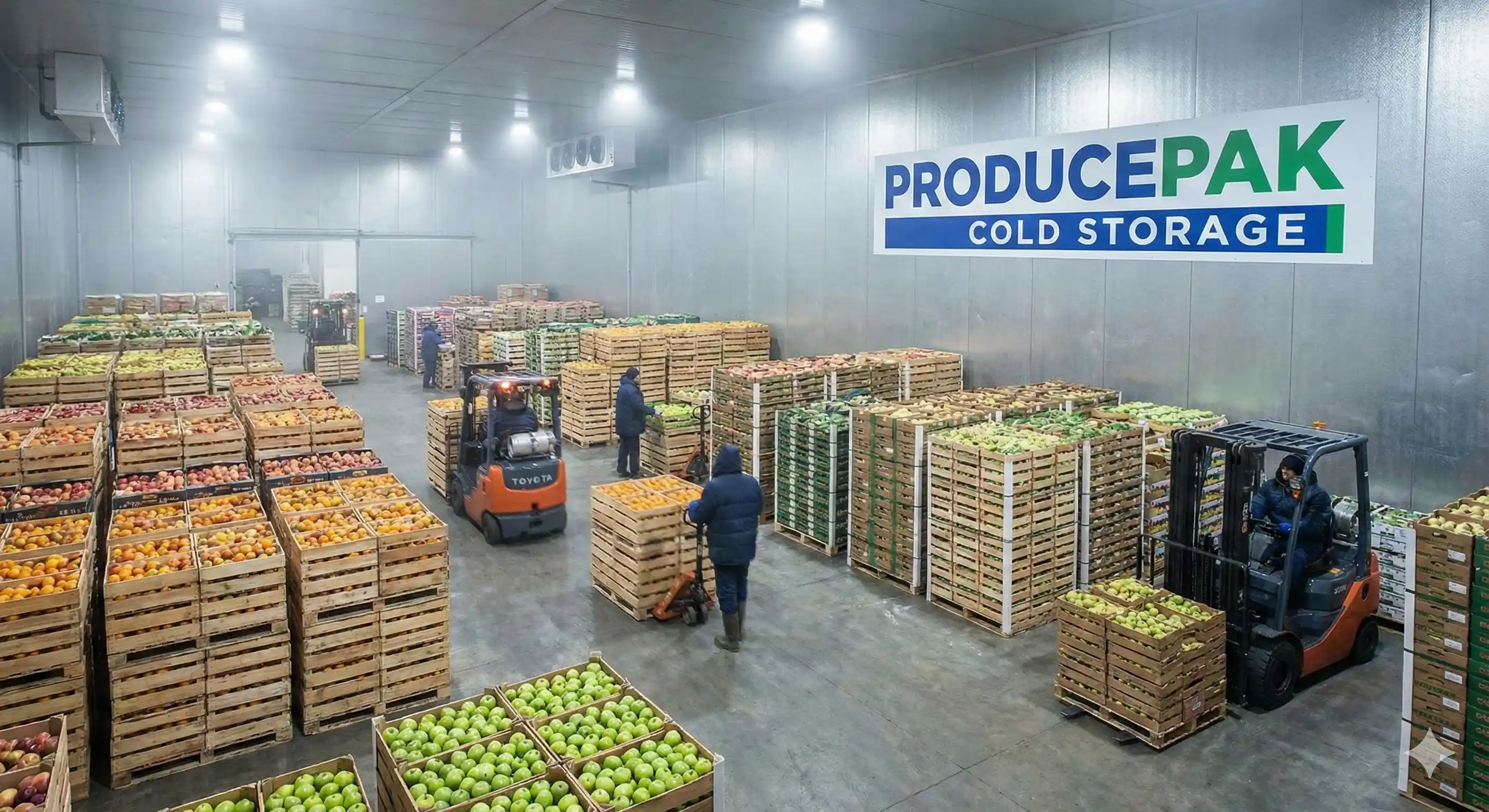
Escondido’s economy is broader than its farm roots suggest, but cold storage stitches a lot of it together. Avocados alone move well over a hundred million dollars through the local economy in a strong year, and most of those dollars are spent in town. Bimbo Bakeries runs a major baked-goods operation here. Sapporo–Stone Brewing is headquartered in Escondido. And a deep bench of smaller food manufacturers and wineries fills out the industrial pockets off Andreason and Enterprise.
For those operations a trailer is operational insurance, not an indulgence. A packhouse that maxes out its cooler during a heavy avocado pick can stage fruit in a 6×16 within the hour instead of letting it sit warm on the dock. A bakery or food manufacturer running a production overflow adds temporary cold capacity for a season without a permanent buildout. During a recall or a power event, a row of staged reefer trailers keeps product in-spec while the underlying problem gets solved: and because we own the fleet, we size that response to the job rather than to whatever a broker happens to have free.
Retail and food service carry the same exposure at a smaller scale. The kitchens and markets around Westfield North County, the revived Grand Avenue dining district, and the East Valley corridor run on tight margins and tighter cold chains. One failed walk-in on a busy Friday can erase a weekend’s product. We match a compact unit to a corner kitchen or a multi-trailer setup to a packhouse, and we do it the same day, from a North County yard.
The San Pasqual Valley Bakes, and That’s When Cold Storage Quits
Escondido sits far enough inland that the marine layer rarely reaches it, no reliable “June Gloom,” far less ocean cooling than the coast a half-hour west. That trade-off shows up every summer. Afternoon highs commonly climb into the upper 90s, heat advisories routinely push the inland valley between 100° and 108°, and the all-time record sits at a brutal 115° set in early September 2020. So the valley is simply a hotter place to keep things cold than the San Diego skyline a few exits down the 15 (the same drive that feels ten degrees cooler at the coast end).
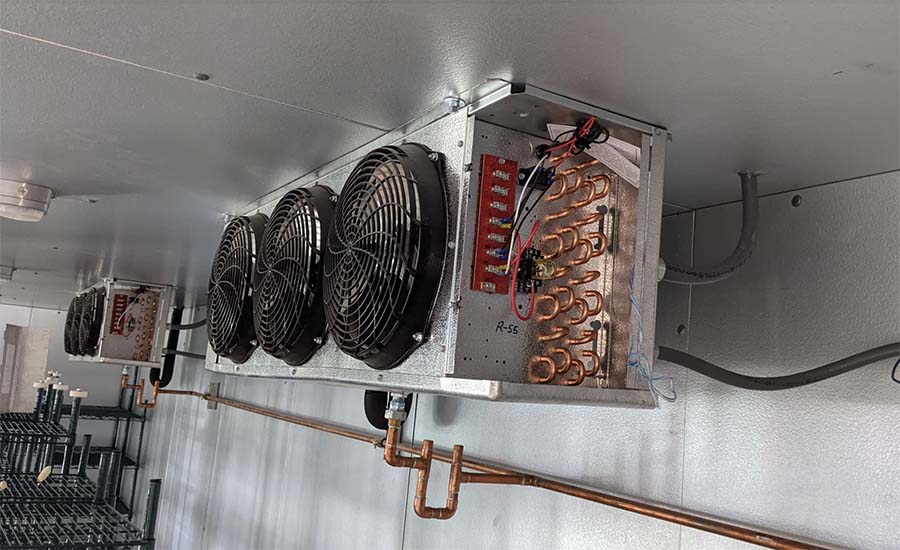
Heat works against refrigeration two ways at once. It piles load onto existing equipment, an aging walk-in compressor that coasted through March can give out in August precisely because it never catches a break. And it shrinks your reaction window, because at 105° ambient, frozen product warms toward the danger zone fast the moment a unit goes dark. That’s why our reefer units are spec’d to pull and hold a set-point in extreme ambient heat, not in a mild test room: a 6×16 parked in an open Escondido lot in August holds the same deep-freeze it would in January.
When you’re planning around the season, or scrambling because of it, that engineered margin is the entire point. We’d rather you call us with a forecast than with a thermometer already climbing.
Fire Season, Power Shutoffs & the Cold Chain When the Grid Goes Dark
North County San Diego lives with a fire-season reality that puts cold storage on the critical list. The backcountry east of Escondido, the same hills that frame Ramona, Valley Center and the San Pasqual ridges, is genuine fire country, and the 2003 Cedar Fire and 2007 Witch Creek Fire are still seared into local memory. When Santa Ana winds spike the danger, San Diego Gas & Electric can call a Public Safety Power Shutoff that drops power to whole inland communities for hours or days at a time. Every walk-in, reach-in and packhouse cooler on that circuit goes out at the same moment.
A trailer on its own generator is built for exactly that hour. For a single business, it simply keeps the inventory frozen until the lights come back. Scale it up and the same machines become something bigger, park a row of generator-fed reefers at a shelter or a recall staging site and you’ve rebuilt the cold chain on wheels, holding food and relief supplies to spec for crews and residents the entire time the fixed grid stays down.
Owning our trailers outright and running dispatch around the clock is what lets us match the response to the emergency, a lone unit for one dark storefront, or a coordinated line of them for a valley-wide relief effort. There’s a logic to it worth saying plainly: if the grid is the thing that broke, only cold storage that doesn’t depend on the grid actually solves the problem.
Sizing a Trailer to Your Escondido Operation
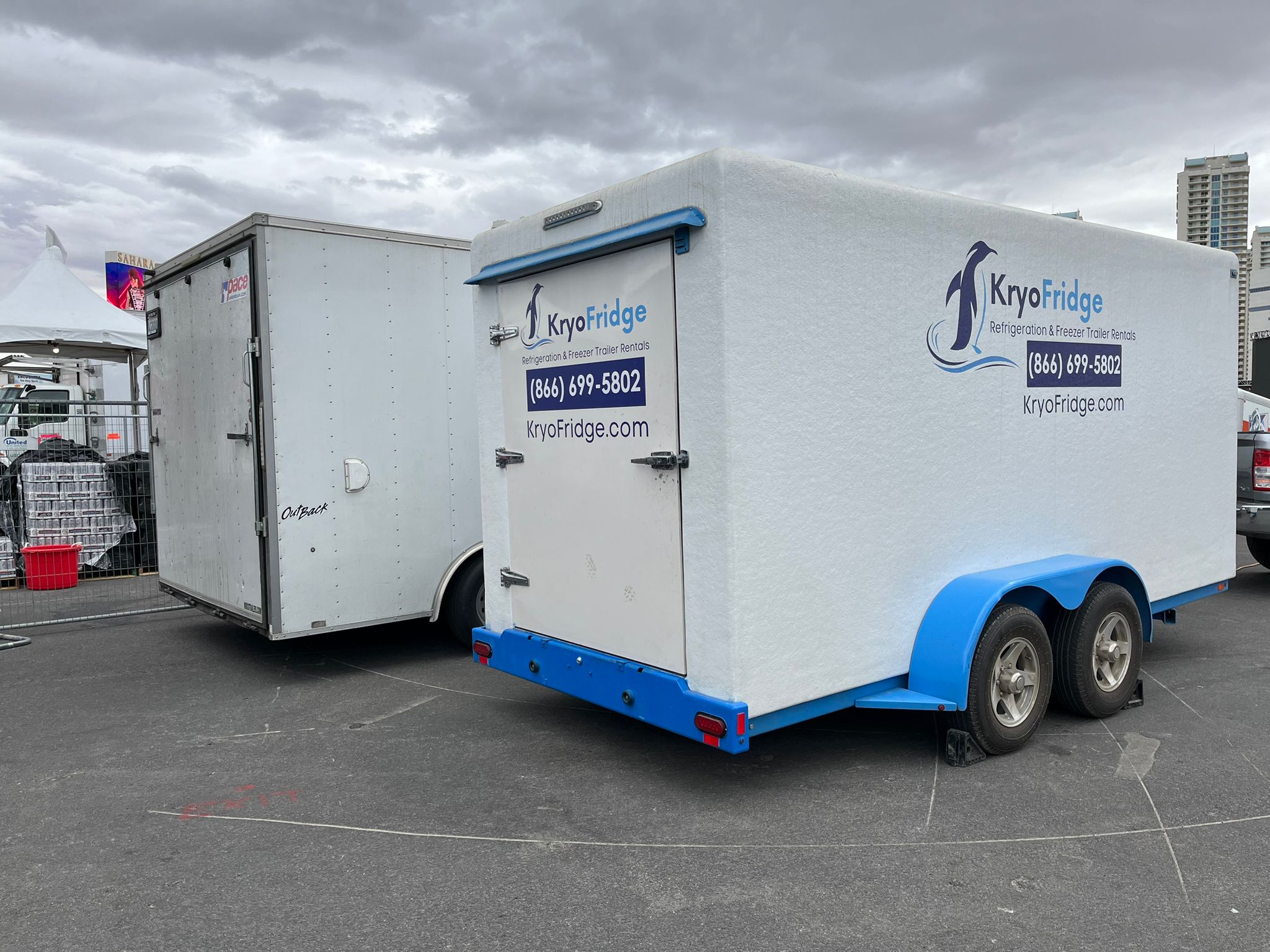
We keep the lineup deliberately simple, three footprints that ladder from a corner-kitchen patch up to a packhouse-plus-disaster job. Each one sets digitally anywhere across the deep-freeze-to-fresh-cold band and powers off a single circuit or a generator.
| Trailer | Where it shines | Temp range |
|---|---|---|
| 6×8 | Tight downtown lots, small kitchens, short overflow | -10°F to 50°F |
| 6×12 | Grocers, caterers, breweries, mid-size events | Deep-freeze capable |
| 6×16 | Packhouses, distribution, large festivals, disaster | Heavy-duty reefer |
Whatever the size, the set-point is dialed in digitally and the unit feeds off a single dedicated 120V/20A line or a generator.
6×8, the compact unit for tight lots and single kitchens
This is the size that slips into the older, narrower lots around the Grand Avenue core and the Old Escondido historic blocks, where a bigger trailer simply can’t turn. It carries roughly eight pallet positions, enough to cover most single-kitchen emergencies and short overflow stretches. If you run a corner restaurant or a small market and your walk-in just quit, this is usually the right call, and the easiest to place.
6×12, our most-rented size for grocers, caterers & breweries
At around fourteen pallet positions and deep-freeze capable, the 6×12 is the workhorse of the fleet. It’s the sweet spot for a grocery backup, a multi-day vineyard wedding, a brewery holding kegs through a release weekend, or a restaurant that needs real walk-in-equivalent space during a remodel. Big enough that nobody’s rationing shelf room, compact enough to drop in most commercial back lots.
6×16, the heavy unit for packhouses, distribution & disaster
Roughly twenty pallet positions with a heavy-duty reefer unit engineered to hold deep-freeze in extreme ambient heat. This is the trailer that stages a heavy avocado pick when the packhouse cooler tops out, covers a large festival at Grape Day Park, or anchors a fire-season relief cold chain. Out in the San Pasqual Valley and the industrial yards off Enterprise, the wider pads and access take a 6×16 with room to spare.
Caught between two sizes? Describe the load and the timeframe and we’ll make the call with you. Sizing you correctly beats selling you a box bigger than the job, every time.
Set It Right: A Temperature Guide for What You’re Storing
Cold storage isn’t a single number. The reason a digital set-point matters is that different product holds safely in different bands, and in Escondido’s heat, drifting out of the right one is exactly how a load is lost. Here’s the working reference our customers size their rentals around.
| Product | Typical holding band | Trailer mode |
|---|---|---|
| Ice cream & frozen desserts | -10°F to 0°F | Deep freeze |
| Frozen proteins, seafood, packaged beer | 0°F or below | Freezer |
| Fresh meat & poultry (short hold) | 28°F to 32°F | Refrigerated |
| Avocados, citrus, dairy, deli | 34°F to 40°F | Refrigerated |
| Kegs, beverages, florals, catering platters | 38°F to 45°F | Refrigerated |
The number to memorize isn’t in the table: 40°F. Above it, across the 40–140°F window food-safety guidance calls the “danger zone”, bacteria on perishable food multiply quickly, and most refrigerated product is treated as unsafe after roughly four cumulative hours there. That single fact is why a failed walk-in on a 100°-plus Escondido afternoon is an emergency, not an inconvenience, and why our reefer units are built to defend a set-point against the worst-case ambient rather than coast in an average one.
One nuance growers ask about: produce like avocados doesn’t want true deep-freeze, it wants a steady cool band, and a trailer that overshoots can chill-injure the fruit as surely as heat spoils it. When you call, tell us the coldest and the most delicate thing you’re holding. A single unit handles a freezer load on its own, and when you’re mixing deep-freeze proteins with cool-but-not-frozen produce, we’ll usually recommend a split plan or a second trailer so nothing has to compromise.
Powering a Trailer in the Valley: Packhouse Outlet or Off-Grid Generator
Two questions decide whether your trailer powers up the moment it lands. First: is there a dedicated 120-volt, 20-amp circuit inside roughly 100 feet of the drop spot? That single circuit is all a unit draws. Second: if there isn’t, are you fine running on a generator? Those are the only two power paths, and the one mistake worth heading off is assuming a trailer taps standard 208–240V building service. It doesn’t. A 30-second phone check on your end spares everyone a wasted delivery.
How that plays out depends entirely on where you sit in North County. A Grand Avenue kitchen, a Westfield-area market, or a San Pasqual packhouse almost always already has the dedicated outlet, so we plug straight in and the box begins pulling toward your set-point. Out where Escondido turns rural, an avocado ranch above Valley Center, a vineyard pad with no service drop, an open festival lawn, the generator simply travels with the trailer and powers it anywhere.
And then there’s the SDG&E factor. Inland North County sits squarely in the utility’s fire-season shutoff footprint, so a generator-fed unit isn’t only for off-grid sites, it’s the version that keeps holding temperature straight through a Public Safety Power Shutoff while everything wired to the grid goes dark. When you call, just tell us which of the three situations you’re in and we set you up accordingly.
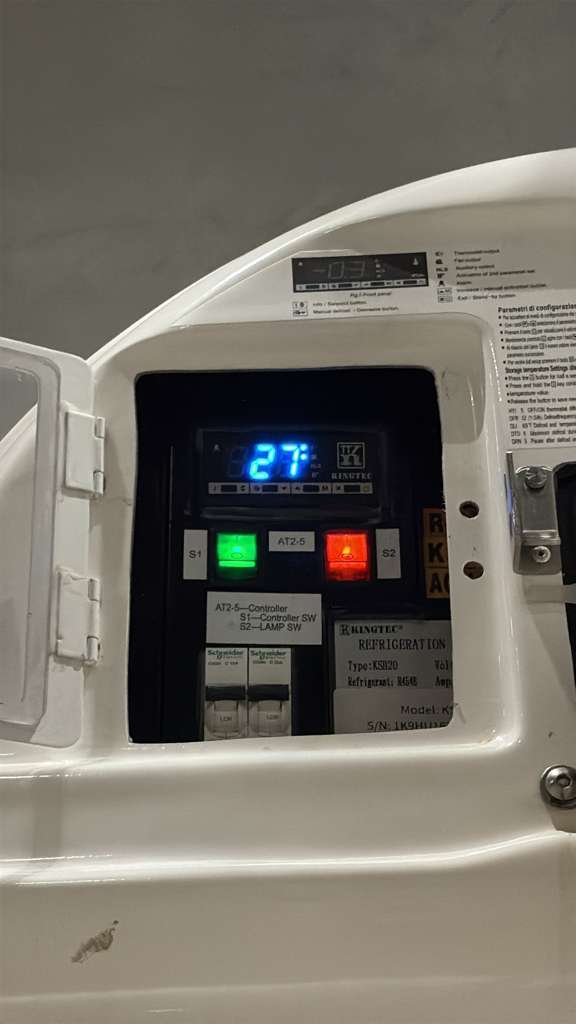
Placement is the other half of a clean delivery. The trailer needs a reasonably level pad, a clear lane for our truck to back in and set it down, and either that nearby circuit or room for a generator. We lock the exact drop point before the rig leaves the yard, which matters in a town this varied, the squeeze of an Old Escondido historic-core lot asks for one approach, the wide-open access along Highway 78 and the San Pasqual ag roads asks for another, and our drivers already know the difference.
Cold Storage for Escondido’s Vineyard Weddings, Festivals & Brewery Events

Events are where cold storage gets overlooked until it’s already too late. A caterer plating for 300 at a hillside vineyard wedding, a vendor row baking through the Grape Day or Tamale Festival at Grape Day Park, a corporate reception in the gardens at Stone Brewing World Bistro & Gardens, a beer-and-wine garden at a downtown street fair, all of it needs steady cold and freezer space that a few ice chests can’t carry once the inland afternoon heats up.
A KryoFridge trailer drops a walk-in’s worth of capacity onto the site, holding frozen desserts, fresh produce, kegs and beverages all at a locked set-point through a triple-digit Escondido afternoon. It runs quiet enough to sit near a guest area, locks up for overnight multi-day events, and is roomy enough that the kitchen never has to ration space mid-service.
Pulling together the whole event footprint? Round it out with water station rentals in Escondido to keep crews and guests hydrated and restroom trailer rentals in Escondido for guest comfort: one call can cover the full site. (cross-brand links, auto-wired into the wheel on publish)
Permits & Temporary Food Facilities for San Diego County Events
If you’re serving food at a public event around Escondido, the cold chain is a permitting question as much as an operations one. Knowing the San Diego County rules in advance keeps your booth, or your whole event, from getting flagged on the day.
Vendors handing out or selling food and drink at a community event in Escondido generally need a Temporary Food Facility permit from the San Diego County Department of Environmental Health & Quality, and the organizer running a multi-vendor event files a separate Community Event / Event Organizer application. The county wants the organizer’s paperwork roughly 30 days ahead, applications submitted inside 14 days of the event (or modified that late) pick up a late-submittal fee. And the organizer is on the hook for the shared infrastructure, including a three-compartment sink with hot and cold running water for vendors who don’t bring their own. Every food vendor must show either a Temporary Food Facility permit or an existing annual health permit number before they pour or plate.
A trailer earns its place in that paperwork for one reason: the county won’t sign off on an operation that can’t keep cold and frozen product at a safe, documented temperature for the entire event, and an open-air booth in San Pasqual heat rarely can on its own. Drop in an NSF-approved unit holding a digital set-point and you’ve answered the inspector’s core question, this is the grade of equipment they expect standing behind a serious food vendor. Our lane is the box itself, food-safe and temperature-holding; the actual permit filing stays with you, though we’ll gladly hand over the unit’s specs to attach when you submit.
Renting Cold Storage in Escondido, the Questions Behind the Questions
Once the basics are covered, these are what come up next. Tap any topic to open it.
Freezer trailer vs. portable walk-in vs. reefer truck, what should you actually rent?
Three things get pitched for the same job in North County, and they’re not interchangeable. Picture an Escondido packhouse that just outran its cooler during a heavy avocado pick. A pop-up walk-in cooler is the cheapest answer on paper, but the word “cooler” is doing a lot of work there, it can’t reach true freezer temperatures, and it’s only as reliable as the building feeding it. When an SDG&E shutoff cuts that building, the cooler quits with it, and on a 100°-plus valley day an undersized one was already losing the fight.
A refrigerated box truck looks like the heavy-duty option, and for moving pallets down the 15 it is. Parked in a yard for a week, though, it’s the wrong tool: it idles loud and burns diesel the whole time, and it pins down a tractor and a driver you’d rather have elsewhere. Useful for a few hours of stopgap, painful for the days or weeks a remodel or harvest overflow actually lasts.
That gap is the reason our freezer trailers exist. A trailer is meant to be dropped and left to hold, deep-freeze rated, NSF-approved, lockable, near-silent, and fed by one simple circuit or a generator, so it gives you more usable space than a walk-in and none of a truck’s noise, fuel or commitment. Built, in short, to keep its set-point in exactly the inland heat and grid trouble that beat the other two.
Will the trailer hold up to a San Diego County health inspection?
Short version: yes, and that’s the whole point of renting one instead of improvising. The San Diego County Department of Environmental Health & Quality is the body that permits and inspects food operations across Escondido and the rest of North County, and its inspectors care about two things in particular, whether your cold equipment is built for food contact and whether it can actually hold a documented temperature. A unit that fails either test can get your service halted then and there.
Our trailers are built to clear that bar: every one is NSF-approved, with food-safe interior surfaces, proper drainage, and a digital controller that puts the set-point right in front of you. Where we’ll be straight with you is the line between equipment and service, we provide the food-safe, temperature-holding box, but we don’t run a temperature-logging or alarm-monitoring service. If your county compliance plan requires continuous recorded logs, source that piece on your own and the trailer handles the rest.
What a cold-storage failure really costs an Escondido operation
It helps to put a number range on it before you need to. The frozen and refrigerated product inside one restaurant walk-in already runs into the thousands; a brewery’s keg cold room, a grocery case bank, or a San Pasqual packhouse cooler holds a multiple of that. Now drop power or a compressor on a 105° afternoon, the clock starts immediately, and within a few hours the spoiled inventory is only the start. Add a stalled line, lost sales, and a crew scrambling to rescue whatever they can.
Set a staged trailer against that and the trade is obvious, you’re spending a known, bounded rental cost to cap a loss that has no ceiling. That arithmetic is exactly why our repeat customers tend to be the ones who got burned once. After the first time, the call comes in before the product ever has a chance to warm.
When does North County demand spike, and should I book early?
Any single emergency is a surprise; the calendar around them isn’t. Four waves drive most of our volume here. June through October, inland heat starts killing tired compressors. The avocado and produce harvests crest on their own agricultural schedule and bury the packhouses. The holiday stretch pushes grocers and restaurants past their built-in cold space. And every Santa Ana wind event raises the odds of an SDG&E shutoff that sends outage calls in all at once. If your need sits inside one of those windows and you can see it coming, reserving early pins down the exact size before it’s gone. If it blindsides you instead, that’s what the 24/7 North County staging is there to absorb.
Can you stage more than one trailer for a big packhouse or festival?
Routinely. A single box is plenty for a typical kitchen, market or taproom, but a packhouse at the top of a pick, a major festival, or a full relief operation runs past what one unit holds, and that’s where owning the fleet pays off, we set several side by side and bring them online in stages as the job ramps. The Mother’s Day rescue described earlier, three freezer trailers dropped overnight for a single restaurant, is the template: grow the cold capacity to fit the operation rather than make the operation squeeze into one box.
Can I rent for just a few days, or do you do long contracts too?
Both ends, and everything between. The shortest jobs are the emergencies and one-day events, a blown compressor, a Grape Day Park festival booth, a single vineyard wedding. The middle band, which is most of what rolls through here, runs weeks to months: a kitchen remodel, an avocado or citrus harvest stretch, a long produce-overflow season. And at the far end, operations that want a unit sitting on standby keep one on an ongoing contract. Give us the rough window when you call and you’ll get a clean quote against it, no penalty for an honest “we don’t know yet,” and none of the buried middleman markup you’d hit going through a broker.
Does it ever make more sense to build permanent cold storage instead?
Sometimes, and the deciding factor is simple, is the need permanent or temporary? Pouring a fixed walk-in is a genuine construction project, refrigeration contractor, electrical, a county building permit, and weeks before a single pallet goes in, and it only earns that cost back when you’ll use the capacity constantly for years. If that’s your reality, build it.
But a huge share of what Escondido businesses actually call about isn’t permanent at all, it’s a remodel gap, one harvest’s worth of overflow, a one-off catered event, or a dead unit you’re waiting on parts to fix. Solving a few-week problem with a months-long build is backwards. A rental closes that gap on its own terms: the right amount of cold for the exact length of time you need it, dropped the same week (often the same day) with zero construction, and gone the moment the need is.
How does a trailer hold deep-freeze when it’s 110° outside in the valley?
Picture the worst case, a 6×16 baking in an open Escondido lot in mid-August, and three layers of engineering keeping the inside frozen anyway. The shell does the first job: thick insulated panels and gasket-sealed doors stop the inland sun from ever reaching the air inside, so the system isn’t bleeding cold through thin walls. Behind that sits a self-contained reefer condensing unit deliberately oversized, it carries enough spare capacity to keep dumping heat at 108° ambient instead of maxing out the way a too-small cooler does. Riding on top is the digital control, locking your chosen set-point and cycling the compressor to defend it degree by degree.
Net effect: that lot-baked trailer behaves no differently than one parked in a mild warehouse, because it was spec’d for the harshest day, not the average one. The one input it needs from you is steady power, which is why we nail down the dedicated circuit or generator before delivery, that margin only holds if the unit never loses its feed.
What We’ll Ask When You Call, and What Happens Next
Most people reach us mid-crisis, so the conversation is built to be quick. Three short questions on the way in, then the trailer does the rest.
“What are you holding?”
Frozen or fresh-cold, and the coldest item in the load. Avocados, kegs, frozen proteins and ice cream all want different set-points, and this is what tells us yours.
“How much, and how long?”
A rough pallet count and a rough window. That’s all it takes for us to point you at a 6×8, 6×12 or 6×16 instead of guessing.
“Where’s it going, and is there power?”
The drop spot and whether a dedicated circuit is close by. If it’s an off-grid grove or open lawn, we send the generator with it.
Then we roll
We deliver on your clock, around 45 minutes when it’s an emergency, set and power the unit, let it pull to temperature, and stay reachable until pickup.
Where We Drop Cold Storage Around Escondido
Our North County staging means a fast response across every Escondido neighborhood: from Downtown and the Old Escondido Historic District to West Escondido, Eureka Springs, the East Valley, and out into the San Pasqual Valley groves and packhouses, plus the retail and industrial corridors around Westfield North County, the Grand Avenue district, and the I-15 / Highway 78 interchange.
We also deliver to the surrounding North County communities: San Marcos, Vista, Valley Center, Rancho Bernardo, Poway, Ramona, and north toward Fallbrook and Temecula. If you’re near the 15 or the 78, we can get a trailer to you, usually same-week, and in roughly 45 minutes when it’s an emergency.

What Escondido Kitchens, Growers & Event Teams Tell Us
“Our packhouse cooler maxed out in the middle of a big avocado pick. KryoFridge had a 6×16 in our San Pasqual yard the same afternoon, fruit never sat warm on the dock. Exactly the response we needed.”
Grower · Valley Center, CA“Walk-in died on a Friday off Grand Avenue with a full book. They had a trailer pulling temp in our lot within the hour and saved the whole weekend’s product. We keep their number on the wall now.”
Restaurant owner · Escondido, CA“Booked a 6×12 to hold kegs and packaged beer through a release weekend. Clean unit, held its set-point in the heat, crew on time. We’ll use them for every big pour.”
Taproom manager · North County San Diego“Straightforward pricing, no broker runaround, and they actually answered the phone at night during a fire-season outage. That’s rare in this business.”
Grocery manager · San Marcos, CAThese are illustrative quotes built around true Escondido use-cases; verified Google reviews replace them before this page goes live.
Escondido Freezer & Refrigeration Trailer Rental FAQ
How quickly can you get a freezer trailer to Escondido?
For a true emergency, a dead walk-in, an SDG&E outage, count on roughly 45 minutes to an Escondido lot or a San Pasqual packhouse, with the unit pulling temperature the moment it’s set and powered. That speed comes from staging trailers in North County rather than dispatching from far off. Anything you can plan, we’ll usually slot for the same week.
How cold do the trailers get?
Wide range, and it’s adjustable on one dial. The same dual-purpose unit runs deep-freeze near -10°F at one end and fresh-cold around 50°F at the other, set digitally to whatever your load needs. The number you pick is the number it defends, even with a 100°-plus inland afternoon pushing against it, not a figure that only holds in a mild test room.
What kind of power does the trailer need at my Escondido site?
Just one dedicated 120V, 20-amp circuit within about 100 feet, or a generator if there isn’t one. The thing to know is that these units skip standard 208–240V building power entirely, which is exactly why a rural Valley Center grove or an open vineyard field is no problem on a generator. We confirm which path fits your site before the truck leaves.
Are your Escondido trailers NSF-approved and fully insured?
On both counts, yes. The NSF approval covers food storage, with food-safe surfaces and proper drainage built in, and every rental we put on the road carries full licensing and insurance.
What’s the shortest and longest I can rent one for?
A single day at one end, an open-ended contract at the other, your call. A festival or blown compressor might need it for a day or two; a remodel or a harvest stretch books it for weeks or months; standby operations hold one indefinitely. Tell us the window and the quote matches it.
Which areas around Escondido do you serve?
The whole inland North County corridor, San Marcos, Vista, Valley Center, Rancho Bernardo, Poway, Ramona, out through the San Pasqual Valley. Anywhere off the I-15 or Highway 78, we can reach you.
Am I dealing with KryoFridge directly, or a middleman?
The actual operator, start to finish. The fleet is ours, we maintain it and deliver it ourselves, and there’s no reseller layered in between. That means no markup, no “let me check with my supplier,” and one person accountable for your quote, your delivery and your pickup.
Cold Storage Trouble in the Valley? Let’s Fix It Today.
Tell us what’s at risk and we’ll size and quote it on the spot, or hit the 24/7 line right now for an emergency drop anywhere from downtown Escondido to the San Pasqual groves.