
Cold Storage Trailer Rental for Warehouses & Distribution
When a distribution center runs out of cold space, loses a compressor, or has to quarantine a recall, KryoFridge stages a food-safe freezer or refrigerated trailer right at your dock across California, Nevada, Utah, Arizona, New Mexico, and Hawaii. We run one of the largest dual-purpose trailer fleets in the West, backed by 30+ years in the equipment-rental industry.
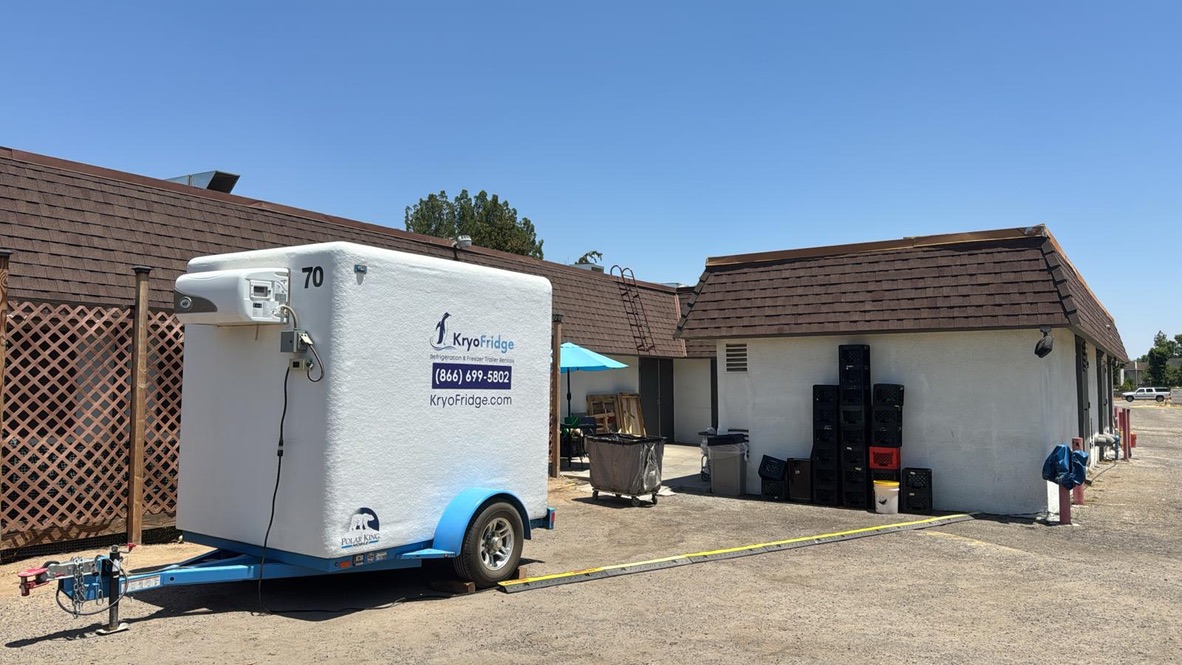
A cold storage trailer is the fastest way for a warehouse or distribution center to add walk-in-grade refrigerated or frozen capacity exactly where the product moves, with no permanent build, no construction permit, and no scramble to find rack space that does not exist. Park it at the dock line or on the overflow yard, plug it in, and you have hundreds of cubic feet of temperature-controlled space holding pallets of frozen protein, case-ready inventory, dairy, produce, or a quarantined recall lot at the same setpoints your food safety plan and a state inspector expect. For a 3PL absorbing a Q4 surge or an operations manager staring down a dead evaporator, that difference is measured in throughput held, SLAs met, and product that never leaves the safe temperature band, not in pallets stacked on a warming dock while the clock runs.
Warehouses and distribution centers reach for a rented cold storage trailer for a predictable set of reasons, and the questions are always the same: how fast a unit can arrive when refrigeration fails, how much overflow it holds through peak season, the temperature and power setup that keeps product food-safe on the yard, whether it can quarantine a recall or stage cross-dock freight, and how a trailer compares to leasing off-site 3PL space or a reefer truck. How KryoFridge answers each one comes straight from how we actually dispatch to distribution centers, 3PLs, cold-storage warehouses, food manufacturers, and grocery hubs across our regional yards, not a generic spec sheet.
The #1 Choice for Warehouse Cold Storage Overflow in the West
KryoFridge is a direct, owner-operated refrigeration company, not a broker or reseller that farms your emergency out to whoever has a trailer free. You deal with the people who own the fleet, and that fleet is built specifically for food-grade cold storage at scale.
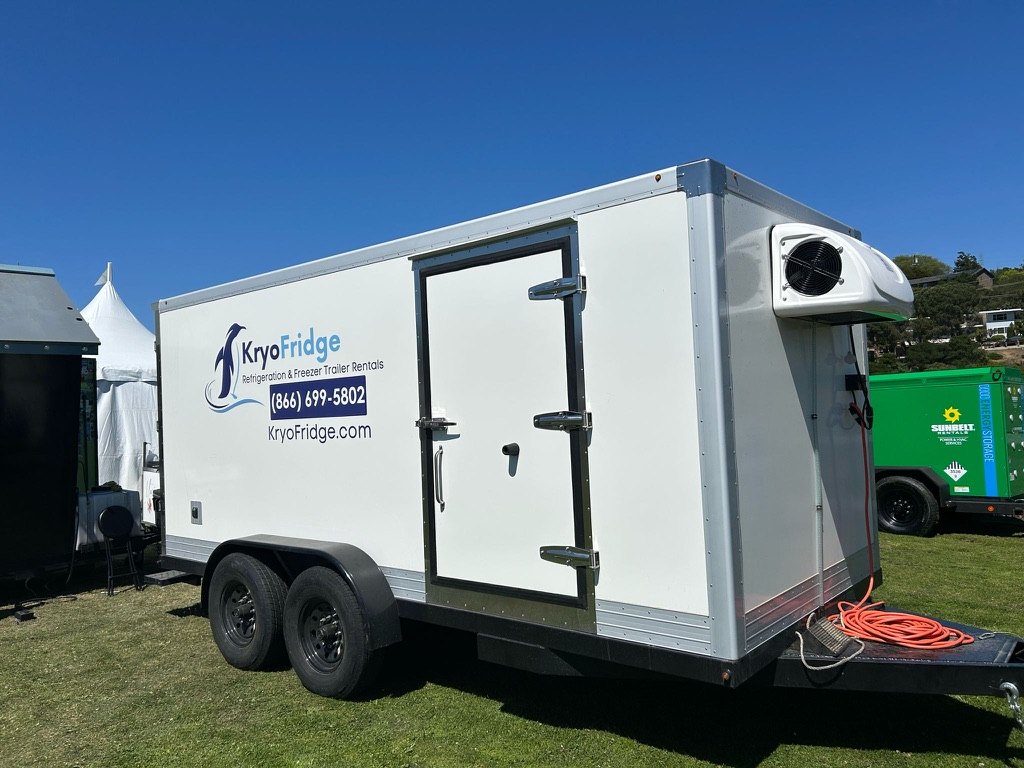
Every KryoFridge trailer is dual-purpose: the same unit runs as a refrigerator holding product between 34°F and 40°F or as a freezer holding at 0°F and below, so a warehouse is never locked into one mode for an inventory mix that needs both. That flexibility, paired with one of the largest fleets in our markets, is why we can put a bank of trailers on a distribution yard during the October-to-February peak crush when every commercial cold-storage warehouse in the region is already running at 90 percent utilization and a single-trailer operator is committed elsewhere. And because we own every trailer, there is no broker or third-party middleman standing between your dock and the unit when a compressor quits at 2 a.m. We come from a long line of rental entrepreneurs, and industrial cold storage is what we do every day.
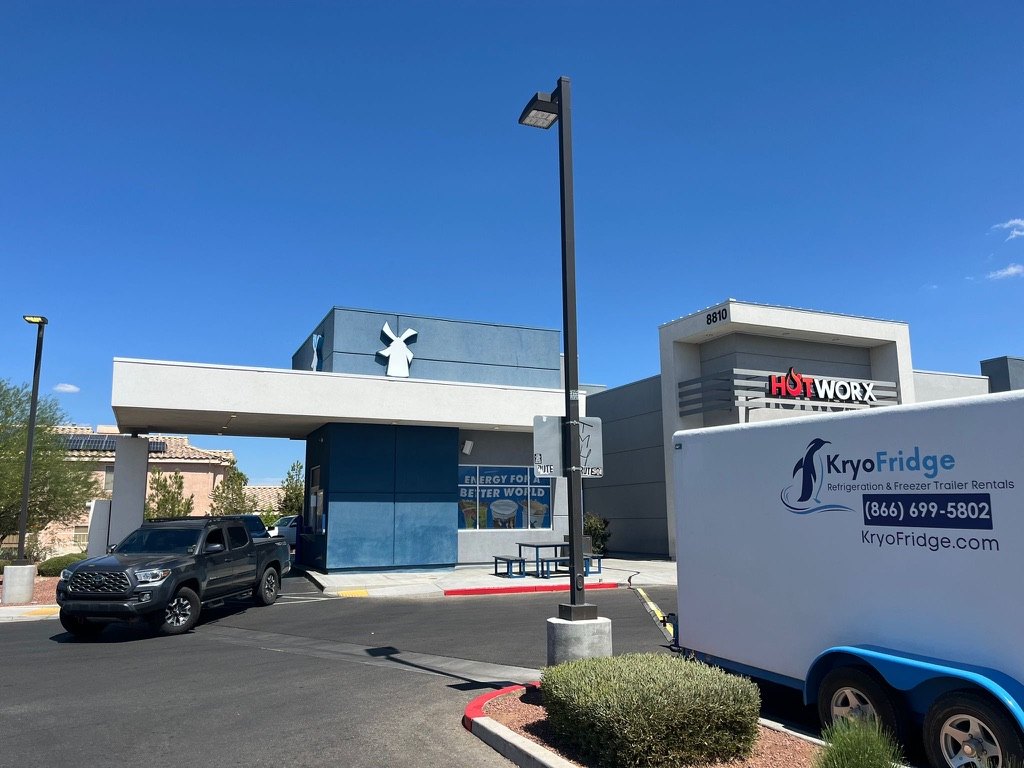
When Warehouses & Distribution Centers Rent a Cold Storage Trailer
Most warehouse cold-storage needs fall into a handful of patterns. Each one runs on a different timeline and calls for a different setup. Here are the six we field most often.
Peak-Season Overflow
Q4 inventory spikes 40 to 60 percent above baseline while your primary cold-storage 3PL is already full. Trailers hold the surge from October into February, then leave.
Refrigeration Downtime
A dead compressor, evaporator, or blast cell puts a whole zone of product at risk. A trailer at the dock holds it at temperature while the repair happens.
Recall & Quarantine Holds
Segregate a recall lot or a quality hold from active inventory in a dedicated, monitored trailer instead of surrendering rack space for weeks.
Cross-Dock Staging
Inbound cold freight arriving before the outbound truck? A trailer becomes a temperature-controlled buffer so nothing sits on a warming dock.
Inventory & Promo Spikes
A new account, a promotional buy, or a supplier’s early shipment can flood a cold DC overnight. Temporary capacity absorbs it without overbuilding.
3PL & Cold-Chain Buffer
Third-party logistics operators stage overflow for client brands, or hold a cold-chain buffer between production and distribution, on flexible terms.
Overflow Cold Storage When the Warehouse Is Full
Cold-storage capacity is the tightest link in the food supply chain, and it does not flex on demand the way dry storage does. A distribution center or a 3PL running at 85 to 90 percent utilization year-round has no cushion left when the fourth-quarter surge hits, and brands that planned for 20 percent above baseline routinely find themselves needing 40 to 60 percent more room as holiday orders accelerate. You cannot pour a new freezer slab in six weeks, and every commercial cold-storage warehouse within trucking distance is fielding the same phone calls you are.
A rented cold storage trailer closes that gap on your own yard. We roll units to your dock, pull them down to your setpoint, and your team loads pallets straight off the forklift into walk-in-grade space that holds frozen inventory at 0°F or refrigerated product between 34°F and 40°F. The overflow sits feet from your operation instead of at a leased facility across town, so you are not paying to truck product back and forth or losing visibility on it. One operations manager who ran a bank of trailers through a holiday crush told us afterward: “it was the only reason we didn’t turn away two of our biggest accounts in December.”
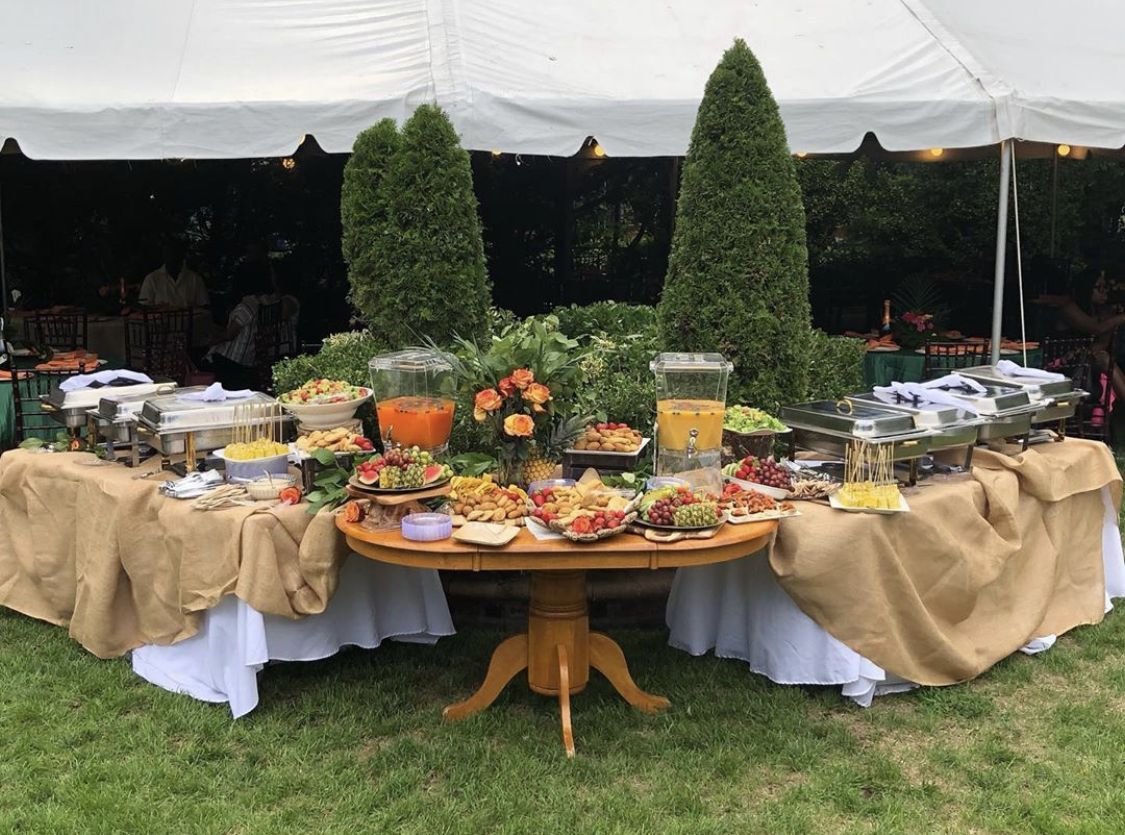
A full warehouse still needs walk-in-grade cold storage. The trailer brings it to your yard.
One Trailer, Every Food-Safe Zone a Warehouse Stores
A single KryoFridge trailer holds any setpoint between -10°F and +50°F, covering every cold-holding zone the FDA Food Code and FSMA preventive-controls rules require. Where common warehouse inventory sits on that scale:
Our Cold Storage Trailers, Hard at Work for Real Warehouses
Every one of these started with a call from an operations team that suddenly had more cold product than cold storage. Different problem each time, same result: the inventory stayed safe and the throughput kept moving.
Inland Cold Logistics: A Q4 Capacity Crunch
An Ontario 3PL hit 94 percent utilization in early November with three client brands still ramping. We staged a row of freezer and refrigerated trailers along the dock line to hold the surge from November into February.
Valley Foods DC: A Compressor Failure
A Stockton distribution center lost the compressor on its main freezer room with a full load of frozen protein inside. A trailer reached the dock same-day so the crew could transfer pallets before the room drifted out of temperature.
Sierra Provisions: A Segregated Hold
A Fresno food manufacturer had to quarantine a suspect lot pending lab results without giving up freezer rack the plant needed for production. A dedicated trailer isolated the held product under its own monitoring.
Desert Fresh Distribution: Inbound Staging
A Las Vegas grocery hub kept catching inbound reefer loads that arrived before the outbound trucks and the cold dock doors were full. A trailer became a refrigerated buffer to hold produce off the warming dock.
Wasatch Cold Chain: A Promotional Buy
A Salt Lake 3PL took on a large promotional buy for a client that landed weeks earlier than forecast and blew past committed rack. Two trailers absorbed the early shipment until the promo shipped out.
Aloha Cold Pack: Production Overflow
An Oahu producer’s blast cell and hardening freezer were maxed during a production run. A freezer trailer parked at the plant held finished cases at 0°F so the line never had to slow down waiting on space.
None of these are lucky exceptions. They are what a large, owner-operated fleet and a dispatch team that actually answers the phone make routine, across every kind of cold-storage gap a warehouse or distribution center can hit. Whatever the emergency or the surge, the difference between an operation that keeps moving and one that stalls comes down to who you call and how fast the trailer lands. A refrigeration outage does not wait for business hours, and a peak-season surge does not care that every warehouse in the region is fielding the same crisis. What separates the operators who ride it out from the ones who lose product and miss SLAs is a plan and a phone number that answers. That is why so many logistics teams keep our number on the wall next to the refrigeration service tech’s, and why the first call from a new distribution client is so often the one that turns into a standing peak-season booking.
What Size Cold Storage Trailer Does Your Warehouse Need?
Match the trailer to the volume you have to hold, not to your whole facility. Small overflow and single quarantine holds land on a 6×12 or 6×16. Peak-season overflow, large recalls, and multi-zone staging step up to an 8×20 or run several units side by side along the dock.
| Trailer | Approx. capacity | Best for |
|---|---|---|
| 6×12 | ~1 small walk-in | Small overflow, single quarantine hold, cross-dock buffer |
| 6×16 | ~1.5 walk-ins | Replenishment surge, promo spike, short refrigeration repair |
| 8×20 | ~2-3 walk-ins of pallets | Peak-season overflow, large recall hold, blast-cell backup |
| Multi-trailer | Scaled to demand | Q4 dock-line banks, freezer + refrigerated split, 3PL buffer |
A quick way to right-size: estimate the number of cold or frozen pallet positions you need to clear and how long you need them held. A standard 8×20 trailer comfortably stages two to three walk-ins worth of racked or floor-stacked pallets with room to organize by lot, while a 6×12 suits a single quarantine hold or a modest overflow. If your inventory carries both frozen and refrigerated product (case-ready protein and ice cream alongside dairy and produce, for instance), tell us. We can either run one trailer split between a freezer zone and a cooler zone, or stage separate freezer and refrigerated units side by side so neither load compromises the other. And because we run one of the largest fleets in the West, scaling from one trailer to a full dock-line bank is a routing question, not a supply problem. When in doubt, size up one step. Running out of cold space in the middle of a peak-season week is a far bigger risk than a little extra room.
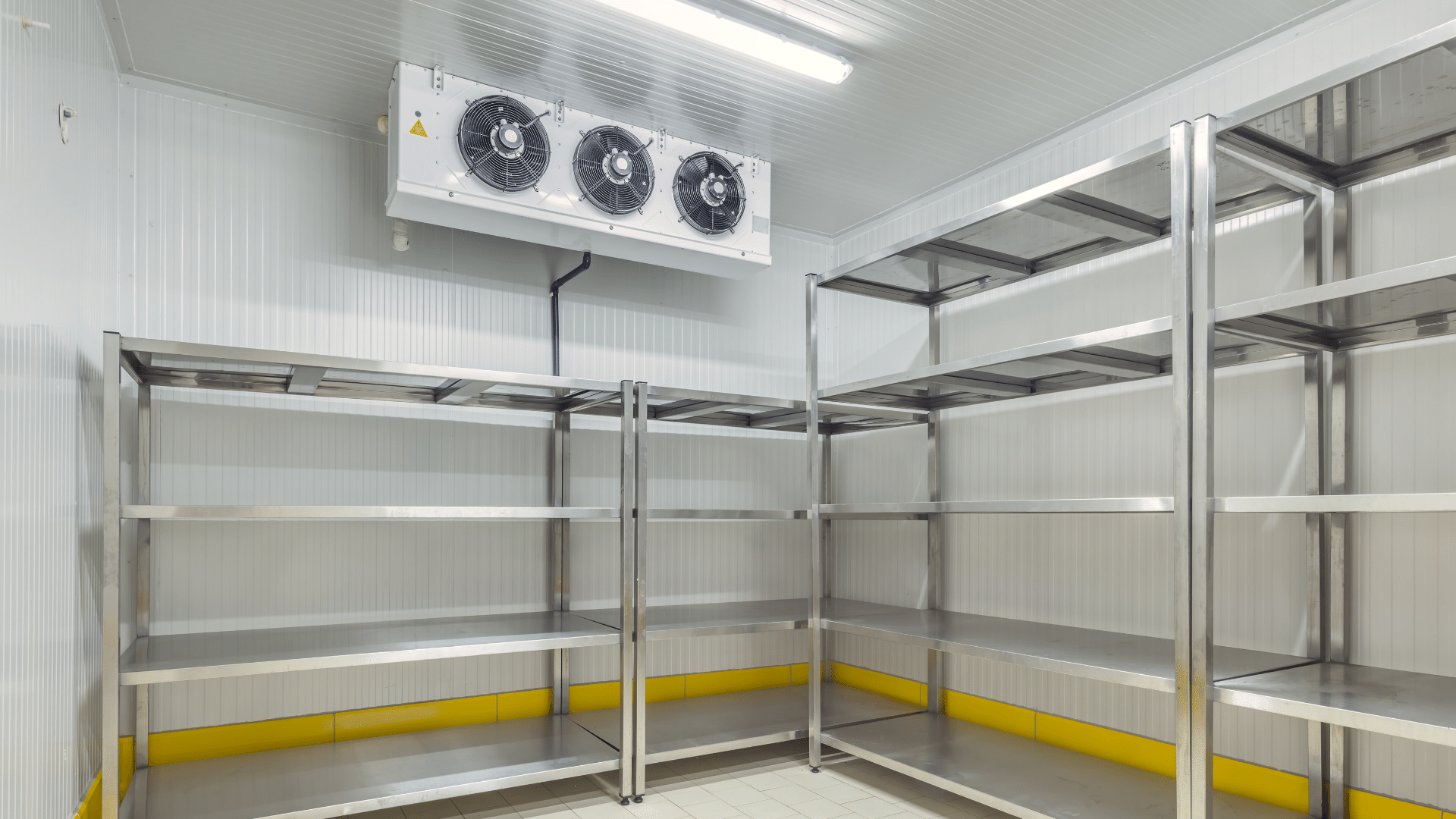
Sealed, washable, food-safe interiors that organize pallets and cases like a permanent walk-in.
Freezer and refrigerated in the same fleet
Every KryoFridge unit holds a tight, adjustable setpoint as warm as +50°F or as cold as -10°F, so the same trailer can run as a refrigerator for produce, dairy, and beverages or as a freezer for protein, seafood, and frozen prepared cases. For warehouse inventory we hold refrigerated product between 34°F and 40°F and frozen loads at 0°F or colder, matching the temperature your product spec and food safety plan require.
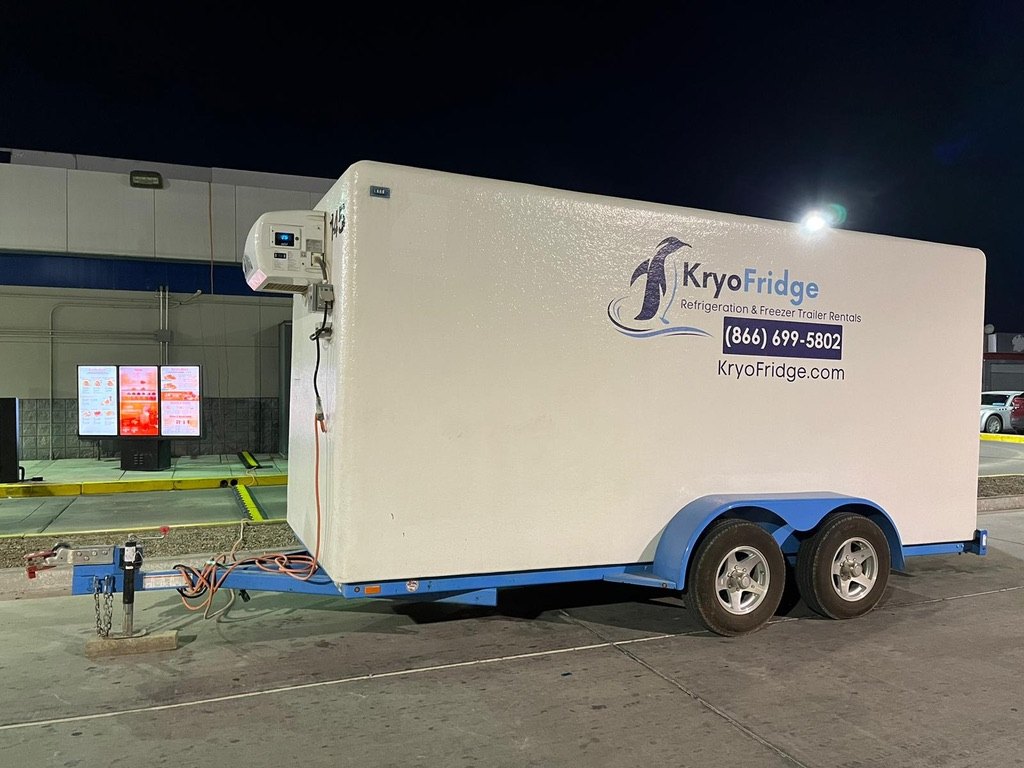
Our team sets the exact setpoint before the trailer ever reaches your dock, and the unit holds it steadily, hour after hour and day after day, whether you are running it as a refrigerated buffer for a cross-dock or a freezer bank for Q4 overflow. That steadiness is the whole point: a monitored, insulated box that does not drift out of the safe band when the yard hits 100°F.
Powering the Trailer at the Warehouse: Generator or a Dedicated 20-Amp Circuit
A cold storage trailer needs continuous power to hold temperature, and at a distribution site there are two clean ways to feed it. We confirm which one fits your yard during the quote so delivery is one-and-done.
Dedicated 20-Amp Circuit
A KryoFridge trailer runs on a dedicated 120V, 20-amp circuit within 100 feet of where it parks. Most warehouse yards and dock walls can spare one, and we confirm it during the quote so the unit powers up the moment it lands.
Standby Generator
Remote overflow lot, gravel yard, or a dock face with no outlet in reach? We add a quiet diesel generator so the trailer holds temperature anywhere on the property, no facility power needed.
Set & Hold
We dial in your exact setpoint before delivery, anywhere from a produce-friendly cooler to a deep freezer, and the unit holds it steadily once it is plugged in or running on the generator.
Power is the single most common cause of a delivery hiccup at a distribution site, which is why we settle it before the trailer leaves the yard. A dedicated 120V, 20-amp circuit within 100 feet of the parking spot is all a single trailer needs, and most warehouse docks can provide one. For a bank of trailers on an overflow lot away from the building, or a site where the panel is already loaded, the standby generator solves it without an electrician and without pulling a permit, and it keeps the cold storage running independent of whatever else the facility’s power is carrying. For any operator staging trailers on a back lot or a remote yard, pairing them with a generator turns each one into a self-contained walk-in you can drop almost anywhere on the property. During a refrigeration outage that is especially useful, because the failure that took your freezer room down may have taken part of your electrical with it, and a generator-fed trailer does not care.
Delivery, Setup & Where to Spot It on the Yard
Planned overflow lands in a scheduled delivery window you pick, usually ahead of the surge so your team can load on its own schedule. For a refrigeration breakdown or a sudden hold we move as fast as the fleet allows. Here is the four-step flow.
Cold Storage Trailer vs. Off-Site 3PL Space vs. Reefer Truck
Warehouses weighing temporary cold storage usually compare three options. For most overflow and emergency situations the trailer wins on speed, capacity, and control. Here is the honest breakdown.
Cold Storage Trailer
- Walk-in capacity on your own yard
- Freezer or refrigerated, holds steady day and night
- Generator option = works on any lot
- Daily to monthly, scale to a full dock-line bank
Off-Site 3PL Space
- Everyone is full at peak season
- Truck product back and forth, added freight
- Lost visibility on inventory across town
- Contract terms, not days-notice flexibility
Reefer Truck
- Cab ties up a whole tractor or a driver
- Engine idles to make power, fuel burn
- Awkward tailgate loading height for pallets
- Built for transport, not stationary storage
Leasing off-site 3PL space works when you plan a quarter ahead, but at peak season every cold-storage warehouse in the region is running full, and even when you find room you are now trucking product across town, paying the freight both ways, and losing eyes on inventory that used to sit at your own dock. A reefer truck can hold cold in a pinch, but it sacrifices a whole tractor or trailer from your transport pool, runs its engine to keep the box cold, and forces staff to load at tailgate height all shift, which is punishing for pallet work. A dedicated cold storage trailer threads the needle: it arrives ready, sits at a workable dock height with room for a forklift, holds far more than a truck box, runs on a generator anywhere on the property, scales to a full bank of units, and bills on whatever term the situation needs. That is why it is the default choice for serious warehouse and distribution overflow.
Scaling Cold Storage for Peak Season Without Overbuilding
Cold storage is not only an emergency tool. It is also how a high-volume warehouse or 3PL scales for a busy stretch without pouring concrete for capacity that sits empty ten months a year. The October-to-February holiday run, produce season, and promotional cycles all hit the same wall: not enough refrigeration for a short, predictable spike in volume. Frozen and refrigerated planning typically has to start three to six months ahead because supplier lead times, storage availability, and carrier capacity all compound, and turning away a client brand’s Q4 inventory because your freezer is full is revenue and a relationship you may never get back.
Trailers rented for the surge give you the capacity exactly when you need it and go away when you do not. Line a bank of them along the dock, use them to hold overflow and stage replenishment inventory for the peak, then release the units in February once volume normalizes, with no capital tied up in freezer space that runs empty most of the year. Q4 overflow typically starts as primary capacity tightens in October and November, runs through January, and transitions out in February, which maps exactly to a monthly trailer term. One 3PL operations director who ran a dock-line bank through peak told us afterward: “we said yes to every client account for the first time in three peak seasons.”

Scale cold storage for the peak-season crush, then send the trailers back in February.
Food-Safe Construction & Health-Code Compliance for Stored Inventory
A cold storage trailer that holds warehouse inventory has to do more than get cold. It has to satisfy the same temperature and sanitation logic a food-safety inspector applies to any cold-holding location in a permitted facility.
Our trailers are built with sealed, washable, food-safe interiors made for food contact, not a dusty cargo box pressed into service. Insulated walls hold the setpoint through a hot afternoon on an open yard, and the cold-holding range supports HACCP plans and the FSMA preventive-controls monitoring your distribution operation already runs. The core standard is simple: frozen product stays at 0°F and refrigerated product stays at or below 40°F, and a KryoFridge unit holds those temperatures the same way a permanent walk-in does, with steady performance an inspector can see on your logs.
If you maintain a HACCP plan or operate under FSMA preventive controls, a rented trailer simply slots in as another monitored cold-holding location under your existing time-and-temperature checks and corrective-action steps. That makes it especially clean for a recall or quality hold, where segregating suspect product in a dedicated, temperature-controlled, lot-traceable unit is exactly the kind of documented control an auditor wants to see. For the federal baseline behind all of this, the FDA Food Code spells out the time-and-temperature rules cold-storage operators work to, and your state and county environmental-health offices are the final word on local warehouse requirements.
Where KryoFridge Delivers Warehouse Cold Storage
We dispatch freezer and refrigerated trailers across six states from regional yards, so a distribution site gets a unit from the nearest base, not a cross-country wait.
In California we cover the densest logistics geography in the West. The Inland Empire alone runs on cold distribution, and we stage trailers across the Ontario, Fontana, Rialto, and Mira Loma warehouse corridors as well as up through the Central Valley freight hubs around Stockton, Tracy, and Fresno. Across Nevada we serve the Las Vegas and Reno distribution markets, and in Utah we reach the Salt Lake and Wasatch Front logistics belt. We also dispatch across Arizona (the Phoenix distribution corridor), New Mexico, and Hawaii, where island logistics reward booking ahead, so we line up trailers in advance rather than last-minute. For a full look at our fleet and service map, start with our freezer and refrigerated trailer rentals overview. Wherever your site sits in our footprint, the call starts the same way: tell us the location, the product mix, and the volume, and we route the nearest unit.
What Warehouse & Logistics Operators Say
Illustrative testimonials. Verified customer reviews are being collected and will replace these.
“Our main freezer room’s compressor died with a full load inside. KryoFridge had a trailer at our dock the same afternoon and we never lost a single pallet. That call saved our week.”

“We run a 3PL and Q4 always outruns our racks. A dock-line bank of their trailers carried the overflow from November through February. Turned away zero client accounts.”

“Needed to quarantine a hold lot for three weeks without losing freezer rack. A dedicated trailer kept it segregated and at temperature, and it passed the audit clean. Easy team to work with.”

Warehouse Cold Storage Trailer Rental FAQ
How fast can a cold storage trailer reach my warehouse?
Can one trailer run as a freezer and another as a refrigerator?
How cold does a cold storage trailer hold for warehouse inventory?
How is the trailer powered at a distribution center?
Can I rent multiple trailers for a large distribution site?
What rental terms work for warehouse overflow?
Is a rented trailer food-safe and compliant for stored inventory?
Can I use a trailer to quarantine recalled or held product?
What size cold storage trailer does a warehouse need?
Does a trailer help when our warehouse refrigeration goes down?
Can a trailer stage product for cross-docking?
Which regions do you serve for warehouse cold storage?
Keep Reading: Cold Storage Rental Resources
A few next steps for operations and logistics teams sizing up temporary cold storage, whether you are planning peak-season overflow or building an emergency playbook for the next refrigeration outage.
Freezer & Refrigerated Fleet Overview
See the full range of freezer and refrigerated trailer sizes, setpoints, and service areas in our main freezer trailer rentals guide before you request a quote.
Inland Empire Logistics Corridor
Distribution sites in the IE move on cold freight. Explore local dispatch and coverage for the Ontario and Fontana warehouse belt.
Central Valley Freight Hubs
For DCs and food producers up the valley, see cold storage coverage for the Stockton freight corridor and the surrounding logistics market.
Cold Storage for Breweries
Running a production or beverage operation? Our cold storage trailer rental for breweries covers a closely related use case with the same fleet.
Reserve a Cold Storage Trailer for Your Warehouse
Scheduled delivery for planned overflow and rapid response for refrigeration outages across CA, NV, UT, AZ & NM (advance booking in HI). Tell us your location, product mix, and volume and we’ll size it in minutes.