
Emergency Cold Storage Trailer Rental
When a walk-in dies, the power drops, or a wildfire or flood threatens your inventory, KryoFridge stages a food-safe refrigerated or freezer trailer the same day across California, Nevada, Utah, and Hawaii. We dispatch 24/7 from regional yards, run one of the largest dual-purpose cooler-or-freezer fleets in the West, and back every call with 30+ years in the rental industry.
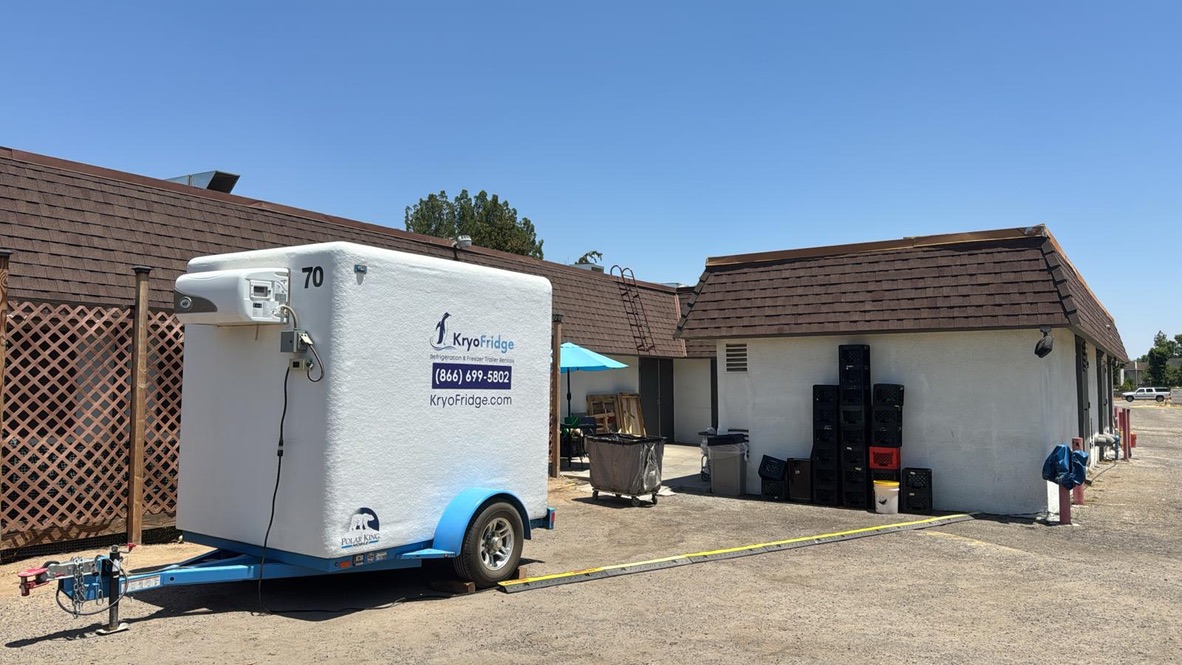
An emergency cold storage trailer is the fastest way to protect a load of perishable inventory the moment your refrigeration fails. Whether a compressor seized mid-service, a transformer blew down the block, a planned power shutoff took your grocery aisle dark, or a wildfire forced an evacuation, a rented reefer trailer rolls into your lot, plugs in, and holds hundreds of cubic feet of product at the same temperatures your inspector expects. For a manager watching a walk-in climb past 41°F, the difference is measured in saved inventory and an open business, not days of loss.
Cold storage emergencies share a brutal common thread: the clock starts the second the temperature rises, and the food does not wait for a callback. That is why KryoFridge built its operation around speed. We answer the phone around the clock, keep ready trailers staged at yards close to the markets we serve, and route the nearest unit to you. The questions an operator asks in a crisis are always the same: how fast can you get here, what size do I need, how does it stay powered, and will it hold food safely? Every answer below comes straight from how we actually dispatch across our California, Nevada, Utah, and Hawaii yards.
The #1 Choice for Emergency Cold Storage in the West
KryoFridge is a direct, owner-operated refrigeration company, not a broker or reseller that farms your emergency out to whoever has a trailer free. In a crisis, that matters: you reach the people who own the fleet, and that fleet is large enough to answer when single-trailer outfits are already booked.
Every KryoFridge trailer is dual-purpose: the same unit runs as a refrigerator for produce, dairy, beverages, and floral, or as a freezer for proteins, frozen prep, ice cream, and pharmaceuticals, so an emergency is never blocked by the wrong kind of box. That flexibility, paired with one of the largest fleets in our markets, is the whole reason we can say yes to a same-day call when a competitor with two trailers cannot. And because we own every trailer, there is no middleman quoting you a markup while your inventory warms up. We come from a long line of rental entrepreneurs, and emergency cold storage is exactly the kind of call we are built to take.
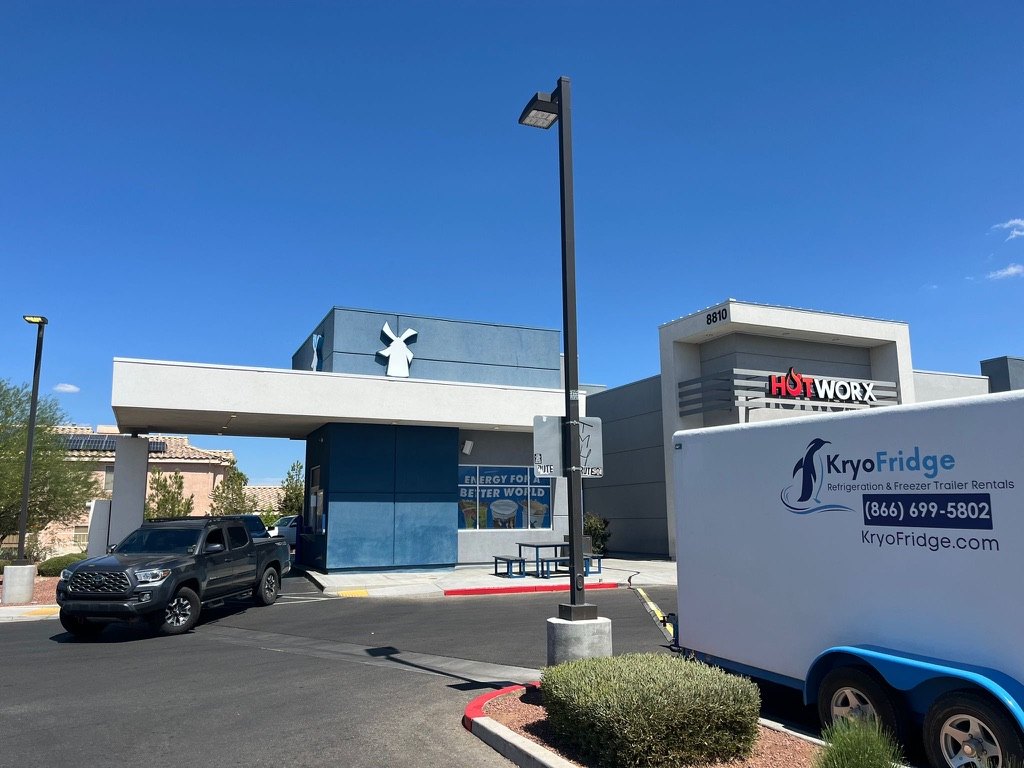
When You Need an Emergency Cold Storage Trailer
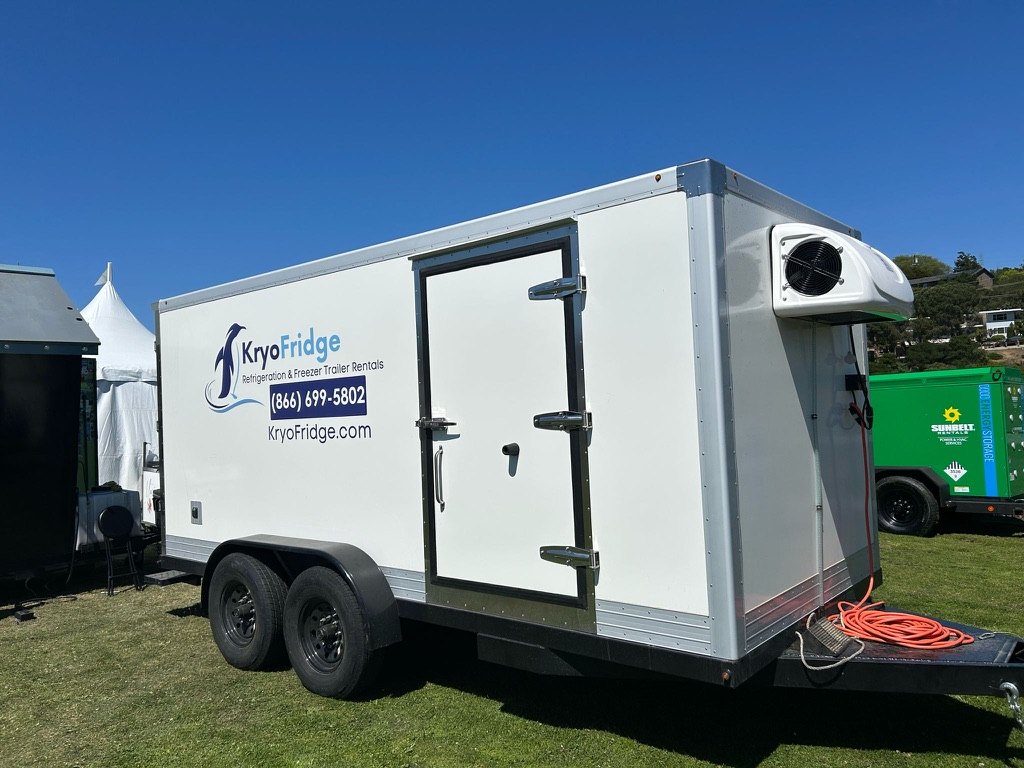
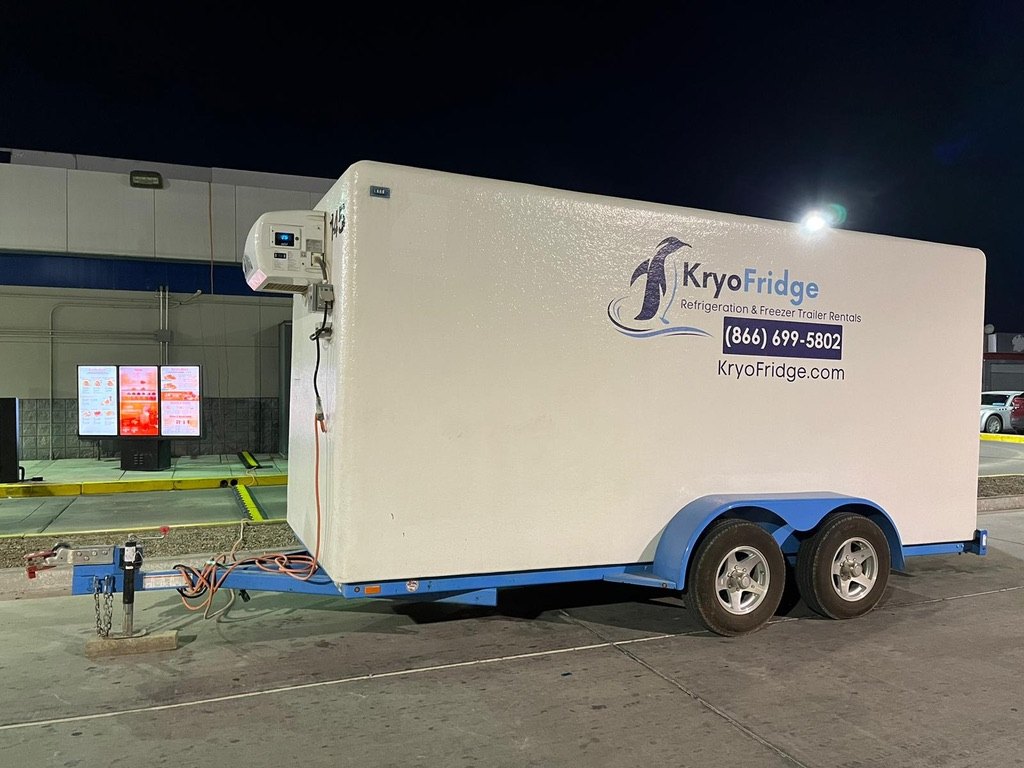
Cold-storage emergencies arrive without warning and on someone else’s schedule. They tend to fall into six patterns, each running on its own clock. Here are the calls our dispatch team fields most.
Walk-In & Cooler Failure
Compressor seized or evaporator iced over? We stage a cold trailer the same day so nothing in your walk-in, reach-ins, or display cases spoils before the box is fixed.
Power Outage
A blown transformer, downed line, or substation fault can dark a building for days. A generator-backed trailer keeps perishables cold while the utility works the repair.
PSPS & Planned Shutoffs
Public Safety Power Shutoffs hit Northern California for days at a time. We pre-stage a trailer ahead of the de-energization so your inventory never warms up.
Wildfire Response
Evacuations, smoke damage, and grid loss force fast moves. A mobile trailer relocates and holds product off-site until your facility is cleared to reopen.
Flood & Storm Damage
Flooded mechanical rooms and storm outages knock built-in refrigeration offline. We roll in clean, sealed cold storage while you dry out and rebuild.
Cold-Chain & Medical
Grocers, pharmacies, labs, and food banks cannot let a cold chain break. We dispatch backup cold storage to protect vaccines, specimens, and bulk perishables.
Emergency Cold Storage When Your Refrigeration Fails
Built-in refrigeration is the backbone of any business that holds perishables: the walk-in behind a restaurant, the cases in a grocery aisle, the blast freezer at a commissary, the cold room at a pharmacy. When it fails (an iced evaporator, a seized compressor, a tripped main, a flooded mechanical room), the temperature climbs past 41°F and the FDA Food Code’s four-hour clock starts on every bit of potentially hazardous product inside. For a mid-size operation, that can be five or six figures of inventory hanging in the balance.
A rented refrigerated trailer breaks that clock. We roll a unit to your site, pull it down to temperature, and you transfer the load before the window closes. The trailer then carries your cold storage for the days or weeks it takes to repair the permanent system, so operations never stop and incoming deliveries still have a home. One operator who lost their cooler bank overnight put it plainly afterward: “you saved the whole inventory.”
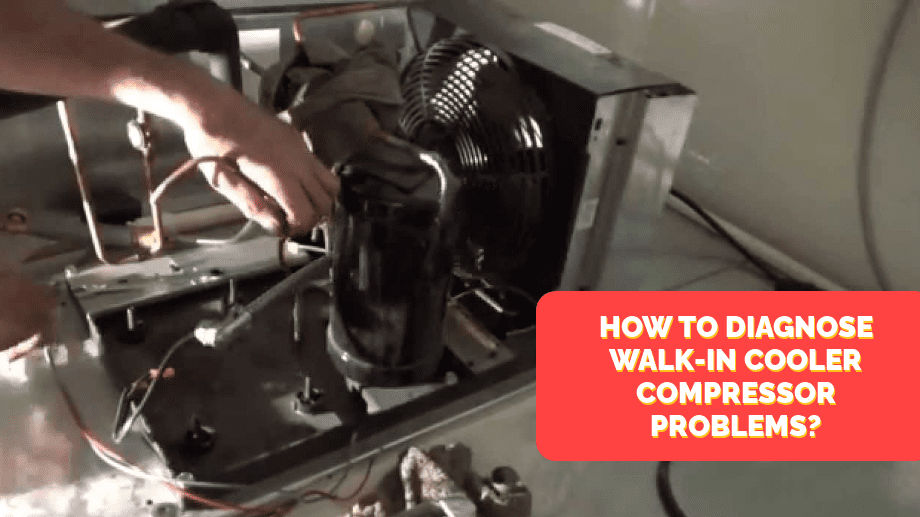
A dead cooler shouldn’t mean a dead loss. A same-day trailer breaks the four-hour clock.
One Trailer, Every Food-Safe Zone
A single KryoFridge trailer holds any setpoint between -10°F and +50°F, covering every cold-holding zone an emergency can demand. Where your product sits on that scale:
Our Emergency Trailers, Hard at Work When It Counted
Every one of these started with a phone call from a business that suddenly had more perishable inventory than working refrigeration. Different crisis each time, same result: the product stayed safe and the doors stayed open.
Copper Skillet Grill: Saturday Rush Save
The call came in on a Saturday at 7:10 PM with the walk-in cooler down and a full dining room out front. We took the call, prepped a staged trailer, and dispatched it immediately to break the four-hour clock before the load was lost.
Foothill Family Market: Transformer Blowout
A neighborhood transformer failed overnight and darkened an independent grocer’s entire cold aisle, dairy case, and frozen section. Our dispatch team scaled the response to the load and kept the store from a total perishable write-off.
Sierra Vista Catering: Pre-Staged for the Shutoff
A Foothills caterer sat inside a Public Safety Power Shutoff zone with a notified de-energization window. We pre-staged a generator-backed trailer the day before, so when the grid went dark the cold storage never paused.
Pinecrest Lodge: Evacuation Cold Storage
A wildfire evacuation pushed a mountain lodge offline with a full kitchen of perishables and no power. We positioned a trailer at a safe staging area so their inventory rode out the closure off-site instead of being lost.
Harbor Provisions: Flooded Cooler Room
Storm flooding knocked out the built-in refrigeration at a Bay Area food commissary serving a dozen kitchens. A clean, sealed trailer took over cold storage while the mechanical room was pumped out and rebuilt.
Valley Harvest Pantry: Mid-Heatwave Outage
A regional food bank lost its freezer bank during a heatwave with truckloads of donated frozen and chilled product on hand. A freezer trailer arrived fast and held the entire cold-chain load until power was restored.
None of these are lucky exceptions. They are what a large, owner-operated fleet and a dispatch team that actually answers the phone after hours make routine, across every kind of cold-storage emergency a business can hit. Whatever the disaster, the gap between a total loss and a normal week comes down to who you call and how fast they roll.
What Size Emergency Cold Storage Trailer Do You Need?
Match the trailer to the load you have to protect right now, not to your whole operation. Most single-site emergencies land on a 6×12 or 6×16. Grocers, commissaries, and multi-location losses step up to an 8×20 or run several trailers.
| Trailer | Approx. capacity | Best for |
|---|---|---|
| 6×12 | ~1 small walk-in | Single restaurant, short outage, small business |
| 6×16 | ~1.5 walk-ins | Busy kitchen, cooler-bank failure, PSPS coverage |
| 8×20 | ~2–3 walk-ins | Grocery, commissary, food bank, large facility |
| Multi-trailer | Scaled to demand | Cooler + freezer split, disaster response, multi-site |
A quick way to right-size in a crisis: count the shelving and cases you need to relocate. A standard 6×16 trailer holds roughly a mid-size restaurant walk-in with room to organize by category, while a 6×12 suits a single-concept kitchen or a small storefront. If you are protecting both refrigerated and frozen product, tell us. We can run one trailer split between a cooler zone and a freezer zone, or stage two units side by side so neither load compromises the other. When the call is an emergency, size up one step. Running out of cold space in the middle of an outage is the far bigger risk.
When the grid goes dark, a generator-backed trailer keeps the cold running regardless.
Cooler and freezer in one trailer
Every KryoFridge unit holds a tight, adjustable setpoint as warm as +50°F or as cold as -10°F, so the same trailer can run as a cooler for produce, dairy, and beverages or as a freezer for proteins, ice cream, and frozen prep. For food safety we keep cold-holding at or below 41°F per the FDA Food Code and freezer loads at 0°F or colder.
Our team sets the exact temperature your product needs before the trailer ever reaches your site, and the unit holds that setpoint steadily, hour after hour, whether you are protecting a cooler load or a freezer load through the emergency.
Powering the Trailer: Generator or a Dedicated 20-Amp Circuit
A refrigeration trailer needs continuous power to hold temperature, and there are two clean ways to feed it. In an outage, the generator is the answer; when the grid is up, a dedicated circuit works. We confirm which fits your site during the quote so delivery is one-and-done.
Standby Generator
When the power is out (or you want to outage-proof the load) we add a quiet diesel generator, so the trailer holds temperature whether the grid is up or down. This is the default for outage, PSPS, wildfire, and flood calls.
Dedicated 20-Amp Circuit
If your power is on, a KryoFridge trailer runs on a dedicated 120V, 20-amp circuit within 100 feet of where it parks. We confirm your panel can spare one during the quote so the unit powers up the moment it lands.
Set & Hold
We dial in your exact setpoint before delivery, anywhere from a produce-friendly cooler to a deep freezer, and the unit holds it steadily once it is plugged in or running on the generator.
Power is the single most common cause of a delivery hiccup, which is why we settle it before the trailer leaves the yard. In an outage, a wildfire, or a flood, there is no grid to plug into, so the quiet standby generator runs the trailer with no electrician and no permit. For operators in California’s PSPS zones or anywhere prone to grid instability, pairing the trailer with a generator turns it into an inventory insurance policy. The cold storage simply keeps running while the neighborhood goes dark.
How Emergency Delivery, Setup & Placement Work
In an emergency, only hours separate your first call and a cold trailer on your site. Planned and pre-staged jobs land in a scheduled window you pick. Here’s the four-step flow.
Emergency Trailer vs. Portable Walk-In vs. Reefer Truck
Businesses weighing emergency cold storage usually compare three options. When the clock is running, the trailer wins on speed and capacity. Here’s the honest breakdown.
Emergency Trailer
- Same-day, 24/7, no construction
- Cooler or freezer, big capacity
- Generator = runs through any outage
- Daily to monthly terms
Portable Walk-In Box
- Needs assembly and a level slab
- Smaller usable capacity
- Days of lead time to set up
- No good for a sudden failure
Reefer Truck
- Cab ties up a whole vehicle
- Engine idles to make power
- Awkward tailgate loading height
- Built for transport, not storage
A portable walk-in box makes sense when you have days of lead time and a permanent slab to set it on. But it cannot answer a failure that happened twenty minutes ago. A reefer truck can hold cold in a pinch, yet it sacrifices a whole vehicle, idles its engine to keep the box cold, and forces staff to load at tailgate height all shift. A dedicated emergency trailer threads the needle: it arrives ready, sits at a workable height, holds far more than reach-ins, runs off a generator when the grid is down, and bills on whatever term the crisis demands. That is why it is the default choice for outages, walk-in failures, and disaster response alike.
Disaster Cold Storage for Wildfire, Flood & Grid Loss
The hardest emergencies are the ones that take the whole grid with them. Wildfire evacuations, flood damage, and multi-day Public Safety Power Shutoffs do not just break one cooler; they can pull power from an entire block or town and leave perishable inventory with nowhere to go. A trailer that only plugs into a wall is useless when there is no wall power left.
That is the scenario KryoFridge is built for. A generator-backed trailer is fully self-contained: it makes its own power and holds temperature whether your building is dark, evacuated, or under water. We can pre-stage a unit ahead of a forecast PSPS event, position one at a safe staging area during a wildfire, or roll clean cold storage to a flooded facility while the mechanical room is pumped out. Across California, Nevada, Utah, and Hawaii, that mobility is the whole point: the cold storage moves to wherever your inventory can ride out the disaster. One operator who weathered a multi-day shutoff with a staged trailer told us, “we’ll have one waiting before the next shutoff.”
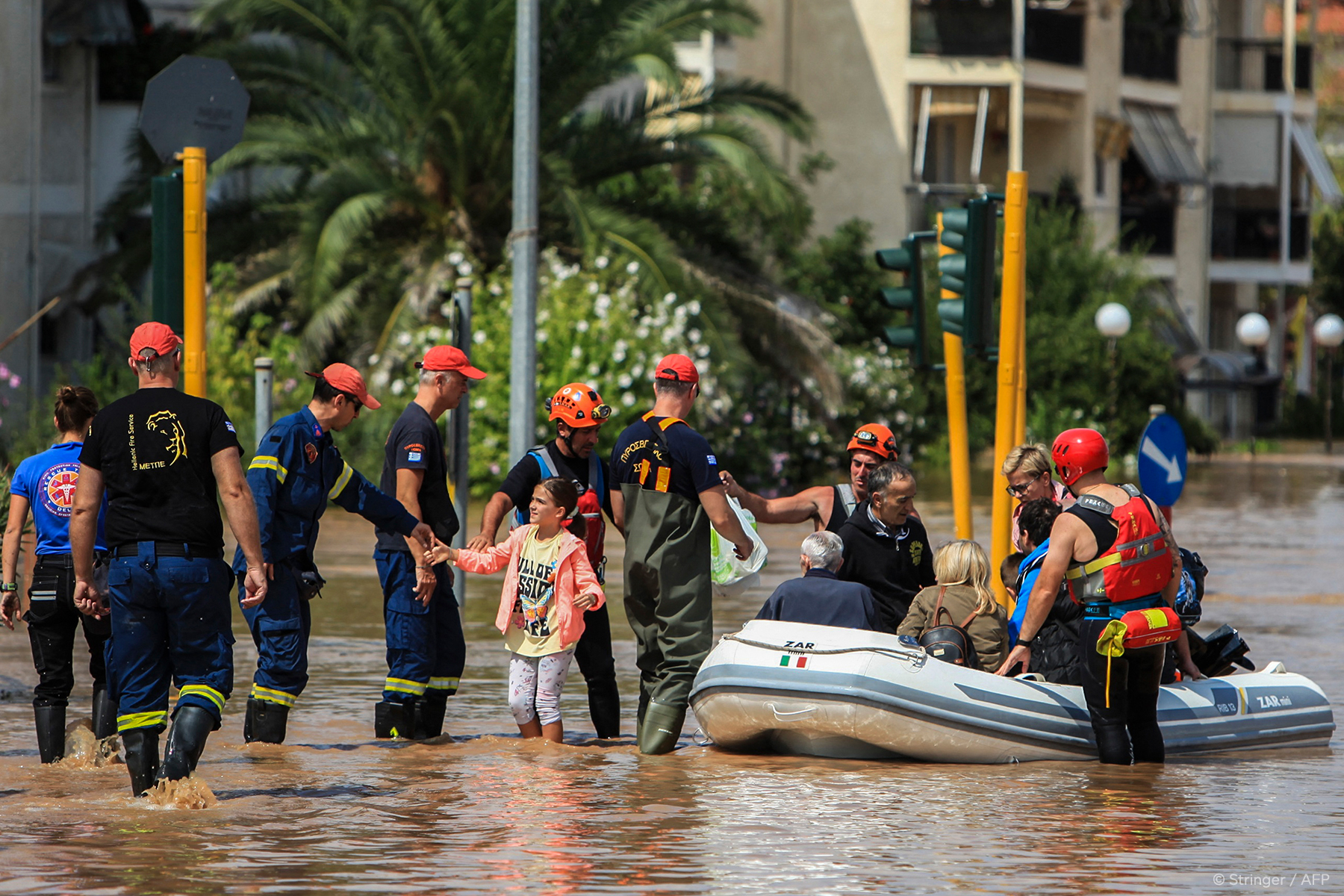
When the whole grid goes down, a self-contained trailer keeps the cold chain alive.
Food-Safe Construction & Health-Code Compliance
An emergency cold storage trailer that touches food has to do more than get cold. It has to satisfy the same temperature and sanitation logic your health department applies to any cold-holding equipment, even when it is standing in for refrigeration that just failed.
Our trailers are built with sealed, washable, food-safe interiors made for food contact, not a dusty cargo box pressed into service. Insulated walls hold the setpoint through summer heat and grid loss alike, and the cold-holding range supports HACCP plans and local health-department requirements. The core standard is simple: potentially hazardous food stays at or below 41°F and frozen product stays solid, and a KryoFridge unit holds those temperatures the same way your permanent refrigeration does.
If you maintain a HACCP plan, a rented trailer slots in as another cold-holding unit under your existing monitoring and corrective-action steps. For the federal baseline behind all of this, the FDA Food Code spells out the time-and-temperature rules every operator works to during a refrigeration failure, and your county environmental-health office is the final word on local requirements.
Where KryoFridge Delivers Emergency Cold Storage
We dispatch refrigerated and freezer trailers around the clock across four states from regional yards, so an emergency gets a unit from the nearest base, not a cross-country wait.
In Northern California (Sacramento, the Bay Area, Stockton, and the Central Valley around Fresno) we are closest to home and routinely turn same-day emergencies, including pre-staged coverage for PSPS events. Across Southern California and the Inland Empire, from Riverside out through the metro corridors, we answer walk-in failures, outages, and wildfire calls with the same speed. In Nevada we serve the Las Vegas valley’s heavy restaurant, grocery, and hospitality demand, and across Utah we reach Salt Lake and the Wasatch Front. Hawaii works a little differently, because island logistics reward booking ahead, so for planned and pre-staged emergency coverage we line up the trailer in advance rather than same-day. Wherever you are in our footprint, the call starts the same way: tell us the gap, and we’ll route the nearest unit.
What Operators Say After an Emergency
Illustrative testimonials. Verified customer reviews are being collected and will replace these.
“Our walk-in died on a Saturday night. KryoFridge had a freezer trailer in our lot within the hour and saved the entire inventory. Lifesavers.”

“PSPS shutoff was coming and we panicked. They pre-staged a generator trailer the day before and we lost nothing. We’ll do it every season now.”

“A transformer blew and our whole cold aisle was at risk. Three trailers showed up fast, the generators were dead quiet, and we never closed.”

Emergency Cold Storage Trailer FAQ
How fast can you deliver an emergency cold storage trailer?
Can the trailer run during a power outage?
How cold does an emergency cold storage trailer get?
Do I need a generator or can it plug in?
Can you pre-stage a trailer before a PSPS shutoff or storm?
How do I get a quote for an emergency cold storage trailer?
How much space do I need to park it?
What rental terms do you offer?
Is it sanitary and health-code compliant for food storage?
Which industries and areas do you serve?
Get an Emergency Cold Storage Trailer On-Site, Today
Same-day 24/7 dispatch across CA, NV & UT (advance booking in HI). Tell us your emergency and we’ll route the nearest unit in minutes.