
Freezer Trailer Rental for Ice Cream & Frozen Dessert Shops
When summer sales outrun your walk-in, a compressor quits, or a festival cart needs a deep-freeze restock, KryoFridge stages a food-safe freezer trailer that holds hard-packed ice cream, gelato, paletas, and novelties down to -10°F, colder than a standard freezer. We serve ice cream shops across California, Nevada, Utah, Arizona, New Mexico, and Hawaii, backed by one of the largest trailer fleets in the West and 30+ years in the rental industry.
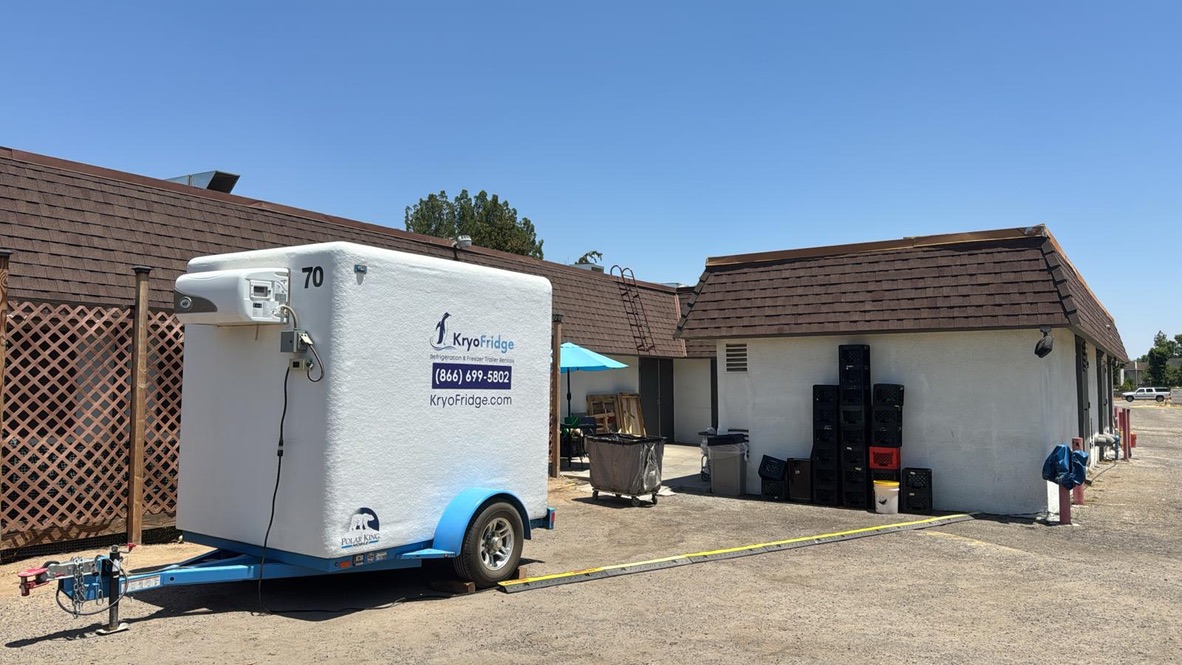
Ice cream is the most temperature-sensitive product in the frozen aisle, and it punishes any storage that runs even a few degrees too warm. A rented freezer trailer is the fastest way for an ice cream shop, gelateria, frozen yogurt bar, or paleta maker to add deep-freeze storage exactly where you need it, with no permanent build, no permit, and no gamble on a walk-in that is already running at capacity. Park it beside the shop or the commissary, plug it into one standard outlet, and you have hundreds of cubic feet of space holding tubs, pans, molds, cakes, and novelties at the same deep-freeze setpoint a scoop shop’s product actually wants. For a shop staring down a July heat wave or a distributor staging cases for morning routes, that difference is measured in product that stays firm and sellable, not in softened tubs you have to dump.
Frozen dessert operators reach for a rented freezer trailer for a handful of recurring reasons, and the questions are always the same: how cold it actually gets, why a normal freezer is not always enough for ice cream, how to size it for a single shop or a franchise group, the power setup that keeps product hard, how delivery works, and how a trailer compares to squeezing in another walk-in or renting a reefer truck. How KryoFridge answers each one comes straight from how we actually dispatch to scoop shops, gelato makers, paleterias, wholesale producers, and event vendors across our six-state footprint, not a generic spec sheet.
The #1 Choice for Ice Cream Cold Storage in the West
KryoFridge is a direct, owner-operated refrigeration company, not a broker or reseller that farms your rental out to whoever has a trailer free. You deal with the people who own the fleet, and that fleet is built specifically for food-grade cold and deep-freeze storage.
Every KryoFridge trailer is dual-purpose: the same unit runs as a refrigerator for mix, dairy, and toppings or as a true deep freezer for ice cream, gelato, paletas, and novelties, so a shop is never locked into one mode. That flexibility, paired with one of the largest fleets in our markets, is why we can cover a peak summer week when every shop in the valley is scaling up at once and a single-trailer operator is already committed elsewhere. And because we own every trailer, there is no broker or third-party middleman standing between your shop and the unit. We come from a long line of rental entrepreneurs, and cold storage is what we do every day.
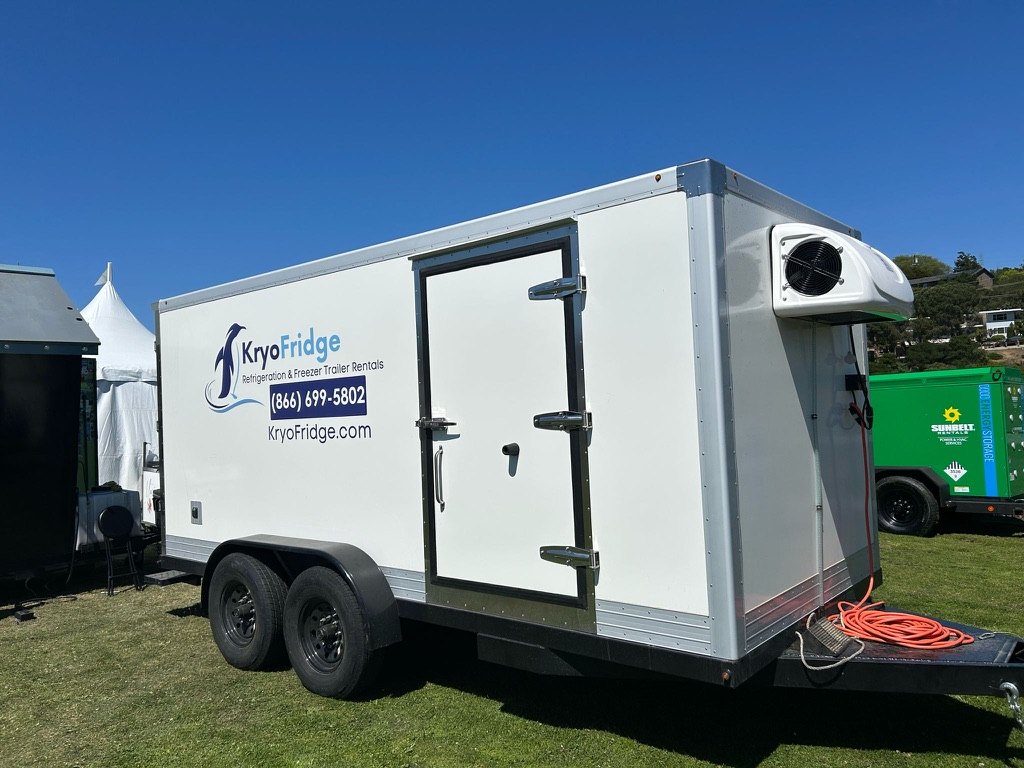
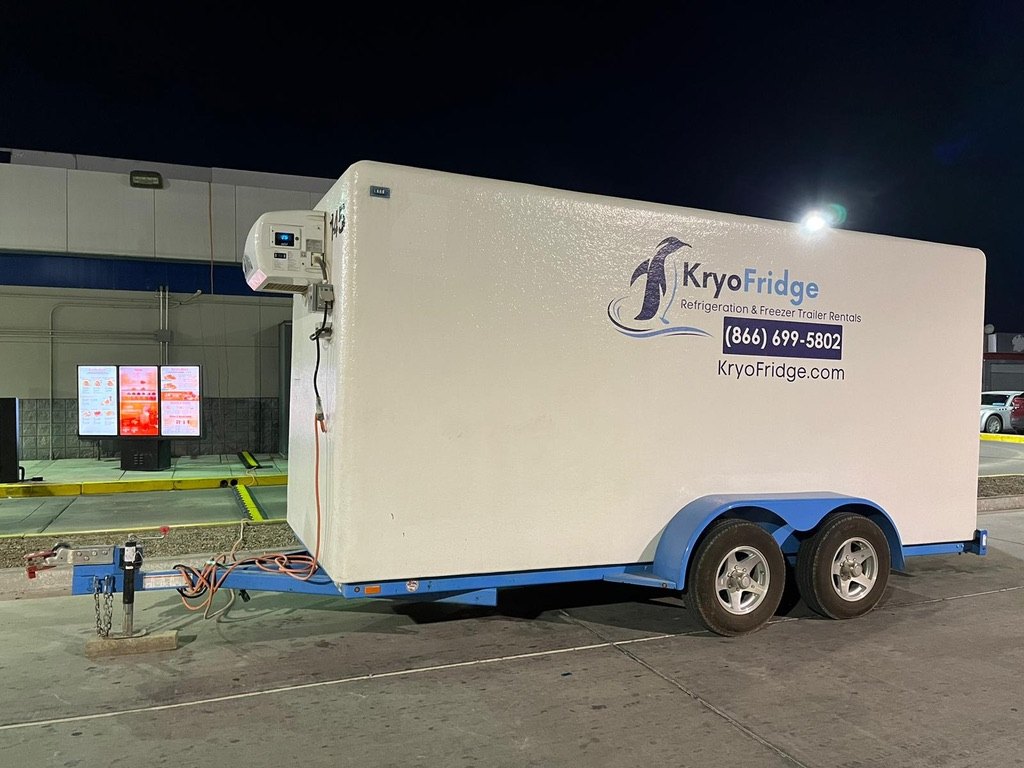
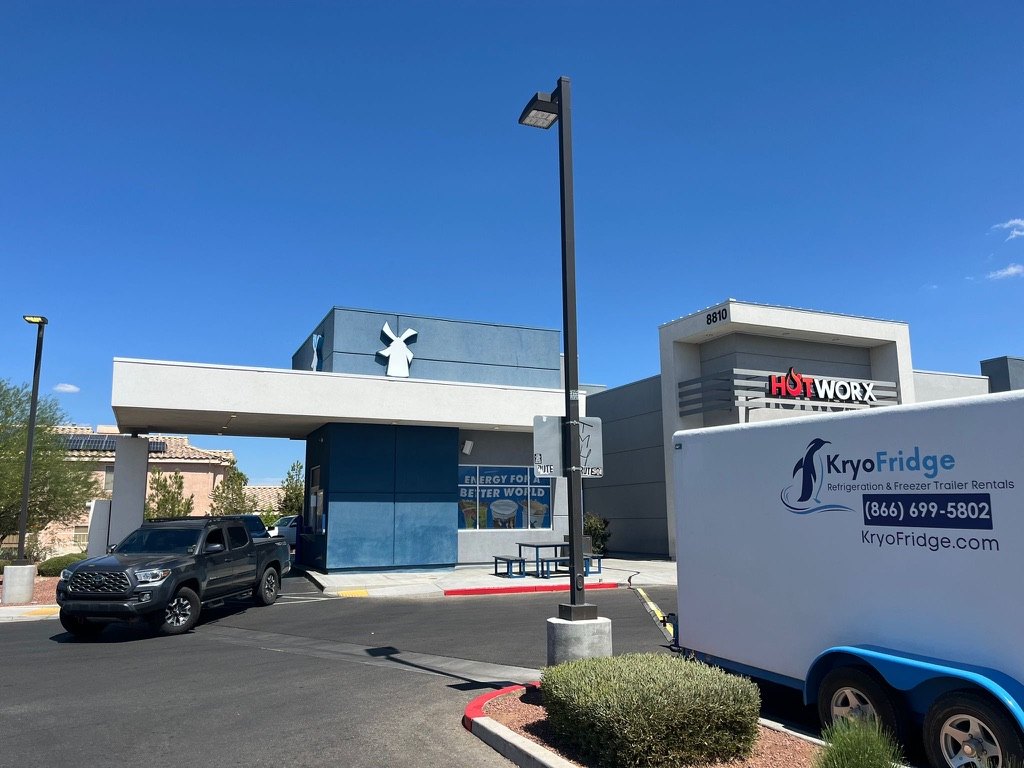
When Ice Cream & Frozen Dessert Shops Rent a Freezer Trailer
Most frozen dessert cold-storage needs fall into a handful of patterns. But each one runs on a different timeline and calls for a different trailer. Here are the six we field most often.
Summer Demand Surges
Sales double or triple in the hot months. A trailer adds the deep-freeze capacity to stock ahead so you never run a flavor short on the busiest weekend.
Walk-In Freezer Failure
A compressor quits and thousands of dollars of ice cream is on the clock. We stage a trailer fast so product moves over before it softens past resale.
Gelato, Froyo & Novelties
Gelato pans, frozen yogurt tubs, ice cream cakes, and packaged bars all hold in the same deep-freeze range one trailer covers.
Multi-Location & Franchise Stocking
Stocking several shops from one commissary before a holiday weekend? A trailer holds the overflow so every location opens fully loaded.
Wholesale Distribution
Paleteros and wholesale makers stage cases in a trailer while they wait on delivery routes, holding everything hard between pulls.
Festivals & Event Carts
Fairs, festivals, and pop-up carts need a deep-freeze restock on site. A trailer becomes the walk-in freezer parked behind the booths.
Why Ice Cream Needs a Colder Freezer Than Almost Anything Else
Here is the detail most storage rentals gloss over: ice cream is not held at the same temperature as the rest of the frozen aisle. A standard walk-in or reach-in food freezer runs right around 0°F, which is the correct setpoint for frozen proteins, vegetables, and packaged meals. Ice cream, frozen custard, and gelato hold best colder than that, closer to -10°F for stable storage, because the texture is fragile in a way a frozen chicken breast is not.
The reason is heat shock. Every time the temperature drifts up toward 0°F and back down, a little of the water in the mix melts and refreezes into larger ice crystals. Do that enough times and smooth, dense ice cream turns coarse, grainy, and icy, and you lose the mouthfeel customers are paying for. A trailer that pulls down to a steady -10°F deep freeze holds frozen dessert at the temperature it actually wants, which is why a real deep-freeze unit protects product a borrowed food freezer cannot.
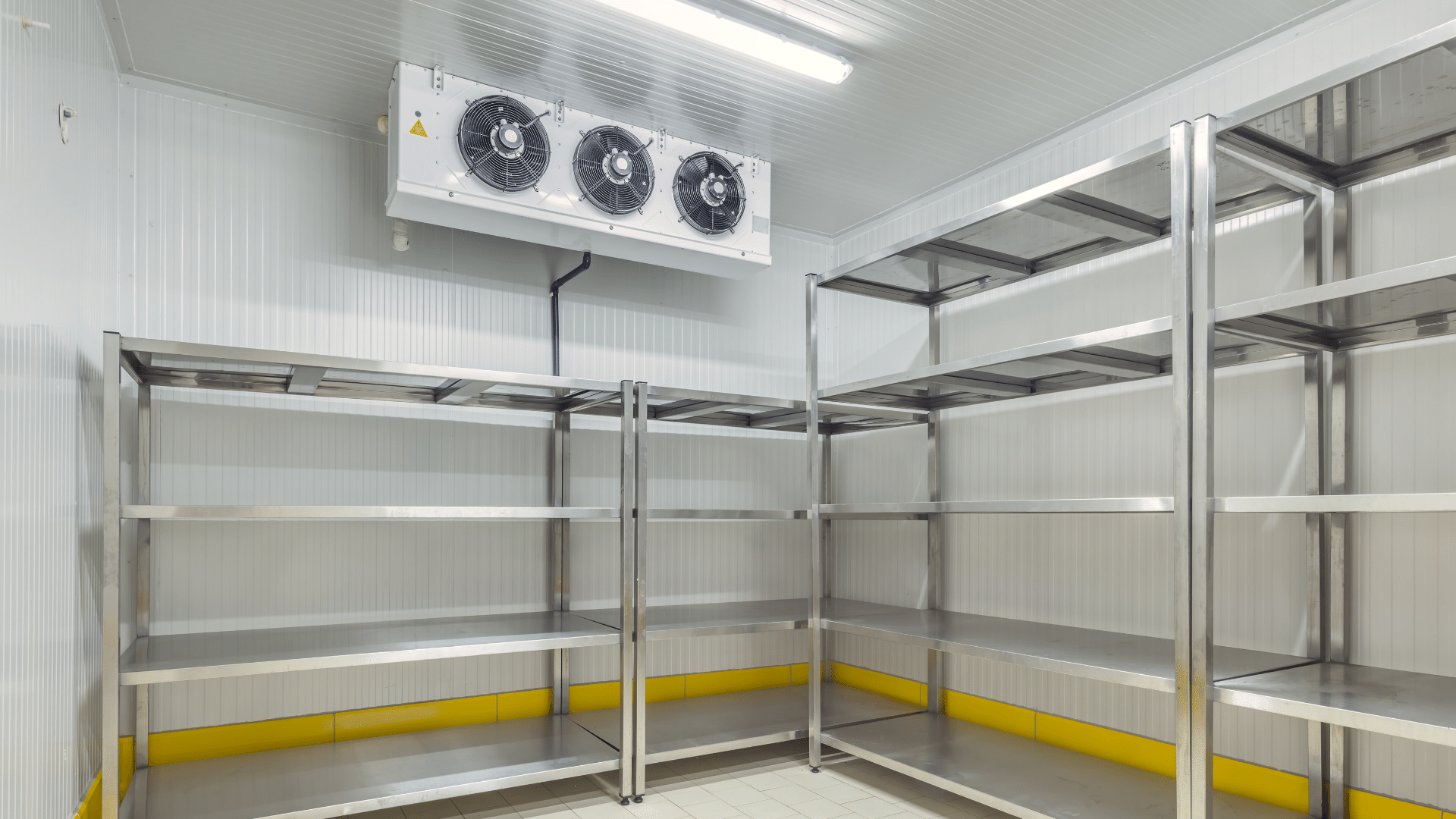
Sealed, washable, food-safe interiors with shelving that organizes tubs, pans, and cases like a permanent walk-in freezer.
Where Frozen Dessert Sits on the Cold Scale
A single KryoFridge trailer holds any setpoint between -10°F and +50°F. Ice cream and its cousins live at the deep-freeze end, colder than the 0°F a standard food freezer runs and far colder than an FDA cold-holding cooler:
The takeaway is simple: the difference between 0°F and -10°F does not matter for a bag of frozen peas, but it is the difference between smooth and grainy for ice cream. When a shop calls us for storage, the first thing we confirm is the setpoint, and for frozen dessert we recommend the deep-freeze end so the product you built stays the product your customers taste. If you also carry refrigerated mix, dairy, or toppings, we can run a larger trailer split between a cooler zone and a deep-freeze zone so both loads hold correctly in one unit.
Our Freezer Trailers, Hard at Work for Real Frozen Dessert Shops
Every one of these started with a phone call from a shop or maker that suddenly had more frozen product than deep-freeze space. Different situation each time, same result: the product stayed firm and nothing got dumped.
Coastline Creamery: A Compressor Down in July
A San Diego scoop shop’s walk-in freezer failed on the hottest Friday of the summer with a full weekend of stock inside. We had a trailer on site the same day, pulled to a deep-freeze setpoint, and the whole inventory moved over before it softened.
Sun Valley Scoops: Stocking for Peak Season
A Phoenix shop knew August would triple its volume and its walk-in could not hold enough backup. A trailer parked beside the shop for the season let them stock every flavor deep so they never ran short on a 110-degree afternoon.
Paleteria La Michoacana Route Staging
A wholesale paleta maker needed cold staging for cases waiting on morning delivery routes. A trailer at the production yard held thousands of molds and packaged bars hard at 0°F between production and dispatch.
Frost & Co. Frozen Yogurt: Holiday Stocking
A froyo franchise stocked five valley locations from one commissary ahead of a holiday weekend and ran out of freezer space mid-prep. A trailer absorbed the overflow so every store opened fully loaded.
Bella Luna Gelato: Production Backup
A Las Vegas gelato maker batched ahead for a busy stretch and outran the walk-in in their production kitchen. A trailer out back held finished pans deep-frozen until they rolled out to the cases.
Island Chill Novelties: A Weekend Festival
An Oahu novelty vendor worked a three-day festival and needed a deep-freeze restock behind the carts. A single trailer with a standby generator kept bars and paletas hard in the heat all weekend.
None of these are lucky exceptions. They are what a large, owner-operated fleet and a dispatch team that actually answers the phone make routine, across every kind of cold-storage gap a frozen dessert business can hit. Whatever the situation, the difference between firm, sellable product and a costly dump comes down to who you call and how fast the trailer gets there.
What Size Freezer Trailer Does Your Shop Need?
Match the trailer to what you actually need to hold, not to your whole operation. A single shop stocking for summer usually lands on a 6×12 or 6×16. Franchise groups, commissary producers, and wholesale distributors step up to an 8×20 or run two trailers.
| Trailer | Approx. capacity | Best for |
|---|---|---|
| 6×12 | ~1 small walk-in | Single scoop shop, small gelateria, seasonal backup stock |
| 6×16 | ~1.5 walk-ins | Busy shop stocking deep for summer, small wholesale run |
| 8×20 | ~2 to 3 walk-ins | Franchise commissary, wholesale distribution, festival supply |
| Multi-trailer | Scaled to demand | Cooler plus deep-freeze split, multi-location stocking, large producers |
A quick way to right-size: count how many tubs, pans, molds, or cases you need to hold at once. A standard 6×16 comfortably stages the deep-freeze backup for a busy single shop through a full summer, with room to organize by flavor and rotate first-in-first-out. A 6×12 suits a smaller shop or a short seasonal spike, while an 8×20 handles a franchise commissary or a wholesale maker moving real volume. If your product mix includes both refrigerated items (mix, dairy, toppings) and frozen dessert, tell us. We can either run one trailer split between a cooler zone and a deep-freeze zone, or stage two units side by side so neither load compromises the other. So when in doubt, size up one step. Running out of deep-freeze space in the middle of a heat wave is a far bigger risk than a little extra room.
One adjustable unit runs as a cooler for mix and dairy or a true deep freezer for ice cream and novelties.
Deep freezer and cooler in one trailer
Every KryoFridge unit holds a tight, adjustable setpoint as warm as +50°F or as cold as -10°F, so the same trailer can run as a cooler for mix, dairy, and toppings or as a true deep freezer for ice cream, gelato, paletas, and novelties. For frozen dessert we set the deep-freeze end, 0°F or colder and down to -10°F for hard-pack storage, and hold it steadily hour after hour.
Our team dials in the exact temperature your product needs before the trailer ever reaches your shop, and the unit holds that setpoint without the drift that coarsens ice cream. Insulated walls keep it stable through a 100-degree afternoon, so what you load stays as smooth and firm as it went in.
Powering the Trailer: One Standard Outlet or a Generator
A freezer trailer needs continuous power to hold a deep-freeze temperature, and there are two clean ways to feed it. We confirm which one fits your site during the quote so delivery is one-and-done.
One Dedicated 20-Amp Outlet
A KryoFridge trailer runs on a single dedicated 120V, 20-amp outlet within 100 feet of where it parks. It never needs 208V or 240V service, so most shops power it from an existing circuit with no upgrade.
Standby Generator
Festival lot, parking area, or distribution yard with no outlet nearby? We add a quiet diesel generator so the trailer holds a deep freeze anywhere, no site power needed.
Set & Hold
We dial in your exact setpoint before delivery, from a salad-friendly cooler down to a -10°F deep freeze, and the unit holds it steadily once it is plugged in or running on the generator.
Power is the single most common cause of a delivery hiccup, which is why we settle it before the trailer leaves the yard. The good news for a scoop shop is that our trailers run on ordinary single-phase 120V power. A dedicated 20-amp circuit is all it takes, the kind most storefronts already have, and there is no need to bring in an electrician to install a 240V outlet the way some larger cold-storage equipment demands. For a shop with a full electrical panel, a festival with no fixed power, or a wholesale yard, the standby generator solves it without a permit and keeps the deep freeze running even if your building’s power is already stretched. Either way, the trailer becomes a self-contained walk-in freezer you can drop almost anywhere.
Delivery, Setup & Where to Park It
Planned rentals land in a scheduled delivery window you pick, usually ahead of your busy stretch so your team can load on its own schedule. For a walk-in failure or another emergency, we move as fast as the fleet allows. Here’s the four-step flow.
Freezer Trailer vs. Walk-In Freezer vs. Reefer Truck
Shops weighing extra deep-freeze capacity usually compare three options. For most situations the trailer wins on speed, deep-freeze reach, and flexibility. Here’s the honest breakdown.
Freezer Trailer
- Deep freeze down to -10°F, colder than most walk-ins
- On site in days, or same-day for emergencies
- Runs on one 120V outlet or a generator
- Daily to monthly terms, no build
New Walk-In Freezer
- Permanent build, permits, and long lead time
- Capital cost for capacity you use a few months
- Many models only reach 0°F, not deep freeze
- Cannot follow you to a festival or route
Reefer Truck
- Cab ties up a whole vehicle
- Engine idles to make power
- Awkward tailgate loading height
- Built for transport, not steady on-site storage
A new walk-in makes sense if you are permanently expanding, but it is the wrong tool for a summer spike, a franchise stocking crunch, or a compressor that failed this morning: you cannot permit and build one in the window ice cream gives you, and many stock models top out around 0°F rather than the deep freeze frozen dessert prefers. A reefer truck can hold cold in a pinch, but it sacrifices a whole vehicle, runs its engine to keep the box cold, and forces staff to load at tailgate height. A dedicated freezer trailer threads the needle: it arrives ready, pulls down to a true -10°F deep freeze, sits at a workable height with real shelving, runs on one standard outlet or a generator, and bills on whatever term you need. That is why it is the default choice for a scoop shop that needs cold storage now.
Scaling for the Summer Season Without Overbuilding
Cold storage is not only an emergency tool. It is also how a frozen dessert business scales for its busiest stretch without paying year-round for capacity it uses a few months. Ice cream demand is brutally seasonal: the same weeks that fill your dipping cabinet empty your backup freezer, and if you cannot stock deep, you either run flavors short or make emergency supply runs in the middle of your busiest shift. Turning customers away from a sold-out case is revenue you never get back.
A trailer rented for the season gives you the deep-freeze capacity exactly when you need it and goes away when you don’t. Park it beside the shop from the first heat wave through Labor Day, stock every flavor deep, and release the unit once the season cools, with no capital tied up in walk-in space that sits half empty from October to March. High-traffic markets like Los Angeles and Phoenix lean on seasonal cold storage every year for exactly this reason.

Scale deep-freeze storage for the summer crush, then send the trailer back when the season cools.
Food-Safe Construction & Health-Code Compliance
A freezer trailer that touches frozen dessert has to do more than get cold. It has to satisfy the same temperature and sanitation logic a health department applies to any cold-holding equipment in a permitted operation.
Our trailers are built with sealed, washable, food-safe interiors made for food contact, not a dusty cargo box pressed into service. Insulated walls hold the deep-freeze setpoint through a hot afternoon, and the cold range supports HACCP plans and the temporary-food-facility requirements your county applies to shops, commissaries, and event vendors. The core standard is simple: frozen product stays frozen solid and any refrigerated mix stays at or below 41°F, and a KryoFridge unit holds those temperatures the same way a permanent walk-in does.
If you maintain a HACCP plan or work under a temporary event permit, a rented trailer simply slots in as another cold-holding unit under your existing monitoring and corrective-action steps. For the federal baseline behind all of this, the FDA Food Code spells out the time-and-temperature rules every operator works to, and your county environmental-health office is the final word on local requirements.
Where KryoFridge Delivers Ice Cream Cold Storage
We dispatch freezer and refrigerated trailers across six states from regional yards, so a shop gets a unit from the nearest base, not a cross-country wait. Warm-climate markets, where the summer surge hits hardest, are our bread and butter.
Across California we cover the whole state, from the Bay Area and the Central Valley down through Los Angeles, the Inland Empire, and San Diego, where scoop shops and paleterias run hot all summer. In Nevada we serve the Las Vegas valley’s shops, wholesale makers, and event vendors, and across Utah we reach Salt Lake and the Wasatch Front. Arizona is one of our busiest deep-freeze markets, because a Phoenix summer punishes any storage that runs a few degrees warm, and across New Mexico we cover Albuquerque and the surrounding region. Hawaii works a little differently, because island logistics reward booking ahead, so we line up units in advance for the islands rather than last-minute. Wherever your shop sits in our footprint, the call starts the same way: tell us how much product you need to hold and when, and we’ll route the nearest unit. If you also cater or supply events, our catering trailer page covers that side of the business.
What Frozen Dessert Shops Say
Illustrative testimonials. Verified customer reviews are being collected and will replace these.
“Our walk-in died on a Friday in July with the whole weekend’s stock inside. They had a trailer here the same day at deep freeze. We didn’t lose a single tub.”

“We rent one every summer now. It holds colder than our old freezer, so the ice cream actually stays smooth, and we never run a flavor short on a hot weekend.”

“We stage paletas for our delivery routes in the trailer. Everything stays rock hard at zero, the generator is quiet, and pickup was painless. Great team.”

Ice Cream Freezer Trailer Rental FAQ
How cold does the trailer get, and is that cold enough for ice cream?
Why is a standard walk-in freezer sometimes not cold enough for ice cream?
How far ahead should an ice cream shop book a freezer trailer?
Can the trailer run at my shop or a festival with no special power?
Can one trailer hold ice cream, gelato, paletas, and novelties at once?
What happens to my product if my walk-in freezer fails in the middle of summer?
What size trailer does a single shop or a franchise need?
Do you provide remote temperature monitoring?
Can I use a trailer for wholesale distribution or event carts?
Is it food-safe and health-code compliant for frozen dessert?
What rental terms are available for the summer season?
Which areas do you serve for ice cream cold storage?
Ice Cream Cold Storage Resource Library
A few practical references we point shop owners to when they are planning deep-freeze storage, from holding temperatures to the health-code basics and the related rentals in our fleet.
Holding Temperature Guide
Hard-pack storage sits at -10°F to -5°F, ice cream and custard at -10°F to 0°F, paletas and novelties at 0°F, and gelato at 0°F or below. Set the deep-freeze end to fight heat shock and keep texture smooth. Refrigerated mix and dairy hold at 34°F to 40°F.
Health-Code Basics
The FDA Food Code sets the time-and-temperature framework for frozen and refrigerated product, and your county environmental-health office is the final word on local and temporary-event permits. A rented trailer slots into your existing HACCP monitoring.
Walk-In Failure Checklist
If your freezer quits: keep the doors shut, call us at 866-699-5802 for the fastest available unit, and stage a temperature log. Ice cream has a short window before it softens past resale, so the sooner product moves to a deep-freeze trailer, the more you save.
Related Rentals
Browse the full freezer trailer rental lineup, or if you also handle off-site events and banquets, see our catering cold storage page for that side of the business.
Reserve a Freezer Trailer for Your Shop
Scheduled delivery across CA, NV, UT, AZ & NM, with advance booking in HI, plus same-day emergency response when a walk-in fails. Tell us how much product you need to hold and we’ll size it in minutes.