
Glendale, AZ Freezer Trailer Rentals: Stadium, Arena & Event Cold Storage
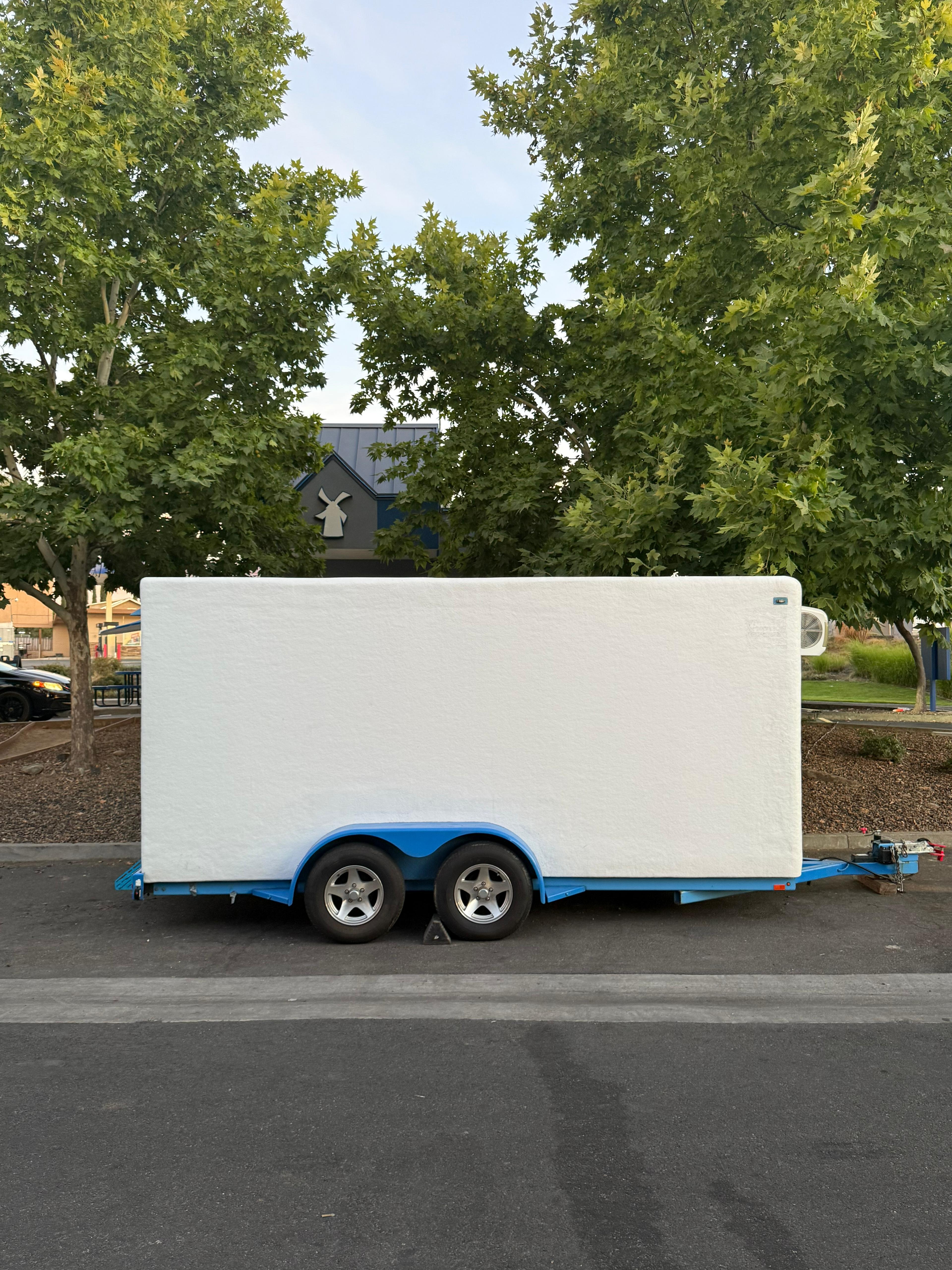
NSF-approved refrigerated and freezer trailers, staged in the West Valley and built for the way Glendale actually uses cold storage, a sold-out night at State Farm Stadium, a festival at Westgate, a Camelback Ranch tailgate, or a walk-in that quits at 5 p.m. on a 112° afternoon. We own and maintain the largest dual-purpose freezer and reefer fleet in the region, we’re licensed and insured, and our 24/7 line gets a unit to you in about 45 minutes.
Glendale’s Go-To Name for Freezer Trailer Rentals
There is a particular kind of pressure that comes with running cold storage in Glendale, and it has a lot to do with crowds. This is the city where 70,000 people pour into State Farm Stadium for a Super Bowl or a Taylor Swift night, where Desert Diamond Arena runs more than 250 events a year, and where Camelback Ranch fills with spring-training fans every February and March. When that many people show up hungry and thirsty on a desert afternoon, the difference between a great event and a disaster is whether the food and drinks stayed cold. We have spent years making sure they do.
That is also why we keep our trailers here, staged in the West Valley rather than dispatched from somewhere across the Valley after you call. When a concessions team is short on freezer space the morning of a show, or a Westgate restaurant loses a compressor on a Friday, the only answer that helps is one that is already nearby. Just as important, we are the direct operator, not a broker, the person who answers your call owns, services, and delivers the trailer. You will not be routed through a middleman marking up someone else’s equipment while your product warms up in 110° heat.

A Quick Read on Glendale. And Why This City Runs on Cold
Glendale is the hub of the West Valley: roughly 252,000 residents, the sixth-largest city in Arizona (and still climbing), sitting where Loop 101, Loop 303 and old Grand Avenue tie the northwest Phoenix metro together. It built its modern identity on one thing above all, being a place crowds come to.
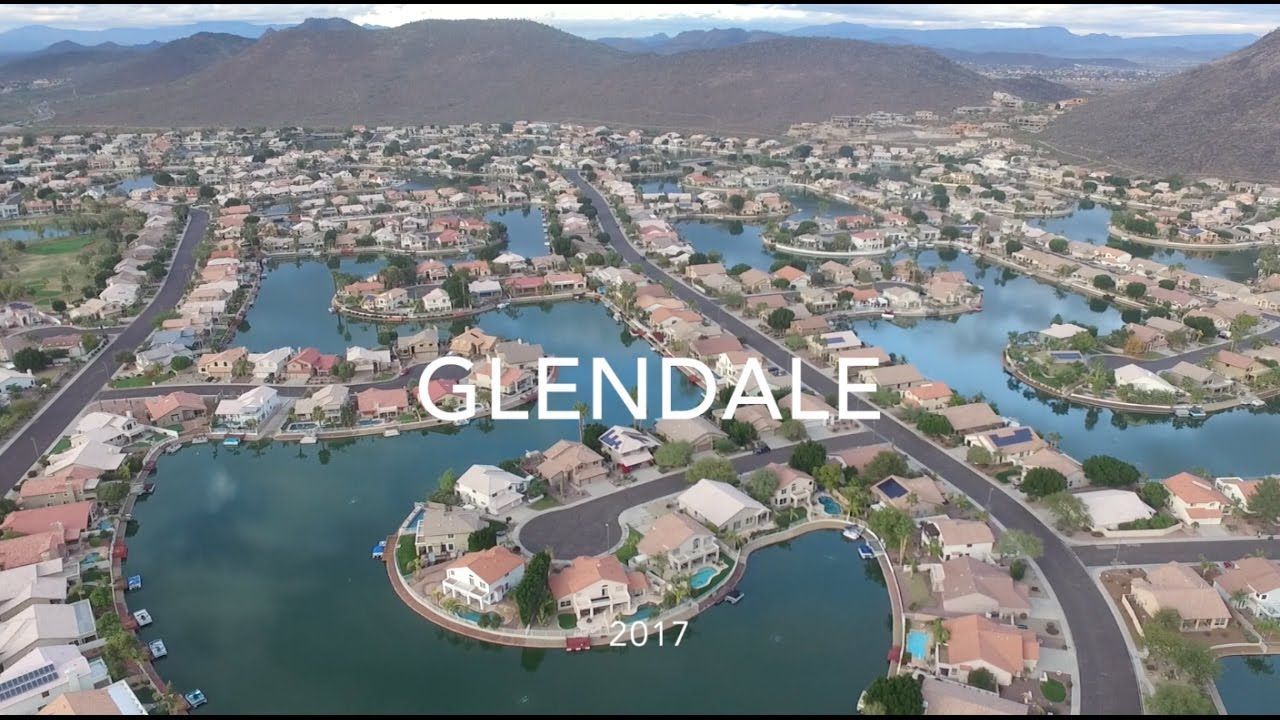
The early-2000s bet on the Sports & Entertainment District changed everything. State Farm Stadium and what is now Desert Diamond Arena anchored a 223-acre, billion-dollar development that turned a quiet stretch of cotton fields near Loop 101 into one of the Southwest’s busiest entertainment corners. Today Westgate’s restaurants, the arena’s concert calendar, the stadium’s marquee weekends and Camelback Ranch’s spring baseball pull millions of visitors a year. And every one of them eats and drinks something that has to stay cold.
Around that engine sits a serious working economy. Nestlé runs a major creamer factory and distribution center off Loop 101; Red Bull, Ball, Honeywell and a deep bench of West Valley logistics and food operations move product through Glendale’s warehouse corridors daily. Add Banner Thunderbird, one of the busiest hospitals in the Northwest Valley, and you have a city where holding temperature is not a luxury, it is the line between a normal day and a five-figure loss.
Glendale spreads across the West Valley along Loop 101. The freeway access that once moved cotton now feeds an entertainment district, a Nestlé distribution plant, and a metro full of restaurants and grocers. Every one of them a cold-storage customer.
Why National Chains Hand Us Their Cold Chain
Holding deep-freeze for national brands is not something you fake your way into. Over three-plus decades in the rental business, our family has supplied mobile refrigeration to names like McDonald’s, Chick-fil-A and Dutch Bros, operations that treat a cold-storage partner the way they treat a food supplier, because a unit drifting out of spec is not an inconvenience to them, it is a recall.

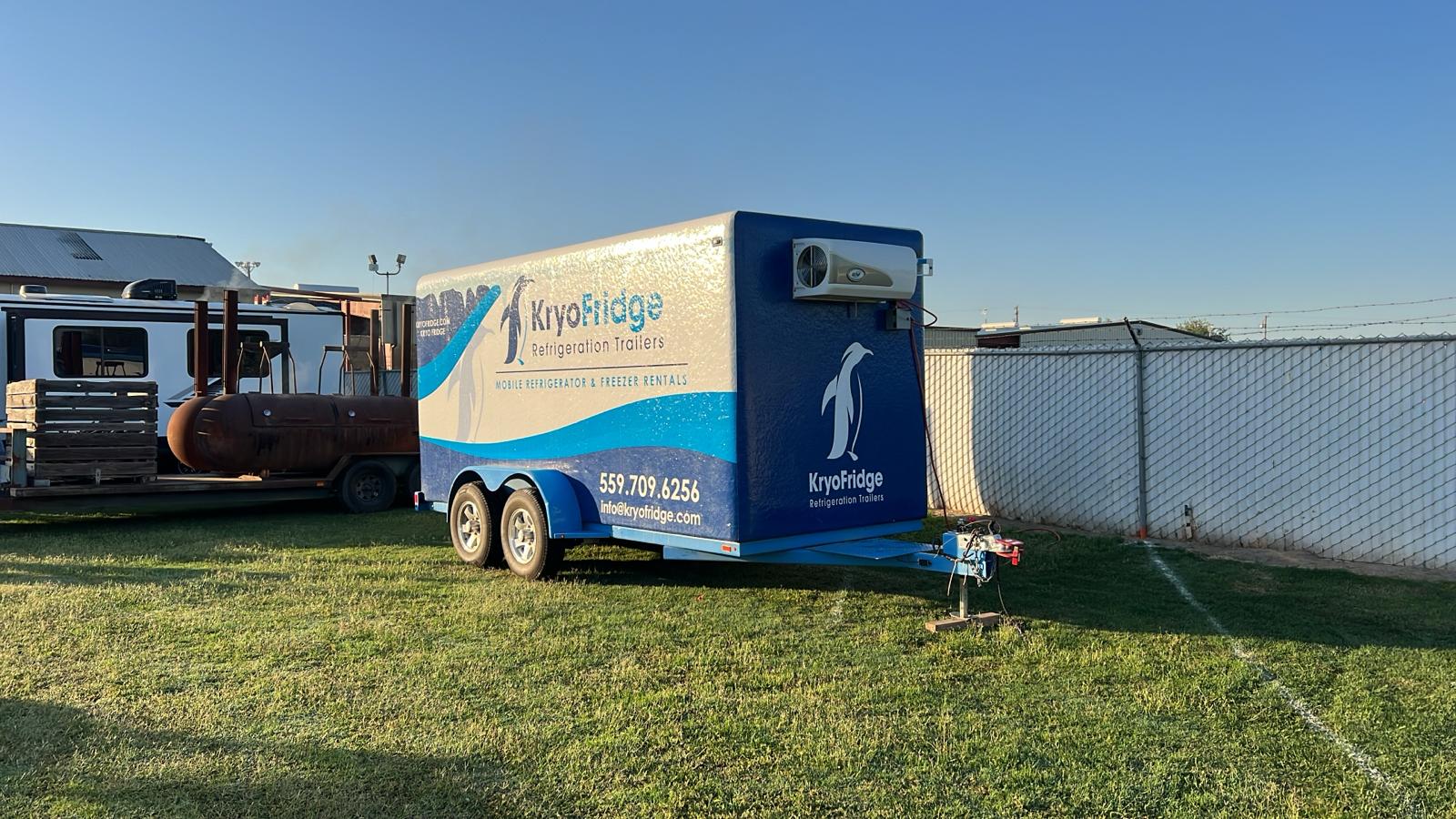
Two field stories make that standard concrete. A Chick-fil-A once lost its walk-in mid-rush, and our trailer was parked, plugged in, and dropping toward set-point 34 minutes after the call. A regional restaurant group going into a Mother’s Day rush needed far more cold space than it had, so we rolled in a three-trailer setup the night before and had every box cold by the time the kitchen fired up. That is the exact discipline a Glendale concessions director leans on with 60,000 people about to fill the gates, and the same one a single taqueria off 59th Avenue needs when its compressor quits the night before a busy weekend. In both cases the trailer has to reach its set-point, defend it through a 110-degree afternoon, and stay clean enough to clear a Maricopa County inspection.
Stadium, Arena & Festival Cold Storage, Glendale’s Signature Job
Most cities rent freezer trailers to cover a remodel or a failed walk-in. Glendale does that too, but its defining cold-storage challenge is the crowd. When the Sports & Entertainment District lights up, the food-and-beverage logistics behind it are enormous, and a few ice chests do not come close.
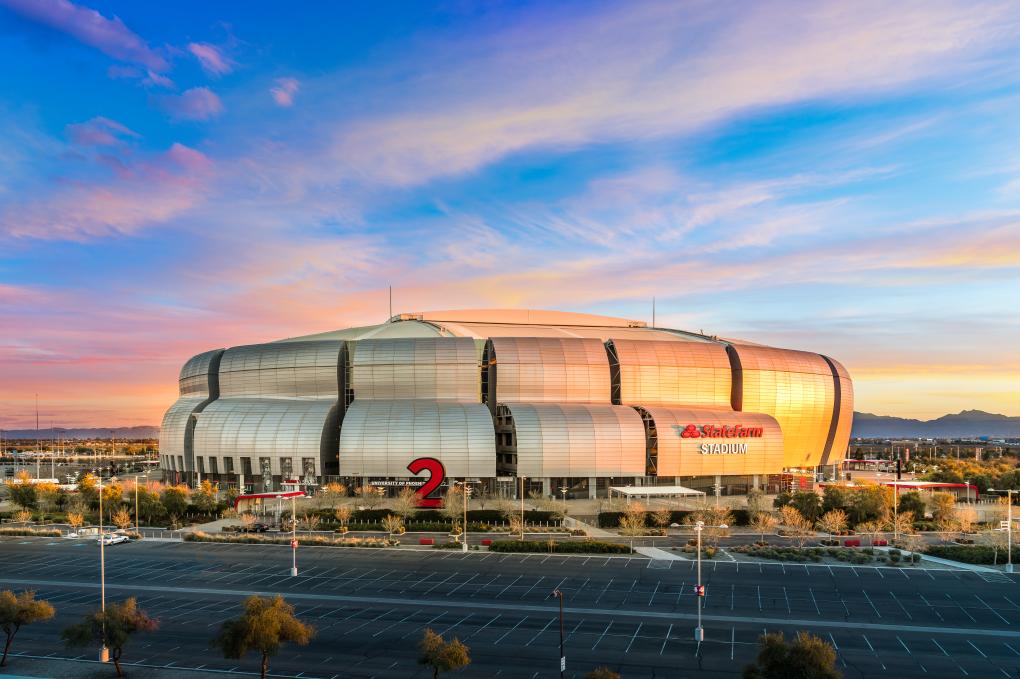
State Farm Stadium seats 63,400 and expands past 72,000 for the big ones. Three Super Bowls (XLII, XLIX and LVII), the 2024 NCAA Men’s Final Four, the annual Fiesta Bowl, Copa América matches, WrestleMania, and stadium tours from Taylor Swift to Beyoncé. A weekend like that runs on a temporary cold chain the public never sees: pallets of proteins, frozen desserts and beverages that have to stay in-spec from load-in Thursday through teardown Sunday.
A walk-in’s worth of freezer and refrigerated space, dropped in the parking lot and holding deep-freeze on a generator, is how a concessions or catering team scales for that without renting a warehouse. We size it to the event, a single 6×16 for a club-level catering operation, several staged together for a full-stadium production.
Desert Diamond Arena runs the calendar all year. 20,000 seats, north of 250 events annually, a fresh 42-million-dollar renovation, and a 2026 concert slate that keeps the venue and the surrounding Westgate restaurants busy nearly every weekend. Camelback Ranch brings its own surge: the spring-training home of the Dodgers and White Sox draws huge February-and-March crowds, with West Valley ballparks collectively pulling more than 400,000 fans a year. Concession stands, tailgate setups and the catering tents around all of it need reliable freezer and refrigerated capacity that an Arizona afternoon cannot break.
The pattern we see across every one of these venues is the same: demand spikes hard and fast, the heat is working against you, and there is zero tolerance for product loss in front of a paying crowd. That is the exact job our reefer trailers were built to do, and because our units sit in the West Valley, we can stage for a planned event weeks out or answer a “we need more cold space by tonight” call the day of the show.
Who Rents a Freezer Trailer in Glendale. And Why
Cold-storage demand here is rarely on the calendar in advance. It shows up as a sold-out event, a remodel, a recall, or a 112° afternoon that finally takes out an aging walk-in. These are the calls we field most across the West Valley, each paired with the kind of operation it serves.
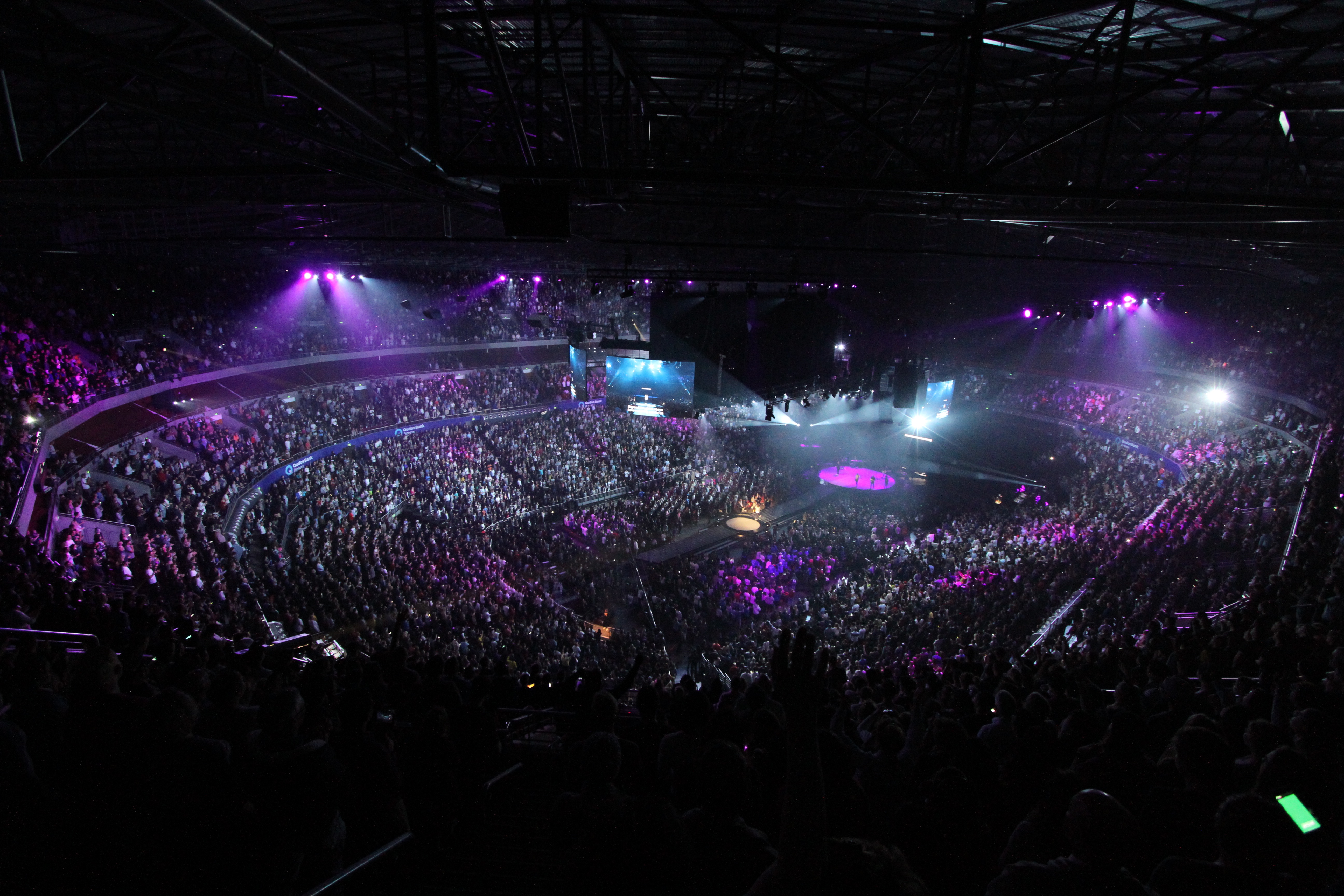
? Stadiums, Arenas & Concerts
Concession and catering freezer space for State Farm Stadium weekends, Desert Diamond Arena shows, and big Westgate productions.

? Festivals & Outdoor Events
Drop-in cold and freezer capacity for Westgate festivals, food-truck events, and the tailgates around Camelback Ranch.
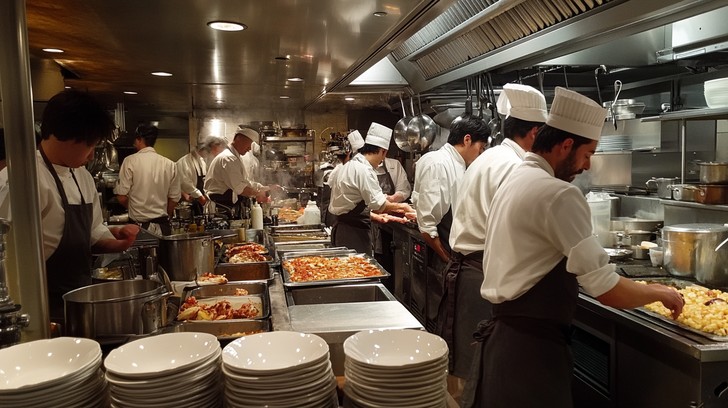
? Restaurants & Kitchens
Walk-in failures, remodels and seasonal overflow for kitchens around Westgate, Arrowhead and the 59th Avenue corridor.

? Grocers & Markets
Stop-gap cold during a refrigerated-case or compressor failure, a remodel reset, or a holiday stock-up the existing boxes can’t hold.
? Distribution & Logistics
Temporary reefer capacity for the warehouses along Loop 101 and Loop 303 when a cold zone runs short or goes down.

? Emergency & Disaster
Around-the-clock rollouts when a haboob drops the grid, a compressor quits, a recall hits, or relief crews need a cold chain fast.
The common thread is timing. Almost no one schedules a freezer-trailer emergency, they need it the night a haboob knocks out the grid, the week a remodel starts, or the morning a concessions count comes up short before a sold-out arena show. With our trailers already parked in the West Valley, a same-day ask is just an ordinary Tuesday around here. Not the long shot it would be from a fleet across the metro.
Our Trailers, Out Working Across the West Valley
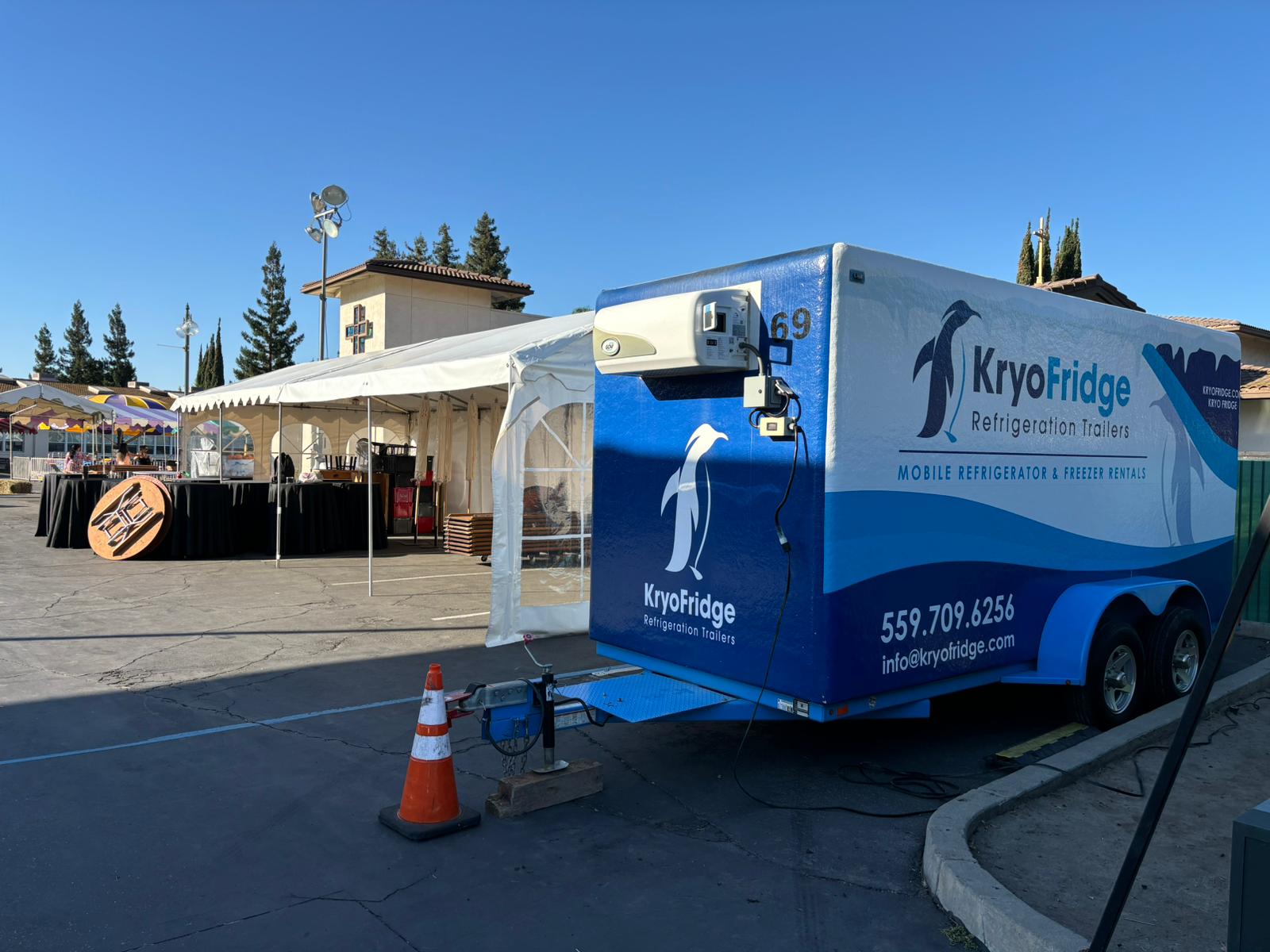
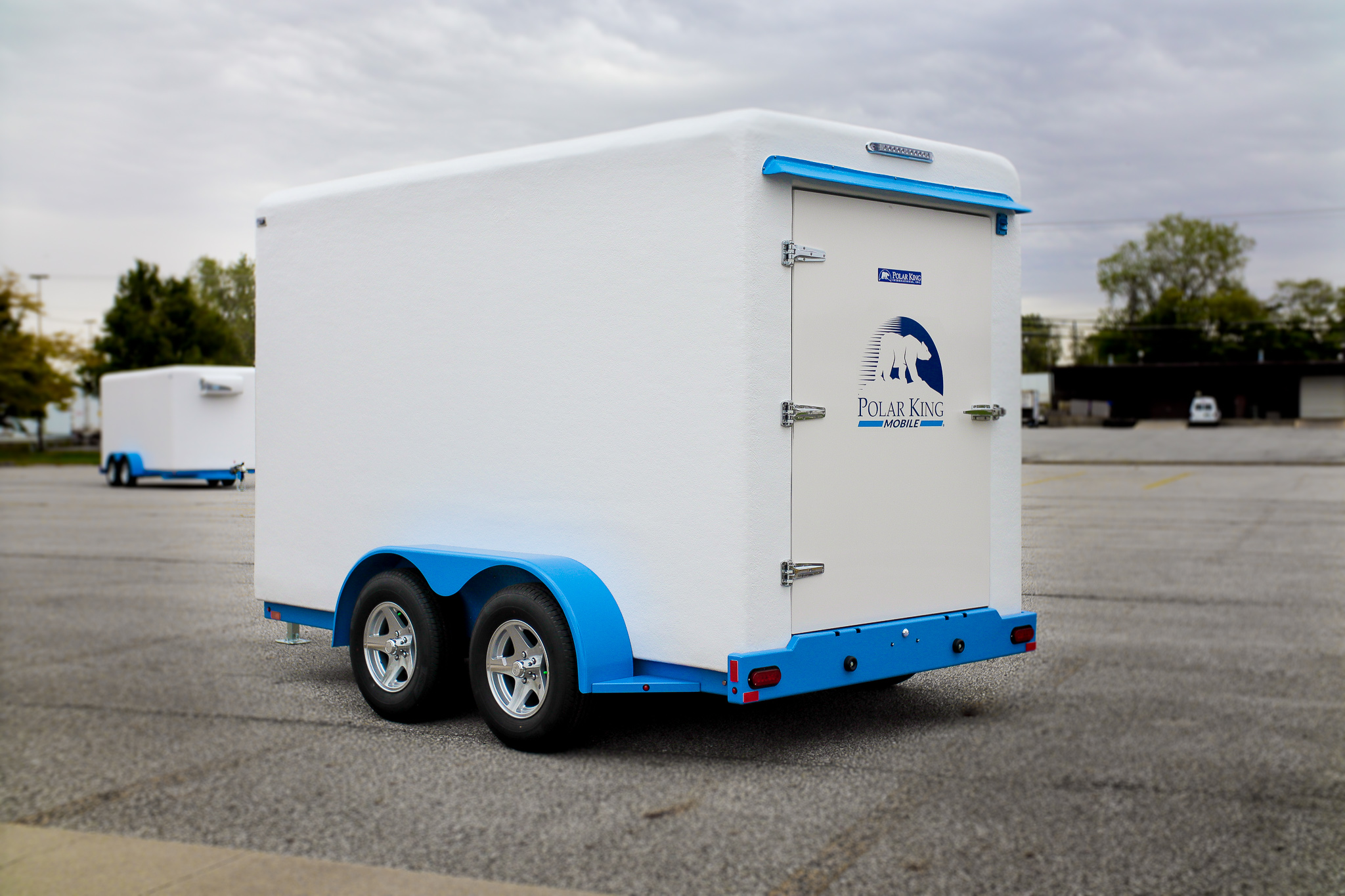
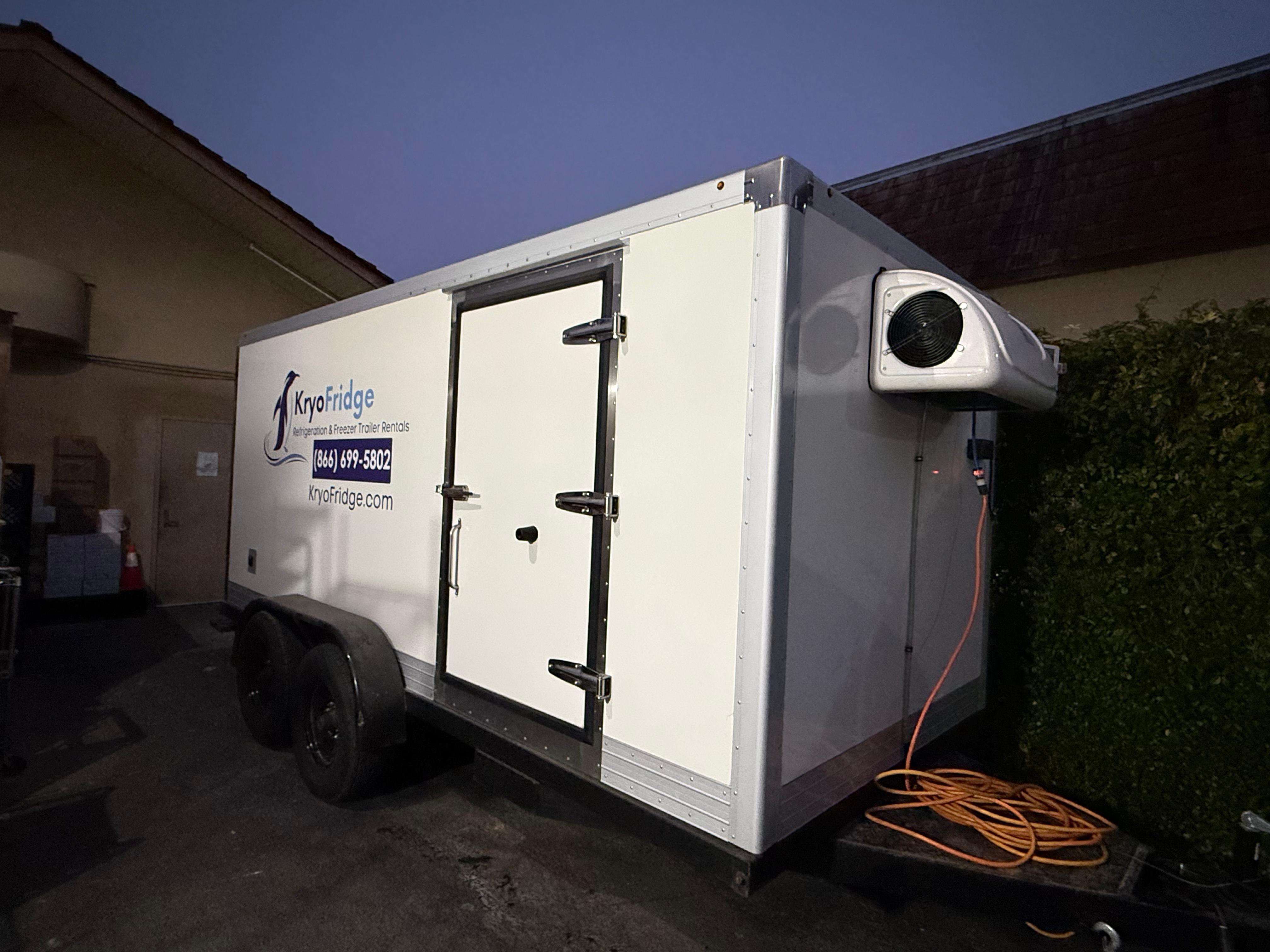
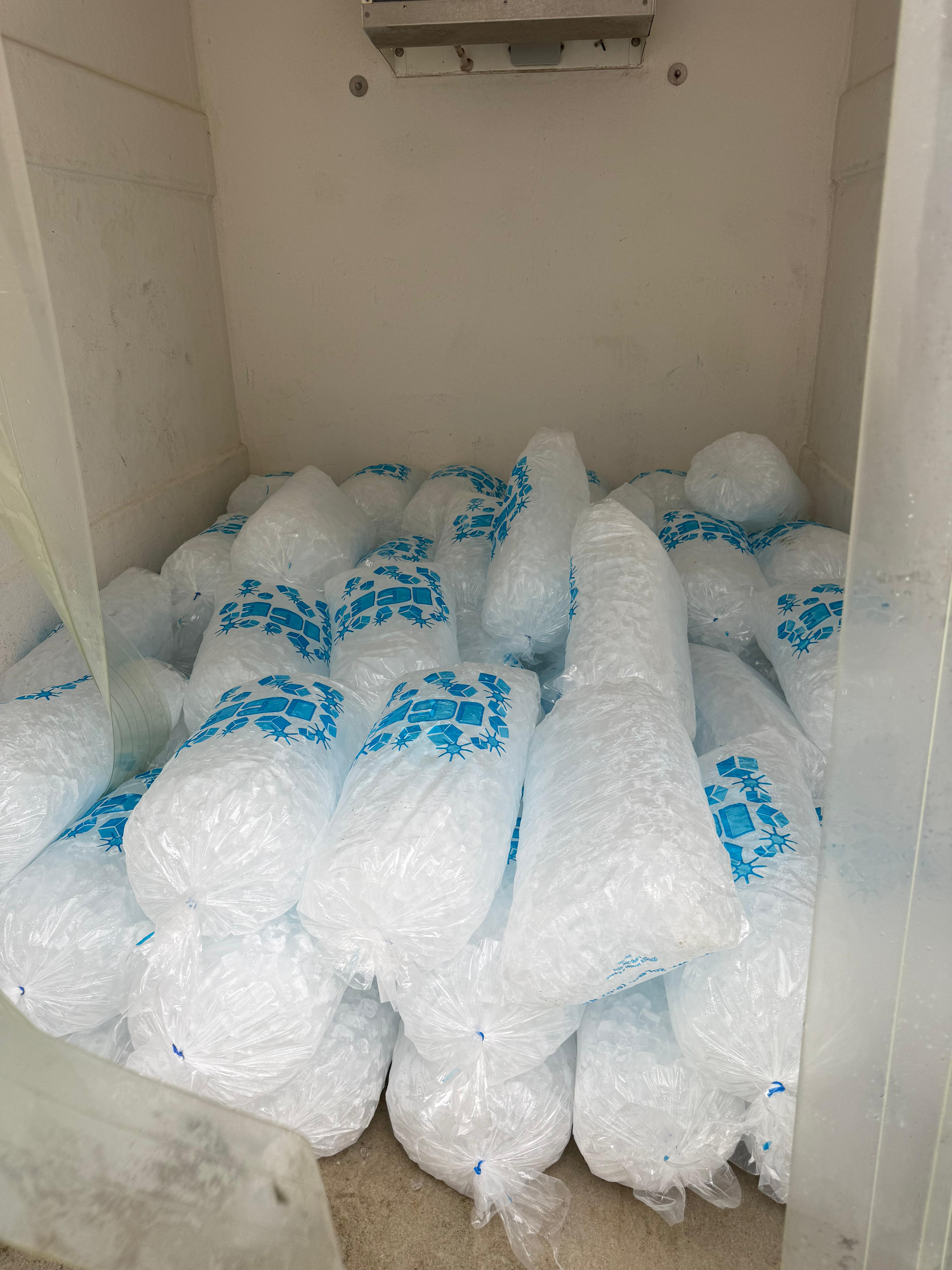
Real KryoFridge units on real jobs, event grounds, restaurant docks, distribution yards, and late-night emergencies around Glendale and greater Phoenix.
Glendale’s Heat Is the Reason Cold Storage Fails When It Matters
Glendale’s climate is the quiet villain in nearly every cold-storage emergency we answer. Phoenix-metro summers are not just hot, they are relentlessly hot for months: the region logged a record 70 days above 110° in a single recent year, and the West Valley, flat, paved, and west of the urban heat island. Bakes right alongside it. From June into September, every cooler and freezer in Glendale is working overtime.
The heat hits from two directions at once. It piles load onto refrigeration that’s already running, so a tired walk-in compressor that hummed along fine in March simply quits in July after weeks with no relief. And it collapses your reaction window, at 112° ambient, frozen stock races toward the danger zone the instant a unit falls silent. At an event the stakes get ugly fast: a concessions failure on a 112-degree afternoon can ruin a weekend’s stock before anyone even tracks down a repair tech.
This is the exact reality our trailers are designed around. The reefer plants are rated to defend their set-point in extreme ambient. Not merely in a forgiving test bay, so a 6×16 sitting on open Westgate asphalt in August (no shade, no mercy) keeps deep-freeze just as it would inside a climate-controlled warehouse. Whether you’re getting ahead of the season or scrambling in the middle of it, that engineered cushion is the entire reason to rent from a team that lives in Arizona heat all year.
When the Monsoon Takes the Grid: Emergency Cold Storage in the West Valley
Ask anyone who has run a business through a Glendale summer and they will tell you the real threat is not a steady-state heat wave. It is the monsoon. From July through September, the West Valley gets hit by haboobs that can stack a wall of dust 5,000 feet tall and 50 miles wide, followed by microbursts that snap power poles and topple trees. A single 2025 storm knocked out power to more than 15,000 metro residents in one night. When that grid goes dark, every walk-in and reach-in on it goes dark at the same moment.
That’s the moment a generator-powered trailer pays for itself. A restaurant or grocer keeps its inventory frozen clean through the outage with the building’s power dead. An event organizer caught mid-setup keeps the concession stock in-spec until the grid wakes back up. And for emergency management and relief operations, a staged row of reefer trailers turns into mobile cold-chain infrastructure, holding food and supplies safe for shelters and crews while everything fixed sits dark.
Owning the fleet and running our own round-the-clock dispatch from the West Valley means we can react to these storms quickly and size the response to fit. A lone unit for one storefront, a coordinated cluster for a relief effort. Worth knowing: Glendale is split between two utilities, APS up north and SRP to the south. Either way, once the grid itself is the thing that died, cold storage that doesn’t depend on it is the whole answer.
How to Choose a Trailer Size for a Glendale Job
Our three sizes span the whole range, a one-kitchen overflow on the small end, a full-stadium event or disaster-relief cold chain on the big end. Whichever you take, it locks to a digital set-point anywhere from deep-freeze to fresh-cold and runs off a dedicated circuit or, where there is no outlet, a generator.
| Trailer | Best for | Temp range |
|---|---|---|
| 6×8 | Tight lots, small kitchens, short overflow | -10°F to 50°F |
| 6×12 | Grocers, caterers, mid-size events | Deep-freeze capable |
| 6×16 | Stadium concessions, distribution, disaster | Heavy-duty reefer |
All three sizes hold a digital set-point and draw from a dedicated 120V/20A circuit, with a generator covering any spot that has no outlet.
6×8 Refrigerated. Small, nimble, and quick to place
Roughly eight pallet positions, and small enough to slip into the tight back lots behind older Glendale storefronts and downtown kitchens near Murphy Park. It handles most single-kitchen emergencies and short overflow, and it tucks into spots a bigger trailer cannot maneuver into. If you run a corner restaurant or a small market and your walk-in just quit, this is usually the right call.
6×12 Freezer / Reefer, the most-booked size for grocers, caterers & mid-size events
Roughly 14 pallet positions, deep-freeze capable, and the unit we send out most often. It hits the sweet spot for a grocery backup, a multi-day catering run at Westgate, or a restaurant that needs true walk-in-equivalent room while its own box is down for a remodel. Roomy enough that nobody’s rationing shelf space, compact enough to set in most commercial lots.
6×16 Freezer / Reefer. The heavy hitter for stadiums & distribution
Roughly 20 pallet positions behind a heavy-duty reefer plant tuned to keep deep-freeze locked in punishing ambient heat. This is the size you reach for when a warehouse cold bay drops near Loop 303, when concessions have to cover a State Farm Stadium weekend, or when a monsoon leaves a relief operation needing real cold-chain capacity. The sprawling event lots and distribution yards across the West Valley swallow a 6×16 with room left over.
On the fence about size? Give us a rough idea of the product and the timeframe, and we’ll spec it to the job, never nudge you toward a bigger unit than the work actually calls for.
Set-Point Guide: Matching the Trailer to Your Product
There is no one “cold.” Ice cream, raw poultry, and catering platters each have their own safe band, which is the whole reason a digital set-point earns its keep. And in Glendale heat, slipping out of the right band is how a load quietly goes to waste. This is the working chart our customers use to size a rental.
| Product | Typical holding band | Trailer mode |
|---|---|---|
| Ice cream & frozen desserts | -10°F to 0°F | Deep freeze |
| Frozen proteins, seafood, prepared foods | 0°F or below | Freezer |
| Fresh meat & poultry (short hold) | 28°F to 32°F | Refrigerated |
| Dairy, deli, packaged produce | 34°F to 38°F | Refrigerated |
| Beverages, florals, catering platters | 38°F to 45°F | Refrigerated |
The most important figure never appears in the chart: 40°F. Cross above it and you enter the 40-to-140°F window food-safety guidance labels the “danger zone,” where bacteria on perishables take off and most refrigerated product is considered unsafe past roughly four cumulative hours. That clock is the reason a dead walk-in on a 110° Glendale afternoon counts as an emergency, not a nuisance, and the reason our reefer units are engineered to drive down and defend a set-point in brutal ambient heat instead of loafing along in a gentle test bay.
On the call, just name the coldest item in your load and we’ll dial the trailer to match it. A single box handles a straight freezer load with no trouble. When you’re juggling deep-freeze alongside fresh-cold product for an event or a remodel, we’ll usually steer you toward a split plan or a second unit so no part of the load has to settle for the wrong temperature.
Power, Hookups & Where the Trailer Goes
Powering a KryoFridge trailer comes down to one of two options: a dedicated 120-volt, 20-amp outlet inside roughly 100 feet of the drop, or else a generator. What the units will not tolerate is ordinary 208–240V building current. So a quick power check up front is the cheapest way to avoid a hold-up on delivery day.
- Dedicated outlet nearby? Most kitchens and markets across Glendale already have one, and the moment we plug in the unit begins pulling down.
- Stadium lot, arena dock or open event field? A generator keeps the trailer cold anywhere, from a State Farm Stadium parking lot to a Camelback Ranch tailgate field.
- Bracing for a monsoon outage? Power in Glendale is divided, APS up north, SRP down south, and summer storms knock out either one. Put the trailer on a generator and your cold chain rides right through the blackout.
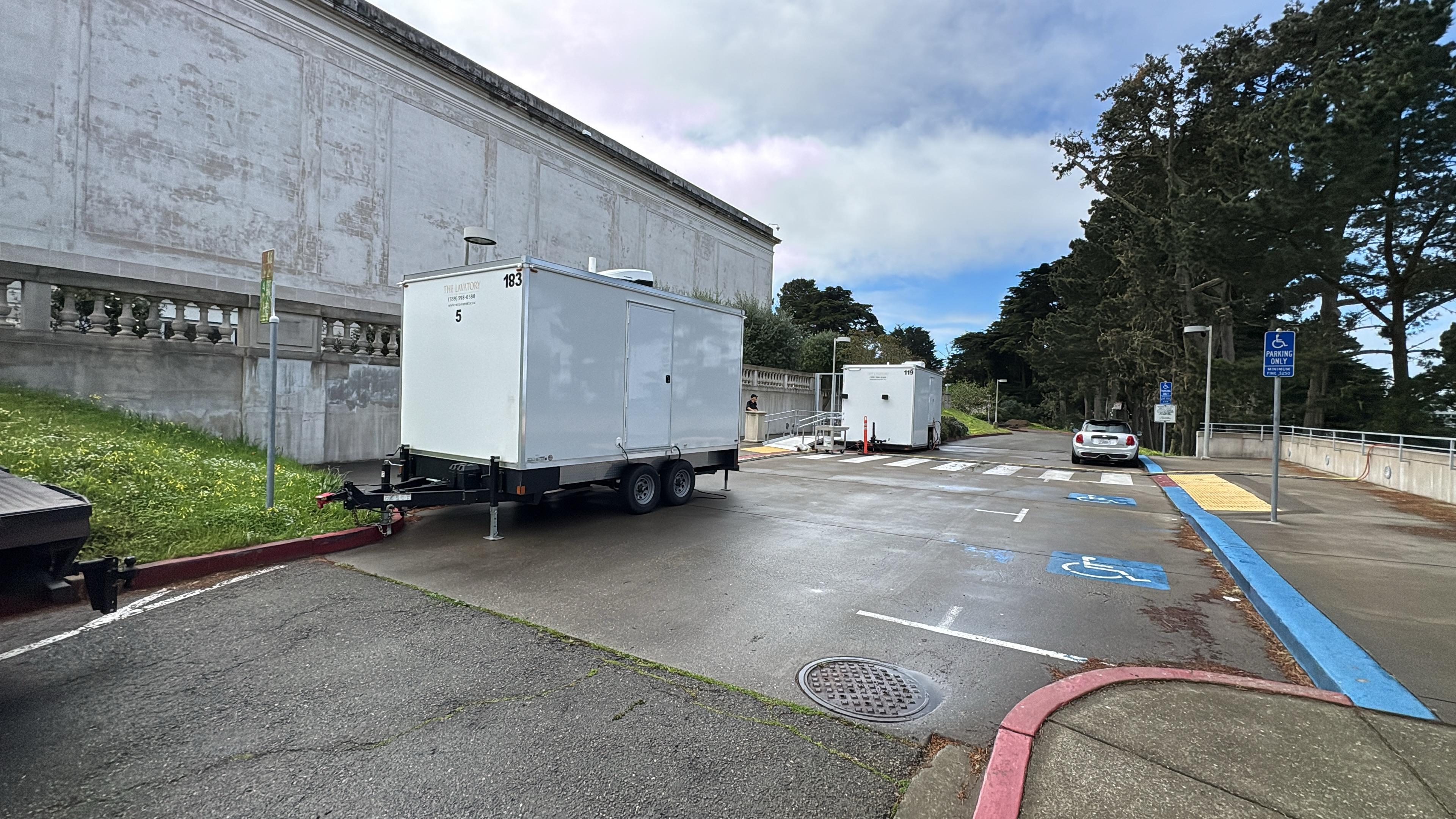
A quick word on placement: the trailer wants a fairly level pad with enough clearance for the delivery truck to back in and set it, plus a power source nearby or space for a generator. We pin the exact drop point before the truck ever leaves the yard. And our drivers run the West Valley by heart, from the cramped older lots near downtown Glendale to the wide-open event grounds and distribution yards out past Loop 303.
Cold Storage for Weddings, Catering & the West Valley Event Circuit
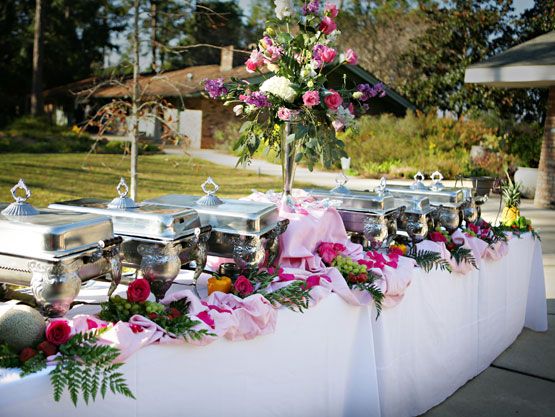
Beyond the big arenas, Glendale and the surrounding West Valley run a busy private-event circuit, resort and golf-club weddings, corporate functions in the Westgate hotels, the VAI Resort coming online with more than a thousand new rooms, and the steady stream of catered gatherings that fill the calendar from October through May when the weather turns gorgeous. Cold storage is the part of that planning that gets overlooked until it is too late.
Picture a caterer plating for 400 at a Westgate-area wedding, a vendor row roasting through a July festival, or a corporate spread laid out across a resort lawn. None of it survives on a handful of ice chests once the afternoon heat lands. A KryoFridge trailer drops an entire walk-in of capacity onto the event site, keeping frozen desserts, fresh produce, and beverages all sitting each at its own held temperature. It runs quiet enough to park near guests, locks down for overnight multi-day runs, and carries enough volume that nobody’s rationing shelves by Saturday night.
Mapping out the whole site? Pair the cold storage with water station rentals in Glendale so crews and guests stay hydrated through a desert afternoon, and restroom trailer rentals in Glendale to keep guests comfortable, one phone call can handle the entire footprint. (cross-brand links. Auto-wired into the wheel on publish)
Permits & Temporary Food Facilities for Glendale Events
Serve food at a public event in Glendale and the cold chain stops being purely an operations problem, it becomes a permitting one too. Walking in with the Maricopa County rules already handled is what keeps an inspector from flagging your booth on event day.
Events where food is sold or given away in Glendale fall under Maricopa County Environmental Services (MCESD). The person coordinating a multi-vendor event has to submit a Special Event Coordinator registration through the county’s Permit Center, and the county wants that application online at least 30 days before the event. Individual vendors who do not already hold a mobile food, catering, or temporary establishment permit need a Temporary Food Establishment permit to sell, sample, or hand out food. The county also sets the booth basics: overhead covering and three protective walls, an approved potable water source for handwashing and warewashing, a temporary handwash station, and sanitizer with test strips on hand. With the permit certificate displayed on site.
Here is the role a freezer trailer plays in all of that. To stay permit-ready, a food operation has to prove it can keep cold and frozen product at a safe, documented temperature for the full length of the event, and an NSF-approved trailer on a digital set-point is the piece carrying your stock safely through a baking Glendale afternoon, precisely the grade of gear an inspector expects from a serious vendor. We bring the food-safe, temperature-holding box. Filing the permit with the county is on you, and we’ll happily pass along the unit’s specs to attach when you submit it.
The Deeper Questions Glendale Operators Ask Us
Once the size and power are sorted, these are the things Glendale teams want nailed down. Open any one to read more.
Should you rent a freezer trailer, a portable walk-in, or a reefer truck?
Portable walk-in cooler: inexpensive and compact, but the name gives it away. It cools, it does not deep-freeze, and it depends completely on your building’s power and a steady ambient. Put one in a Glendale July and an undersized walk-in fights to hold its temperature; let a monsoon pull the building’s power and the cooler dies right along with it.
Reefer (refrigerated) truck: engineered to haul product over the road, not to park and hold it for a week. Idling burns diesel, the unit is loud next to a storefront or an event, and you are paying to tie up a tractor and a driver. A decent bridge for a single day, but a clumsy and costly answer for weeks of stationary cold.
Freezer trailer (our lane): designed from the ground up to be set down and to keep product cold for days or weeks at a stretch, deep-freeze capable, NSF-approved, quiet, lockable, and fed by nothing more than a dedicated circuit or a generator. It gives you more room than a walk-in and far less expense and fuss than a truck, all while being tuned to defend its set-point in precisely the heat that defeats the other two.
Food-safe construction & Maricopa County health-code compliance
Drop-in cold storage still answers to Maricopa County Environmental Services, the agency that permits and inspects food operations throughout Glendale and the West Valley. Let an inspector find a unit that cannot prove its temperature, or that was never built for food contact, and they can pull the plug on your service immediately.
Our trailers are NSF-approved across the board. Food-safe interior surfaces, real drainage, and a digital controller right where you can glance at the set-point. A straight answer worth giving up front: we furnish the food-safe, temperature-holding box, but we do not resell third-party temperature-logging or alarm-monitoring services, so if your compliance program requires continuous logging, line that piece up on your own.
What a cold-storage failure actually costs a Glendale operation
Do the arithmetic a Glendale operator runs in their head. One restaurant walk-in can be holding several thousand dollars of frozen and chilled stock, and a grocery case, a warehouse freezer bay, or a stadium concessions store holds a great deal more than that. Drop power or a compressor at 110° and that inventory starts going at risk inside a couple of hours, and that is before you fold in the revenue from a shuttered line and the overtime spent racing to rescue whatever you can. At an event, add the cost of a paying crowd left with nowhere else to buy.
Set a staged freezer trailer against all of that and it reads as cheap insurance: a fixed, known cost standing in front of a loss with no ceiling. It is exactly why the operators who have already been burned keep our number taped by the phone. The second time around, they call us while the product is still hard-frozen.
Glendale’s seasonal demand. Book ahead when you can
Zoom out and Glendale demand is seasonal and fairly predictable, even when no single emergency ever is. The event calendar sets the planned surges, Fiesta Bowl and football in winter, the arena’s nonstop concert run, spring training across February and March, and the wedding-and-catering wave that builds from fall into spring. Layer on summer equipment failures from June through September and the monsoon outage spikes in that same stretch. Plan ahead and you lock in the size you want; leave it to chance and our round-the-clock West Valley staging is there to catch the fall.
Staging multiple trailers for a stadium weekend or a big operation
A single trailer covers nearly any restaurant or grocer. Stadium weekends, large festivals, distribution centers, and disaster response routinely need more, and since the fleet is ours, we can line up several units side by side and bring them on as the job grows. That Mother’s Day three-trailer run from earlier is the template, match the cold capacity to the operation rather than making the operation squeeze into one box. For a State Farm Stadium weekend, that can look like a row of 6×16 reefers set before load-in and held all the way through teardown.
How long can the rental run. Overnight to open contract?
A term can be as short as a couple of days for an emergency or a one-off event, run weeks or months through a remodel or a busy season, or sit open-ended on a contract for operations that want a unit parked and ready. Tell us the window and the quote comes back straight, no penalty for an honest “not sure yet,” and nobody’s markup hiding inside the figure.
When to rent cold storage and when to build it
Putting in a permanent walk-in is a capital project in every sense: a refrigeration contractor, an electrician, a building permit, and weeks of lead time before the box chills its first pallet. And it only earns its keep when the demand is constant and here to stay. A lot of what drives Glendale calls is the opposite of constant. An event surge, a July overflow, a remodel gap, a seasonal stock build, or a dead unit waiting on a part are all temporary problems, and pouring concrete to solve a temporary problem is the slow and expensive route every time.
A rental turns that around. You bolt on precisely the cold capacity the moment calls for, kept only as long as you actually need it, with zero construction and no permit clock running. The trailer shows up and is holding temperature inside the week, frequently the same day. And the instant the need is over, so is your obligation.
How a refrigerated trailer holds deep-freeze in 110°+ Arizona heat
Three pieces have to pull in the same direction. Start with the shell: thick insulated panels and sealed, gasketed doors that lock ambient heat out and trap cold air in, so the box is never bleeding off cold through thin walls under the Glendale sun. Add the refrigeration plant, a self-contained reefer condensing system carrying enough capacity headroom to keep extracting heat at 112°, rather than maxing out the way an undersized cooler does. Finish with the digital thermostat that pins your chosen set-point and cycles the system to guard it.
That combination is why a unit baking in an open West Valley lot in August performs like one tucked in a temperate warehouse: it was built for the worst-case ambient, not the average day. And it is the reason we always ask about power first. That margin only survives on steady supply from a dedicated circuit or a generator.
Booking a Trailer: From First Call to Pickup
On a chaotic day, booking should be the simple part. Four steps, pricing with nothing hidden, and one person who owns your job start to finish.
1 · Describe the load
Frozen or refrigerated, a rough volume, and the rental window. A sentence or two is plenty for us to land on the right size.
2 · We lock size, power & the drop spot
We pair you with the right trailer, sort out a dedicated circuit versus a generator, and pin down exactly where it lands so delivery is a single clean run.
3 · We deliver & bring it to temp
Our crew rolls out across Glendale when you need us, about 45 minutes on an urgent call. Positions the box, ties in the power, and lets it draw down to your set-point.
4 · You load it; we stay on call
The trailer holds temperature for the full term while our line stays open the whole time, and we haul it off the moment you are finished.
Our West Valley Delivery Footprint Around Glendale
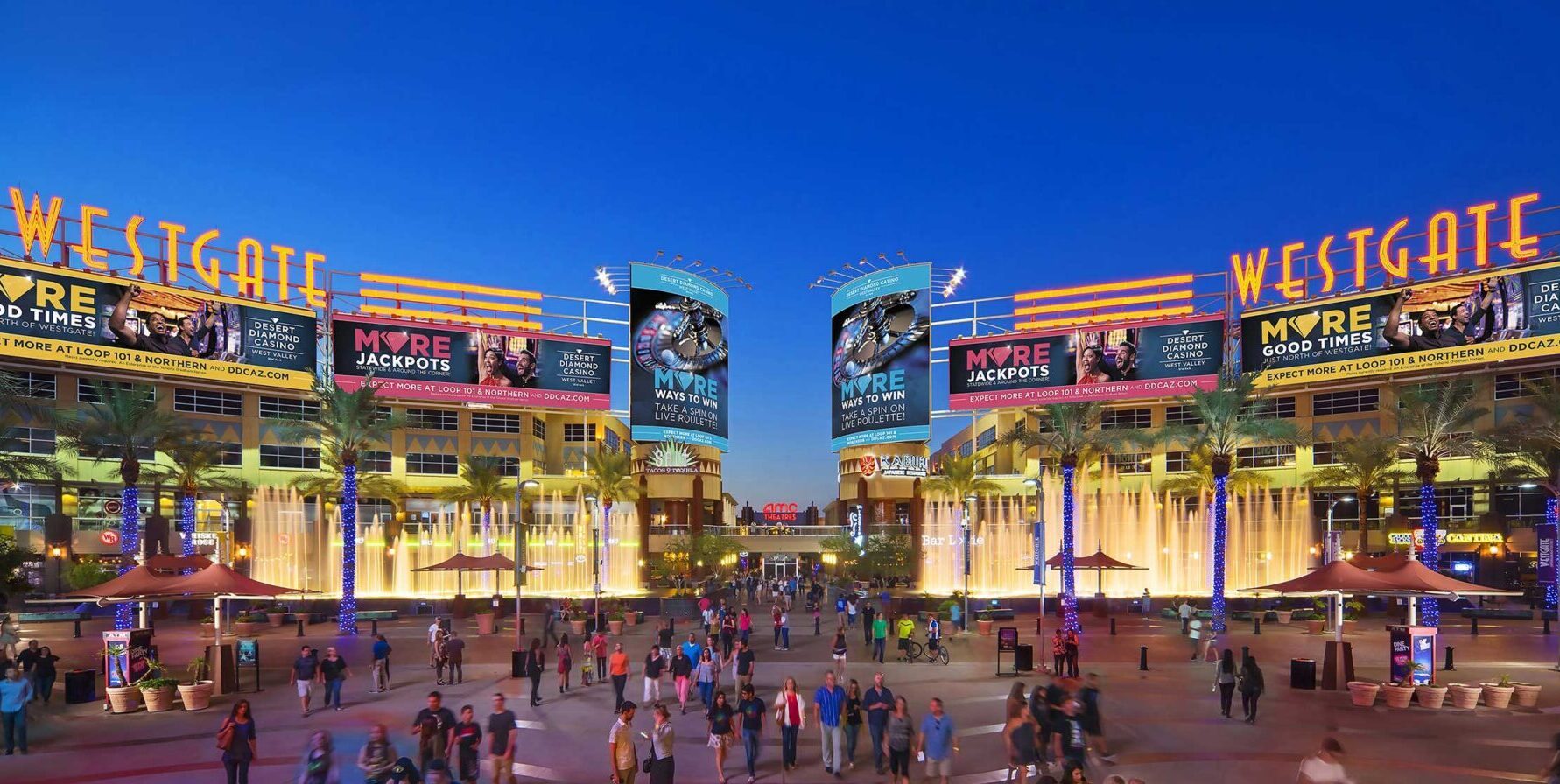
Our West Valley staging means fast response across every Glendale neighborhood, from the Sports & Entertainment District and Westgate to Arrowhead Ranch, Historic Downtown Glendale near Murphy Park, Sahuaro Ranch, Cholla, and the industrial corridors along Glendale and Bethany Home. Plus the venues at State Farm Stadium, Desert Diamond Arena and Camelback Ranch.
We also deliver across the wider West Valley and greater Phoenix: Peoria, Surprise, Avondale, Goodyear, Litchfield Park, Sun City, and El Mirage. If you are near Loop 101, Loop 303 or Grand Avenue, we can get a trailer to you, usually same-week for planned jobs, and within about 45 minutes when it is an emergency.
What Glendale Kitchens, Grocers & Event Teams Tell Us
“Lost our walk-in the morning of a packed Westgate weekend. KryoFridge had a freezer trailer dropped in our lot and cold inside an hour, every bit of our event product survived a 110-degree day because of them.”
Restaurant owner · Glendale, AZ“Booked a 6×16 for a multi-day event in the Sports District. Clean unit, held set-point through the afternoon, crew on time and easy. We’ll absolutely use them again for the next show.”
Event coordinator · West Valley“A monsoon knocked out our power overnight and we run a distribution operation off Loop 303. They staged two reefer trailers on generators same-night and kept everything in spec. Exactly the response we needed.”
Operations manager · Glendale, AZ“Straightforward pricing, no broker runaround, and a real person answered at night. In Arizona summer, an operator who actually shows up fast is worth everything.”
Grocery manager · Peoria, AZSample reviews written to mirror real Glendale jobs. These get replaced with verified Google reviews before this page goes live.
Glendale Freezer & Refrigeration Trailer Rental FAQ
How fast can you deliver a freezer trailer in Glendale, AZ?
For planned rentals we typically schedule same-week. For an emergency, a failed walk-in or a monsoon power outage. Our 24/7 West Valley dispatch routinely reaches Glendale and is pulling temperature within about 45 minutes, because our units are staged locally rather than driven in from out of town.
Do you handle cold storage for events at State Farm Stadium and Westgate?
Yes. Stadium concerts and game weekends, Desert Diamond Arena shows, Westgate festivals, and Camelback Ranch spring-training crowds are exactly what our 6×16 reefer trailers are built for, walk-in-equivalent freezer and refrigerated capacity that holds set-point through a triple-digit Glendale afternoon, and that we can stage in advance or scale to a multi-trailer setup.
What temperature range do the trailers hold in Arizona heat?
The dial spans deep-freeze near -10°F all the way up to fresh-cold around 50°F, all on a digital set-point. Because the reefer plants carry headroom for brutal ambient temps, a unit baking on July asphalt holds the same as one sitting in a climate-controlled warehouse.
What power do I need on a Glendale job site?
Either a dedicated 120V, 20-amp circuit inside roughly 100 feet of the parking spot, or a generator. These units won’t take standard 208–240V building current, so we verify your hookup before the truck rolls. Out on a stadium lot or an open event field, a generator keeps the box cold wherever you put it.
Is the equipment NSF-approved, licensed and insured?
They are. Each trailer carries NSF approval for food storage, with food-safe surfaces and a digital controller, and every rental is fully licensed and insured. Exactly the grade of equipment a Maricopa County inspector wants to see behind a serious vendor.
How long can I keep the trailer?
For whatever the job needs, a few days for an emergency or a single event, weeks or months through a remodel or a seasonal build, and longer still on a contract. Tell us the window and we’ll quote the term around it.
Are you a broker or the actual operator?
The actual operator. The fleet is ours. We own it, maintain it, and run it out of our West Valley yard, which means no markup, no go-between, and a single accountable contact from your first call through pickup.
Need a Freezer Trailer in Glendale Today?
Grab a quick, no-runaround quote, or ring our 24/7 line for emergency and event cold storage anywhere across Glendale and the West Valley.