

Walk-In Refrigerated & Freezer Trailer Rentals in Turlock
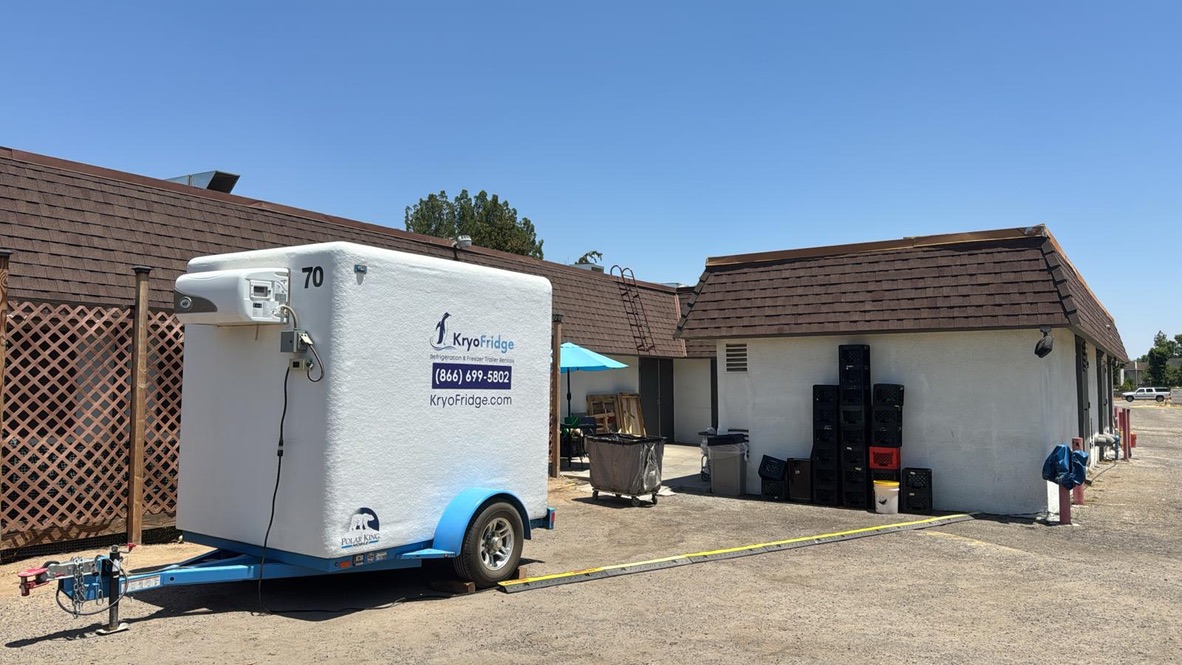
When a cooler quits or a harvest fills your storage faster than you can move it, we bring the cold to you. KryoFridge rents refrigeration and freezer trailers across Turlock, holding a true setpoint from produce temps down into deep freeze, on a generator we provide or a standard 120V circuit, with same-day dispatch when the clock is running.
Turlock's most-trusted name in cold-storage trailer rentals
Stanislaus County farms move more than three billion dollars in crops a year, and Turlock sits at the heart of it. Almonds lead the county at over eight hundred million. Milk is right behind. Most of that product lives and dies on one number, and that number is 41 degrees. When holding it gets hard, Turlock calls us. KryoFridge is the refrigeration and freezer arm of a rental family with more than 30 years in this business. We run one of the largest refrigerated and freezer fleets in the West, and we own every trailer we send. So you deal with us, not a broker handing your job to a stranger. National names like McDonald's, Chick-fil-A, and Dutch Bros trust our freezer trailers. But most of our Turlock calls come from a local operator with a walk-in that just died and a cooler full of product on the clock.
One trailer, cooler or freezer
Every unit dials from about plus-50 down to minus-10 on a digital control. So the same trailer holds almonds at cool temps for a packer and frozen protein for a turkey run. In a county that grows this many things, that range earns its keep.
We own the fleet you get
A lot of valley listings are brokers. They take your call, then go hunt for someone else's trailer. Not us. KryoFridge owns every trailer we rent, and the company that answers the phone is the one that rolls up in Turlock.
Thirty years behind the brand
We are the refrigeration arm of a rental family with more than 30 years in the equipment business. That is a long time learning what a Central Valley August does to a walk-in. We tend to see the failure coming before you finish describing it.
Same-day when the walk-in dies
Our fastest restaurant save put a trailer on the lot 34 minutes after the call. We run 24/7 emergency dispatch across the valley. When your product is on the 41-degree clock, minutes are the whole game.
Power that fits your site
Two clean ways to run a unit. A generator we bring, or a 120V, 20-amp dedicated circuit within 100 feet. A Main Street kitchen usually plugs in, a fairgrounds booth usually runs the generator, and we sort that out before we dispatch.
Trusted by names you know
McDonald's, Chick-fil-A, and Dutch Bros lean on our freezer trailers. So do local hullers, dairies, and grocers around Turlock. We run one of the largest refrigerated and freezer fleets in the West, so we can send one trailer or several.
The direct operator, never a middleman. A lot of cold-storage ads in the valley are brokers. They take your call, then scramble to find someone else's trailer and mark it up. We are not that. KryoFridge owns every trailer we rent, we are licensed and insured, and the same outfit that answers the phone is the one that shows up in Turlock. When your product is on the 41-degree clock, one accountable operator beats a chain of go-betweens.
The Cold-Storage Name America's Biggest Brands Keep on Speed Dial
National chains do not gamble on refrigeration. A drifting set-point during dinner rush can cost a brand a day of sales and a health-code headache, so the chains that scale fast vet a cold-storage partner the same careful way they vet a protein supplier. KryoFridge has held temperature for names like McDonald's, Chick-fil-A, and Dutch Bros, and earned the repeat call.
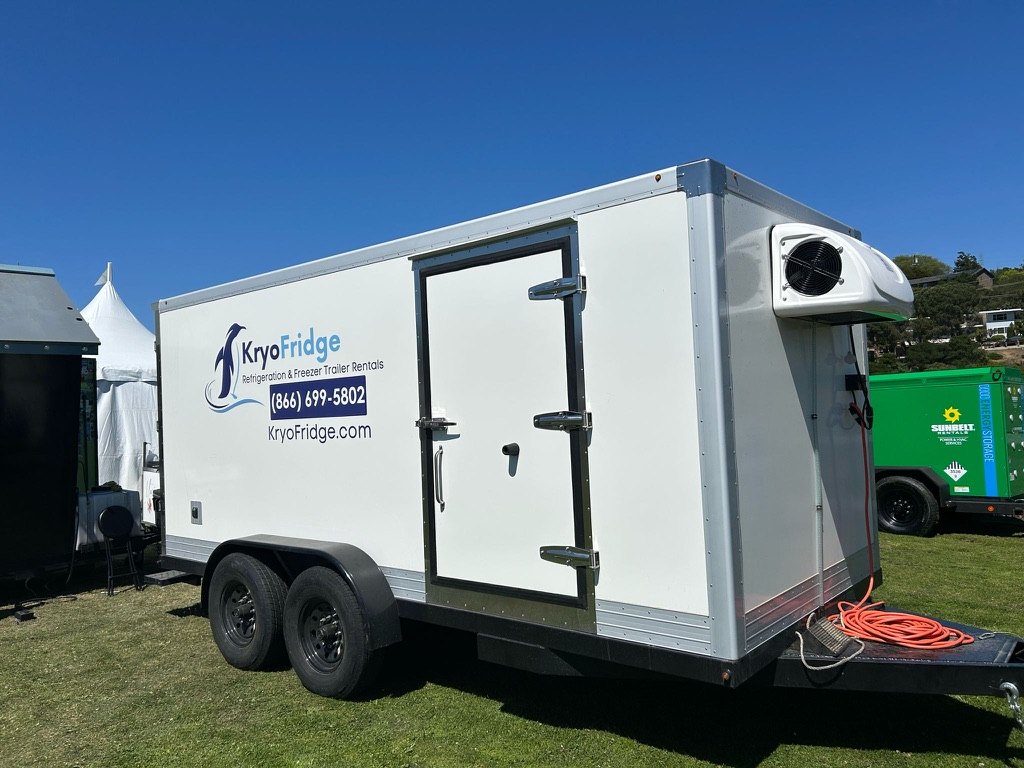
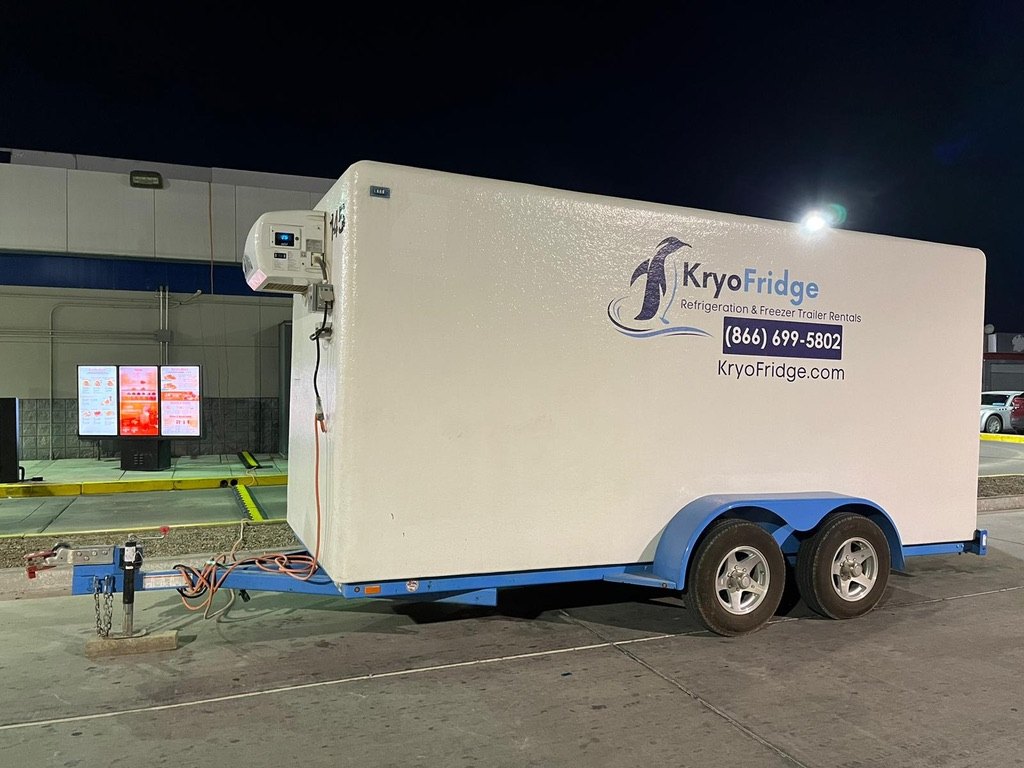
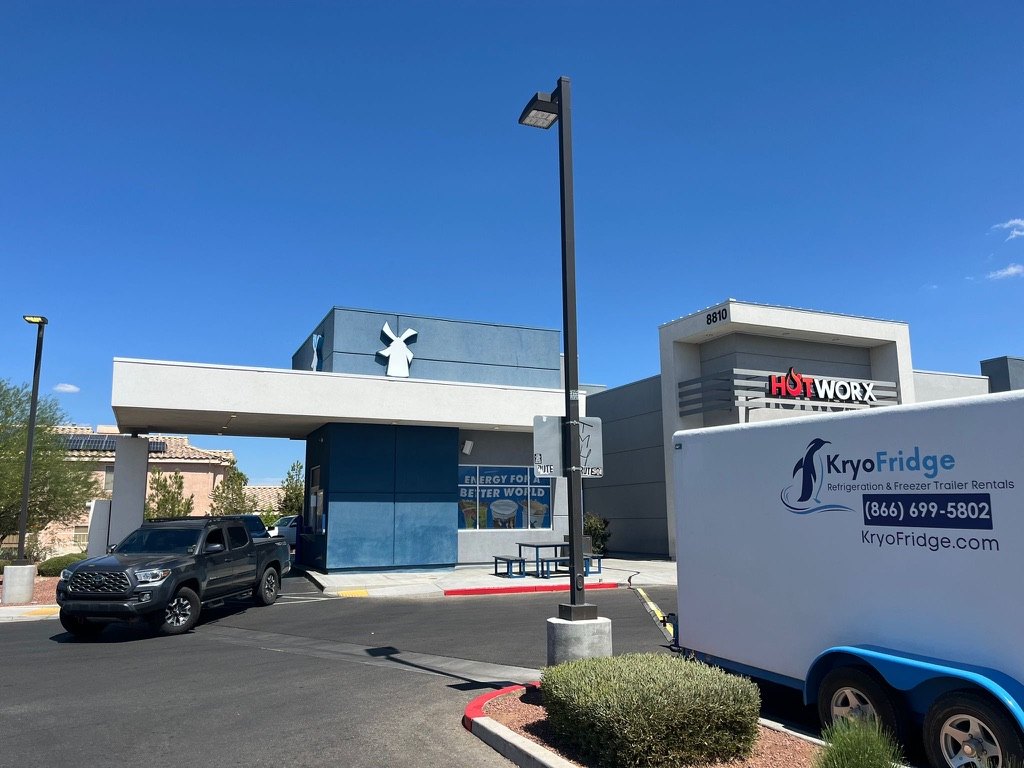
The stories behind that trust are the kind every restaurant owner recognizes. One Friday at 6:30 in the evening, the worst possible hour, a Chick-fil-A called with a dead walk-in and a drive-through line wrapped around the building. We prepped a trailer, dispatched it, and had it on their pad pulling temperature 34 minutes after the phone rang. That is the bar we hold ourselves to. Another year, an overnight outage shorted a cooler on the morning of a holiday rush, and our team staged three freezer trailers to hold every pie, every protein, and every prep tray and got the kitchen through the rush. What made both of those calls work: the equipment was already nearby, already cold, and owned by the people who answered the phone. That same standard travels to every Turlock job, from a one-cook taqueria to a distribution floor.
Refrigerated trailers for growers, packers, and processors
Turlock runs on almonds, milk, and poultry, and each one wants a different temperature. A single unit that dials from produce-cool down into deep freeze does the work of two, which is why our dual-purpose trailers fit this town.
Almonds are the number-one crop in Stanislaus County, worth more than eight hundred million dollars a year. Harvest runs from late July into October, and after the nuts are hulled and shelled they go straight into cold storage to hold their grade. That peak lands in August. And August is the hottest stretch of the Turlock year, so cold capacity runs tightest exactly when the weather is worst. Blue Diamond runs one of its almond plants right here in Turlock, and the company holds a huge block of refrigerated storage for a reason. When a huller or packer on the Highway 99 corridor runs short of space, our portable refrigeration adds cold at the dock the same day.
Milk is the county's second crop, worth about three-quarters of a billion. Most of it becomes cheese or powder within hours. Hilmar Cheese, just south of town, turns out around two million pounds of cheese a day and takes milk from more than 200 local dairies. The cold rooms around Hilmar, Delhi, and Denair move enormous volume every single day. The pace never stops. A dairy cooler cannot let product sit warm for even an hour. So when one loses capacity, our trailers backstop it and nothing drifts into the danger zone.
| Spec | What you get |
|---|---|
| Temperature range | Roughly -10°F deep-freeze up to about 50°F fresh-cold |
| Mode | Dual-purpose: freezer or refrigerator on one precise digital set-point |
| Power | A dedicated 120V, 20-amp circuit within about 100 feet, or a generator we supply |
| Food safety | NSF-approved for direct food contact, food-safe surfaces, proper drainage |
| Footprints | 6x8, 6x12, and 6x16, from a tight retail lot to distribution scale |
| Backing | Owned in-house, fully licensed and insured, with 24/7 emergency dispatch |
Each unit holds a precise digital set-point and runs on a dedicated 120V/20A circuit or a generator. The trailers are not wired for 208 to 240V building service, so we confirm your hookup before the truck rolls.
Poultry and turkey are the third leg. Foster Farms is headquartered up the road in Livingston, and the old Turlock turkey plant now runs under Diestel Family Ranch. Raw protein lives entirely inside the cold chain, from the plant to the truck to the store. Maybe you need surge space during a heavy run. Maybe a permanent freezer goes down and you need backup fast. A mobile freezer trailer holds the load at a true setpoint until the product moves.
There is a hard lesson in this county about how fragile a big cold chain can be. Avian flu tore through the local dairies not long ago and quarantined most of them. When your whole operation depends on unbroken cold, a backup plan is not optional. It is part of the job. We stage trailers around Turlock so that plan is one phone call.
The refrigeration and freezer trailers we run in Turlock
Every KryoFridge trailer is one adjustable box. Set it warm and it holds produce at cooler temps. Set it cold and the same unit runs as a freezer, down to about minus-10 degrees. You pick the number on a digital control, and the trailer holds it through a Turlock August. So a packer can chill almonds on Monday and freeze protein on Friday with the same rental.
Power is simple. There are only two ways to do it. We drop a generator we provide, or you give us a 120V, 20-amp dedicated circuit within 100 feet of the trailer. Those are the only two. A Main Street kitchen usually plugs into the wall. A vendor booth at the fairgrounds runs the generator. The unit is self-contained enough to sit on a lot with no permanent hookup.
We run several footprints, from a 6x8 that tucks behind a small restaurant to a 6x16 built for distribution scale. So we right-size the trailer to your load instead of guessing. One unit covers a single walk-in. Several staged together cover a full cold room or a big event. And because we own the whole fleet, we can send portable refrigeration the same day rather than hunting for someone else's trailer while your product warms up.
Other jobs our Turlock trailers cover
Turlock is a farm town, a processing town, and a university town all at once, and each of those worlds hits the same cold-storage wall at a different time of year. A refrigeration trailer is the fastest way over it. Here is where our units do the most work.
🍽 Kitchen remodels
Renovating a Turlock kitchen means your walk-in is offline for weeks. A refrigeration trailer keeps you fully open through the build. It rolls off when your permanent cooler is back.
🛒 New location build-outs
Turlock keeps growing north of Monte Vista, and new restaurants open all the time. Permanent refrigeration is often the last thing installed. A trailer gives you inspection-ready cold so you can stock and train before the built equipment is done.
📦 Processing and distribution overflow
Processors along the Golden State Boulevard corridor use our trailers for surge cold during heavy shipping windows. Or to keep finished goods moving while a permanent cooler is down for maintenance.
🎪 Institutional kitchens
CSU Stanislaus dining, Turlock Unified school kitchens, and Emanuel Medical Center food service all run cold storage at scale. When one needs backup, a trailer covers it without shutting the operation down.
🚨 Power outage backup
A storm outage that shorts a walk-in fuse can wipe a full cold room overnight. Turlock is on TID power, and the rural county fringe rides PG&E. But our trailers run on a generator we bring or a standard circuit, so a lost breaker does not mean lost inventory.
🏭 Bulk buy and overstock
Bought ahead on a good price or landed a big order? A freezer trailer gives you temporary deep-freeze space to hold the overstock, instead of turning down volume you cannot store.
What ties these together is the clock. Nobody budgets a freezer trailer into next quarter. They reach for one the hour a compressor quits, the morning a remodel begins, or the evening before a party when the stack of rented ice chests suddenly looks laughably undersized. Since our units sit staged around Turlock instead of a couple counties down the freeway, "can I get it today" is an ordinary ask here, not a stretch.
Our Trailers on Real Turlock-Area Jobs
Actual KryoFridge units on actual work. Retail back lots, distribution yards, event grounds, and the late-night emergencies that do not wait for morning.
What a Cold-Storage Failure Actually Costs a Turlock Operation
Add it up the way a Turlock owner has to. One restaurant walk-in routinely sits on a small fortune in proteins, dairy, and prepped product. Scale that to a grocery rack or a warehouse freezer bay and the exposure balloons. Now knock the power or the compressor out on a triple-digit afternoon, and that whole inventory is in jeopardy inside a few hours. Then stack on the sales you lose while the line sits dark and the wages you burn paying staff to triage what can still be saved.
Hold a pre-staged trailer up against that risk and it reads like cheap insurance, a fixed, predictable expense parked in front of a loss with no ceiling. That is exactly why the businesses that got stung once tape our number by the phone. There is never a second scramble, because the next time they dial before the product has a chance to warm. Owning every trailer ourselves means we can scale the answer to fit, a single compact box for a corner cafe or a clustered setup for a warehouse floor, and turn it around the same day.
Why valley heat is the real driver of cold-storage demand
Turlock sits in the southern half of Stanislaus County, where summer is less a season than a test. July averages a high around 98 degrees and August around 97. Those are averages. So a long run of days pushes well past 100, and a hard heat wave has put Turlock at 104 and 106. There is almost no rain from June through September, just dry heat, day after day.
Every refrigeration unit is rated to pull heat out of its box against the outside air. On a mild day, easy. On a 105-degree Turlock afternoon the same compressor fights a battle 30 degrees hotter, and that is when tired equipment finally gives out. Heat is the hardest test your cold storage faces all year. And that is why our emergency calls cluster from June through September.
Our trailers are built for that fight. Each one holds a true digital setpoint from roughly plus-50 degrees down to minus-10, running on a generator we provide or a 120V, 20-amp dedicated circuit within 100 feet. They hold that number no matter what the air outside does. So the smart move in Turlock is to line up a trailer partner in spring, well before the week every other operator in the county is calling too.
Reefer trailers when the walk-in dies in the heat
Turlock summers punish refrigeration. July averages a high near 98 degrees, and August is right behind it. In a bad heat wave the reading climbs past 104. On a 105-degree afternoon your walk-in's compressor is fighting a far hotter battle than it was built for. It runs longer, pulls more power, and sheds less heat. The strain adds up. So it quits on the worst day, not a mild one.
When it quits, the clock starts. Under the California Retail Food Code, cold food has to stay at or below 41 degrees. Once it climbs past that line and holds there, you are legally throwing it out. For a Main Street restaurant on a Friday dinner rush, a dead walk-in is not a headache. It is every protein, every dairy item, and every prepped tray sitting on a timer. We built our emergency dispatch around that exact moment.
Speed is the whole point. We keep trailers staged and ready, and our fastest restaurant save put a unit on-site 34 minutes after the call, right in the middle of a walk-in failure. There is a hard truth about valley heat too. When Turlock hits a multi-day heat wave, coolers do not fail one at a time. They fail all over town at once. And every operator in Turlock, Ceres, and Modesto is calling for the same scarce help on the same afternoon. So the partner you line up before summer beats the one you scramble for during it.
Grocery runs the same math on a bigger scale. Save Mart keeps stores on Geer Road and Lander Avenue, and a refrigeration rack that fails leaves a whole meat and dairy case short of cold. Add the holiday freezer crunch in the middle of turkey country, and you need deep-freeze space fast. Our mobile cold storage holds the overflow so a case full of product does not turn into a loss.
Cold-storage trailers for the fair, festas, and campus events
Turlock keeps a real outdoor calendar, and outdoor food service in a hot valley is a cold-holding problem whether the organizers plan for it or not. The Stanislaus County Fair is the big one, and it is a Turlock event. It runs ten days every July at the fairgrounds on North Broadway and draws more than 250,000 people. The crowds are huge. Picture a full row of food concessions in the exact middle of summer heat. A refrigeration trailer behind the vendor line is legal, steady cold holding for the whole run. Not a stack of melting ice chests.
The city's festival life runs deep too. Turlock's Azorean families have thrown a Portuguese Holy Ghost festa since 1912, with a street procession and a free community meal of sopas served to anyone who comes. That means big pots of meat and bread and dairy, held safe for a crowd, in June. A caterer working a festa or a wedding needs cold holding that scales past a few coolers. So they bring in a temporary refrigeration unit and stop babysitting ice.
The farmers market keeps its own rhythm downtown. It runs Saturday mornings on Main Street from spring into fall, and the vendors selling cheese, meat, and prepared food all need real cold on the table. And the Central Valley Brewfest packs the fairgrounds with dozens of breweries once a year. Any of these can lean on a trailer for the weekend.
The university adds its own spikes. CSU Stanislaus has grown to around 10,000 students, and move-in weekends, commencement, and big Warrior events all mean catering at volume. When a campus event or a downtown festival needs real cold for a weekend, a self-contained trailer is on-site, holding a steady setpoint, and gone when the event wraps.
Setting the Right Temperature for What You're Holding
"Cold" is not one number. Different product stays safe inside different temperature windows, which is the entire reason a precise digital set-point matters, and in the middle of a Turlock heat wave, a load that slips out of its window is a load you write off. Use the chart below as the reference our customers lean on when they size a rental.
| Product | Target holding band | Trailer mode |
|---|---|---|
| Ice cream and frozen desserts | -10°F to 0°F | Deep freeze |
| Frozen proteins, seafood, prepared meals | 0°F or below | Freezer |
| Fresh meat and poultry (short hold) | 28°F to 32°F | Refrigerated |
| Dairy, deli, packaged produce | 34°F to 38°F | Refrigerated |
| Beverages, florals, catering trays | 38°F to 45°F | Refrigerated |
One figure outranks everything in that chart, and it is not listed there: 40°F. Food-safety guidance treats the band between 40°F and 140°F as the zone where bacteria thrive, and the clock on perishable product starts ticking the moment it crosses 40 on the way up. Roughly four cumulative hours above that line and most refrigerated inventory is no longer safe to serve. Picture that countdown running on a 100-degree afternoon in Turlock with the walk-in dark, and the urgency of a quick trailer drop stops being abstract.
Tell us the single coldest item you are holding when you call, and we dial the trailer to that. One unit carries a straight freezer load with no fuss. But when your list mixes deep-freeze desserts with fresh-cold produce for the same remodel or event, we will usually point you toward a split setup or a second box so neither side of the load has to settle for the wrong temperature.
Power and Placement on a Turlock Site
Powering one of our trailers is refreshingly simple, and there are precisely two ways to do it. Either you have a dedicated 120-volt, 20-amp circuit reachable within roughly 100 feet of the parking spot, or we bring a generator. What the units will not accept is standard 208 to 240V building service, so a quick question about your outlet before dispatch heads off any surprise on delivery day.
- Dedicated outlet on hand? Most Turlock kitchens and markets already have the right one, so we plug straight in and the unit begins pulling the temperature down.
- Open lot or event field? A generator keeps the trailer running anywhere, whether that is an event lawn or a warehouse yard.
- Worried about a shutoff? A unit on a generator keeps your cold chain alive when a fire-season power shutoff takes the surrounding grid down.
On placement, all the unit really asks for is a fairly flat patch with enough room for the delivery truck to maneuver it in and set it straight, plus either a power source in reach or space for a generator. We lock down the exact drop point before dispatch, and our drivers know the Turlock layout cold, so the delivery is one clean trip instead of a guessing game on the property.
From the Field, Real Turlock-Area Saves
Downtown Turlock restaurant, walk-in down on a July Friday
A sit-down spot near Main Street lost its walk-in mid dinner service on one of the hottest Fridays of the summer. We took the call, prepped a trailer, and had it on the back lot fast. Every protein and dairy item moved across before anything crossed 41 degrees. The kitchen finished the night on a full menu. No closed sign on the door.
Almond processor on the Highway 99 corridor, August overflow
A processor near the highway ran out of cold storage during a heavy August run, with more product coming in than the built rooms could hold. We staged two refrigeration trailers at the dock within the day. That gave them the overflow to keep grading and holding without a bottleneck, and we pulled the units once the peak passed. Not a pound of grade lost to the heat.
Caterer at the Stanislaus County Fair, ten days in July heat
A caterer working the fairgrounds needed real cold holding for a ten-day run, well past what ice chests could manage. We dropped a cold-storage trailer behind their booth on its own generator. It held their product at a steady setpoint through every 100-degree afternoon. They cleared every health check with room to spare.
Renting a Freezer Trailer in Turlock, Step by Step
On a bad day, booking should be the part that does not add stress. Four steps, an upfront number, and a single person who owns the whole thing.
1 · Describe the load
Tell us whether it is freezer or fridge product, a ballpark volume, and your rough window. That is enough for us to call the right size.
2 · We finalize size, power & spot
We pair you with a unit, confirm whether you have a dedicated circuit or need a generator, and pin the exact drop point so the truck makes one trip.
3 · Delivery and cold-down
We arrive on your schedule, about 45 minutes for a true emergency, set the trailer, energize it, and let it drive down to your number.
4 · Run it, reach us anytime
It holds the set-point for your entire term while our line stays live the whole way through. Wrap up, and we swing back for the pickup.
What California's cold-holding law means for Turlock operators
Under the California Retail Food Code, cold food that needs temperature control for safety has to stay at or below 41 degrees, and temperatures are supposed to be checked on a schedule. The danger zone runs from 41 to 135 degrees. Inside that band, harmful bacteria grow fast. The rule is strict. So if cold food climbs past 41 and stays there beyond the allowed window, the law says it has to be tossed.
In Turlock that rule touches almost everyone, because these foods are not just restaurant plates. They are raw and cooked poultry, milk and cheese, cut melons and leafy greens, cooked sauces, and deli items. This is the list this county grows and processes at scale. A grocery meat case, a caterer's coolers at the fair, a school kitchen walk-in, a dairy cold room, all live by the same math. And Stanislaus County environmental health inspectors enforce it.
So a refrigeration trailer is often more than a convenience during a cooler failure. It is frequently the only way to keep an operation legal while permanent equipment is down. Our trailers hold a true, digital-setpoint 41-degree box or colder. You get back into compliance the same day, instead of watching a danger-zone clock run out on your inventory.
What our trailers bring to a health-code inspection
- NSF-approved interior surfaces built for direct food contact.
- A digital controller that puts the set-point in plain view for the inspector.
- Proper drainage and a sealed, food-safe insulated box.
- Licensed and insured on every unit we put on the road.
One caveat we always state plainly: we supply the food-safe, temperature-holding hardware itself, but we are not a temperature-logging or alarm-monitoring service. If your program requires continuous written records, line that vendor up on your own.
Three Trailer Sizes, and How to Pick Yours
We stock three footprints, and together they stretch from a one-kitchen overflow all the way to distribution and disaster-scale capacity. Each one is dual-purpose by design, a single adjustable system that swings between freezer and refrigerator on a precise digital set-point, and each one lives on either a dedicated circuit or a generator.
| Trailer | Best for | Temp range |
|---|---|---|
| 6x8 | Tight lots, small kitchens, short overflow | -10°F to 50°F |
| 6x12 | Grocers, caterers, mid-size events | Deep-freeze capable |
| 6x16 | Distribution, large events, disaster | Heavy-duty reefer |
Each unit holds a precise digital set-point and runs on a dedicated 120V/20A circuit or a generator.
6x8, the compact pick for tight retail lots
Think eight or so pallet spots, and the unit to grab when square footage is the whole problem. It slips into the pinched service yards and cramped back-of-house corners that a larger box cannot even swing into. One cafe or small-market walk-in goes down, and this is almost always enough cold to cover it, plus the simplest unit to set in a small space.
6x12, the everyday pick for grocers and caterers
Call it fourteen pallet spots, deep-freeze rated, and far and away the size people ask for most. It lands right in the middle for a grocery backstop, a multi-day catering job, or a restaurant that needs true walk-in-equivalent room while the kitchen is torn up. Roomy enough that nobody is playing Tetris with shelves, yet still small enough to set in most commercial back lots without a site survey.
6x16, the heavy hauler for distribution and disaster
Roughly twenty pallet spots paired with a heavy-duty reefer plant engineered to keep deep-freeze locked in even when the ambient air is merciless. Reach for it when a warehouse bay drops, when a large festival needs an anchor, or when a relief operation is carrying its own cold chain.
Not sure which size fits? Tell us roughly what you are storing and for how long, and we will spec it for you rather than nudging you into a bigger unit than the job calls for.
Everything Else Turlock Operators Ask Us
The questions that surface once the basics are settled. Tap any topic to open it.
Freezer trailer vs. portable walk-in vs. reefer truck. Which should you rent?
The pop-up walk-in cooler. Cheap to rent and easy to set up, but it chills, it does not freeze, and it draws every watt it needs from your building while depending on a calm ambient temperature around it. The second your building loses power, your cooler loses it too.
The refrigerated box truck. Designed to haul product on the interstate, not to sit in a lot and babysit it. Parked, it idles fuel all day, broadcasts compressor noise across a storefront or an event lawn, and pins down a tractor plus a driver you probably do not need.
The freezer trailer we deliver. Built from the ground up to be dropped on a pad and to defend a temperature for as long as the job runs. It freezes deep, carries NSF approval, locks, stays quiet near guests, and lives on nothing more than one dedicated circuit or a generator.
NSF build quality and health-code compliance
Even a rented box has to satisfy the county environmental health office that licenses and inspects every food facility. Show an inspector a unit that cannot document its temperature or was not built for food contact, and they have the authority to halt service immediately.
That is a bar each of our trailers clears: NSF-approved throughout, food-safe interior surfaces, proper drainage, and a digital controller that puts the set-point in plain view. We supply the food-safe, temperature-holding hardware itself, but we are not a temperature-logging or alarm-monitoring service.
Multi-trailer setups for distribution and large operations
For a typical kitchen or market, one box does the job. Distribution floors, big fairs, and full-scale disaster response routinely need more, and because the fleet is ours, we can cluster several units and bring them online in waves as the work expands. Match the cold capacity to the operation rather than make the operation squeeze itself into one box.
Short-term emergency vs. long-term and contract storage
The clock is yours to set. Some jobs are a handful of days for an emergency or a single event. Others stretch across weeks or months for a remodel or a seasonal swell, and a few become standing contracts for businesses that want capacity parked on standby. Name your window and you will get a clean quote, no penalty for an honest "not sure yet."
Renting vs. building permanent cold storage
Building permanent cold storage is a capital project in every sense: you hire a refrigeration contractor, schedule the electrical, pull a building permit, and wait weeks before a single pallet goes inside. A rental turns that equation on its head. You bring in precisely the cold you need, for precisely the stretch you need it, and the trailer is holding temperature that same week, frequently that same day, with the commitment ending the moment your need is over.
How a trailer holds deep-freeze in triple-digit heat
Three engineered elements carry the load. Thick insulated panels and tightly gasketed doors lock the sun outside and the cold inside. A self-contained reefer condensing system specified with surplus capacity keeps stripping heat out of the box even when the air outside is brutal. And a digital thermostat locks onto your chosen number and cycles the compressor to hold the line. Run those three together and a trailer baking on open asphalt behaves like one tucked in a cool warehouse. That is also why power is the first thing we ask about: the design delivers its safety margin only on steady, uninterrupted power.
Serving every corner of Turlock and the southern county
We dispatch throughout the city and the surrounding county, from downtown and the university side to the processing corridor along Highway 99 and the dairy towns beyond. Are you in or around Turlock? We can get a trailer to you.
Neighborhoods and towns we cover include Downtown Turlock, Main Street, Golden State Blvd, Monte Vista Crossings, Countryside Plaza, Geer Road, CSU Stanislaus, Northwest Triangle, Fulkerth Road, Lander Avenue, Denair, Hughson, Keyes, Hilmar, Delhi, Ballico, Ceres, Modesto, Livingston, Atwater, Winton, Merced, Hickman, Waterford.
Downtown Turlock. The restaurant and events heart of town, from Main Street kitchens to the Saturday farmers market and the Carnegie Arts Center. When a downtown walk-in fails or a Main Street event needs cold holding, we are minutes out.
North Turlock. The fast-growing side north of Monte Vista Avenue, thick with newer housing, Monte Vista Crossings retail, and the grocery and dining that feed it. All of it runs on cold storage we can backstop.
CSU Stanislaus and Geer Road. The university side, feeding around 10,000 students plus the Geer Road retail strip. Campus dining and the restaurants around it lean on reliable refrigeration through the valley summer.
Fulkerth and the Northwest Triangle. The newer commercial zone off Highway 99, with big-box grocery and the Countryside shops. Heavy retail cold storage that needs fast backup when a rack goes down.
South Turlock and the Highway 99 corridor. The processing and distribution side along Golden State Boulevard, home to almond plants and freight-adjacent cold storage. Packers and processors here use our trailers for surge and backup cold.
Hilmar, Delhi, Denair, and beyond. The dairy and cheese country just outside town, plus the corridor to Ceres, Modesto, and Merced. From a cooler down at a dairy to a poultry backup, we cover the southern county the same day.
Planned rentals are usually scheduled same-week, and a true emergency puts a trailer on your Turlock lot in about 45 minutes.
What Turlock customers say
"Our walk-in died on a Friday night in July with a full house. I called and they had a trailer in our back lot before we lost a single tray of product. Saved the whole weekend. These are the folks you want on speed dial."
Ruben A. · restaurant owner, Downtown Turlock"August harvest hit harder than our cold rooms could handle and we needed capacity yesterday. Two trailers showed up the same day, held everything at temp through the heat, and got picked back up when the run slowed. No runaround."
Karin S. · processing manager, Highway 99 corridor"Ten days at the fairgrounds in July heat is no joke. Their trailer ran off its own generator and held our product cold the whole event. Passed every inspection. I book them every year now."
Tony M. · caterer, Stanislaus County Fair"We needed extra freezer space for the holiday turkey rush and our own units were maxed. Easy call, quick drop-off, and the trailer held deep freeze without a hiccup. Dealt with the actual company the whole time, not some middleman."
Danielle P. · grocery operations, North Turlock"When one of our coolers went down we could not have product sitting warm for even an hour. They understood the urgency and had us covered same day. Real operators who know cold storage."
Sukhdeep G. · dairy operations, near HilmarSample reviews written to mirror genuine Turlock situations, to be replaced with verified Google reviews ahead of launch.
Turlock Freezer & Refrigerated Trailer Rental FAQ
How fast can you get a reefer trailer to me in Turlock?
Fast is the whole reason we exist. We run same-day and 24/7 emergency dispatch across the valley, and our fastest restaurant save was a trailer on-site 34 minutes after the call. Response time depends on your location and how busy the day is, especially during a summer heat wave when calls spike across the county. So call the moment you know you have a problem, not after you have watched the box warm up for an hour.
How do you power the trailer at my Turlock location?
There are exactly two ways. We can provide a generator, or you can plug into a 120-volt, 20-amp dedicated circuit within 100 feet of the trailer. Those are the only two. Many Turlock restaurants and processors use the standard circuit, while outdoor events at the fairgrounds almost always run on the generator we bring. We confirm which one fits your site before we dispatch.
How cold do the trailers get?
Every KryoFridge trailer is dual-purpose, so one adjustable unit runs as either a refrigerator or a freezer. The range is roughly plus-50 degrees down to minus-10, set with a digital control on the unit. That means the same trailer can hold almonds or produce at cool temps for one job and frozen protein for the next. In a county that grows everything from nuts to poultry, that range matters.
Can a trailer really hold 41 degrees in Turlock summer heat?
Yes. Our trailers are built to hold a true setpoint against valley heat, including the 100-plus degree afternoons that push aging walk-ins past their limit. The California Retail Food Code requires cold food at or below 41 degrees, and our units are designed to keep you there and colder even when the air outside is fighting them. It is the exact job they are built for.
Do you help during almond harvest or a processing surge?
Absolutely, and it is some of our busiest work in Turlock. When a heavy almond run or a poultry surge fills up your built cold storage, we stage refrigeration trailers at your dock for overflow capacity. Then we pull them when the peak passes. You get the cold space for the weeks you actually need it, without pouring a slab or pulling a permit.
Are you a broker or do you own the trailers?
We own every trailer we rent. KryoFridge is a direct owner-operated company, not a broker that takes your call and farms it out. We are licensed and insured, and the same company that answers your call is the one that shows up in Turlock. When your product is on the clock, that accountability matters.
What size and how many trailers can I get?
It depends on your job, and we would rather right-size it than guess. We run several footprints, from a 6x8 up to a 6x16, and one of the largest refrigerated and freezer fleets in the West. So we can put a single trailer at a downtown restaurant or stage several at a processing site or a large event. During emergencies we have dropped multiple trailers at one location to cover a full cold room. Tell us your load and we will match it.
Do you serve the towns around Turlock too?
Yes. From our Turlock base we cover the surrounding county and beyond, including Ceres, Modesto, Denair, Hughson, Keyes, Hilmar, Delhi, Livingston, Atwater, and Merced. If you are anywhere in or around the southern Stanislaus County valley, we can get a trailer to you.
Can I rent for the Stanislaus County Fair or a Portuguese festa?
Definitely. Outdoor events in valley heat are a core part of what we do. We drop a cold-storage trailer behind your vendor row or catering setup, run it off a generator we provide, and hold your product at a steady setpoint for the full run. Caterers working the fairgrounds and the festa season use our trailers to stay cold and stay compliant.
What happens during a power outage?
A storm outage that shorts a walk-in fuse can wipe out a full cold room overnight. Turlock is on TID power, and the rural edge of the county rides PG&E, which can call a safety shutoff on dry, windy days. But our trailers run on a generator we provide or a standard dedicated circuit, so we can get you cold capacity that does not depend on the breaker that just failed.
Do you provide temperature monitoring or logged records?
Our trailers have digital setpoint control on the unit, so you can set and see the temperature. But we do not offer a remote monitoring, temperature-logging, or high-temp alarm service. What we provide is reliable cold storage that holds its setpoint. If your operation needs documented logs, you would handle that with your own monitoring, and the trailer gives you the dependable cold box to log.
How far ahead should I book?
For a planned need like a harvest window, a remodel, or an event, book as early as you can so we can reserve the right trailer for your dates. That goes double heading into summer, when demand climbs across the whole county. For an emergency, do not wait at all. Call the moment your cooler shows trouble, because in a Turlock heat wave every operator around is calling at once.
Answers and guides for Turlock cold storage
We also run refrigerated and freezer trailers for jobs beyond Turlock, across Stanislaus County and the rest of the Central Valley.
Why Turlock walk-in coolers fail in summer, and how to be ready
If a walk-in cooler is going to fail, a Turlock summer is when it will happen. The reason is physics, not bad luck. A refrigeration system works by moving heat from inside the box to the air outside, and how well it does that depends on how hot that outside air is. On a mild spring day, dumping heat is easy and the compressor barely works. On a Turlock July afternoon, with the average high near 98 degrees and heat waves pushing past 104, the same compressor has to fight a much hotter gradient. It runs longer, and it draws more power just to hold the same inside temperature.
That extra strain is what finds the weak point in tired equipment. A compressor that has limped along for years. A low refrigerant charge. A dirty condenser coil. A worn fan motor. None of it shows up as a problem in February. It shows up in August, on the hottest afternoon, when the system is asked to do the most work of its life. That August afternoon is when it gives out.
California Retail Food Code, CDPH · National Weather Service, Hanford and Central Valley
Cold storage for the Stanislaus County almond and dairy harvest
Stanislaus County is one of the most productive farm counties in the country, and its crops move more than three billion dollars a year. Behind that number is a simple fact. Most of what this county produces is perishable, and a lot of it comes off the field or out of the barn in concentrated windows that push cold storage to its limit all at once.
The almond harvest is the sharpest example. Almonds are the county's top crop, worth over eight hundred million dollars, and across California growers start shaking trees in late July and run through October. After the nuts dry and pass through a huller and sheller, they move into cold storage to protect their grade until they ship. That peak lands squarely in August. And August is the hottest stretch of the Turlock year, which means holding capacity is stretched thin exactly when the weather is working against it. Blue Diamond runs a Turlock plant and keeps a large block of refrigerated storage for that very reason.
Stanislaus County Agricultural Commissioner · Almond Board of California, almond lifecycle
California cold-holding rules every Turlock food business should know
Cold food safety in California is not a suggestion. It is a code with a number attached, and in Turlock that number governs a huge share of the local economy. Under the California Retail Food Code, cold foods that need temperature control for safety have to be held at or below 41 degrees. Forty-one is the ceiling. Staying under it is what keeps food out of the range where it turns dangerous.
The reason 41 matters is the temperature danger zone, which runs from 41 to 135 degrees. Inside that band, the bacteria that cause foodborne illness multiply quickly, and the higher the temperature the faster they grow. Holding cold food at or below 41 keeps it on the safe side of that line. When cold food is held under time-based rules, the code generally calls for checking it. And if it climbs above 41 and stays there past the allowed window, discarding it. The law would rather see product thrown out than served warm and unsafe.
California Retail Food Code, CDPH · Stanislaus County Environmental Resources
Planning cold storage for a Turlock outdoor event
Outdoor events are part of the rhythm of Turlock life. The Stanislaus County Fair every July. The Portuguese Holy Ghost festas in June. The Saturday farmers market downtown. The Central Valley Brewfest at the fairgrounds. They all share one logistical challenge that is easy to underrate: keeping food cold and legal, outdoors, in a valley that runs hot.
The math is unforgiving. California requires cold food to stay at or below 41 degrees, and the danger zone starts right there. On a July event day in Turlock, with the air near or past 100, a cooler full of ice loses the fight quickly. Ice melts, the box warms, and somewhere in the middle of a busy service window the product crosses 41 degrees and legally has to be tossed. For a food vendor, that is not just wasted food. It is a failed health check in front of a crowd.
Get a cold-storage trailer to your Turlock site
Call our 24/7 dispatch line or request a quote, and we will match a trailer to your load, your power, and your dates. Same-day when it is an emergency.