
Freezer Trailer Rental for Seafood & Meat Processing
When a processing floor, harbor dock, or distribution cooler runs short on cold space, KryoFridge stages a food-safe freezer or refrigerated trailer right at the plant across California, Nevada, Utah, Arizona, New Mexico, and Hawaii. We run one of the largest dual-purpose trailer fleets in the West, backed by 30+ years in the equipment-rental industry.
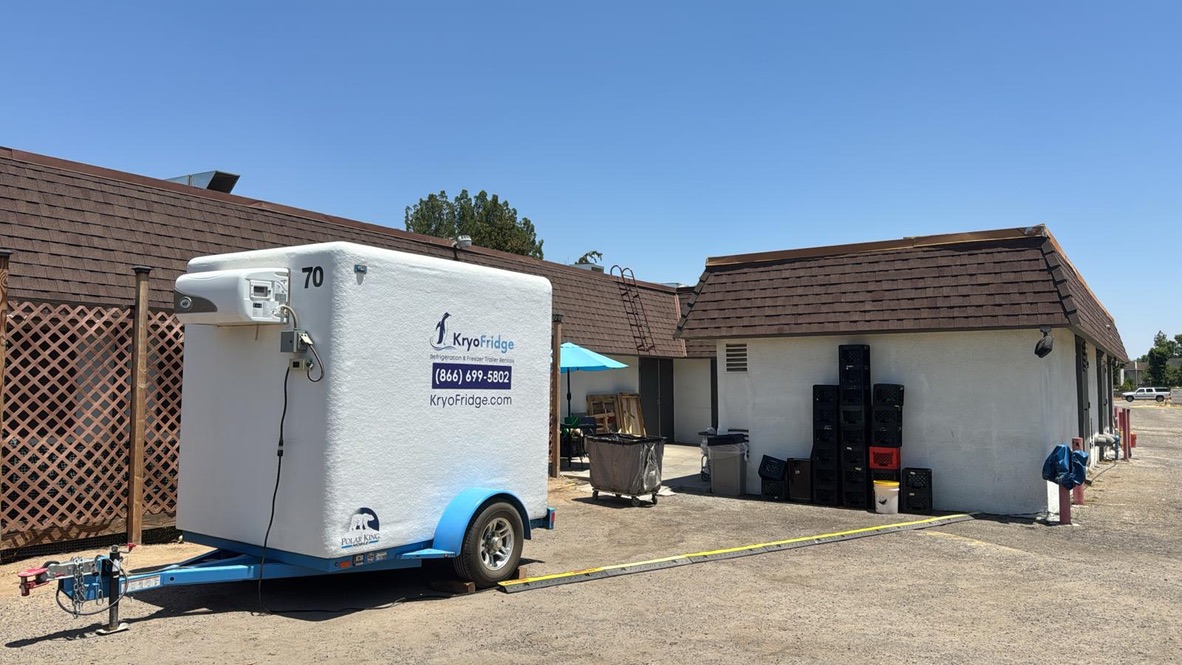
In seafood and meat processing, cold storage is not a convenience. It is the product. The moment a catch hits the dock or an animal leaves the kill floor, a clock starts, and every hour above temperature costs yield, shelf life, and food safety. A rented freezer trailer is the fastest way to add walk-in-grade cold or frozen capacity exactly where the work happens, with no permanent build, no permit, and no waiting on a contractor while product sits warm. Park it beside the dock, the cutting room, or the loading bay, plug it in, and you have hundreds of cubic feet of temperature-controlled space holding fresh fillets, primals, ground product, and frozen inventory at the same setpoints an inspector expects. For a processor working a landing, a holiday meat run, or a recall hold, that difference is measured in product saved and a cold chain that never breaks, not in pallets thawing on a warm floor.
Seafood and meat operations reach for a rented freezer trailer for a handful of recurring reasons, and the questions are always the same: how cold it holds, whether it can take fresh product straight off the dock, how fast we deliver when a blast freezer or walk-in fails, how it fits a HACCP plan, the power setup at a harbor or plant, and how a trailer compares to a reefer truck or an emergency contractor build. How KryoFridge answers each one comes straight from how we actually dispatch to processors, harbors, butchers, and distributors across our six-state footprint, not a generic spec sheet.
The #1 Choice for Processing Cold Storage in the West
KryoFridge is a direct, owner-operated refrigeration company, not a broker or reseller that farms your emergency out to whoever has a trailer free. You deal with the people who own the fleet, and that fleet is built specifically for food-grade cold and frozen storage.
Every KryoFridge trailer is dual-purpose: the same unit runs as a refrigerator for fresh catch and just-cut product or as a freezer for frozen inventory, blast-frozen loads, and long-hold stock, so a processor is never locked into one mode for a run that needs both. That flexibility, paired with one of the largest fleets in our markets, is why we can cover a landing that lands three times the forecast or a plant-wide freezer failure at 2 a.m. when a single-trailer operator is already committed elsewhere. And because we own every trailer, there is no broker or third-party middleman standing between your product and the unit. We come from a long line of rental entrepreneurs, and food-grade cold storage is what we do every day. When a walk-in or blast freezer drops, we run same-day and 24/7 emergency dispatch across California, Nevada, Utah, Arizona, and New Mexico, with advance booking in Hawaii, because a broken cold chain in seafood or meat is a red-alert, not a next-week service ticket.
When Seafood & Meat Operations Rent a Freezer Trailer
Most processing cold-storage needs fall into a handful of patterns. But each one runs on a different timeline and calls for a different setpoint. Here are the six we field most often.
Dock-to-Freezer Holding
Fresh catch lands faster than the crew can grade and cut it. A refrigerated trailer holds the landing at or below 41°F until it moves to the cutting room or the freezer.
Blast & Deep-Freeze Overflow
When your blast freezer maxes out mid-run, a freezer trailer at 0°F or colder absorbs the frozen product so nothing waits warm for a spot to open up.
Distributor & Cold-Store Overflow
Seafood and meat distributors hit their cooler ceiling ahead of a big pull. A trailer parks at the dock and holds the surge without renting permanent freezer space.
Recall & Hold-and-Test
Product under a recall or hold has to be frozen and physically separated from clean inventory. A dedicated trailer becomes the quarantine freezer for the duration.
Halal & Kosher Processing Surges
Religious-holiday demand spikes slaughter and cut volume for a short window. Temporary frozen capacity covers the surge without overbuilding for the off weeks.
Holiday Meat & Seafood Volume
Prime rib, ham, turkey, and holiday seafood bury a plant in November and December. A trailer holds the seasonal build so the walk-in never runs out of room.
Dock-to-Freezer Holding for Fresh Catch
Fresh seafood is the least forgiving cold-chain product there is. A tuna, a halibut, or a tote of Dungeness comes off the boat at whatever temperature the hold and the ice gave it, and from that point the quality only moves one direction. Fresh fish holds best iced down as close to 32°F as the load allows, and every degree it drifts upward on a warm dock shortens the window before the flesh softens and the grade slips. On a big landing, the boats often deliver faster than the crew can weigh, grade, and cut, so the catch has to hold somewhere cold while it waits its turn.
A refrigerated trailer solves that gap. We roll a unit to the harbor or the plant, pull it down to your refrigerated setpoint, and the crew loads totes and pallets straight off the dock so the whole landing holds at a steady temperature instead of sweating in the sun. The same logic applies on the meat side: primals and just-cut product hold below 41°F while they wait for the grinder, the cure, or the freezer, and nothing sits in the danger zone between the kill floor and cold storage. Speed matters here too, because the faster fresh product gets to a stable cold setpoint the more of it you grade at the top of the market, and a trailer on the dock buys the crew that time without a scramble for space. One harbor processor who ran a record salmon week through a heat spell put it plainly afterward: “the trailer is the only reason we graded the whole landing at top quality.”
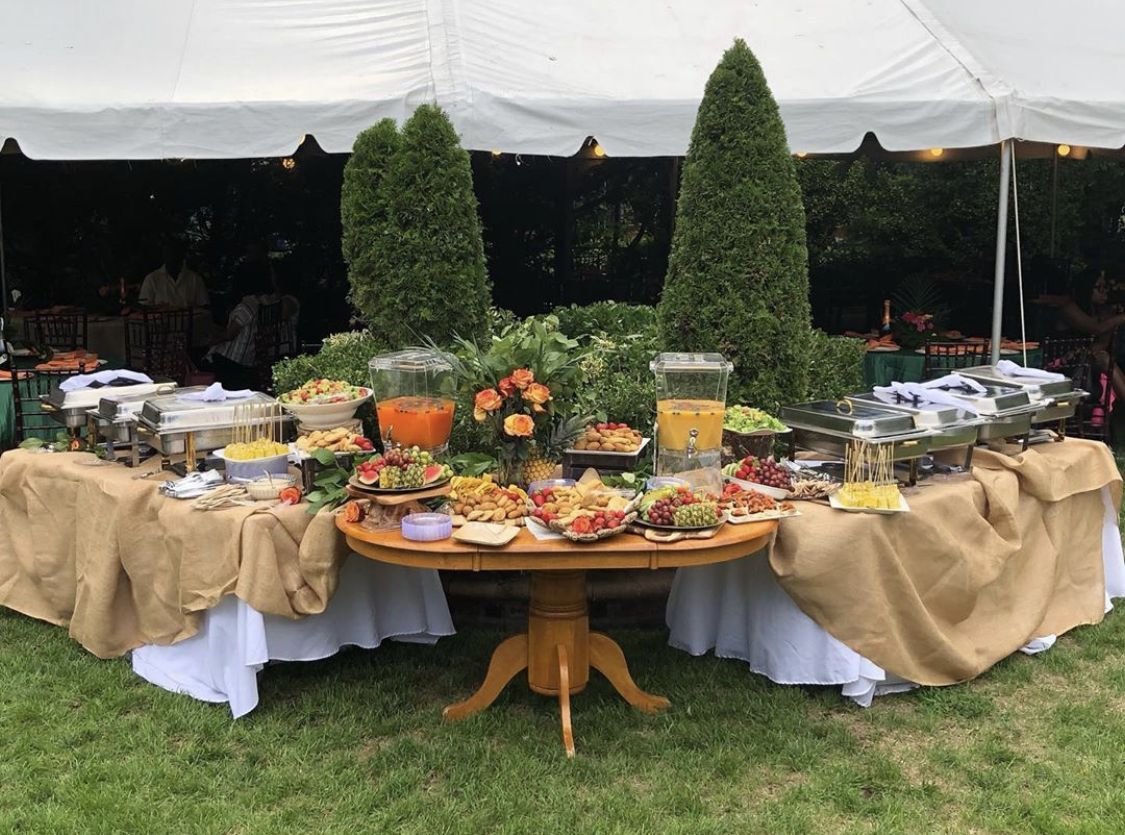
A harbor dock with no spare cooler still needs walk-in-grade cold storage. The trailer brings it.
One Trailer, Every Cold Zone Seafood & Meat Processing Needs
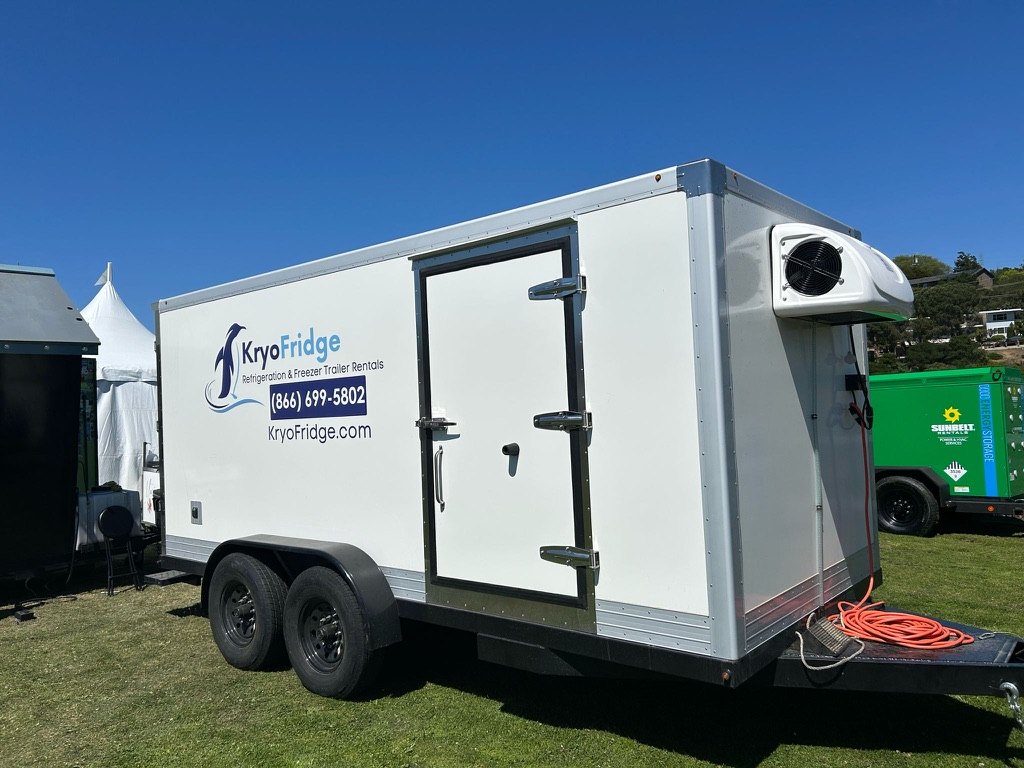
A single KryoFridge trailer holds any setpoint between -10°F and +50°F, covering every cold-holding and freezing zone a processor works to. Where your product sits on that scale:
Our Freezer Trailers, Hard at Work for Real Processors
Every one of these started with a phone call from a processing team that suddenly had more product than cold storage. Different plant each time, same result: the product stayed cold and the cold chain never broke.
Pacific Dock Seafood: A Record Salmon Week
A Northern California harbor processor took three times the forecast landing during a heat spell, with fresh fish arriving faster than the crew could grade and cut. We staged a refrigerated trailer on the dock to hold totes at fresh temperature until each lot moved to the cutting room.
Sierra Provisions Meats: A Blast Freezer Down
A Central Valley meat processor lost its blast freezer mid-shift with a full run of ground product to freeze. Our dispatch team ran a freezer trailer to the plant the same day, holding at 0°F so the run finished on schedule.
Bay Cold Distribution: A Pre-Holiday Pull
An Oakland seafood distributor hit its cooler ceiling ahead of a holiday pull, with pallets staged and nowhere frozen to put them. A trailer at the dock held the frozen overflow for three weeks until the orders cleared.
Coast Line Processors: A Hold-and-Test
A San Diego processor had to isolate suspect lots under a hold-and-test while the disposition was worked out. A dedicated freezer trailer kept the flagged product frozen and physically separated from clean inventory for the duration.
Crescent Halal Meats: An Eid Volume Spike
A Utah halal butcher ran triple its normal cut and freeze volume for the days around Eid. A freezer trailer parked behind the shop absorbed the surge so the walk-in never backed up during the busiest week of the year.
Aloha Butcher Co.: A December Meat Build
An Oahu meat processor built prime rib and ham inventory through December and maxed the plant freezer before Christmas. A trailer held the seasonal build for the month so no order got turned away.
None of these are lucky exceptions. They are what a large, owner-operated fleet and a dispatch team that actually answers the phone at 2 a.m. make routine, across every kind of cold-storage gap a seafood or meat operation can hit. Whatever the product, the difference between a saved run and a written-off load comes down to who you call and how fast the trailer lands.
What Size Freezer Trailer Does Your Processing Operation Need?
Match the trailer to the volume you are holding, not to your whole plant. A small butcher or single dock lands on a 6×12 or 6×16. Distributor overflow, a plant-wide freezer failure, or a holiday build steps up to an 8×20 or runs two trailers split between fresh and frozen.
| Trailer | Approx. capacity | Best for |
|---|---|---|
| 6×12 | ~1 small walk-in | Small butcher shop, single dock, one-lot recall hold |
| 6×16 | ~1.5 walk-ins | Busy processor, blast-freeze overflow, distributor pull |
| 8×20 | ~2-3 walk-ins | Plant-wide freezer outage, large distributor, holiday build |
| Multi-trailer | Scaled to demand | Fresh + frozen split, harbor landings, cold-store overflow |
A quick way to right-size: estimate your peak daily throughput in pounds or pallets and how much of it needs frozen versus refrigerated holding at once. A standard 6×16 trailer comfortably stages the frozen overflow of a busy processor with room to keep lots organized and rotated, while a 6×12 suits a single butcher shop or a one-lot recall hold. If your run carries both fresh and frozen product, meaning fresh catch or just-cut primals alongside deep-frozen inventory, tell us. We can either run one trailer split between a cooler zone and a freezer zone, or stage two units side by side so fresh product and frozen product each hold at their own setpoint without one compromising the other. So when in doubt, size up one step. Running out of cold space in the middle of a landing or a freeze run is a far bigger risk than a little extra room.
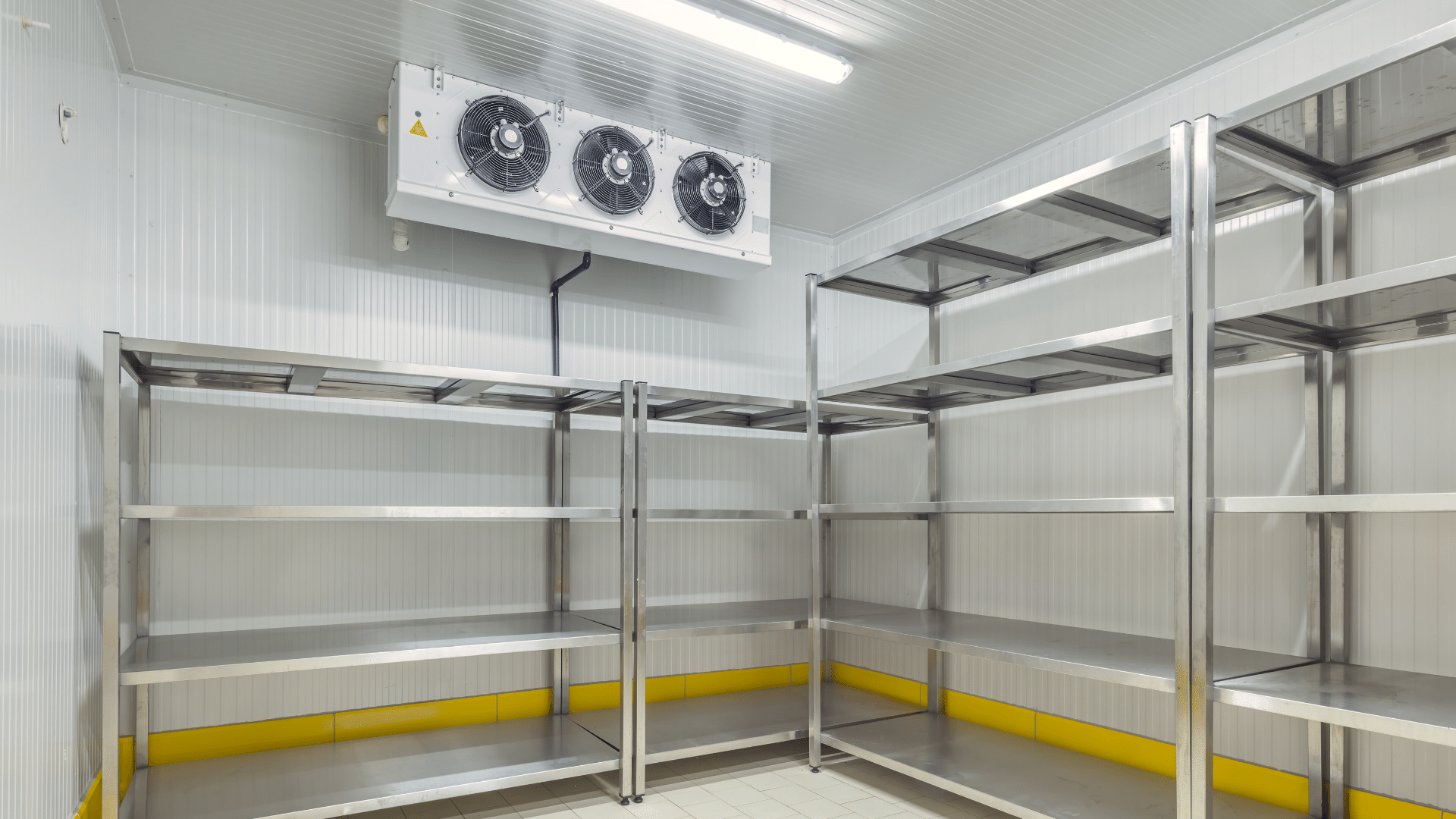
Sealed, washable, food-safe interiors, with shelving that organizes totes, primals, and pallets like a permanent walk-in.
Refrigerator and freezer in one trailer
Every KryoFridge unit holds a tight, adjustable setpoint as warm as +50°F or as cold as -10°F, so the same trailer can run as a refrigerator for fresh catch, primals, and cured product or as a freezer for frozen seafood, ground meat, and long-hold inventory. For processing we keep refrigerated holding at or below 41°F per the FDA Food Code, fresh fish iced as close to 32°F as the load allows, and frozen loads at 0°F or colder, with a deep-freeze hold available down to -10°F.
Our team sets the exact temperature your product needs before the trailer ever reaches the plant, and the unit holds that setpoint steadily, hour after hour, whether you are running it as a cooler for fresh landings or a freezer for a full blast run. The digital setpoint control on the unit keeps the temperature locked where you dialed it.
Powering the Trailer at the Plant or Dock: Generator or a Dedicated 20-Amp Circuit
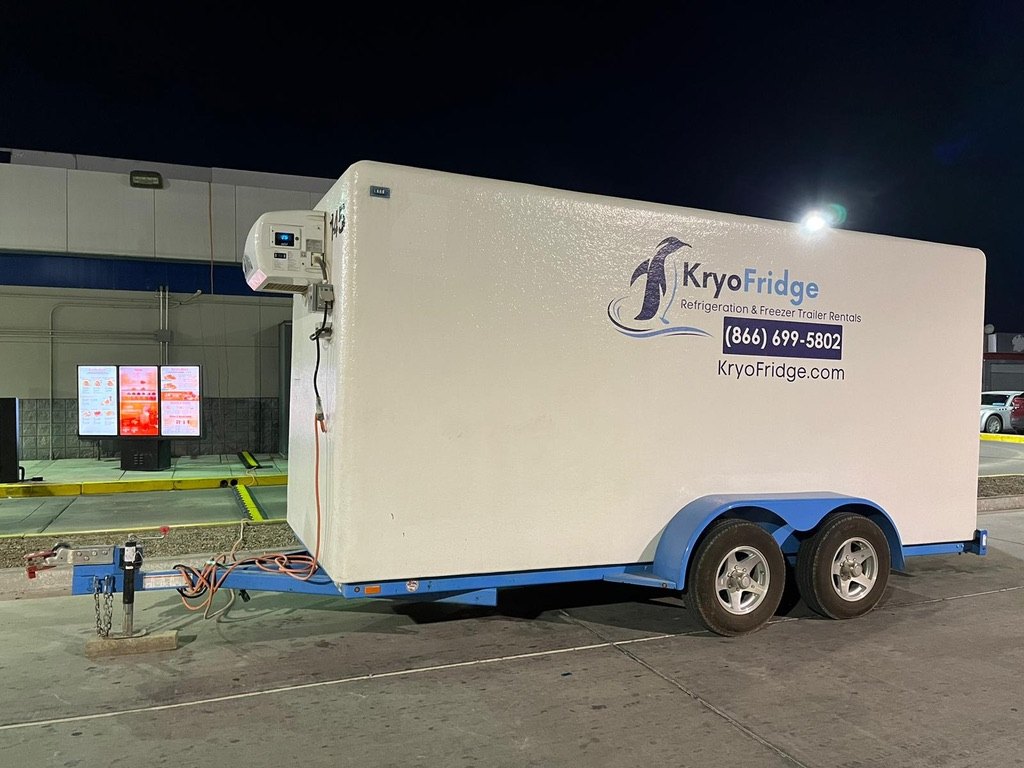
A freezer trailer needs continuous power to hold temperature, and at a plant, harbor, or yard there are two clean ways to feed it. We confirm which one fits your site during the quote so delivery is one-and-done.
Dedicated 20-Amp Circuit
A KryoFridge trailer runs on a dedicated 120V, 20-amp circuit within 100 feet of where it parks. If the plant or dock can spare one, we confirm it during the quote so the unit powers up the moment it lands.
Standby Generator
Harbor, remote yard, or a plant already running its panels flat out? We add a quiet diesel generator so the trailer holds temperature anywhere, no site power needed.
Set & Hold
We dial in your exact setpoint before delivery, anywhere from a fresh-fish cooler to a deep freezer, and the unit holds it steadily once it is plugged in or running on the generator.
Power is the single most common cause of a delivery hiccup at a processing site, which is why we settle it before the trailer leaves the yard. Many docks, harbors, and older plants simply do not have a dedicated 120V, 20-amp circuit free within reach of where the trailer needs to sit, or the panel is already loaded with the cutting-room line and the existing coolers. The standby generator solves that without an electrician or a permit, and it keeps the cold storage running even during the kind of power outage that takes a walk-in down in the first place. For any processor working a harbor, a remote yard, or a plant with no spare circuit, pairing the trailer with a generator turns it into a self-contained walk-in you can drop almost anywhere.
Delivery, Setup & Where to Park It at the Plant
Planned holds land in a scheduled delivery window you pick, usually ahead of a landing or a build so your crew can load on its own schedule. For a freezer failure or a sudden landing, we run same-day and 24/7 emergency dispatch and move as fast as our fleet allows. Here is the four-step flow.
Freezer Trailer vs. Reefer Truck vs. Emergency Build for Processing
Processors weighing temporary cold storage usually compare three options. For most operations the trailer wins on capacity, food safety, and how fast it lands. Here is the honest breakdown.
Freezer Trailer
- Walk-in capacity at the plant or dock
- Refrigerator or freezer, holds steady around the clock
- Generator option = works at any harbor or yard
- Same-day dispatch, daily to monthly terms
Reefer Truck
- Cab ties up a whole vehicle
- Engine idles to make power
- Awkward tailgate loading height
- Built for transport, not on-site holding
Emergency Contractor Build
- Days or weeks to install
- Permits and downtime while product sits warm
- Capital tied up in permanent space
- No help the night a freezer fails
A reefer truck can hold cold in a pinch. But it sacrifices a whole vehicle, runs its engine to keep the box cold, and forces the crew to load at tailgate height all shift, and it was built to move product down the road, not to sit and store it at the dock. A contractor build gives you permanent space eventually, but eventually is the problem: permits, install time, and downtime are exactly what you do not have when a landing is on the water or a blast freezer just quit. A dedicated freezer trailer threads the needle. It arrives ready, often the same day, sits at a workable height with real shelving, holds far more than any truck box, runs on a generator anywhere, and bills on whatever term the run needs. That is why it is the default choice for serious seafood and meat operations.
Cold-Chain Integrity, Recall Holds & Seasonal Surge
Cold storage in processing is not only an emergency tool. It is also how a plant protects the cold chain through the parts of the year that overwhelm permanent capacity. Halal and kosher processing surges around religious holidays, the November-to-December meat and seafood run, and peak landing season all hit the same wall: not enough refrigeration or freezer space for a short, predictable spike in volume. Turning away an order, or worse, letting product drift out of temperature because there is nowhere cold to put it, is loss you never recover, in yield and in an inspector’s confidence.
A trailer rented for the surge gives you the capacity exactly when you need it and goes away when you do not. Park it at the dock or behind the plant and use it to hold fresh landings, freeze the build ahead, or quarantine a recall lot, then release the unit once the season or the hold clears, with no capital tied up in freezer space that sits empty most of the year. On the recall side especially, a dedicated trailer lets you keep suspect product frozen and physically separated from clean inventory for as long as the hold-and-test runs, which is the kind of clean separation an auditor wants to see. One processing manager who ran a December trailer told us afterward: “we filled every order and never once broke the chain.”

Scale cold storage for the holiday and landing surge, then send the trailer back when it clears.
Food-Safe Construction, HACCP & Cold-Chain Integrity
A freezer trailer that touches raw seafood or meat has to do more than get cold. It has to satisfy the same temperature and sanitation logic a health department and a USDA-inspected plant apply to any cold-holding equipment.
Our trailers are built with sealed, washable, food-safe interiors made for direct food contact, not a dusty cargo box pressed into service. Insulated walls hold the setpoint through a hot afternoon on an exposed dock, and the cold-holding range supports HACCP plans and the food-safety requirements your operation works under. The core standard is simple: refrigerated product stays at or below 41°F, fresh fish holds as close to 32°F as the load allows, and frozen product stays solid at 0°F or colder, and a KryoFridge unit holds those temperatures the same way a permanent walk-in or blast freezer does.
If you maintain a HACCP plan or work under continuous inspection, a rented trailer simply slots in as another cold-holding unit under your existing monitoring and corrective-action steps. You keep logging temperatures the way your plan already requires, and the trailer becomes one more controlled point in the same system, no different from adding a walk-in you already know how to monitor. For the federal baseline behind all of this, the FDA Food Code spells out the time-and-temperature rules seafood and meat operations work to, the FDA seafood HACCP regulation governs fish and fishery products, and USDA FSIS sets the standards for federally inspected meat and poultry plants. Your local environmental-health office and inspector remain the final word on site-specific requirements, and we size and set the trailer so meeting them is straightforward rather than one more thing to worry about mid-run.
Where KryoFridge Delivers Processing Cold Storage
We dispatch freezer and refrigerated trailers across six states from regional yards, so a plant or dock gets a unit from the nearest base, not a cross-country wait.
In California we cover the coastal harbors and landings from the Bay Area down to San Diego, plus the inland meat and produce plants of the Central Valley, and we run one of our heaviest emergency-dispatch calendars here. Across Nevada we serve the distribution and cold-storage corridors around the Las Vegas valley and Reno. In Utah we reach Salt Lake and the Wasatch Front processors and butchers, and across Arizona and New Mexico we stage trailers for plants, distributors, and butchers working the Southwest heat, where a reliable cold chain matters even more. Hawaii works a little differently, because island logistics reward booking ahead, so we line up the trailer in advance for harbor landings and seasonal builds rather than last-minute. Wherever your operation sits in our footprint, the call starts the same way: tell us your product, your volume, and your site, and we will route the nearest unit. For a city-level look at coverage, see our San Diego freezer trailer rentals, Oakland freezer trailer rentals, and Hawaii freezer trailer rentals, or browse the full freezer trailer rental lineup.
What Seafood & Meat Operations Say
Illustrative testimonials. Verified customer reviews are being collected and will replace these.
“Our blast freezer quit in the middle of a run. They had a trailer at the plant the same afternoon, holding at zero, and we finished the freeze without losing a pound of product.”

“Record landing, heat wave, and no room in the cooler. The refrigerated trailer on the dock held the whole catch at temperature so we graded every lot at top quality.”

“We needed to quarantine a hold lot and keep it frozen and separate. A dedicated trailer made the recall hold clean and simple. Easy team to work with.”

Seafood & Meat Freezer Trailer Rental FAQ
How cold does a freezer trailer get for seafood and meat?
Can a trailer hold fresh catch straight off the dock?
How fast can you deliver for a cold-storage emergency?
Does the trailer support HACCP and cold-chain records?
Can one trailer hold both refrigerated and frozen product?
How do you power a freezer trailer at a plant or dock?
What size freezer trailer does a processor need?
Can I use a trailer for a recall hold or quarantine?
Is the interior food-safe for raw seafood and meat?
What rental terms do you offer processors?
Which areas do you serve for seafood and meat processing?
How do I get a quote?
Seafood & Meat Cold-Storage Resources
A short reference shelf for processors, harbor crews, butchers, and distributors sizing up temporary cold storage. Start here, then call and we will match a trailer to your run.
Right-Size Your Cold Storage
Estimate peak throughput and how much needs frozen versus refrigerated holding, then match it to a trailer. Compare sizes and terms on our freezer trailer rental lineup.
Cold-Chain Temperature Guide
Frozen seafood and meat at 0°F or colder, fresh fish near 32°F, refrigerated staging at or below 41°F. The FDA Food Code sets the federal time-and-temperature baseline.
Coastal & Harbor Coverage
Landing product on the coast? See our San Diego and Oakland harbor coverage, or Hawaii island coverage for advance-booked landings.
Other Cold-Storage Use Cases
Not a processor? The same dual-purpose trailers serve other industries. See how they work for breweries and beverage producers for a parallel cold-storage playbook.
Reserve a Freezer Trailer for Your Plant or Dock
Same-day and 24/7 emergency dispatch across CA, NV, UT, AZ & NM (advance booking in HI). Tell us your product, volume, and site and we will size it in minutes.