
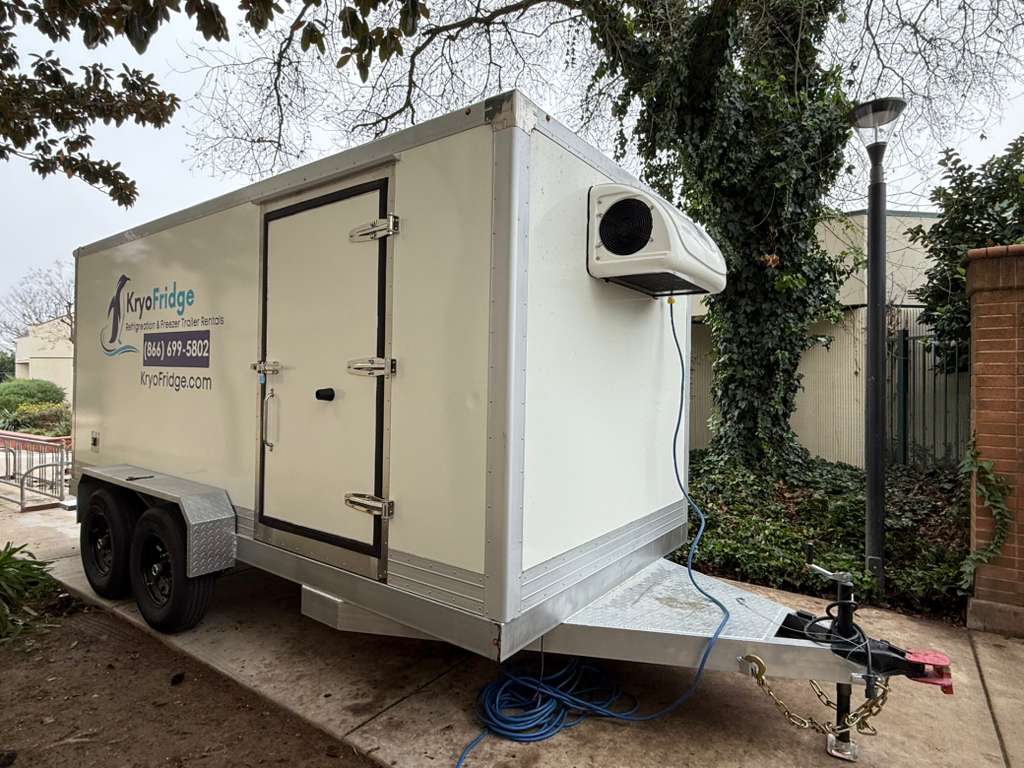
KryoFridge is Raleigh's go-to team for refrigerated freezer trailer rentals when campus events, RTP cold gaps, or restaurant walk-ins need backup now. We deliver a dual-purpose unit, set cooler or freezer temps, and leave it ready to load on day one. Call 866-699-5802 now or request a quote and we will confirm dates for Glenwood, North Hills, Cary, or Morrisville. Backed by 30+ years in the rental industry, licensed and insured, and trusted by national brands including McDonald's, Chick-fil-A, and Dutch Bros Coffee.
KryoFridge runs a large dual-purpose portable freezer trailer fleet backed by 30+ years in event and equipment rental. We own the boxes. You work with us directly. Across Raleigh and the Research Triangle we keep restaurants, campus caterers, and lab-adjacent teams cold when a walk-in fails or an event outgrows the building. Call us or request a quote and we will confirm size, power, and delivery windows. Teams comparing multi-city plans sometimes also review Charlotte mobile freezer trailer rentals when they stage work across North Carolina. We also help grocery teams during case resets and hotel banquet crews when dessert volume spills out of the production cooler.
Every trailer runs cooler or freezer. You are not waiting on a broker to find a specialty box while product warms on Glenwood.
KryoFridge sits inside a long-running rental family. The dispatch habits are seasoned. The trailers are maintained like revenue equipment, because they are.
Dedicated 120V 20A within about 100 feet, or a generator. We say that on the first call so nobody invents a 240V myth at 9 p.m.
McDonald's, Chick-fil-A, and Dutch Bros Coffee are authorized names on our freezer roster. Independents get the same owned-fleet standard.
We have learned which downtown alleys lie on maps and which RTP courts need a tape measure. That scouting is part of the quote.
SAM.gov registered for campus and municipal buyers. Licensed and insured for landlord COIs. A+ BBB rated network credentials ride in the trust band.
We ask about pad width, breaker distance, and setpoint before we promise a truck. That habit saves Raleigh kitchens from pretty quotes that fail at the curb.
National chains do not gamble on refrigeration. A drifting set-point during dinner rush can cost a brand a day of sales and a health-code headache, so the chains that scale fast vet a cold-storage partner the same careful way they vet a protein supplier. KryoFridge has held temperature for names like McDonald's, Chick-fil-A, and Dutch Bros, and earned the repeat call.
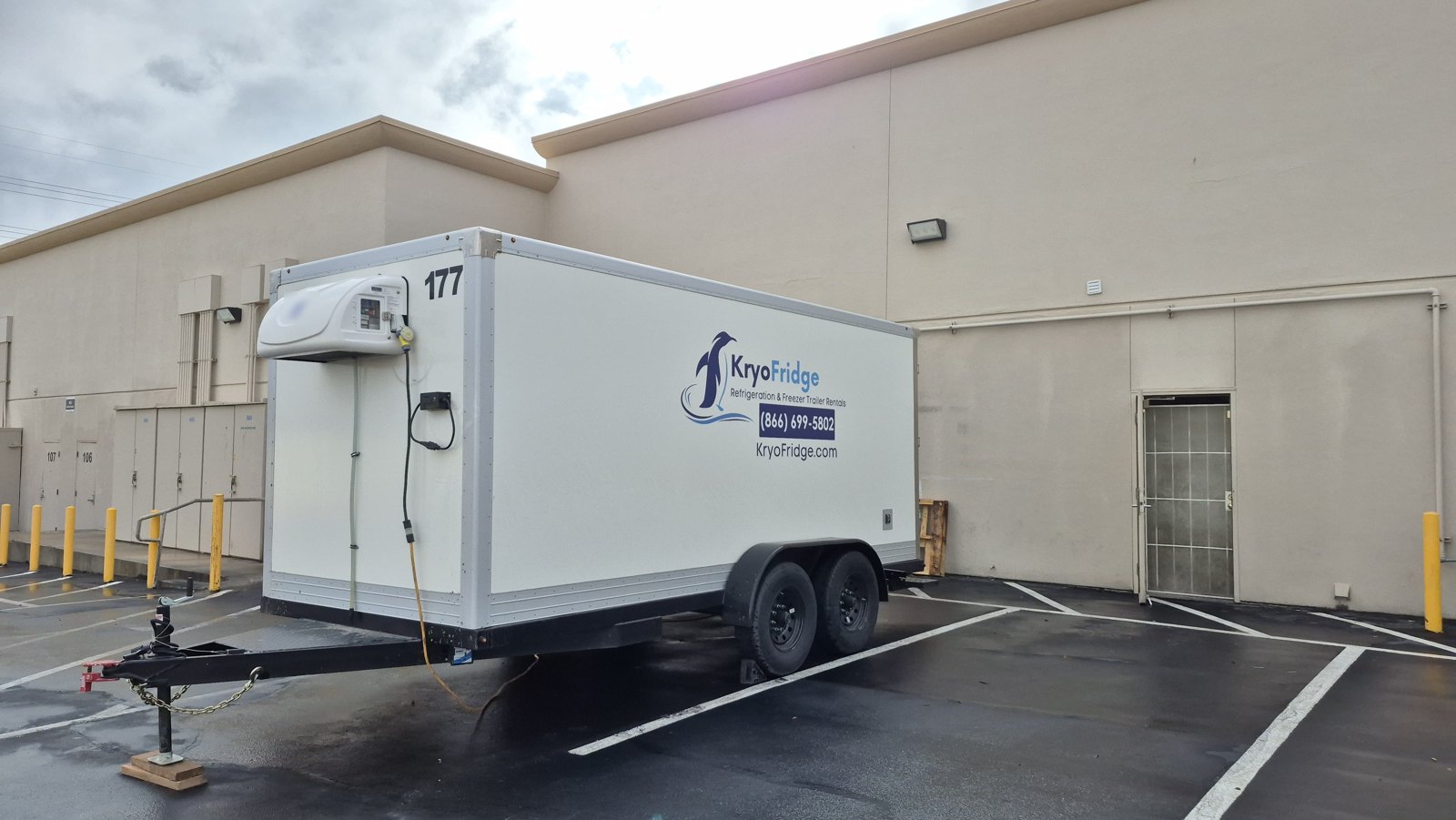
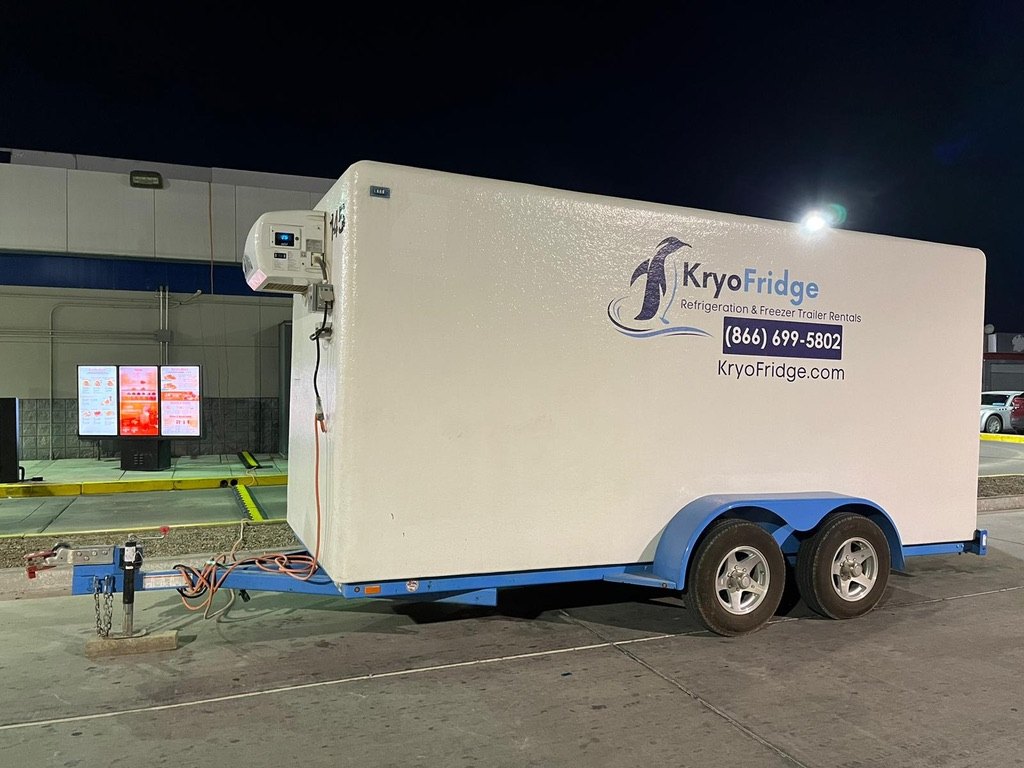
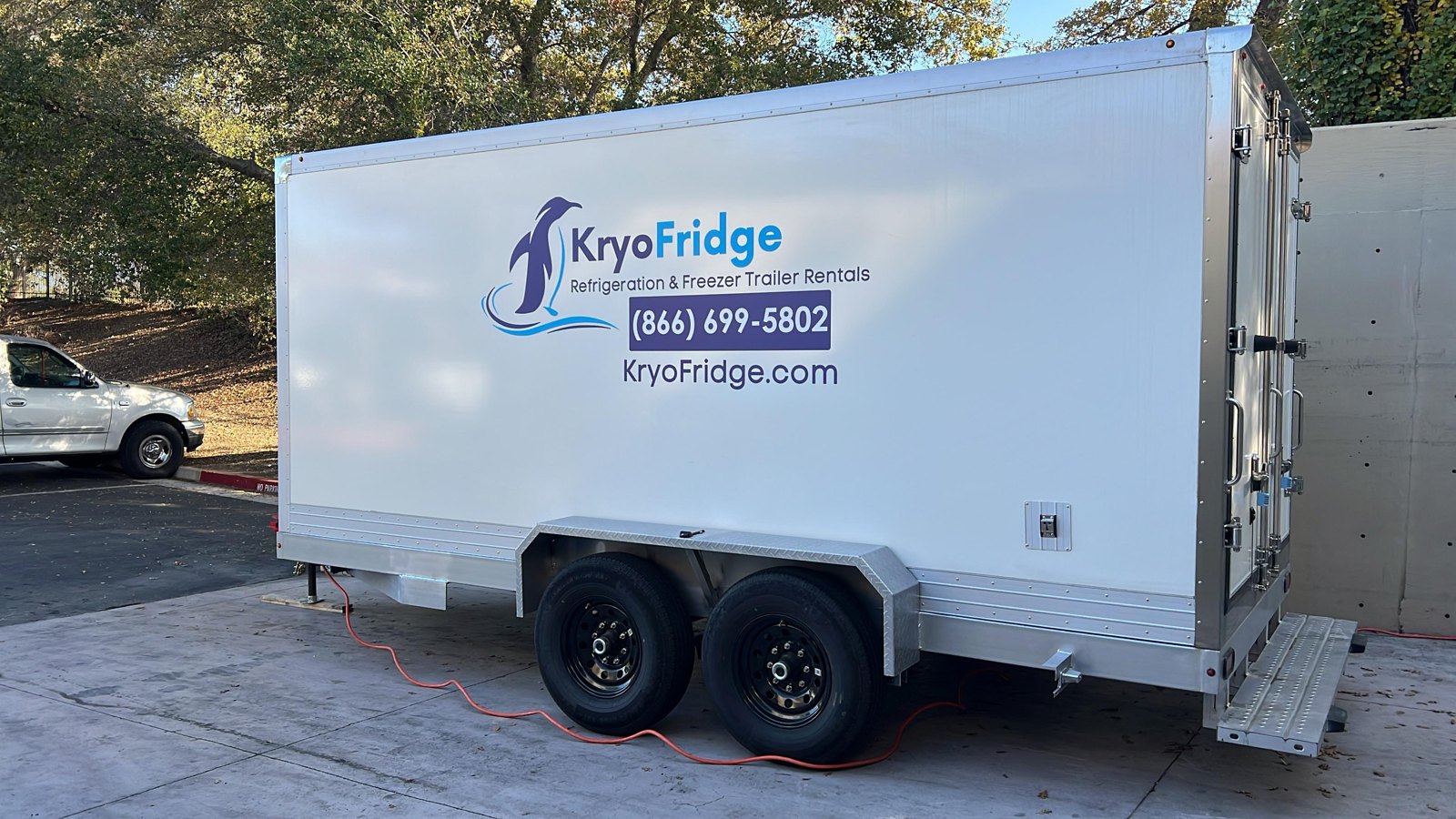
The stories behind that trust are the kind every restaurant owner recognizes. One Friday at 6:30 in the evening, a Chick-fil-A called in with a dead walk-in and a drive-through line already wrapped around the building. We prepped a trailer, dispatched it, and had it on their pad pulling temperature 34 minutes after the phone rang. The manager's first words when the driver pulled in were, "I cannot believe you are already here." That is the bar we hold ourselves to. Another year, an overnight outage shorted a cooler on the morning of a holiday rush, and our team staged three freezer trailers to hold every pie, every protein, and every prep tray so the kitchen served the rush without missing a ticket. The reason we hear some version of that line so often is the same every time: the equipment was already nearby, already cold, and owned by the people who answered the phone. That same standard travels to every Raleigh job, from a one-cook taqueria to a distribution floor.
"Walk-in died before lunch on a sticky Tuesday. KryoFridge had a 6x12 on our lot fast enough that we kept the proteins and stayed open."
"Orientation week blew past our dining cooler. The dual-temp trailer held frozen overnight and cooler items for daytime service. Simple handoff."
"We needed refrigerator-range overflow while a chamber moved. They were honest that they do not do ultra-low or monitoring services. That honesty helped us plan."
In Raleigh we most often stage the 6x12 behind restaurant lots and the 6x16 for State Fair week volume or grocery overflow, with the 6x8 reserved for tight downtown pads.
The 16' Utility is the trailer our crews reach for when the job is serious. A 16-foot insulated box on a tandem axle holds anything from -10°F deep-freeze to 50°F fresh-cold on one precise digital set-point, with NSF-approved surfaces throughout. Rear double doors take pallet loads straight off a dock, and the side utility door lets a cook grab one tray without opening the whole box to the heat.
We own every one of these units, so the trailer that shows up is fueled, pre-cooled, and maintained in-house. It runs on a dedicated 120V, 20-amp circuit or a generator we supply, and it holds its number through triple-digit afternoons. When a walk-in dies or a harvest runs long, this is the box that carries the load.
| Spec | What you get |
|---|---|
| Temperature range | Roughly -10°F deep-freeze up to about 50°F fresh-cold |
| Mode | Dual-purpose: freezer or refrigerator on one precise digital set-point |
| Power | A dedicated 120V, 20-amp circuit within about 100 feet, or a generator we supply |
| Food safety | NSF-approved for direct food contact, food-safe surfaces, proper drainage |
| Footprints | 6x8, 6x12, and 6x16, from a tight retail lot to distribution scale |
| Backing | Owned in-house, fully licensed and insured, with 24/7 emergency dispatch |
Each unit holds a precise digital set-point and runs on a dedicated 120V/20A circuit or a generator. The trailers are not wired for 208 to 240V building service, so we confirm your hookup before the truck rolls.
From a Raleigh hub we cover Wake County and the wider Research Triangle. Call to confirm edge communities. If your address is in the list below, we already know the roads. Long-term remodel holds and same-day emergency drops both start with the same checklist: pad, power, setpoint, and who signs on site.
Neighborhoods and towns we cover include Downtown Raleigh, Glenwood South, North Hills, Midtown, NC State, West Raleigh, Brier Creek, Cary, Morrisville, Apex, Holly Springs, Garner, Knightdale, Wake Forest, Rolesville, Fuquay-Varina, Durham, Chapel Hill, Carrboro, Clayton, Wendell, Pittsboro, RTP, Hub RTP.
Each community around Raleigh has its own venues, its own events, and its own cold storage headaches. We work all of them.
Fayetteville Street and Warehouse District kitchens need early access scouting. We favor lots that a truck can exit without a ten-point turn.
Late ticket times and tight backs. Emergency frequency climbs in July. Smaller footprints often win.
Lifestyle center parking makes placement easier. Banquet and retail dining remodels are common.
Hotels and corporate catering near RDU. Generator plans are straightforward in open lots.
Duke-area and downtown Durham dining sit in our Triangle radius. Same dual-purpose fleet, same power rules.
Campus and Franklin Street restaurants need remote-lot thinking on event days. We plan the cart run with you.
One call sizes the trailer, sets the delivery window, and locks your quote for Raleigh. Call now, or send the quick quote request and we will call you.
Three jobs show up again and again in the Triangle. Campus events that outgrow the dining cooler. Lab and clinic overflow inside our temperature band. Restaurant walk-ins that quit in the humidity.
Eleven fair days and nearly a million visitors in a recent year create commissary pressure. We stage dual-purpose boxes on service roads when freezer banks cannot keep up.
Late January menus spike ticket counts across Raleigh, Durham, and Cary. Extra cooler space keeps prep from choking the walk-in.
When stores swap refrigerated cases, overflow product still needs a safe hold. Lot placement with a 6x16 covers the gap.
Brier Creek and downtown hotels stack weddings and corporate dinners. Trailers keep dessert and dairy out of the hot production line.
After Triangle thunderstorms knock power, kitchens move TCS food fast. We help bridge until the permanent box recovers.
What ties these together is the clock. Nobody budgets a freezer trailer into next quarter. They reach for one the hour a compressor quits, or the evening before a party when the stack of rented ice chests suddenly looks laughably undersized. Since our units sit staged around Raleigh instead of a couple counties down the freeway, "can I get it today" is an ordinary ask here, not a stretch.
Add it up the way an owner in Raleigh has to. One restaurant walk-in routinely sits on a small fortune in proteins, dairy, and prepped product. Scale that to a grocery rack or a warehouse freezer bay and the exposure balloons. Now knock the power or the compressor out on a triple-digit afternoon, and that whole inventory is in jeopardy inside a few hours. Then stack on the sales you lose while the line sits dark and the wages you burn paying staff to triage what can still be saved.
Hold a pre-staged trailer up against that risk and it reads like cheap insurance, a fixed, predictable expense parked in front of a loss with no ceiling. That is exactly why the businesses that got stung once tape our number by the phone. There is never a second scramble, because the next time they dial before the product has a chance to warm. Owning every trailer ourselves means we can scale the answer to fit. A single compact box suits a corner cafe. A clustered setup covers a warehouse floor. Either turns around the same day.
July normals at RDU sit near 91F highs and 70F lows. That sticky air slows walk-in recovery every time a door stays open. A trailer with a correct setpoint and closed-door discipline buys you time a dying compressor cannot.
Thunderstorm outages are a Wake County fact of life. Building generators often skip the walk-in circuit. Ask what your backup power actually covers before the next cell hits.
We plan generator fuel and pad drainage when house power is down. Call or request a quote ahead of peak storm weeks if your kitchen has already had a close call.
Winter ice storms are less frequent than summer cells, yet they glaze Triangle roads and drop limbs on lines. Delivery ETAs stretch. We still lead with product protection and honest timing.
NC State weeks stack orientation, game days, and catering that a single dining walk-in was never built to absorb. We stage portable cold storage behind halls and at remote lots so carts can run without fighting Hillsborough Street peaks.
Graduation weekends and alumni events pull banquet volume fast. Dual-purpose setpoints let the same trailer hold frozen proteins overnight and shift toward cooler temps for plated dairy and produce when the menu flips.
BTEC and other research-adjacent buildings on Oval Drive add another pattern. Training programs and demos need reliable cold for short runs. We size the box to the load, not the other way around.
Call us early when the campus calendar spikes. Request a quote with your load list and power plan. We will confirm whether a 6x12 is enough or whether State Fair style volume needs the 6x16.
Bring your load list in pounds or rack counts. Guessing cubic feet from memory is how kitchens under-order and then crowd the aisle until airflow suffers.
We also handle Charlotte walk-in freezer trailer rentals, Atlanta self-contained freezer trailer rentals.
Every KryoFridge trailer dials from cooler temps for produce and dairy down into freezer range for proteins and frozen prep. Same unit. You pick the setpoint. That matters in Raleigh where a remodel might need cooler space one week and frozen hold the next.
We stock three workhorse sizes. The 6x8 holds about 268 cubic feet and roughly 3,000 pounds. The 6x12 gives about 416 cubic feet and 4,300 pounds, our most booked restaurant backup. The 6x16 opens up to about 564 cubic feet and 6,690 pounds for commissary and multi-day fair loads. Interiors are built for food storage and cleaned before every drop.
Power is simple and strict. You need a dedicated 120V 20-amp circuit within about 100 feet, or we plan a generator. We connect house power when that is the plan. We deliver and pick up. You do not tow the unit. If your group also stages events in Florida, ask us how Orlando cold storage trailer rentals line up with the same fleet standards.
Research Triangle Park and Morrisville pack life-science employers, university cores, and support vendors. When a refrigerator-range chamber moves or a small clinic remodels, teams still need a clean cold hold for materials that belong in our trailer temperature band.
We are clear about limits. These units are not validated ultra-low freezers and we do not sell remote temperature monitoring. If your QA lead needs continuous logged alarms, that is a different vendor. If you need a dual-purpose box set to refrigerator or standard freezer range while a chamber is offline, that is us.
Access at RTP campuses means gate lists and service-drive measurements. We ask for turn radius notes before we promise a 6x16 on a tight court. Many docks lack a spare dedicated 20A outlet at the pad. That is when the generator plan matters.
Hub RTP dining growth around Horseshoe adds soft-opening cold needs too. New restaurants waiting on permanent walk-ins use the same fleet. One call covers both the lab suite and the cafe next door when schedules collide.
Bring your load list in pounds or rack counts. Guessing cubic feet from memory is how kitchens under-order and then crowd the aisle until airflow suffers.
Glenwood South and downtown kitchens run hard in sticky summers. A condenser that dies before lunch is not a paperwork problem. North Carolina cold holding for TCS food sits at 41F or below. Product moves or it becomes waste.
We treat walk-in failures as emergency dispatch work. You call 866-699-5802. We confirm pad access and power. A 6x12 usually replaces a mid-size restaurant walk-in. Tight alley pads may need the 6x8. Grocery-scale loss steps up to the 6x16.
Remodels on Hillsborough Street and North Hills follow a calmer pattern. Demo the old box, stage the trailer, install the new walk-in, then release the rental. Long enough to finish the job. Short enough that staff learn the trailer layout in a day.
National brands trust this model. McDonald's, Chick-fil-A, and Dutch Bros Coffee are on our authorized client list for freezer work. Local independents get the same owned-fleet response. Request a free quote when your service tech says parts are days out.
Bring your load list in pounds or rack counts. Guessing cubic feet from memory is how kitchens under-order and then crowd the aisle until airflow suffers.
"Cold" is not one number. Different product stays safe inside different temperature windows, which is the entire reason a precise digital set-point matters, and in the middle of a heat wave in Raleigh, a load that slips out of its window is a load you write off. Use the chart below as the reference our customers lean on when they size a rental.
| Product | Target holding band | Trailer mode |
|---|---|---|
| Ice cream and frozen desserts | -10°F to 0°F | Deep freeze |
| Frozen proteins, seafood, prepared meals | 0°F or below | Freezer |
| Fresh meat and poultry (short hold) | 28°F to 32°F | Refrigerated |
| Dairy, deli, packaged produce | 34°F to 38°F | Refrigerated |
| Beverages, florals, catering trays | 38°F to 45°F | Refrigerated |
One figure matters more than everything in that chart, and it is not listed there: 40°F. Food-safety guidance treats the band between 40°F and 140°F as the zone where bacteria thrive, and the clock on perishable product starts ticking the moment it crosses 40 on the way up. Roughly four cumulative hours above that line and most refrigerated inventory is no longer safe to serve. Picture that countdown running on a 100-degree afternoon in Raleigh with the walk-in dark, and the urgency of a quick trailer drop stops being abstract.
Tell us the single coldest item you are holding when you call, and we dial the trailer to that. One unit carries a straight freezer load with no fuss. But when your list mixes deep-freeze desserts with fresh-cold produce for the same remodel or event, we will usually point you toward a split setup or a second box so neither side of the load has to settle for the wrong temperature.
Powering one of our trailers is refreshingly simple, and there are precisely two ways to do it. Either you have a dedicated 120-volt, 20-amp circuit reachable within roughly 100 feet of the parking spot, or we bring a generator. What the units will not accept is standard 208 to 240V building service, so a quick question about your outlet before dispatch heads off any surprise on delivery day.
On placement, all the unit really asks for is a fairly flat patch with enough room for the delivery truck to maneuver it in and set it straight, plus either a power source in reach or space for a generator. We lock down the exact drop point before dispatch, and our drivers know the Raleigh layout cold, so the delivery is one clean trip instead of a guessing game on the property.
A freezer door seal failed mid-fair. We staged a dual-purpose trailer on the service road the same day so novelty desserts and proteins stayed hard frozen through the weekend crush.
A condenser fan quit mid-morning on a humid Tuesday. The 6x12 took the walk-in load before lunch tickets stacked. Service stayed on the full menu.
A refrigerated chamber had to move for construction. We set a trailer to refrigerator range for labeled kits while the permanent room came back online. Their staff logged temps with their own instruments.
State Fair week readiness. October fair traffic on Blue Ridge and Edwards Mill is real. We pad delivery windows and stage early when your commissary cannot risk a late arrival.
On a bad day, booking should be the part that does not add stress. Four steps, an upfront number, and a single person who owns the whole thing.
Tell us whether it is freezer or fridge product, a ballpark volume, and your rough window. That is enough for us to call the right size.
We pair you with a unit, confirm whether you have a dedicated circuit or need a generator, and pin the exact drop point so the truck makes one trip.
We arrive on your schedule, about 45 minutes for a true emergency, set the trailer, energize it, and let it drive down to your number.
It holds the set-point for your entire term while our line stays live the whole way through. Wrap up, and we swing back for the pickup.
North Carolina adopted the 2017 FDA Food Code by reference effective October 1, 2021. For kitchen teams that means TCS foods belong at 41F or below in cold holding. A warm walk-in is not a wait-and-see moment.
Wake County Environmental Services enforces local food establishment sanitation. After storms, NCDHHS guidance still points kitchens back to safe temperatures and discard timelines. Hurricane Helene's 2024 western NC emergency plans showed how seriously the state treats limited-utility reopening. Cold holding stays in the plan.
We help you keep product inside the rule while repairs happen. We do not replace your relationship with the health department. If you also run sites in Georgia, the same owned-fleet approach shows up in Atlanta mobile freezer trailer rentals with the same plain power specs.
One caveat we always state plainly: we supply the food-safe, temperature-holding hardware itself, but we are not a temperature-logging or alarm-monitoring service. If your program requires continuous written records, line that vendor up on your own.
Our signature 16 foot Utility series leads the fleet. It is the trailer we send on most jobs, and crews like it for the side utility access door. We build three footprints in all, so a single kitchen holding overflow stock has a fit and so does a distribution floor in a disaster. Every unit is dual purpose by design: one adjustable system swings between freezer and refrigerator on a digital set point. Each trailer runs on a dedicated circuit or on a generator.
| Trailer | Best for | Temp range |
|---|---|---|
| 6x16 Utility ⭐ | Our signature series: distribution, large events, disaster response, side utility door | Heavy-duty reefer |
| 6x12 | Grocers, caterers, mid-size events | Deep-freeze capable |
| 6x8 | Tight lots, small kitchens, short overflow | -10°F to 50°F |
Each unit holds a precise digital set-point and runs on a dedicated 120V/20A circuit or a generator.
Think eight or so pallet spots, and the unit to grab when square footage is the whole problem. It slips into the pinched service yards and cramped back-of-house corners that a larger box cannot even swing into. One cafe or small-market walk-in goes down, and this is almost always enough cold to cover it, plus the simplest unit to set in a small space.
Call it fourteen pallet spots, deep-freeze rated, and far and away the size people ask for most. It lands right in the middle: roomy enough for a multi-day catering job or a restaurant that needs true walk-in-equivalent room while the kitchen is torn up. Roomy enough that nobody is playing Tetris with shelves, yet still small enough to set in most commercial back lots without a site survey.
Roughly twenty pallet spots paired with a heavy-duty reefer plant engineered to keep deep-freeze locked in even when the ambient air is merciless. Reach for it when a warehouse bay drops, when a large festival needs an anchor, or when a relief operation is carrying its own cold chain.
Not sure which size fits? Most customers land on the 16 foot Utility, and we will tell you honestly if a smaller footprint covers your job. Tell us roughly what you are storing and for how long, and we will spec it for you.
The questions that surface once the basics are settled. Tap any topic to open it.
The pop-up walk-in cooler. Cheap to rent and easy to set up, but it chills, it does not freeze, and it draws every watt it needs from your building while depending on a calm ambient temperature around it. The second your building loses power, your cooler loses it too.
The refrigerated box truck. Designed to haul product on the interstate, not to sit in a lot and babysit it. Parked, it burns fuel all day, broadcasts compressor noise across a storefront or an event lawn, and pins down a tractor plus a driver you probably do not need.
The freezer trailer we deliver. Built from the ground up to be dropped on a pad and to defend a temperature for as long as the job runs. It freezes deep, carries NSF approval, locks, stays quiet near guests, and lives on nothing more than one dedicated circuit or a generator.
Even a rented box has to satisfy the county environmental health office that licenses and inspects every food facility. Show an inspector a unit that cannot document its temperature or was not built for food contact, and they have the authority to halt service immediately.
That is a bar each of our trailers clears: NSF-approved throughout, food-safe interior surfaces, proper drainage, and a digital controller that puts the set-point in plain view. We supply the food-safe, temperature-holding hardware itself, but we are not a temperature-logging or alarm-monitoring service.
For a typical kitchen or market, one box does the job. Distribution floors, big fairs, and full-scale disaster response routinely need more, and because the fleet is ours, we can cluster several units and bring them online in waves as the work expands. Match the cold capacity to the operation rather than make the operation squeeze itself into one box.
The clock is yours to set. Some jobs are a handful of days for an emergency or a single event. Others stretch across weeks or months for a remodel or a seasonal swell, and a few become standing contracts for businesses that want capacity parked on standby. Name your window and you will get a clean quote, no penalty for an honest "not sure yet."
Building permanent cold storage is a capital project in every sense: you hire a refrigeration contractor, schedule the electrical, pull a building permit, and wait weeks before a single pallet goes inside. A rental turns that equation on its head. You bring in precisely the cold you need, for precisely the stretch you need it, and the trailer is holding temperature that same week, frequently that same day, with the commitment ending the moment your need is over.
Three engineered elements carry the load. Thick insulated panels and tightly gasketed doors lock the sun outside and the cold inside. A self-contained reefer condensing system specified with surplus capacity keeps stripping heat out of the box even when the air outside is brutal. And a digital thermostat locks onto your chosen number and cycles the compressor to hold the line. Run those three together and a trailer baking on open asphalt behaves like one tucked in a cool warehouse. That is also why power is the first thing we ask about: the design delivers its safety margin only on steady, uninterrupted power.
"Case reset week. The 6x16 in the lot kept overflow cold without chaos in the back room."
"Remodel dragged. Trailer stayed clean and cold for three weeks. Staff stopped worrying about the walk-in timeline."
"Moore Square food event. Generator plan was clear on the quote call. No surprises at 6 a.m. load-in."
"Corporate would have freaked. Local dispatch treated it like a normal Thursday save. Appreciated the straight talk on the 20-amp circuit."
"Two overlapping banquets. Extra cooler space for desserts mattered more than I expected. Pickup was on time Monday."
"State Fair traffic is ugly. They padded the ETA and still beat our panic window. Frozen novelties survived the seal failure."
"Short remodel. Trailer did the refrigerated job. We logged temps ourselves as planned."
"Tight pad. They switched us to the 6x8 instead of forcing a bigger box. That call saved the alley."
"Game Saturday overflow. Remote lot placement kept the truck out of students. Cart run was annoying. Cold storage was not."
"Wedding weekend plus a corporate lunch. The trailer kept plated desserts out of the hot line. Setup was calm. Pickup Monday was on schedule."
"Compressor failed on a delivery day. We moved meat and dairy into a 6x12 in the side lot. Lost almost nothing. Repair took three days. Trailer stayed the whole time."
You need a dedicated 120V 20-amp circuit within about 100 feet of the trailer, or we plan a generator. Standard random outlets and extension-cord chains are not enough. We connect house power when that is the plan. Tell us what you have on the quote call so we do not discover a problem at delivery.
Yes. Dual-purpose is the point. The same unit holds refrigerator setpoints for produce and dairy or freezer range for proteins and frozen prep. We set it at delivery and you can discuss setpoint changes if your job shifts mid-rental.
We run emergency dispatch with a protect-the-product mindset. Exact timing depends on fleet position, traffic, and whether your pad and power are ready. Call 866-699-5802 with the address and we will give you a real window, not a vague promise.
Most North Hills and suburban lots handle a 6x12 without drama. Downtown alleys are the question marks. Share photos or a pin drop when you request a quote. We would rather resize to a 6x8 than get stuck on delivery day.
Yes. Those communities sit in our Research Triangle service radius from the Raleigh hub page. Edge towns are a quick confirmation call. Mileage and timing land on the quote.
Keep doors closed, use your thermometers, and follow NC 41F cold holding guidance for discard decisions with your health department rules in mind. Call us early if you need temporary cold while power or the walk-in recovers. Waiting until product is already lost helps no one.
Labs and clinics rent them for overflow inside our temperature band. We are not a substitute for validated ultra-low freezers or LN2 storage, and we do not offer remote monitoring services. If your hold temperature matches a cooler or standard freezer setpoint, we can talk.
No. We deliver and pick up for insurance and safety reasons. Once placed, units are set so they are not meant to be moved by the customer.
As long as the job needs. Weekly and longer bookings are normal for remodels. We schedule pickup when your new walk-in is verified cold and your team is ready to move product back.
Yes. Generator power is one of the two supported options. We plan fuel and placement with you, especially for downtown sites where space and exhaust matter.
Commissary and multi-vendor support often wants the 6x16 or more than one trailer so cooler and freezer loads can split. Share your SKU list. We size from the load, not from a guess.
No. We are a direct owner-run company with a dual-purpose fleet. That is a core brand claim. You talk to the people who own the equipment.
Have a clear pad, a named onsite contact, and a power plan that is either a dedicated 120V 20-amp circuit within about 100 feet or an approved generator spot. Know whether you need cooler or freezer setpoint on arrival. If a landlord or venue needs a COI, say so on the quote call so paperwork does not delay the truck. Photos of the approach help when downtown turns look tight on a map.
Often yes, because the units are dual-purpose. Tell us before you change a loaded box so we can talk through recovery time and product mix. A trailer stuffed with frozen protein will not become a produce cooler in ten minutes. Empty or stage product, change setpoint, and give the box time to stabilize before you reload the new category.
Running cold storage in more than one metro? Cross-check our other hub pages when your team covers multiple cities. Raleigh crews comparing coastal jobs also skim Tampa and Jacksonville pages for storm-season habits.
Start with what is leaving the building. Count racks, speed racks, and floor stacks, not just the nameplate on the dying walk-in. Remodel weeks also add dry goods that people try to shove into cold space. Keep those out.
Most full walk-in replacements in Raleigh land on the 6x12 at about 416 cubic feet. If you only lost a reach-in wall, the 6x8 usually clears it. Grocery-style back rooms and commissaries jump to the 6x16.
KryoFridge units run on a dedicated 120V 20-amp circuit or a generator. That sentence prevents most delivery-day fights. It is not 208V. It is not a shared wall outlet behind a soda machine.
Within about 100 feet matters. Panels that look close on a napkin sketch often sit on the wrong side of a fire corridor. Walk it with a tape measure.
Further reading: NCDHHS.
The NC State Fair runs October 15 through 25 in 2026. A recent year drew about 946,811 visitors across eleven days. That is not a popup fridge job.
Duration drives the cold plan more than slogans. A one-day Moore Square festival can live on a single cooler-set trailer. Fair week often needs freezer capacity and sometimes a second box.
Further reading: N.C. State Fair.
Severe cells knock out Triangle power often enough that hope is not a plan. Walk the kitchen now. Which circuits does the building generator actually cover?
Identify a trailer parking spot that trucks can reach after rain. Low alley spots flood. Choose the boring high pad.
Further reading: NCDHHS Environmental Health.
Campus drops fight pedestrians and event traffic. Restaurant drops fight alleys and landlords. Same trailer. Different scouting.
For NC State area jobs, ask whether a remote lot plus cart run beats a curb fantasy on Hillsborough. Game Saturdays change the answer.
Call 866-699-5802 or request a quote online. Tell us your load, your pad, and your power plan. We will confirm the size and the delivery window. If the walk-in is already warm, say so on the call so we prioritize dispatch.