
KryoFridge is the go to freezer trailer team in Rialto, and we have been renting cold storage across the Inland Empire for more than thirty years. Your trailer arrives clean, already pulled down to your set point and running the day it lands, whether it goes on a distribution truck court off the 210, behind a Foothill Boulevard kitchen, or beside a grocery loading dock on Riverside Avenue. Call our dispatch line or request a freezer trailer quote for Rialto and we will lock your dates before the next heat run fills the calendar.
We run one of the largest freezer trailer fleets in the region, and our freezer trailer rentals throughout California come off our own yards instead of a broker's phone list. That matters at seven on a Saturday evening when a walk in quits out in Las Colinas, because the person who picks up owns the trailer and knows which driver is closest. Thirty plus years in the rental business, fully insured, NSF ready equipment, and a dispatch desk staffed around the clock. Our network has put over 12,000 successful trailer deliveries on the ground, and we serve customers in all 50 states. Call and we will tell you exactly when we can have a unit at your gate.
Our trailers sit staged around Rialto, fueled, pre-cooled, and maintained in-house, parked and waiting for the call rather than being sourced after it. That is why an emergency call usually puts a unit on your lot and pulling temperature in about 45 minutes.
The voice on the phone belongs to the same outfit that owns the trailer and sends the driver. No reseller in the middle quietly marking up somebody else's equipment while your inventory creeps past 40°F on the shelf.
Every unit is ours to own, service, and deliver, and each one swings between deep-freeze and fresh-cold on a precise digital set-point. So we can size the answer to your Rialto job and turn it around the same day rather than putting you on next week's list.
National chains do not gamble on refrigeration. A drifting set-point during dinner rush can cost a brand a day of sales and a health-code headache, so the chains that scale fast vet a cold-storage partner the same careful way they vet a protein supplier. KryoFridge has held temperature for names like McDonald's, Chick-fil-A, and Dutch Bros, and earned the repeat call.
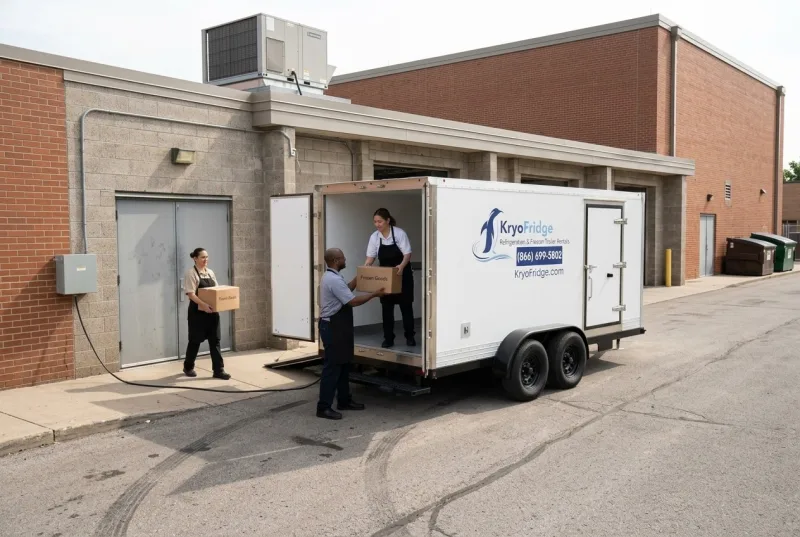
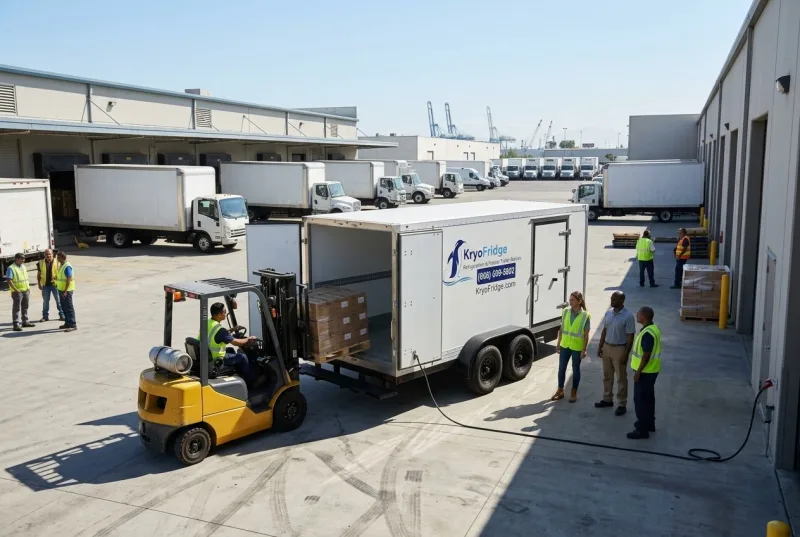
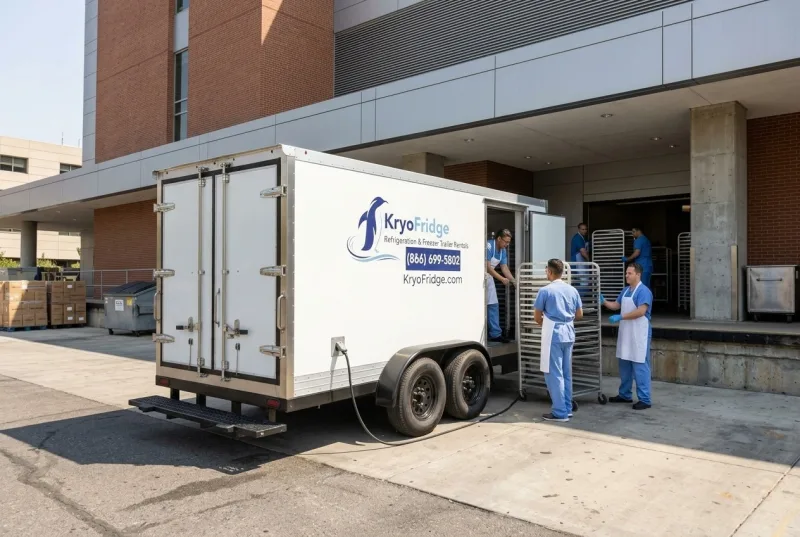
The stories behind that trust are the kind every restaurant owner recognizes. One Friday at 6:30 in the evening, a Chick-fil-A called in with a dead walk-in and a drive-through line already wrapped around the building. We prepped a trailer, dispatched it, and had it on their pad pulling temperature 34 minutes after the phone rang. The manager's first words when the driver pulled in were, "I cannot believe you are already here." That is the bar we hold ourselves to. Another year, an overnight outage shorted a cooler on the morning of a holiday rush, and our team staged three freezer trailers to hold every pie, every protein, and every prep tray so the kitchen served the rush without missing a ticket. The reason we hear some version of that line so often is the same every time: the equipment was already nearby, already cold, and owned by the people who answered the phone. That same standard travels to every Rialto job, from a one-cook taqueria to a distribution floor.
"Our walk in died on a Thursday night in August and I was already writing off the weekend. KryoFridge had a trailer in the lane behind us before midnight and the driver figured out the turn without me moving a car. We did not lose a case."
 Rhonda S. · restaurant owner, downtown Rialto
"I book two units every event season and they have never once shown up warm or late. Because they bring the generator I can stage anywhere on a property, which matters when the tent is a hundred yards from the nearest building."
 Julia L. · catering manager, Renaissance Rialto
"When our frozen rack went down we moved eight doors of product into their trailer in about an hour. They left it on our lot for three weeks while the repair dragged out and never pushed us to give it back early."
 Elissa N. · market owner, Foothill Boulevard
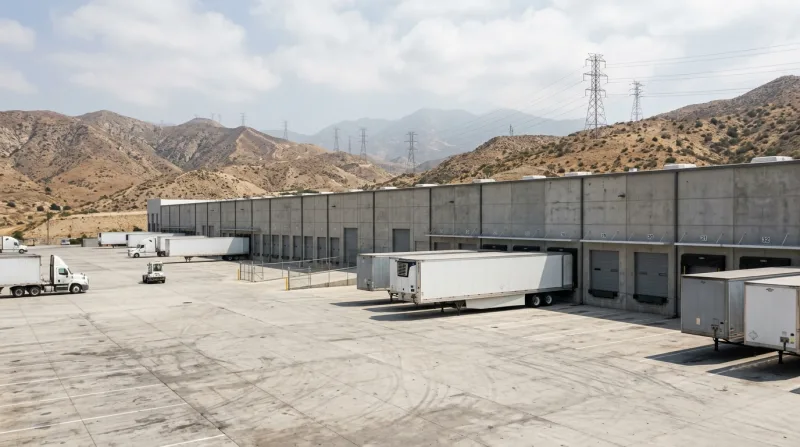
Around Rialto we set units on a wide distribution truck court off the 210 one day and a shallow Route 66 storefront lot the next, so we match the trailer to the space before a truck ever leaves the yard. Look through our freezer trailer sizes and features, tell us your gate width and where the nearest dedicated circuit sits, and we will bring the one that actually fits your property.
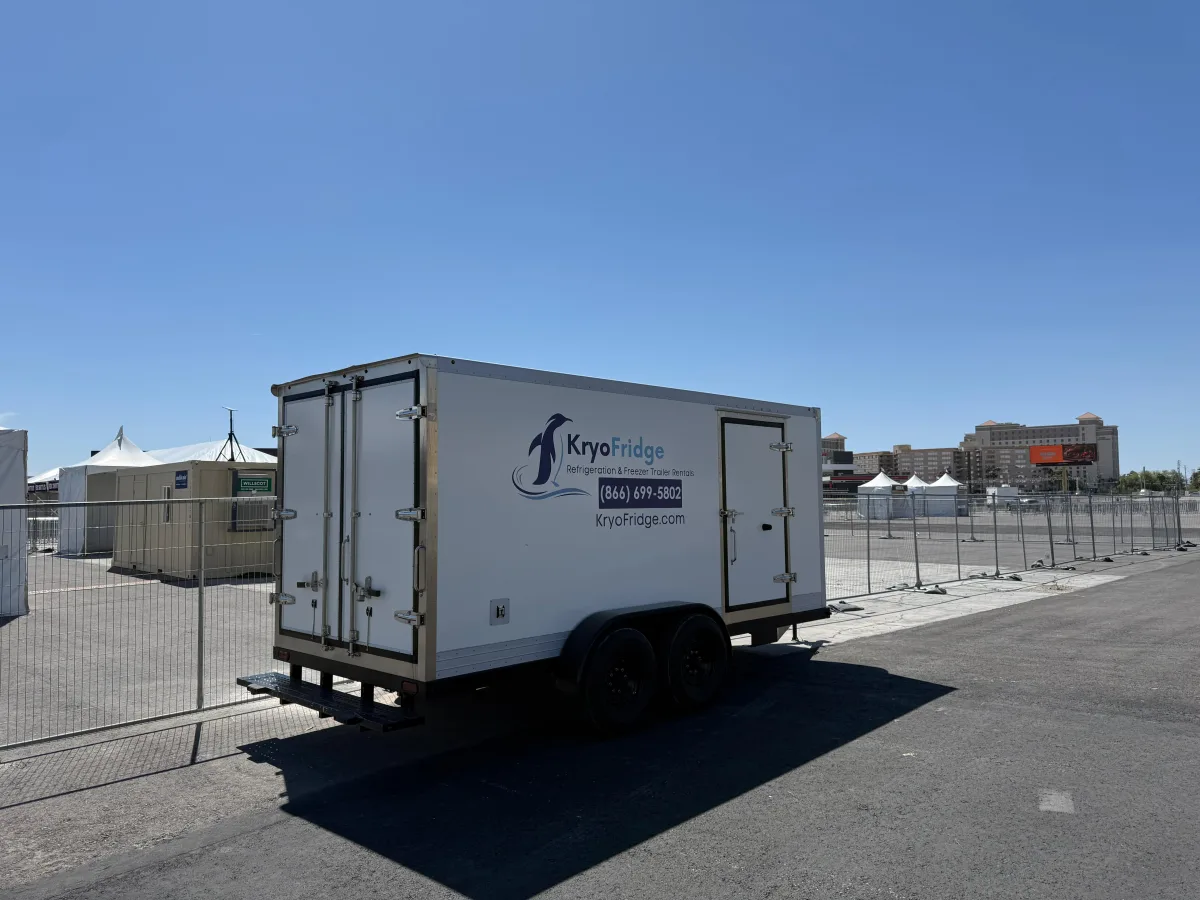
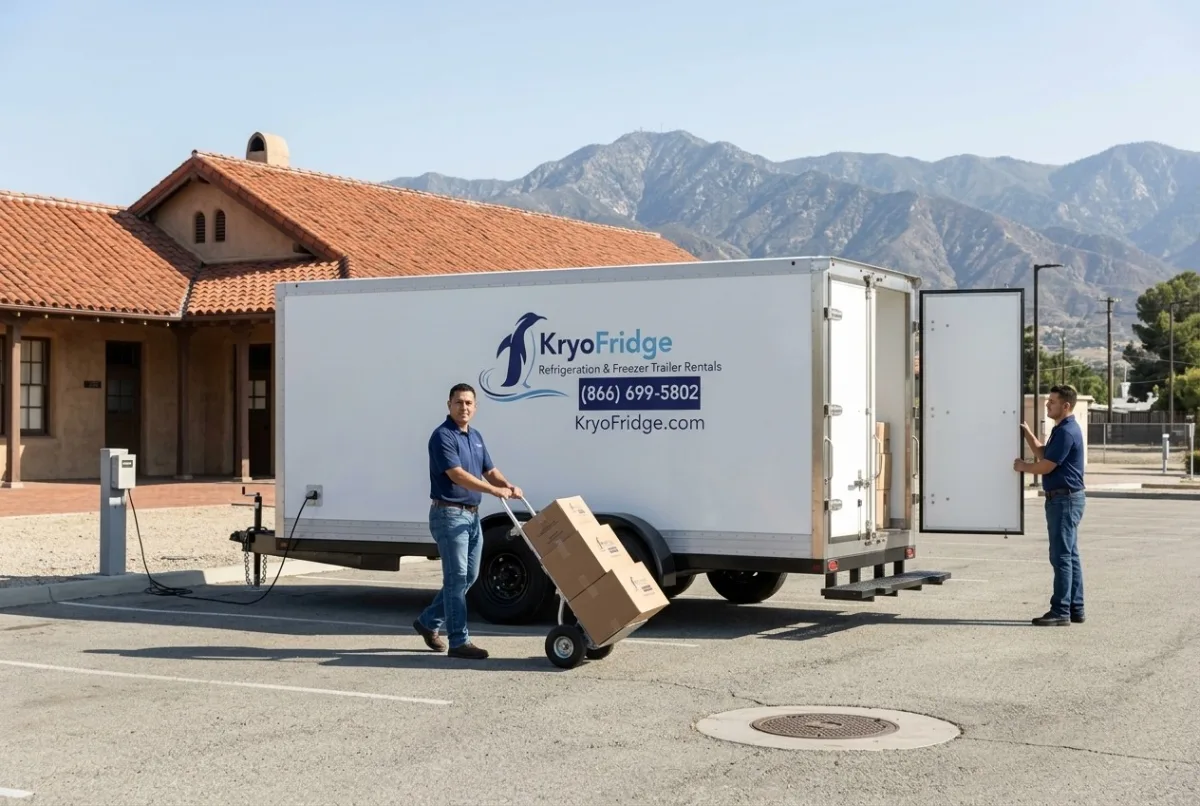
The 16' Utility earned its flagship spot the hard way, on jobs where a few degrees of drift would have cost somebody their inventory. The box is 16 feet long and fully insulated, riding on a tandem axle. The interior is NSF approved. One digital set point covers everything from -10°F frozen storage to a 50°F produce cooler. There are two ways in: rear double doors for pallets, and the side utility door for everyday grab-and-go.
Because we own and service the entire fleet, the trailer on your lot was prepped in our yard, not scrambled together after your call. It lives on a dedicated 120V, 20-amp circuit or a generator we supply, and it keeps its temperature whether the job runs a weekend or a full season.
| Spec | What you get |
|---|---|
| Temperature range | Roughly -10°F deep-freeze up to about 50°F fresh-cold |
| Mode | Dual-purpose: freezer or refrigerator on one precise digital set-point |
| Power | A dedicated 120V, 20-amp circuit within about 100 feet, or a generator we supply |
| Food safety | NSF-approved for direct food contact, food-safe surfaces, proper drainage |
| Footprints | 6x8, 6x12, and 6x16, from a tight retail lot to distribution scale |
| Backing | Owned in-house, fully licensed and insured, with 24/7 emergency dispatch |
Each unit holds a precise digital set-point and runs on a dedicated 120V/20A circuit or a generator. The trailers are not wired for 208 to 240V building service, so we confirm your hookup before the truck rolls.
We deliver into Rialto proper and every community that touches it, from the downtown grid out to the foothills and down to the Bloomington line. Tell us the address, the gate width and where the nearest dedicated circuit sits, and we will confirm access before you commit to a date. Nearby, we handle Jurupa Valley freezer trailers for rent, Victorville walk-in freezer rental and Orange freezer trailer rentals.
Neighborhoods and towns we cover include Downtown Rialto, North Rialto, Las Colinas, North Rialto Business Park, Renaissance Rialto, El Rancho Verde, Foothill Boulevard, Riverside Avenue, Slover Avenue, Bloomington, Colton, Fontana, San Bernardino, Muscoy, Devore, Lytle Creek, Highland, Grand Terrace, Loma Linda, Redlands, Rancho Cucamonga, Ontario, Jurupa Valley, Riverside.
Every part of the Rialto area rents cold storage for its own reasons. We know each one, and we deliver to all of them.
One call sizes the trailer, sets the delivery window, and locks your quote for Rialto. Call now, or send the quick quote request and we will call you.
This is a distribution town with a serious food economy layered on top of it. More than twelve million square feet of industrial space sits inside the city limits, the grocery corridors along Foothill Boulevard and Riverside Avenue turn heavy perishable volume, and the restaurant strip on old Route 66 has been feeding travelers since 1926. Below are the three places our units land most often here. Tell us your dates and we will pencil you in while the slot is open.
Rialto Unified serves roughly 24,461 students across 19 elementary schools, five middle schools and five high schools, and runs a central kitchen model with breakfast and lunch at no cost to every student. A central kitchen concentrates risk, because one refrigeration failure touches every campus on the route. We park capacity on the yard for summer projects and equipment swaps.
Biscomerica has been baking in Rialto since 1980 out of a 225,000 square foot plant, running GFSI certification, a Grade A plus BRC audit and a Kosher OU Dairy program. Certified facilities cannot move product to a warm dock and hope. A trailer holding a documented set point on the plant yard is the corrective action an auditor will accept.
Medline Industries distributes out of Rialto, and temperature sensitive medical inventory feeds Arrowhead Regional in Colton, Kaiser in Fontana and hospitals in San Bernardino. We supply cold capacity for quality holds, facility power events and refrigeration retrofits so inventory never leaves temperature control.
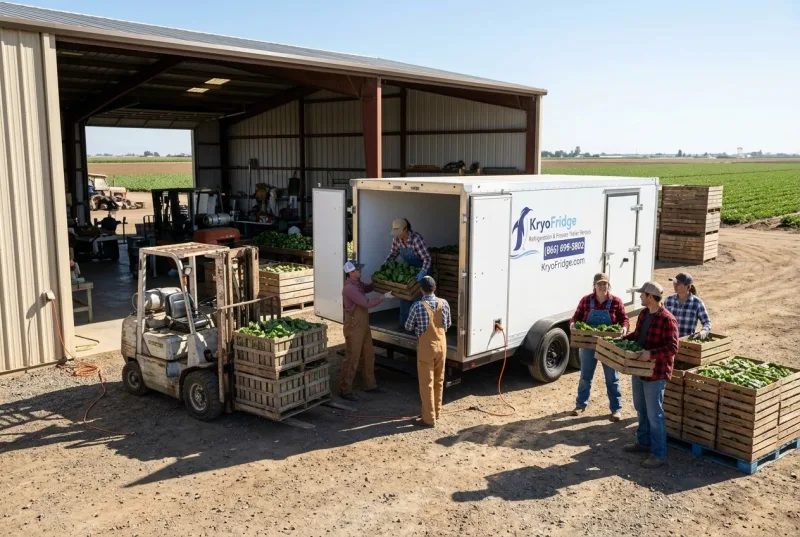
Rialto grew up on lemon and orange groves shipping under labels like Rialto Boy, and working agriculture still sits at the edges of the city toward Bloomington and the Lytle Creek wash. Harvest holds, farm stand seasons and certified market vendors all need cold capacity that arrives where the product is.
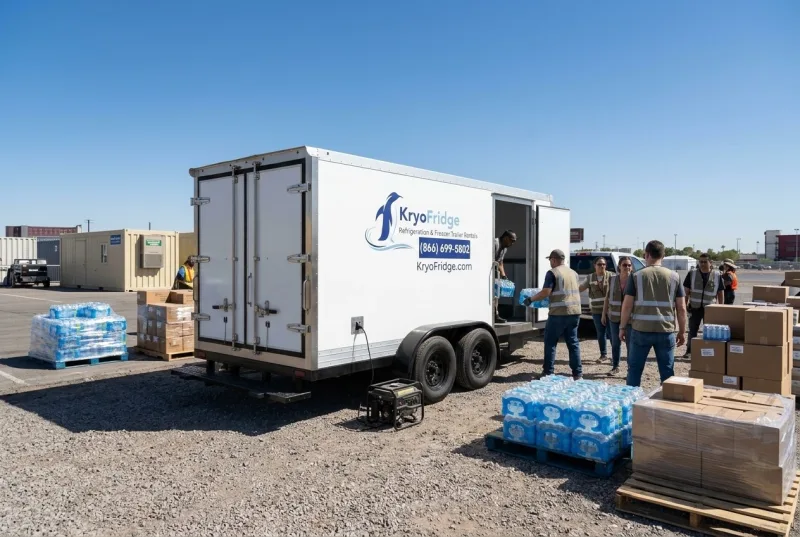
When the Line Fire put mandatory evacuation orders on more than 9,200 homes in September 2024, the shelters and feeding sites went up down here on the valley floor. Rialto has freeway access from three directions, which makes it a natural staging point for that work.
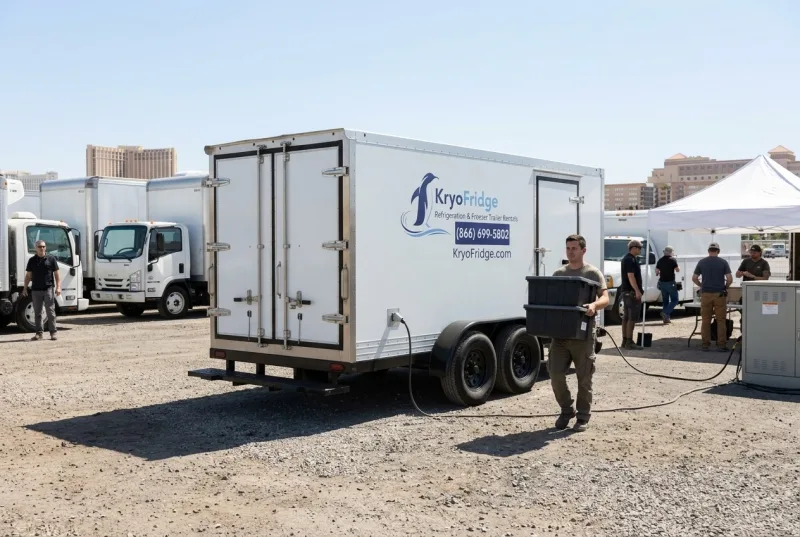
The Route 66 motel architecture, the Cajon Pass canyon country and the open industrial landscapes on the south side all pull location shoots, and none of them has a craft services building. One trailer covers cold holding for a whole unit and moves to the next setup with the production.
What ties these together is the clock. Nobody budgets a freezer trailer into next quarter. They reach for one the hour a compressor quits, or the evening before a party when the stack of rented ice chests suddenly looks laughably undersized. Since our units sit staged around Rialto instead of a couple counties down the freeway, "can I get it today" is an ordinary ask here, not a stretch.
Add it up the way an owner in Rialto has to. One restaurant walk-in routinely sits on a small fortune in proteins, dairy, and prepped product. Scale that to a grocery rack or a warehouse freezer bay and the exposure balloons. Now knock the power or the compressor out on a triple-digit afternoon, and that whole inventory is in jeopardy inside a few hours. Then stack on the sales you lose while the line sits dark and the wages you burn paying staff to triage what can still be saved.
Hold a pre-staged trailer up against that risk and it reads like cheap insurance, a fixed, predictable expense parked in front of a loss with no ceiling. That is exactly why the businesses that got stung once tape our number by the phone. There is never a second scramble, because the next time they dial before the product has a chance to warm. Owning every trailer ourselves means we can scale the answer to fit. A single compact box suits a corner cafe. A clustered setup covers a warehouse floor. Either turns around the same day.
Rialto sits at about 1,348 feet on the San Bernardino Valley floor, far enough inland that no marine air reaches it. The climate record for this valley runs an August average high of 97.3 degrees and a July average high of 96.2, with average lows above 63 degrees through both months. The all time record for the valley is 118 degrees, set on July 6, 2018, and the monthly record book carries 116 degrees in June, July and August and 117 degrees in September.
The overnight number is the one that decides equipment life. Rooftop condensers survive hot afternoons by catching up after dark. When the low sits in the mid sixties and the air is bone dry, that recovery window shrinks, and a rack that coped fine in June starts running behind by the second week of August. Summers here are arid enough to suppress cloud cover, so the same equipment takes full solar load day after day with no break in the pattern.
The other half of the story is wind and power. Santa Ana conditions are felt particularly strongly in the San Bernardino area, sometimes approaching 60 miles per hour, and Southern California Edison names Rialto directly in its Public Safety Power Shutoff notifications. During the January 2025 wind event, with gusts forecast to 85 miles per hour, roughly 30,000 customers across a named list that included Rialto were warned of possible shutoffs. Heat season, fire season and shutoff season sit on the same calendar here, which is why we hold spare freezer capacity through late summer.
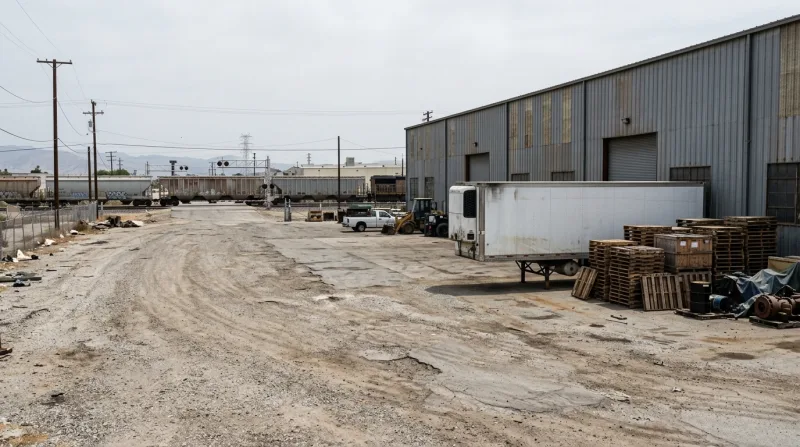
Rialto turned into a logistics city because of where the freeways cross. Interstate 10 runs the south edge, State Route 210 runs the north, Interstate 215 sits minutes east and Interstate 15 opens the Cajon Pass to the northwest. That geometry pulled in regional distribution for Staples, Target, Amazon, Under Armour, Medline Industries, Niagara Bottling and FedEx, and it left the city with more than 12.4 million square feet of industrial space at a vacancy rate near 4.7 percent, tighter than the Inland Empire average.
Here is the problem nobody plans for. Purpose built refrigerated warehouse space in this region clusters in Ontario, Rancho Cucamonga and Fontana, near the airport and the rail intermodals, and the refrigerated buildings across the Los Angeles and Inland Empire market average between 29 and 52 years old with almost nothing new under construction. Cold storage vacancy hit a record 7.7 percent in the first half of 2026, which sounds like slack until you try to find racked frozen space in the city you are actually standing in.
So when a Rialto building needs cold capacity, the answer is usually a trailer on the tenant's own yard. We handle refrigeration retrofits inside dry warehouses converting to food grade, overflow during peak inbound season, quality holds where a flagged lot has to stay in temperature, and bridge capacity while a condenser gets rebuilt. A sealed reefer box at the dock keeps the hold off the operating floor without taking it out of temperature.
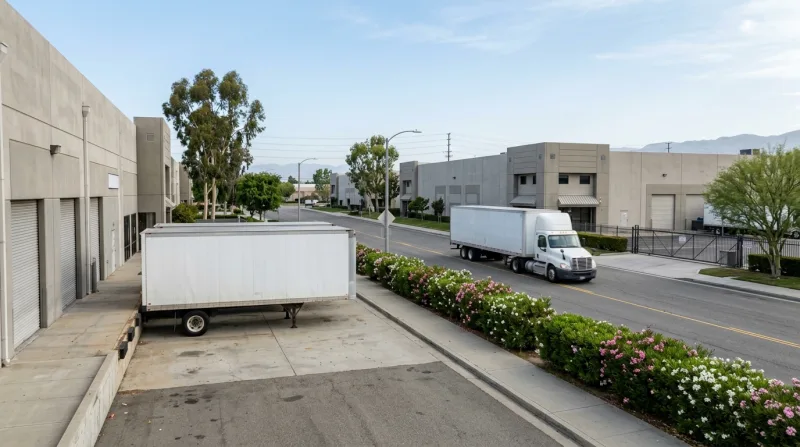
The sets themselves are the easy part up here. Truck courts in Las Colinas and the North Rialto Business Park are deep, the aprons are wide and the approach is straight. We still confirm the gate width and the power before we roll, because the unit runs off a generator we provide or a dedicated 120 volt, 20 amp circuit within 100 feet. One adjustable control takes the same trailer from about 50 degrees down to 10 below zero, so a cooler job this month becomes a freezer job next month without a swap.
Rialto is well fed by grocery retail, and the mix leans toward the formats that move the most perishable product per square foot. Stater Bros sits at 571 East Foothill Boulevard, Cardenas Markets holds the corner at 250 West Foothill Boulevard, Sprouts runs at 1524 South Riverside Avenue, and Grocery Outlet anchors part of Renaissance Marketplace up at the 210. Add the carnicerias, panaderias and independent markets serving a city that is roughly three quarters Latino and you have a lot of cold cases on a lot of clocks.
A frozen rack failure in a busy store is not a maintenance ticket, it is a countdown. Ice cream is the first casualty and it never fully comes back, because a single temperature excursion changes the texture permanently. Our dispatch line is staffed around the clock precisely because these calls do not arrive during business hours, and the honest answer to how fast we can be there depends more on where the trailer can sit than on whether we have one.
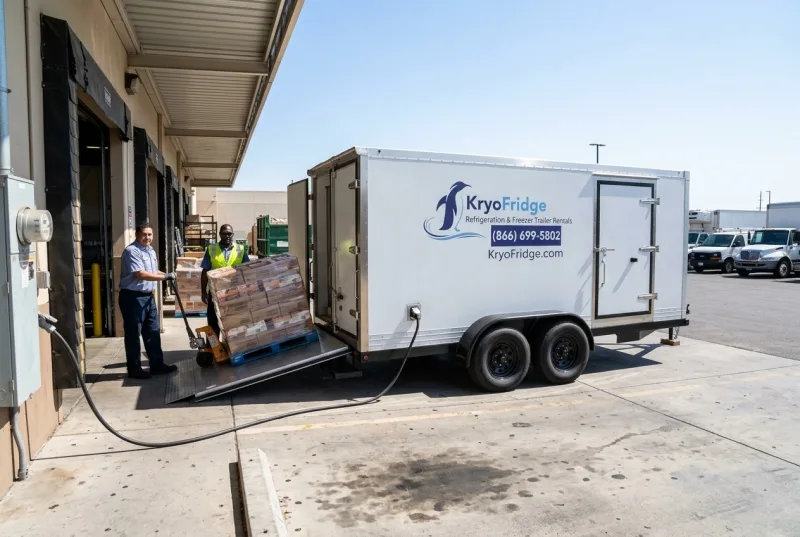
The planned side of grocery work is steadier and it is the part smart buyers book early. Refrigeration rack replacements take a section of the store out for weeks, store resets need product staged before the new cases are commissioned, and holiday overstock through Thanksgiving and Christmas outruns the back room every year. A trailer on the back lot gives the store its capacity back without renting space in another city.
Placement is where the Foothill and Riverside corridors get interesting. The older strip centers along historic Route 66 were laid out for 1950s delivery vehicles, with shallow rear lots and tight service lanes, while the newer pads near Renaissance Marketplace have real parking fields and a straightforward set. We look at the approach, the surface and the outlet location before we confirm a date, which is why our deliveries here do not turn into a second phone call from the driver.
The walk in cooler is the entire back of house in one insulated room. Proteins, produce, dairy, dressings, marinating trays, every bit of prepped mise. When the compressor quits the line stops, and in Rialto it tends to quit in the worst possible week, because a condenser fighting a 97 degree August afternoon on this valley floor is already at the top of its duty cycle. Overnight lows here stay above 63 degrees in July and August, so the equipment never gets the recovery window a coastal kitchen gets.
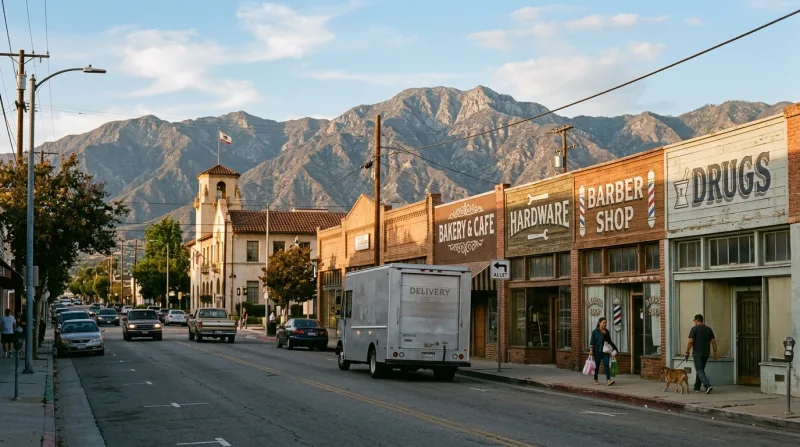
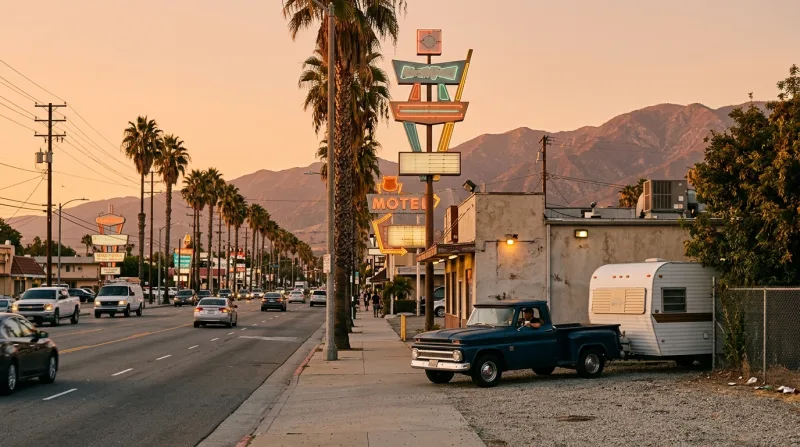
Foothill Boulevard carried U.S. Route 66 from 1926 until the 1964 bypass and the corridor still shows it, from Mac's Garage at Linden Avenue, in business since 1926, to the El Rey Motel and the Fiesta Lodge with its facade built from Lytle Creek stone. Kitchens along that strip work out of older buildings with shallow rear access, and placement there takes a real look before a truck rolls. Send us a photo and we will tell you honestly whether it works.
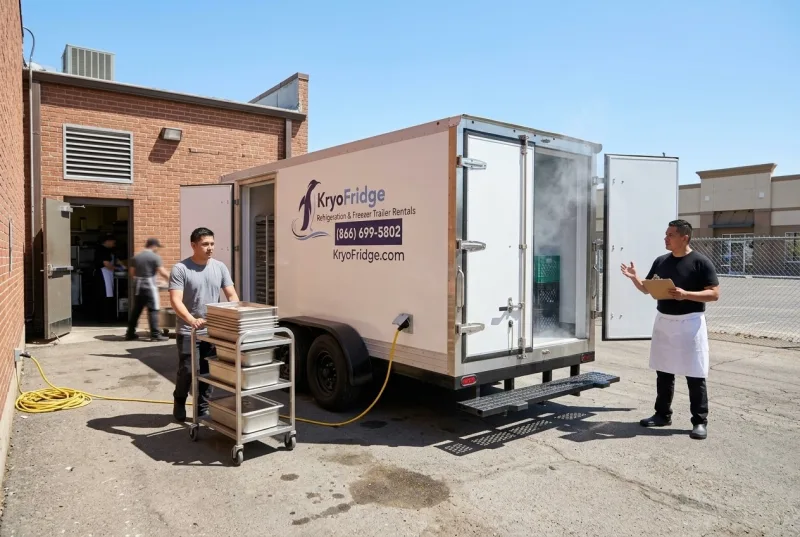
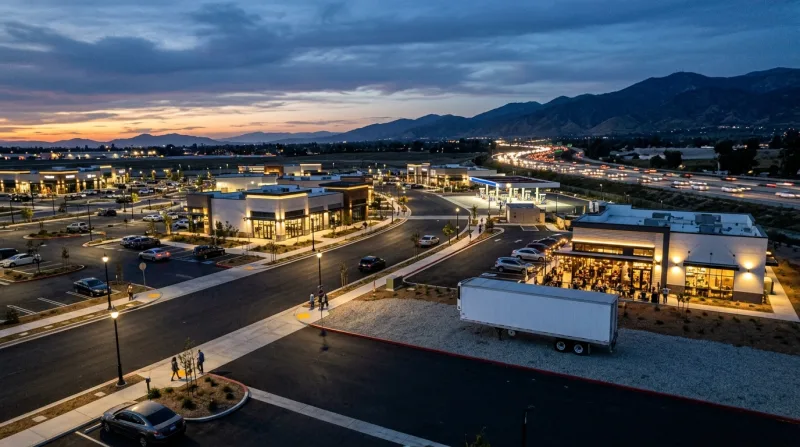
The newer side of town is a different job entirely. Renaissance Marketplace covers about 407,000 square feet at the southwest corner of the 210 and Ayala Drive, with 127,000 cars passing the frontage every day and food tenants including CAVA and a Handel's Ice Cream shop. Hard serve ice cream is one of the least forgiving frozen users in retail food. Pads like these have parking fields and easy staging, and they usually call for a planned reason such as a remodel that touches refrigeration or a walk in floor replacement. A hood and suppression job is another common one.
Then there is the event side. The city runs its own calendar, from Rialto on Wheels and the Cook-Off at National Night Out to the Memorial Day Tribute, the weekly certified farmers market at City Hall and the Holiday Festival and Parade on South Palm Avenue. Ten minutes up the freeway, Glen Helen Amphitheater seats 65,000 and has hosted Ozzfest, Knotfest, Rock the Bells and Nocturnal Wonderland. Concession footprints that size need frozen capacity staged on site, and we book those weekends early.
"Cold" is not one number. Different product stays safe inside different temperature windows, which is the entire reason a precise digital set-point matters, and in the middle of a heat wave in Rialto, a load that slips out of its window is a load you write off. Use the chart below as the reference our customers lean on when they size a rental.
| Product | Target holding band | Trailer mode |
|---|---|---|
| Ice cream and frozen desserts | -10°F to 0°F | Deep freeze |
| Frozen proteins, seafood, prepared meals | 0°F or below | Freezer |
| Fresh meat and poultry (short hold) | 28°F to 32°F | Refrigerated |
| Dairy, deli, packaged produce | 34°F to 38°F | Refrigerated |
| Beverages, florals, catering trays | 38°F to 45°F | Refrigerated |
One figure outranks everything in that chart, and it is not listed there: 40°F. Food-safety guidance treats the band between 40°F and 140°F as the zone where bacteria thrive, and the clock on perishable product starts ticking the moment it crosses 40 on the way up. Roughly four cumulative hours above that line and most refrigerated inventory is no longer safe to serve. Picture that countdown running on a 100-degree afternoon in Rialto with the walk-in dark, and the urgency of a quick trailer drop stops being abstract.
Tell us the single coldest item you are holding when you call, and we dial the trailer to that. One unit carries a straight freezer load with no fuss. But when your list mixes deep-freeze desserts with fresh-cold produce for the same remodel or event, we will usually point you toward a split setup or a second box so neither side of the load has to settle for the wrong temperature.
Powering one of our trailers is refreshingly simple, and there are precisely two ways to do it. Either you have a dedicated 120-volt, 20-amp circuit reachable within roughly 100 feet of the parking spot, or we bring a generator. What the units will not accept is standard 208 to 240V building service, so a quick question about your outlet before dispatch heads off any surprise on delivery day.
On placement, all the unit really asks for is a fairly flat patch with enough room for the delivery truck to maneuver it in and set it straight, plus either a power source in reach or space for a generator. We lock down the exact drop point before dispatch, and our drivers know the Rialto layout cold, so the delivery is one clean trip instead of a guessing game on the property.
A Chick-fil-A called on a Friday at 6:30 in the evening with the walk in cooler down and the drive through backed up around the block. We took the call, prepped a trailer and dispatched immediately, and it was on site and running 34 minutes from the phone call. Nothing in that cooler was lost and the store never stopped taking orders.
An overnight power outage shorted the fuse on a Denny's walk in cooler heading into Mother's Day weekend, one of the biggest days on the calendar for that kind of restaurant. Our dispatch team put three freezer trailers on site to hold the pies, the meats and the rest of the product, and the store served the whole weekend without cutting a single item from the menu.
A food grade warehouse crew needed a flagged lot held in temperature while the disposition got sorted out, and their racked cooler was the space they needed for moving product. We set a sealed unit on their dock apron, held the set point through the review, and pulled it the day the release came through. Zero product loss.
We plan the set before the truck leaves the yard. Anybody can quote a trailer. The hard part in Rialto is knowing that a Las Colinas truck court and a rear lane off Foothill Boulevard are two completely different jobs, and that we set a trailer on a gravel yard off Slover Avenue differently than we set one on fresh asphalt at Renaissance. We confirm your gate width, your surface, your turning room and where the nearest dedicated circuit sits before we put you on the schedule.
On a bad day, booking should be the part that does not add stress. Four steps, an upfront number, and a single person who owns the whole thing.
Tell us whether it is freezer or fridge product, a ballpark volume, and your rough window. That is enough for us to call the right size.
We pair you with a unit, confirm whether you have a dedicated circuit or need a generator, and pin the exact drop point so the truck makes one trip.
We arrive on your schedule, about 45 minutes for a true emergency, set the trailer, energize it, and let it drive down to your number.
It holds the set-point for your entire term while our line stays live the whole way through. Wrap up, and we swing back for the pickup.
If you are serving food at a public event in Rialto, San Bernardino County Environmental Health Services issues the Temporary Food Facility health permit, and the timing is real. Vendor applications go in at least two weeks before the first event, and a late fee attaches when an application arrives inside that window. Event organizers face a separate permit with a late fee if the application is not complete a full 48 hours before the day of operation, and every vendor keeps a valid permit readily available at the booth. Crews that plan cold storage when they file move through cleanly, and the ones who wait end up calling every vendor in the county on day ten.
The temperature line decides whether product survives the day. Under the California Retail Food Code, potentially hazardous food is held at or below 41 degrees or at or above 135 degrees, and San Bernardino County inspects to that standard using its own Cal Code report format. On a July afternoon in this valley, where the average high runs 96 degrees, holding 41 degrees out of an ice chest on asphalt is a losing proposition. A trailer holding a stable set point is how a vendor stays on the right side of that line, and it is why we ask what you are holding before we set your control.
On the labor side, California heat protection is in force and it reaches straight into a warehouse city like this one. Cal/OSHA section 3395 has covered outdoor work since 2006, and section 3396 took effect on July 23, 2024 for indoor workplaces, with obligations that begin at 82 degrees for crews near a radiant heat source or in heavy protective clothing and 87 degrees more broadly. Covered employers keep a written indoor heat illness prevention plan and provide cool down areas. At the federal level, OSHA published a proposed Heat Injury and Illness Prevention rule on August 30, 2024 and held its public hearing in the summer of 2025. Experienced Rialto crews already build cold product handling and shaded staging into the plan rather than waiting on the final text.
One caveat we always state plainly: we supply the food-safe, temperature-holding hardware itself, but we are not a temperature-logging or alarm-monitoring service. If your program requires continuous written records, line that vendor up on your own.
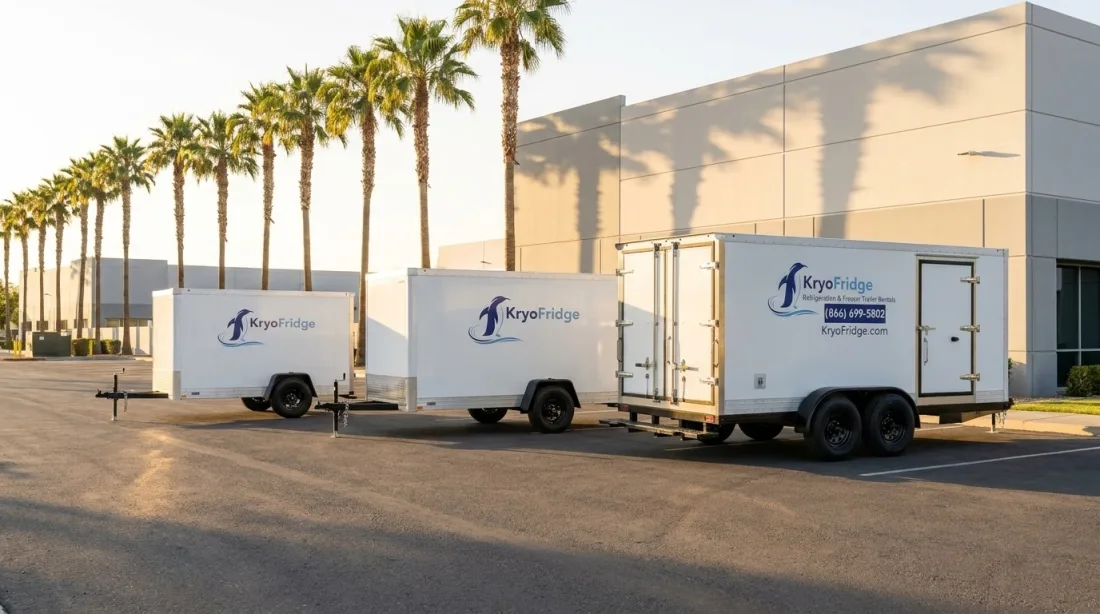
Our signature 16 foot Utility series leads the fleet. It is the trailer we send on most jobs, and crews like it for the side utility access door. We build three footprints in all, so a single kitchen holding overflow stock has a fit and so does a distribution floor in a disaster. Every unit is dual purpose by design: one adjustable system swings between freezer and refrigerator on a digital set point. Each trailer runs on a dedicated circuit or on a generator.
| Trailer | Best for | Temp range |
|---|---|---|
| 6x16 Utility ⭐ | Our signature series: distribution, large events, disaster response, side utility door | Heavy-duty reefer |
| 6x12 | Grocers, caterers, mid-size events | Deep-freeze capable |
| 6x8 | Tight lots, small kitchens, short overflow | -10°F to 50°F |
Each unit holds a precise digital set-point and runs on a dedicated 120V/20A circuit or a generator.
Think eight or so pallet spots, and the unit to grab when square footage is the whole problem. It slips into the pinched service yards and cramped back-of-house corners that a larger box cannot even swing into. One cafe or small-market walk-in goes down, and this is almost always enough cold to cover it, plus the simplest unit to set in a small space.
Call it fourteen pallet spots, deep-freeze rated, and far and away the size people ask for most. It lands right in the middle: roomy enough for a multi-day catering job or a restaurant that needs true walk-in-equivalent room while the kitchen is torn up. Roomy enough that nobody is playing Tetris with shelves, yet still small enough to set in most commercial back lots without a site survey.
Roughly twenty pallet spots paired with a heavy-duty reefer plant engineered to keep deep-freeze locked in even when the ambient air is merciless. Reach for it when a warehouse bay drops, when a large festival needs an anchor, or when a relief operation is carrying its own cold chain.
Not sure which size fits? Most customers land on the 16 foot Utility, and we will tell you honestly if a smaller footprint covers your job. Tell us roughly what you are storing and for how long, and we will spec it for you.
The questions that surface once the basics are settled. Tap any topic to open it.
The pop-up walk-in cooler. Cheap to rent and easy to set up, but it chills, it does not freeze, and it draws every watt it needs from your building while depending on a calm ambient temperature around it. The second your building loses power, your cooler loses it too.
The refrigerated box truck. Designed to haul product on the interstate, not to sit in a lot and babysit it. Parked, it idles fuel all day, broadcasts compressor noise across a storefront or an event lawn, and pins down a tractor plus a driver you probably do not need.
The freezer trailer we deliver. Built from the ground up to be dropped on a pad and to defend a temperature for as long as the job runs. It freezes deep, carries NSF approval, locks, stays quiet near guests, and lives on nothing more than one dedicated circuit or a generator.
Even a rented box has to satisfy the county environmental health office that licenses and inspects every food facility. Show an inspector a unit that cannot document its temperature or was not built for food contact, and they have the authority to halt service immediately.
That is a bar each of our trailers clears: NSF-approved throughout, food-safe interior surfaces, proper drainage, and a digital controller that puts the set-point in plain view. We supply the food-safe, temperature-holding hardware itself, but we are not a temperature-logging or alarm-monitoring service.
For a typical kitchen or market, one box does the job. Distribution floors, big fairs, and full-scale disaster response routinely need more, and because the fleet is ours, we can cluster several units and bring them online in waves as the work expands. Match the cold capacity to the operation rather than make the operation squeeze itself into one box.
The clock is yours to set. Some jobs are a handful of days for an emergency or a single event. Others stretch across weeks or months for a remodel or a seasonal swell, and a few become standing contracts for businesses that want capacity parked on standby. Name your window and you will get a clean quote, no penalty for an honest "not sure yet."
Building permanent cold storage is a capital project in every sense: you hire a refrigeration contractor, schedule the electrical, pull a building permit, and wait weeks before a single pallet goes inside. A rental turns that equation on its head. You bring in precisely the cold you need, for precisely the stretch you need it, and the trailer is holding temperature that same week, frequently that same day, with the commitment ending the moment your need is over.
Three engineered elements carry the load. Thick insulated panels and tightly gasketed doors lock the sun outside and the cold inside. A self-contained reefer condensing system specified with surplus capacity keeps stripping heat out of the box even when the air outside is brutal. And a digital thermostat locks onto your chosen number and cycles the compressor to hold the line. Run those three together and a trailer baking on open asphalt behaves like one tucked in a cool warehouse. That is also why power is the first thing we ask about: the design delivers its safety margin only on steady, uninterrupted power.
"We needed a flagged lot held in temperature during a review, and our cooler is the space we actually need for moving freight. They set a sealed unit on the dock apron the same afternoon and pulled it the day the release came through."
 Mey D. · distribution center quality manager, Las Colinas
"Our summer equipment swap ran a week long and the central kitchen still had to feed every site. The trailer sat right outside the loading door and the crew adjusted the set point for us twice without a fuss."
 Cody A. · school nutrition supervisor, Rialto
"I called three companies during a heat run in August. Two put me on a callback list. KryoFridge gave me a delivery window on the phone, and the trailer showed up when they said, on the pad I asked for."
 JEANIQUA F. · warehouse operations manager, North Rialto Business Park
"My rear lot is tight and every other company told me it would not work. Their driver walked it with me first, backed it in on the first try, and showed me exactly where the cord had to run. Small thing, but nobody else bothered."
 Bailey W. · panaderia owner, Riverside Avenue
"We run food vendors at outdoor events all summer and the county holding rules are not negotiable. A freezer trailer on site means my vendors are not fighting ice chests on hot asphalt at hour six. I book them first."
 Skip W. · event producer, San Bernardino
"Thanksgiving week our back room was full by Monday. The unit went on the rear lot Tuesday morning and gave us a whole extra freezer we did not have. We have booked it every holiday season since."
 Steven L. · grocery store manager, Bloomington
"Four trucks at one event and none of us has real freezer capacity on board. One trailer parked behind the row solved it for the whole weekend. Dropped Friday morning, picked up Monday, like clockwork."
 Lisa P. · food truck owner, Fontana
Sample reviews written to mirror genuine Rialto situations, to be replaced with verified Google reviews ahead of launch.
For emergencies we work in hours, not days. Our fastest documented response was 34 minutes from the phone call to a running trailer on site for a Chick-fil-A with a dead walk in. Same day delivery in Rialto is normal when a unit is available, and our dispatch line is staffed 24 hours a day. Call first and then send photos of the site, because placement usually sets the timeline, not the equipment.
There are exactly two options and we confirm which one you have before delivery. Either we bring a generator and the trailer runs off that, or you provide a dedicated 120 volt, 20 amp circuit within 100 feet of where the trailer sits. That is the whole power conversation. Most distribution yards in Las Colinas and the North Rialto Business Park already have a usable circuit at the dock, while event sites and older lots along Foothill Boulevard usually take the generator.
Yes. Our units are dual purpose, with one adjustable control that takes the box from about 50 degrees down to 10 below zero. The same trailer can hold refrigerated product for a grocery reset this month and run as a freezer for a restaurant walk in failure next month with no swap. Tell us what you are holding and we will set the control before delivery so the box is already at temperature when it lands.
As long as the job needs. Emergency rentals often run a few days while a compressor gets rebuilt, remodel and retrofit holds commonly run three to six weeks, and seasonal grocery overflow tends to book by the month through the holidays. We do not push customers to return a unit early because a repair took longer than the contractor promised. Give us your best guess on dates and we will build in the room.
Constantly. From a Rialto staging point we reach San Bernardino, Fontana, Colton, Bloomington, Highland, Grand Terrace, Loma Linda, Redlands, Rancho Cucamonga, Ontario, Riverside and Jurupa Valley inside a single delivery window, and we run the 15 through the Cajon Pass into the High Desert regularly. Our service area covers all 50 states, so multi location accounts can call once for several markets.
That depends on the unit and the approach, which is why we ask before we schedule. The two numbers that matter most are your gate width and your turning room, and the third is the surface, because a gravel yard on Slover Avenue and fresh asphalt at Renaissance need different handling. Send a photo of the space with the approach visible and we will tell you honestly whether it works.
We do not offer a monitoring service. The trailers carry digital set point control on the unit itself, so you can see and adjust the temperature, but we do not provide remote monitoring, logged temperature records or a high temperature alarm service. If your audit or insurance requires a documented log, plan on your own data logger inside the box. We tell you that up front rather than after you have signed.
Under the California Retail Food Code, potentially hazardous food is held at or below 41 degrees or at or above 135 degrees, and San Bernardino County Environmental Health Services inspects to that standard. Vendors also need a Temporary Food Facility health permit filed at least two weeks before the first event, kept readily available at the booth. A trailer holding a steady set point is the practical way to stay under 41 degrees through a long day on hot asphalt.
The valley floor around Rialto runs an August average high near 97 degrees and a July average near 96, with overnight lows above 63 degrees through both months and almost no rainfall. Rooftop condensers survive hot afternoons by catching up overnight, and that recovery window closes when the low stays in the mid sixties. Equipment that coped in June starts running behind by the second week of August, which is when our Inland Empire emergency volume peaks.
Yes, and it is one reason we keep generator equipped units staged. Southern California Edison names Rialto directly in its Public Safety Power Shutoff notifications, and during the January 2025 Santa Ana event roughly 30,000 customers across a list that included Rialto were warned of possible shutoffs. A trailer running off a generator we bring does not care what the grid is doing. Call ahead of a red flag weekend and we will hold a unit for you.
Deeper reading for local businesses, from the failure-hour playbook to compliance and seasonal planning. Tap any guide to open it.
The first hour decides how much you lose. Everything after that is cleanup. When a walk in cooler quits in a Rialto restaurant, the clock that matters is not the repair timeline, it is the interior temperature of the box and how long the product stays under 41 degrees. In an air conditioned dining room the box might hold a couple of hours. In a back of house corridor on a 97 degree August afternoon, with the compressor dead and the door opening every few minutes, it will not.
Step one is to stop opening the door. Every open cycle dumps the remaining cold air and pulls warm humid air in, and humid air is worse because moisture carries far more heat. Pull what the line needs for the next half hour, get it into whatever reach in capacity you have, then leave the walk in shut while you make calls. A closed box with no compressor still buys you time. A box opened every four minutes buys almost none.
If you are running a food booth at a Rialto event, the permit is not the hard part. The temperature is. San Bernardino County Environmental Health Services issues Temporary Food Facility health permits for vendors and a separate permit for event organizers, and the paperwork is straightforward as long as you file on time. What trips people up is the eight hours in the middle, on asphalt, in a valley where July averages 96 degrees and almost no rain all month.
Start with the calendar. Vendor applications go in at least two weeks before the first event, and a late fee attaches when an application arrives inside that window. Event organizers face their own deadline, with a late fee assessed if the application is not complete a full 48 hours before the day of operation. Every vendor has to keep a valid health permit readily available at the booth for the entire event.
San Bernardino County Environmental Health Services, applications, forms and fees
Every business in Rialto that holds perishable product should have an answer to one question: what happens to the cold when the power goes off for two days. Not a vague answer, a specific one with a phone number attached. In this part of San Bernardino County a multi day outage during Santa Ana season is a recurring operating condition, not a freak event.
The documentation is unusually clear here. Southern California Edison names Rialto directly in its Public Safety Power Shutoff notifications. During the extreme wind event that opened January 2025, with gusts forecast to 85 miles per hour and isolated gusts to 100, SCE placed more than 294,000 customers across six counties under consideration for a shutoff, and roughly 30,000 were notified of possible outages in a named community list that included Rialto, San Bernardino, Fontana, Rancho Cucamonga and Lytle Creek.
Rialto holds more than 12.4 million square feet of industrial space at a vacancy rate near 4.7 percent, tighter than the Inland Empire average of 7.6 percent direct vacancy reported for the second quarter of 2026. That tightness is good news for landlords and a headache for anyone who suddenly needs cold space, because the buildings that hold temperature in this region are a specific, limited and aging subset of the total.
Look at the supply picture honestly. Cold storage across the Los Angeles and Inland Empire market posted negative net absorption in the first half of 2026 and reached a record vacancy high of 7.7 percent, but almost nothing new is under construction and the existing refrigerated buildings average between 29 and 52 years old. Purpose built refrigerated product concentrates in Ontario, Rancho Cucamonga and Fontana, near the airport and the rail intermodals. That is a different set of cities from where a Rialto tenant actually operates.
Grab a quick, no-runaround quote, or ring our round-the-clock line for emergency cold storage anywhere across Rialto and the surrounding area.