
KryoFridge brings portable cold storage rentals to Arvada restaurants, food makers, grocers and pharmacies, with every trailer pre-cooled and set to your temperature before it reaches your lot. Our 6x8, 6x12 and 6x16 units work as either a freezer or a cooler, so one call covers frozen stock and fresh product alike. Call now for a delivery window, or request a free quote and we will call you back with sizes and dates.
Keeping a trailer cold is mostly about where it sits, and that is the part years of hands-on placement teach you. On a lot that is not level off Ralston Road, we level the box first so the doors seal tight and the drain line falls the right way. The roof condenser needs open air, so we keep it out from under low branches and the low roof edges you find in Olde Town alleys. KryoFridge is licensed and insured, we run a direct fleet and are not a reseller, so we own every trailer we send out, and the company is backed by more than 30 years in the rental business. Call us today or request a quote, and we will plan the exact spot with you before delivery day.
Every trailer that shows up is ours, not a broker's rental from somebody else. The unit arrives pre-cooled and maintained by the same company that answers your call.
If a 6x8 will cover your need, we will not talk you into a 16-foot trailer. Sizing comes from what you are holding and for how long, not from what happens to be sitting in the yard.
Walk-ins do not pick convenient hours to fail. Our dispatch line answers around the clock, and the person on the phone can size a trailer and set a delivery window in one call.
KryoFridge is licensed, insured and registered on SAM.gov, so schools, agencies and food banks can work with us through normal purchasing. The paperwork is in order before the trailer rolls.
When the rental ends, we pick up on your timeline so an empty trailer is not taking up parking. Extending by a few days or a few months takes one phone call.
If the nation's largest chains trust us to protect their inventory, your kitchen is in good hands. These are brands that vet a cold-storage partner the same careful way they vet a food supplier, and they keep calling us back.
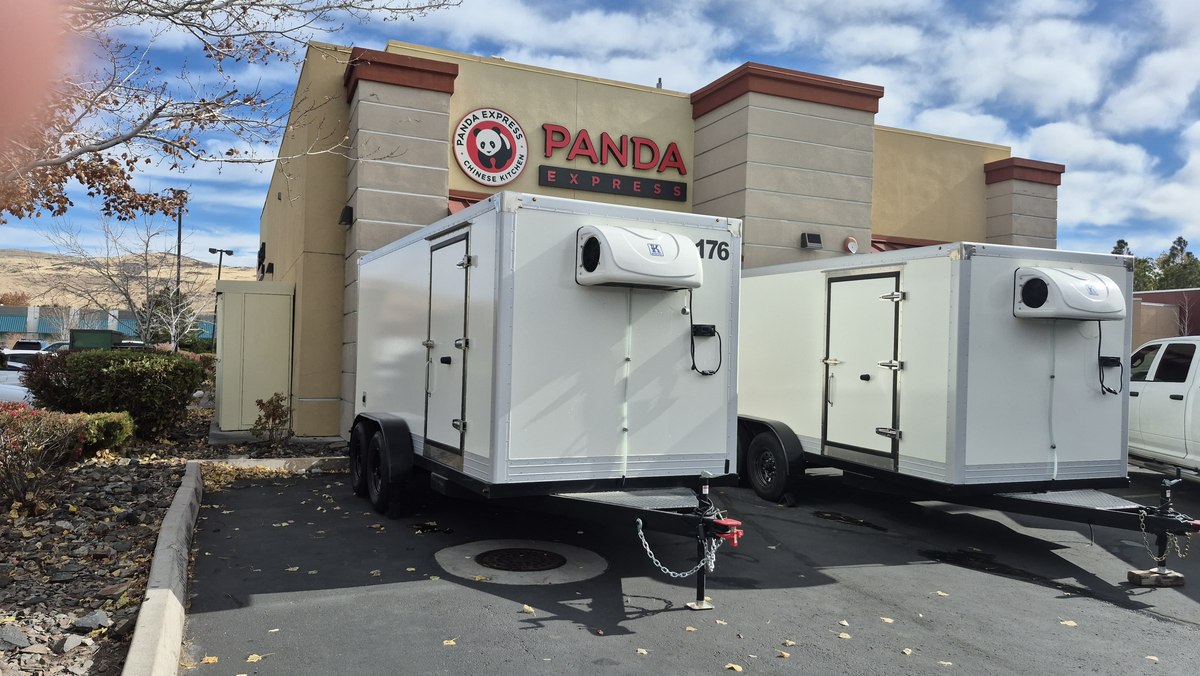 Panda Express
Extra freezer room for meat and frozen stock during planned kitchen work.
Freezer overflow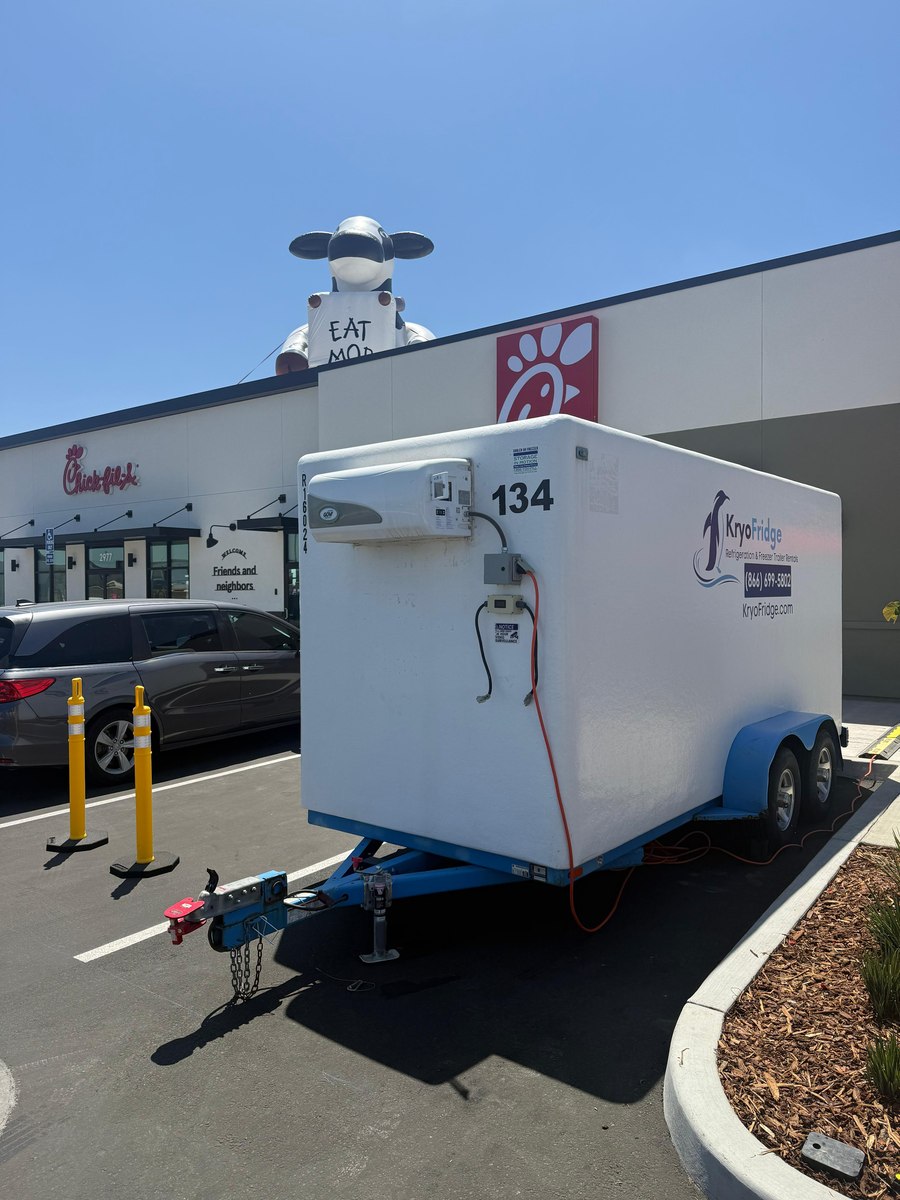 Chick-fil-A
On-site frozen holding during equipment changeouts, parked close to the back door.
Freezer hold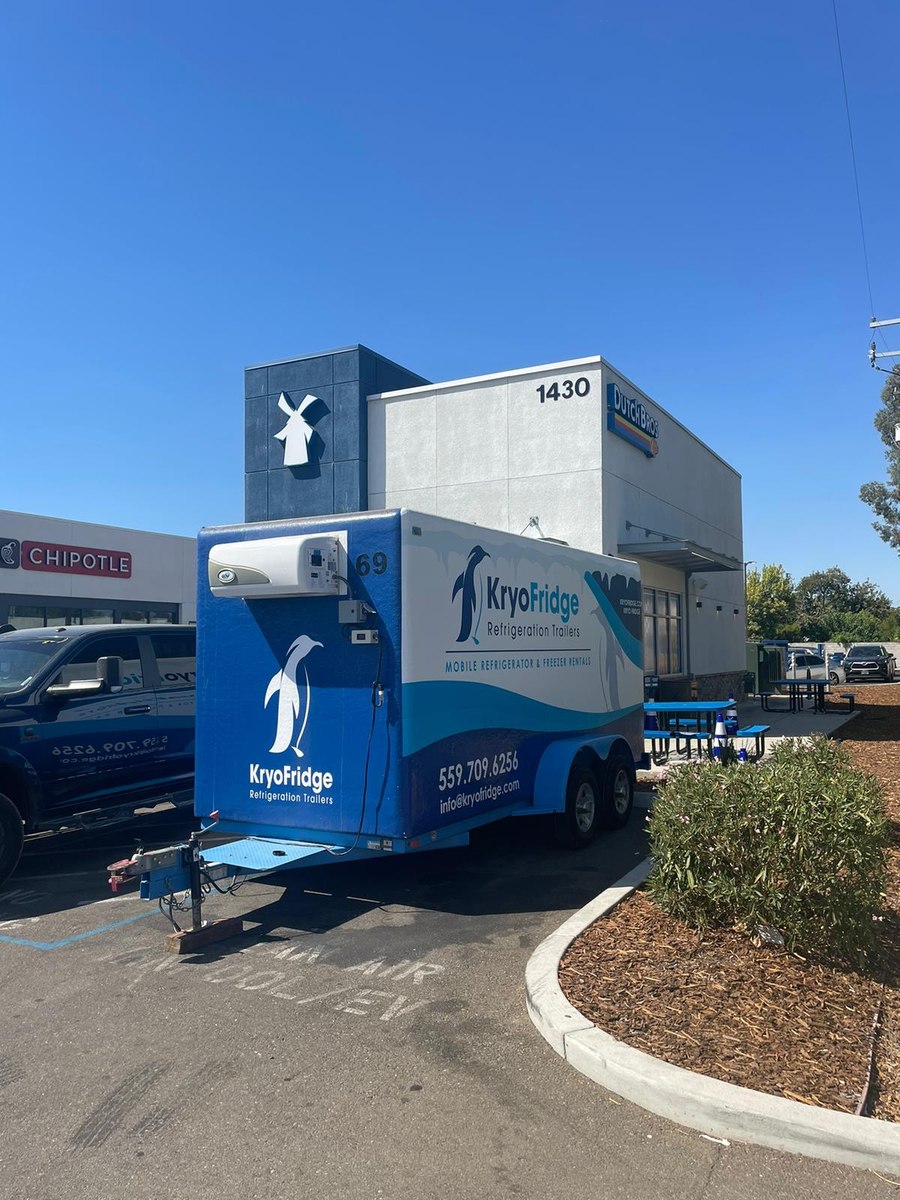 Dutch Bros
A trailer set as a cooler for milk and cold stock between deliveries.
Cooler overflow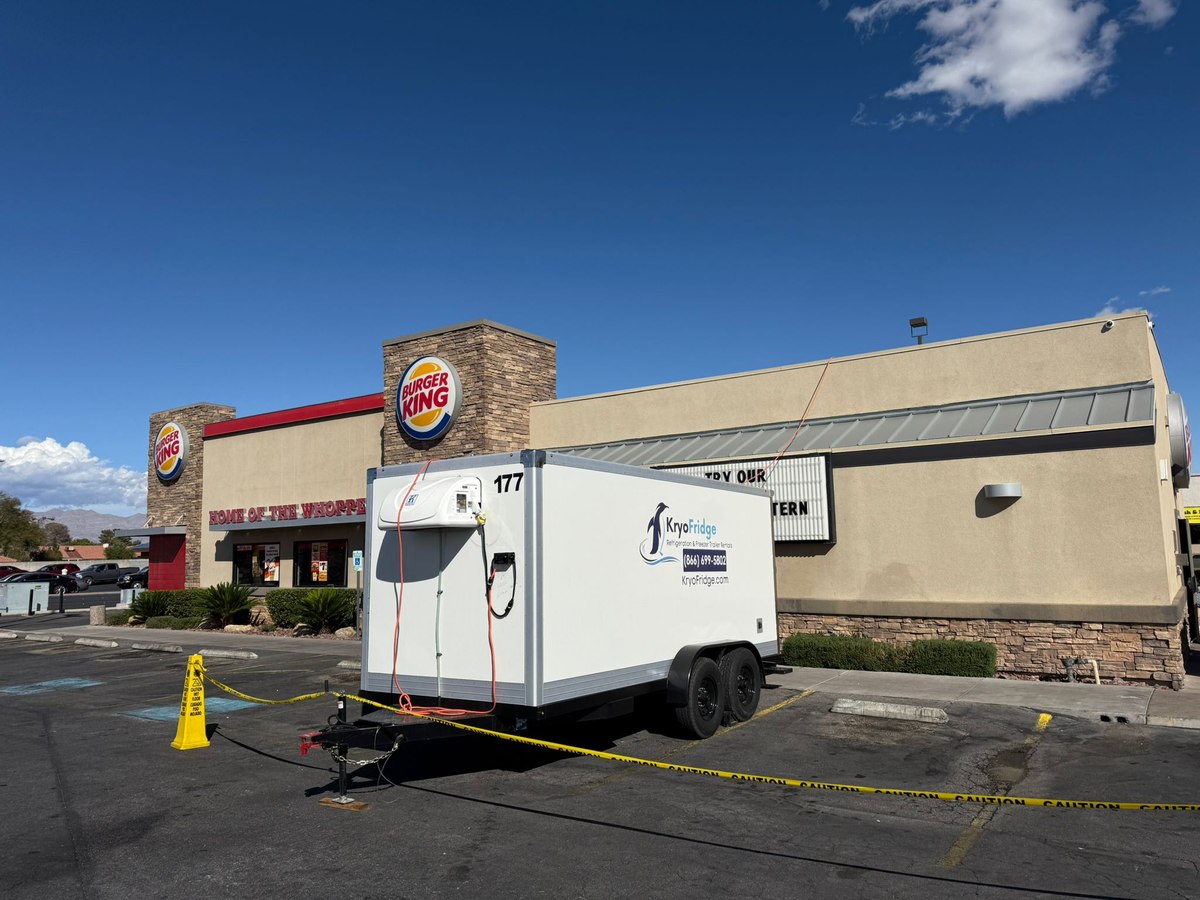 Burger King
Holding frozen stock during kitchen remodels and equipment swaps.
Freezer hold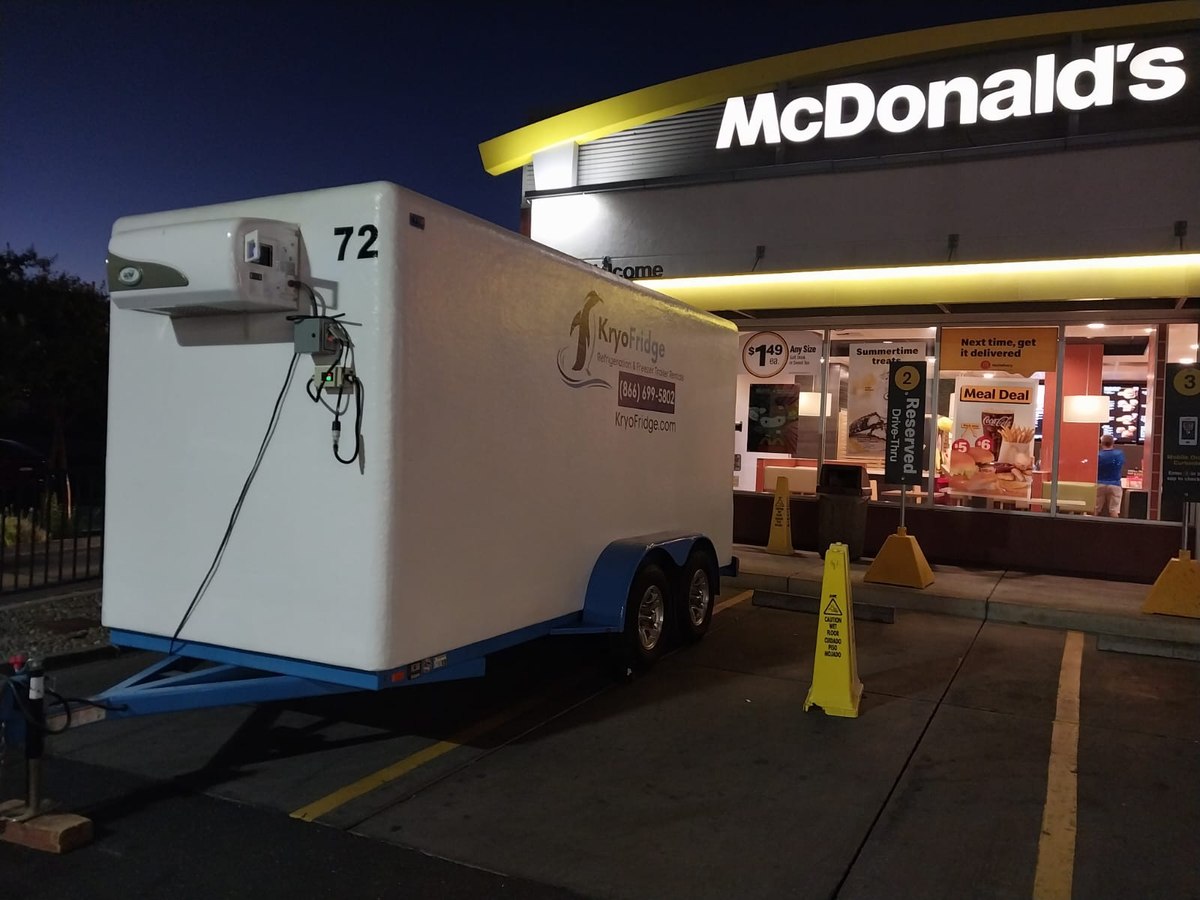 McDonald's
Extra frozen holding parked on site during remodels and equipment swaps.
Remodel support"We picked up a second grocery account and ran out of freezer room in about a week. The 6x12 fit behind our kitchen and held every dozen we made until the truck came. Easy people to deal with."
"Our canning run landed on the same week as a festival order, and the cooler was packed to the ceiling. Kegs went into the trailer and stayed cold all week."
"Our cooler compressor failed on a Saturday. They had a small cooler trailer holding steady behind the store that afternoon, and our pharmacist checked it with our own thermometer every few hours. We did not lose any product."
Around Arvada, the 16-foot flagship is the usual pick for a grocer or a distributor, while the 6x8 slides in behind an Olde Town restaurant where alley space is short.
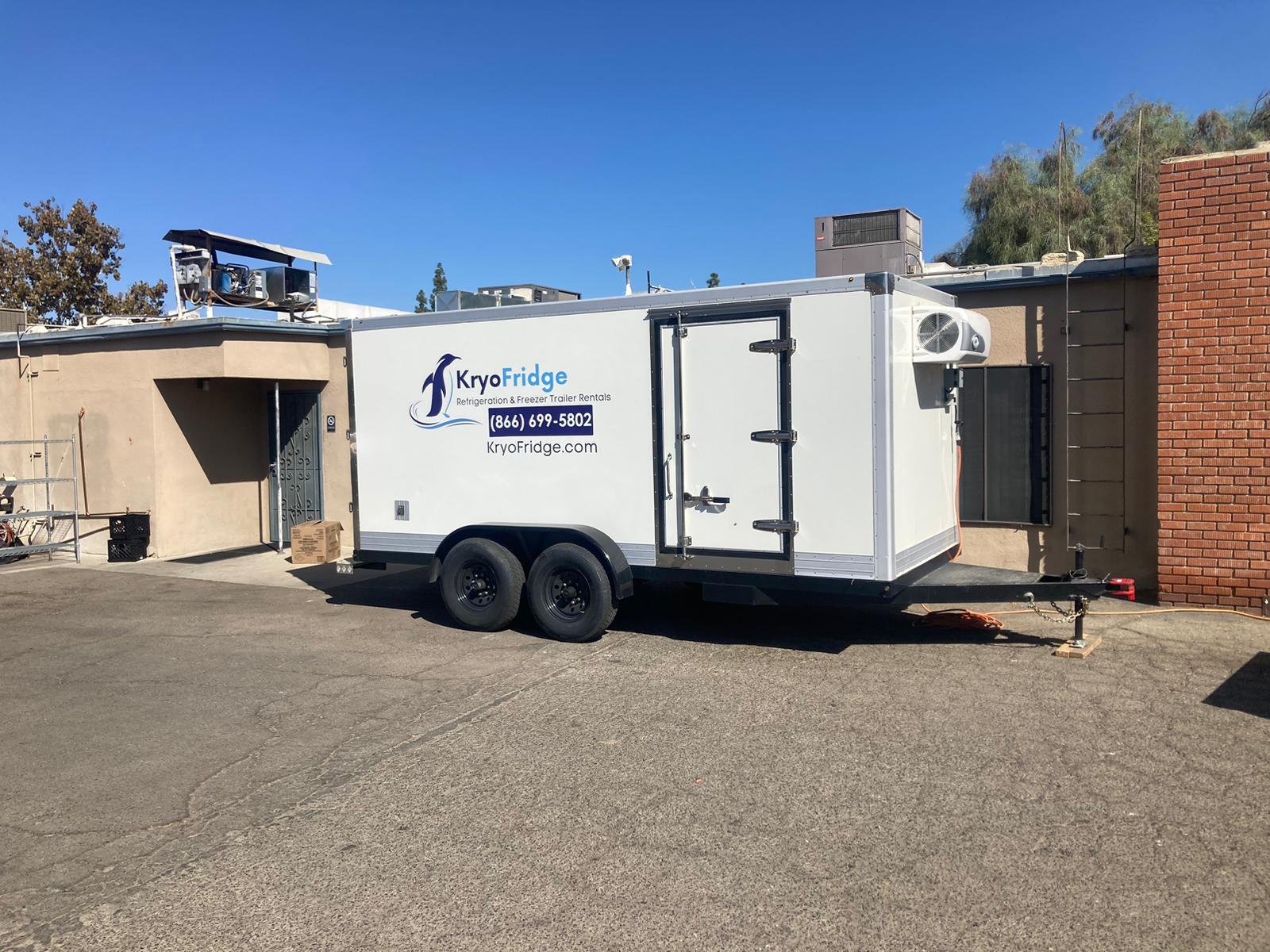
The 16' Utility is the trailer our crews reach for when the job is serious. A 16-foot insulated box on a tandem axle holds anything from -10°F deep-freeze to 50°F fresh-cold on one precise digital set-point, with NSF-approved surfaces throughout. Rear double doors take pallet loads straight off a dock, and the side utility door lets a cook grab one tray without opening the whole box to the heat.
We own every one of these units, so the trailer that shows up is fueled, pre-cooled, and maintained in-house. It runs on a dedicated 120V, 20-amp circuit or a generator we supply, and it holds its number through triple-digit afternoons. When a walk-in dies or a harvest runs long, this is the box that carries the load.
| Spec | What you get |
|---|---|
| Temperature range | Roughly -10°F deep-freeze up to about 50°F fresh-cold |
| Mode | Dual-purpose: freezer or refrigerator on one precise digital set-point |
| Power | A dedicated 120V, 20-amp circuit within about 100 feet, or a generator we supply |
| Food safety | NSF-approved for direct food contact, food-safe surfaces, proper drainage |
| Footprints | 6x8, 6x12, and 6x16, from a tight retail lot to distribution scale |
| Backing | Owned in-house, fully licensed and insured, with 24/7 emergency dispatch |
Each unit holds a precise digital set-point and runs on a dedicated 120V/20A circuit or a generator. The trailers are not wired for 208 to 240V building service, so we confirm your hookup before the truck rolls.
We deliver across all of Arvada, from Olde Town and the G Line stations to the newer neighborhoods near Candelas, and out to Wheat Ridge, Golden, Westminster and the rest of the northwest metro. KryoFridge delivers nationwide, and the same trailer lineup goes out for Tempe freezer trailer rentals and Santa Clarita portable cold storage.
Neighborhoods and towns we cover include Olde Town Arvada, Arvada Ridge, 60th and Sheridan, Ralston Fields, Village Commons, City Center, Jefferson Center, Candelas, Leyden Rock, Westwoods, Lake Arbor, Indian Tree, Ralston Valley, Pomona, Arvada West, Wheat Ridge, Golden, Westminster, Broomfield, Lakewood, Federal Heights, Northwest Denver.
From the busiest commercial corridors to the quietest side streets, these are the Arvada area communities we serve every week.
Main Street restaurants, breweries and the winery work out of older buildings with small walk-ins and tight alleys. A 6x8 or 6x12 is usually the right fit, and street parking near the G Line station fills early on event nights.
This renewal area along Ralston Creek has the most new projects in the city, including the Creekside Village homes planned through 2028. New restaurant and retail tenants often need cold space before their own kitchen equipment is running.
The Hilton Garden Inn project in Village Commons points to more hotel kitchen work along Kipling Street. Banquet and conference weeks can be too much for a hotel walk-in, and a trailer at the service entrance takes the overflow.
Grocers, pharmacies and chain restaurants line Wadsworth from the Arvada Center north. Most jobs here are short backup holds while a cooler or case gets fixed.
The west side is mostly homes, with Arvada West High School and newer neighborhoods like Candelas near Rocky Flats. The typical need here is school kitchen backup or a grocery outage after a wind storm.
This redevelopment area at the northwest edge has room for light commercial and food production space. Larger lots make it easy to park a 16-foot trailer with room to back a truck up to it.
One call sizes the trailer, sets the delivery window, and locks your quote for Arvada. Call now, or send the quick quote request and we will call you.
Three kinds of Arvada businesses get the most out of extra cold space. Each one uses the trailer a little differently, and the setup changes with it.
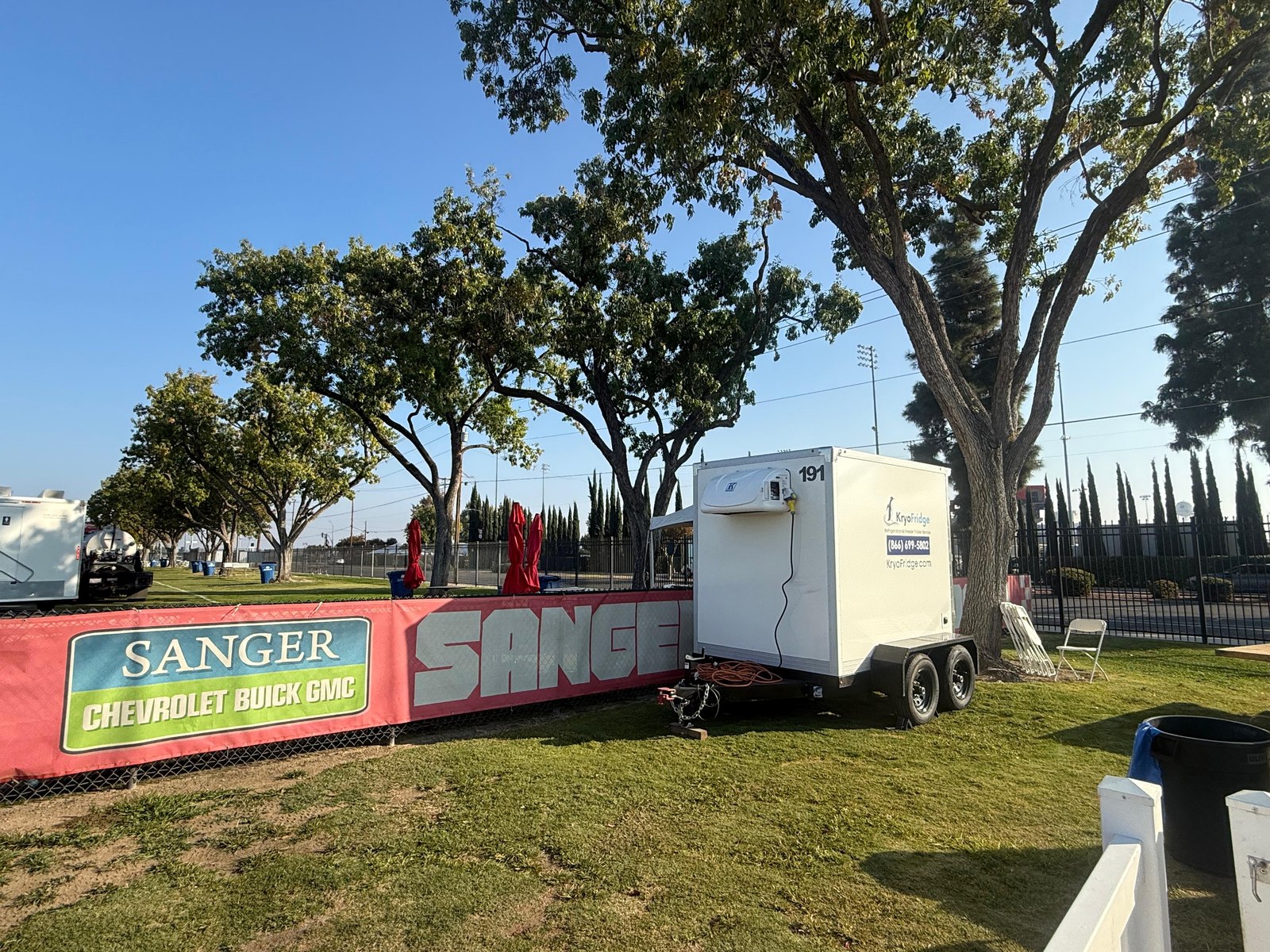
When a walk-in quits in the middle of service, the fastest fix is to move product into a trailer and let the repair happen without a deadline hanging over it. A 6x8 fits most alley spots behind Main Street.
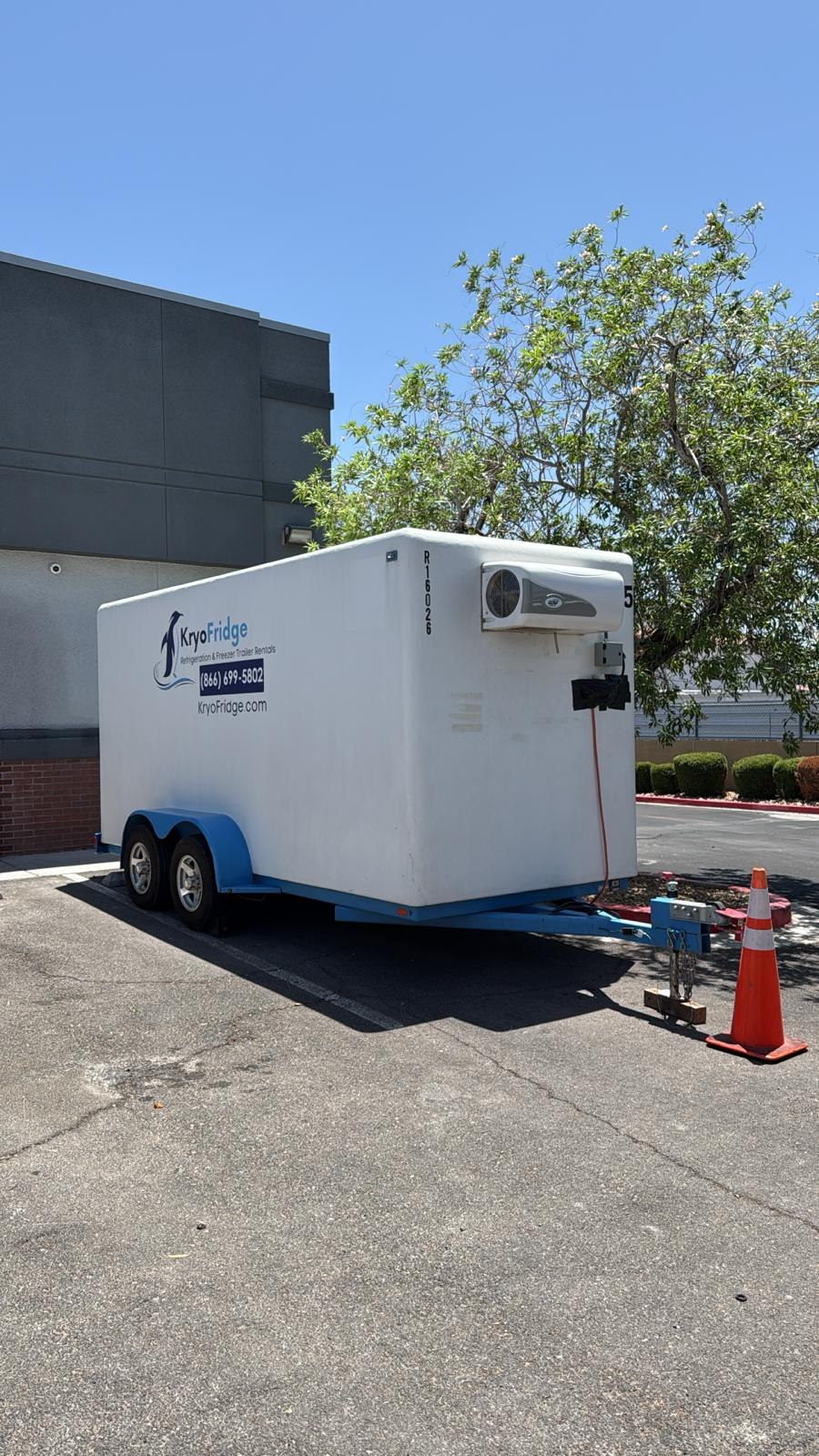
Caterers and food trucks at Apex Park and Recreation District events and the city's Food Trucks and Fireworks night need cold holding for the whole day. A cooler trailer on site beats running back and forth to a commissary kitchen.
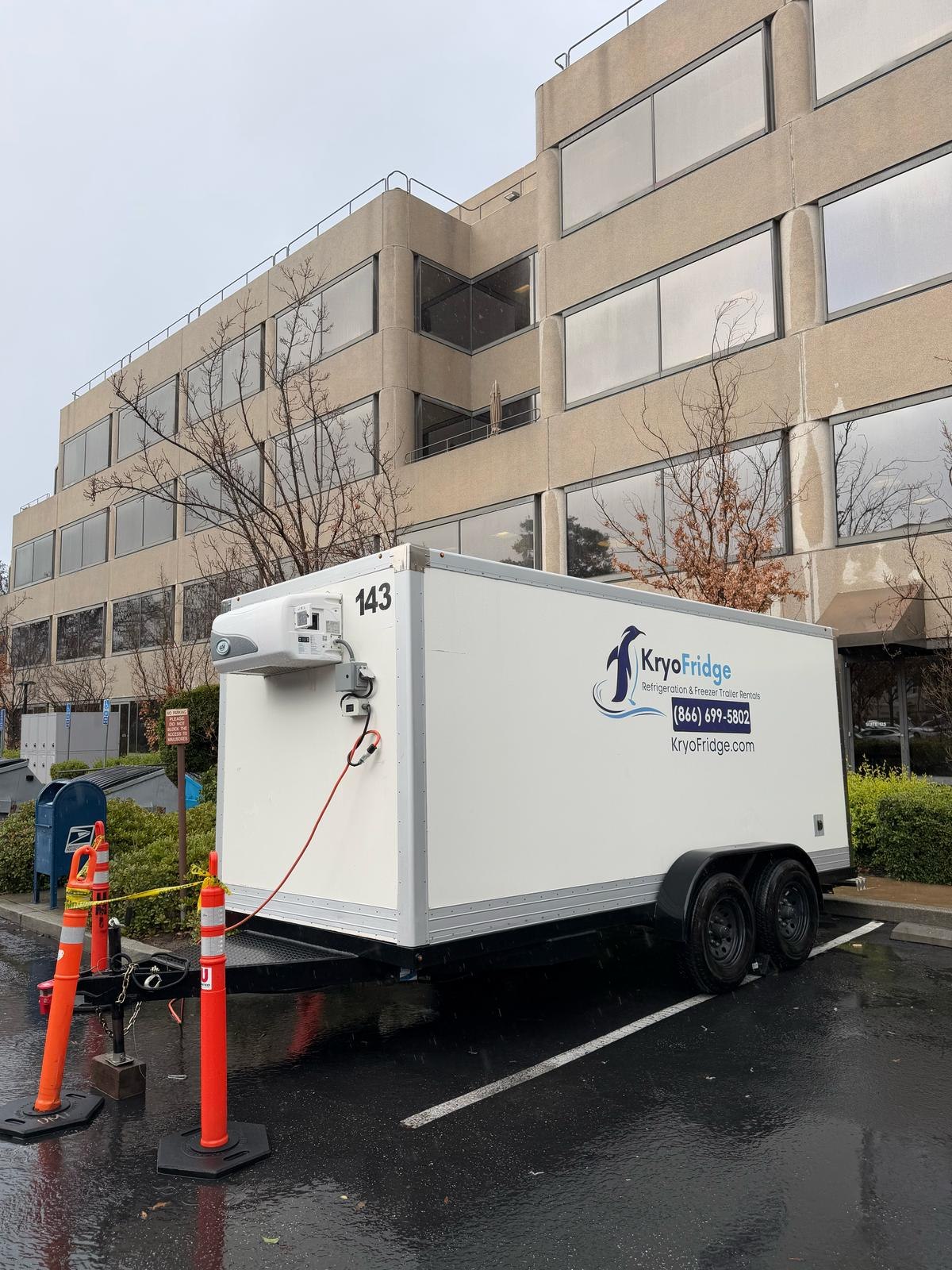
Jeffco Public Schools kitchens at Arvada High, Arvada West, Pomona and Ralston Valley feed a lot of students from walk-ins that cannot be down for long. A trailer holds the week's food order if a cooler fails mid-week.
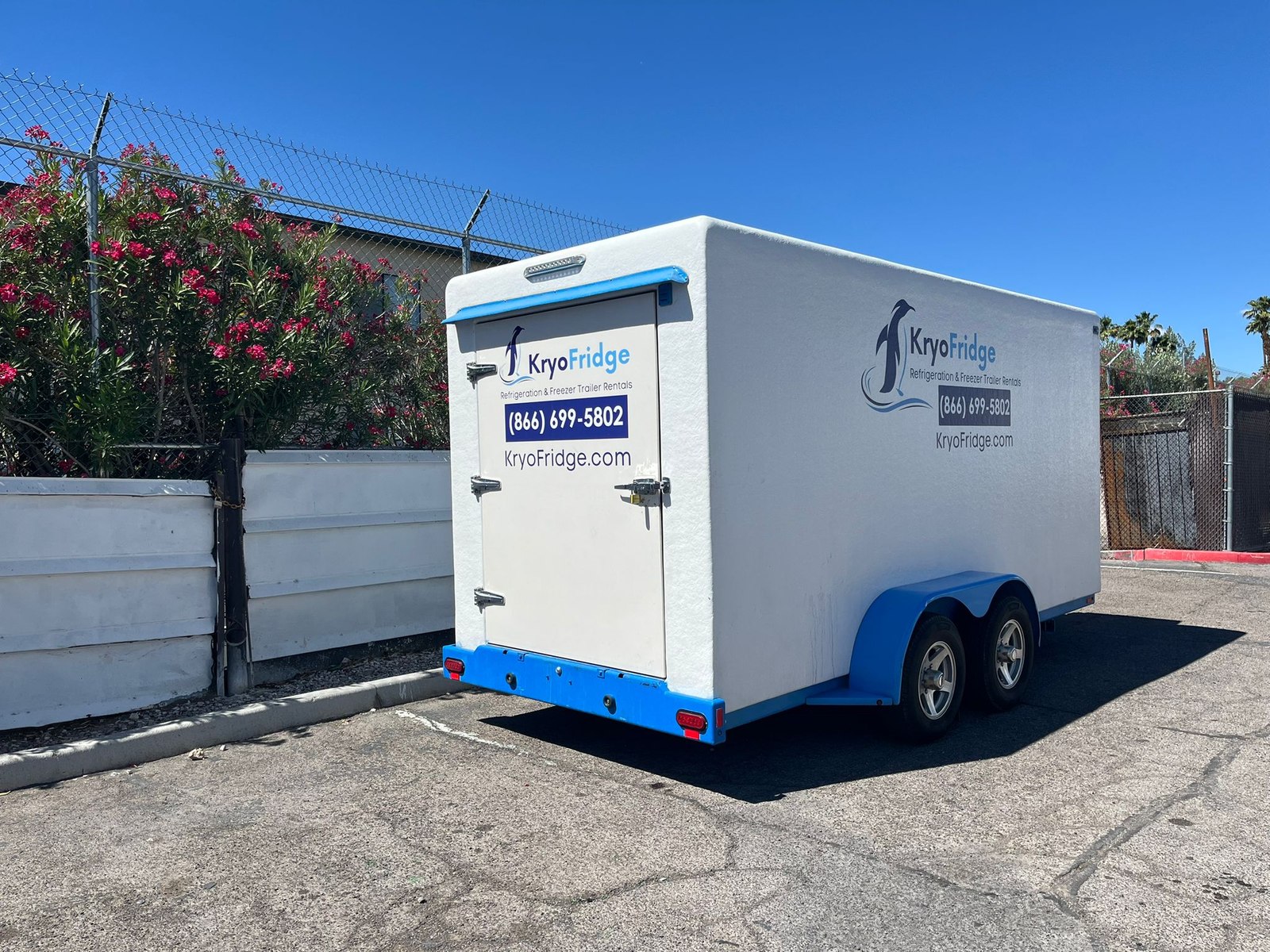
Grocers waiting on a dairy or frozen case repair need somewhere cold for milk, yogurt and ice cream for a few days. A 16-foot trailer at the back dock keeps the aisles stocked while the tech works.
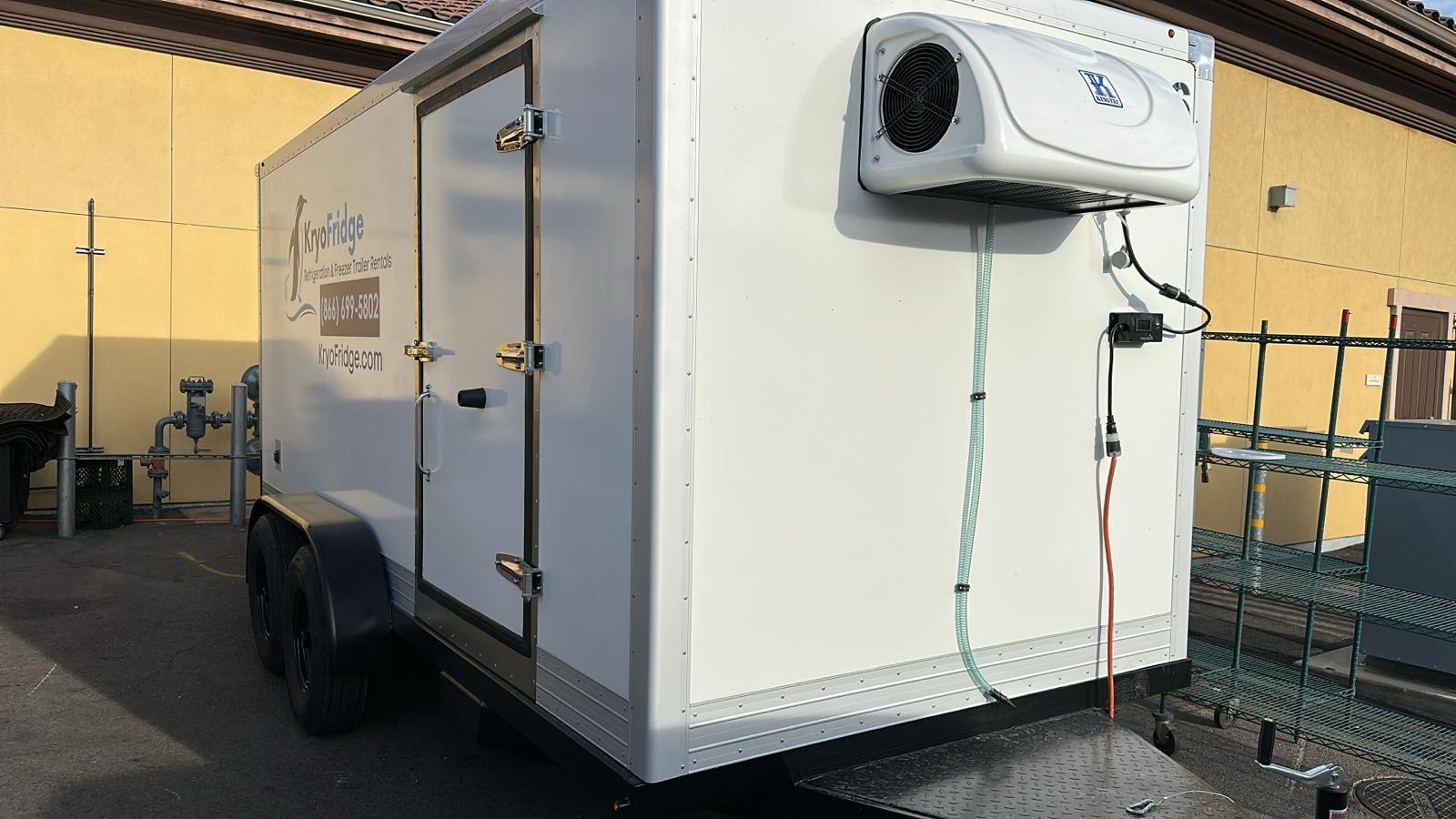
When a storm or a wildfire forces evacuations, relief groups need cold space for donated meals and perishables near shelters. A freezer trailer on a generator can sit at a church or school lot for as long as the response lasts.
What ties these together is the clock. Nobody budgets a freezer trailer into next quarter. They reach for one the hour a compressor quits, or the evening before a party when the stack of rented ice chests suddenly looks laughably undersized. Since our units sit staged around Arvada instead of a couple counties down the freeway, "can I get it today" is an ordinary ask here, not a stretch.
Add it up the way an owner in Arvada has to. One restaurant walk-in routinely sits on a small fortune in proteins, dairy, and prepped product. Scale that to a grocery rack or a warehouse freezer bay and the exposure balloons. Now knock the power or the compressor out on a triple-digit afternoon, and that whole inventory is in jeopardy inside a few hours. Then stack on the sales you lose while the line sits dark and the wages you burn paying staff to triage what can still be saved.
Hold a pre-staged trailer up against that risk and it reads like cheap insurance, a fixed, predictable expense parked in front of a loss with no ceiling. That is exactly why the businesses that got stung once tape our number by the phone. There is never a second scramble, because the next time they dial before the product has a chance to warm. Owning every trailer ourselves means we can scale the answer to fit. A single compact box suits a corner cafe. A clustered setup covers a warehouse floor. Either one is booked with a single call.
Arvada sits in the stretch of the Front Range that people call Hail Alley, where summer afternoon storms can drop ice hard enough to wreck the rooftop cooling units on restaurants and grocery stores. A damaged rooftop unit can take days to replace. Every cooler tied to it stays warm until the part arrives and the tech can get on the roof.
Wind is the other threat. The Marshall Fire in neighboring Boulder County burned from December 30, 2021 into New Year's Day, pushed by extreme winds rather than summer heat, and it knocked out power and water systems across a wide area. High-wind days along the Front Range can cut power to whole neighborhoods, and a walk-in without power starts warming within hours.
Winter adds cold snaps and heavy snow that can take power lines down for a day or more. Freezing weather outside does not save a walk-in, because doors still get opened and product still warms once the compressor stops. A trailer on a generator keeps frozen stock hard while the crews get the lines back up.
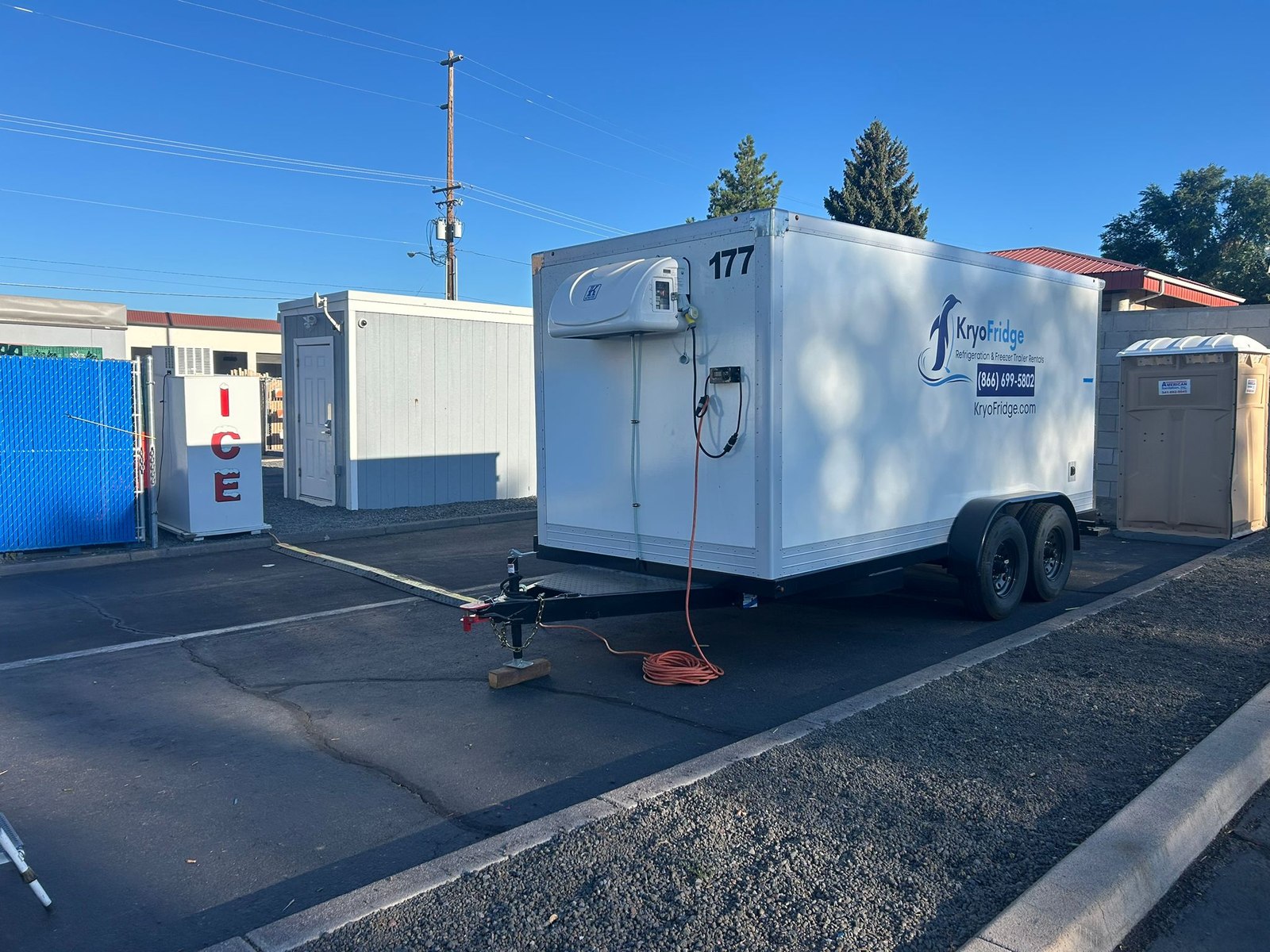
Arvada has a long food history. The city was once called the Celery Capital of the World for the crop grown along Clear Creek and Ralston Creek, and Colorado's first supermarket opened here in 1947 at West 57th Avenue and Webster Street. Today the food makers are smaller and more spread out, from commercial kitchens along Kipling Street to the breweries and the winery in Olde Town Arvada.
Small producers tend to hit the same wall. A small family food business lands a bigger grocery order, and the walk-in that handled normal weeks is suddenly full. A walk-in freezer trailer parked by the back door holds finished product at a hard freeze while the next batch gets made, so nothing sits out waiting for space.
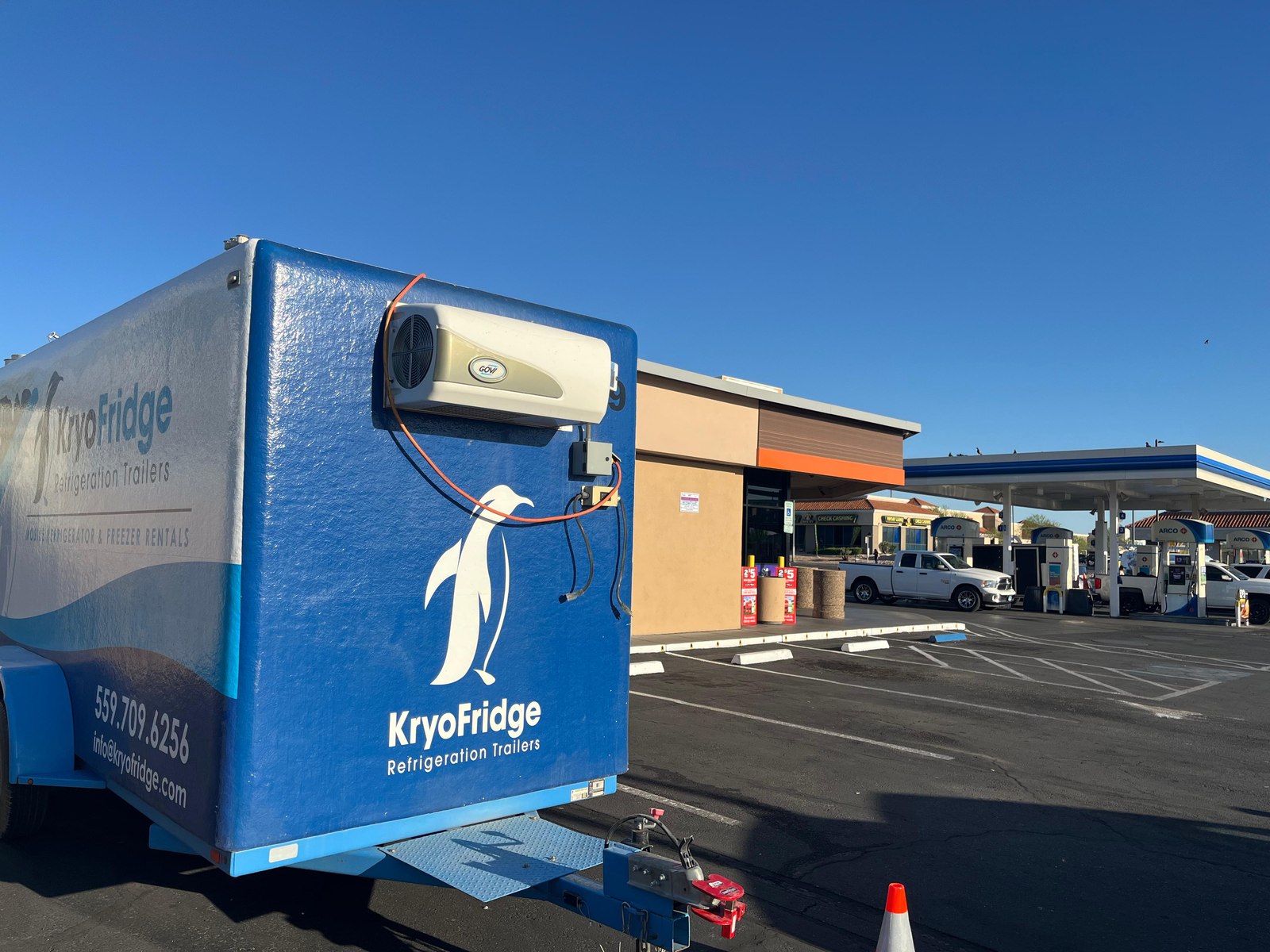
Breweries have their own version of that problem. A canning run or a festival order can fill a taproom cooler fast, and kegs and packaged beer need to stay cold until pickup. Set in the mid 30s, the trailer works as an overflow cold room for as long as the order takes. With Coors Brewery a short drive away in Golden, beverage work is a steady part of cold storage demand on this side of the metro.
Processing work also includes meat. Fall brings a run of deer and elk that small processors have to hold until it is cut and wrapped, and a portable freezer trailer gives them room for the busy weeks without buying a second walk-in they only need for a month. We size the trailer around how many boxes you expect at the peak of the season, not the average week.
Every KryoFridge unit is dual-purpose. One digital set-point takes it anywhere from about -10°F for hard-frozen stock up to about 50°F for produce and drinks, so the same trailer can switch jobs from one rental to the next. The interior surfaces are NSF-approved for food contact, which matters the moment a health inspector opens the door.
The lineup comes in three footprints. The 6x8 fits a small kitchen or a pharmacy back lot, and the 6x12 suits a busy restaurant or a caterer with a big weekend. The 6x16 Utility is our signature trailer for distributors and large holds. The 16-foot box has rear double doors for pallet loads plus a side door, so staff can grab one case without opening the whole trailer to warm air. That same flagship is what goes out for our St. George freezer trailer rentals in Utah, and the setup is identical here.
Power comes from one of two sources. You can plug into a dedicated 120-volt, 20-amp circuit within about 100 feet of the trailer, or we bring a generator. The units are not built for 208 or 240-volt building service, so we confirm the outlet before delivery instead of finding out on the lot.
Arvada sits right where Interstate 76 begins at Interstate 70, which puts a lot of refrigerated freight within a few miles of town. Produce and seafood both arrive by truck on tight windows, and a receiving dock that is already full has nowhere to put an early load. A cold storage trailer at the dock gives you a place to break down pallets and hold them at the right temperature until shelf or cooler space opens up.
Colorado produce has a real season. Palisade peaches come over the mountains in late summer, Olathe sweet corn arrives around the same time, and Pueblo peppers show up at farm stands along the Front Range into fall. Grocers on Wadsworth Boulevard and the independent markets feel that rush all at once, and extra cold space set in the mid 30s keeps fruit and greens out of a warm back room.
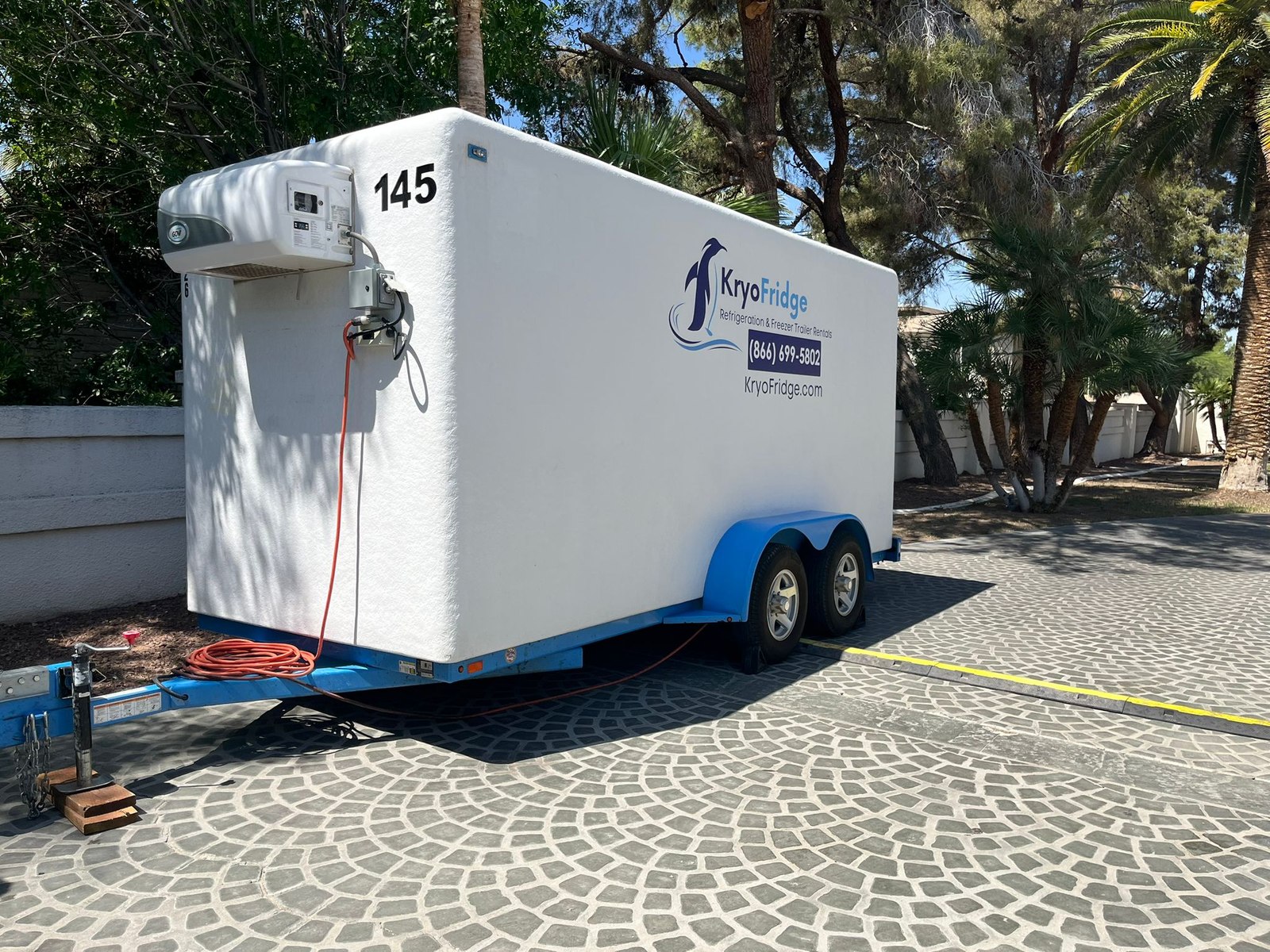
Seafood is less forgiving. Colorado is a long way from any coast, so fish arrives already on the clock, and the Lent season brings Friday fish orders that can swamp a normal walk-in. We set the trailer just above freezing for fresh fish on ice, or all the way down to a hard freeze for frozen shrimp and fish, and the digital set-point holds that number on its own.
Distribution loads usually mean the 16-foot trailer. Its rear double doors open wide enough for a pallet jack at a dock, and the side door lets a worker pull a single case without dumping cold air out the back. One thing to plan for is that each trailer holds one temperature, so frozen seafood and fresh greens need two trailers set to different numbers. The same 16-foot setup is available through our Tulare cold storage trailer rentals for Central Valley harvest work.
Retail pharmacies line Wadsworth Boulevard and Kipling Street, and clinics and senior living communities are spread across Arvada's older neighborhoods. Each one keeps a mix of refrigerated stock, from certain medications to nutrition drinks, in coolers sized for a normal week. A pharmacy cooler that dies on a Saturday puts that whole shelf at risk until a repair tech can get there.
A refrigerated trailer set in the high 30s gives you a clean, food-grade cold room to move product into while the repair happens. It also helps during a store reset, an inventory count or a move to a new location, when shelving is torn apart for a few days and cold items need a place to wait. The set-point is digital and precise, and the unit holds it through a hot afternoon on an open parking lot.
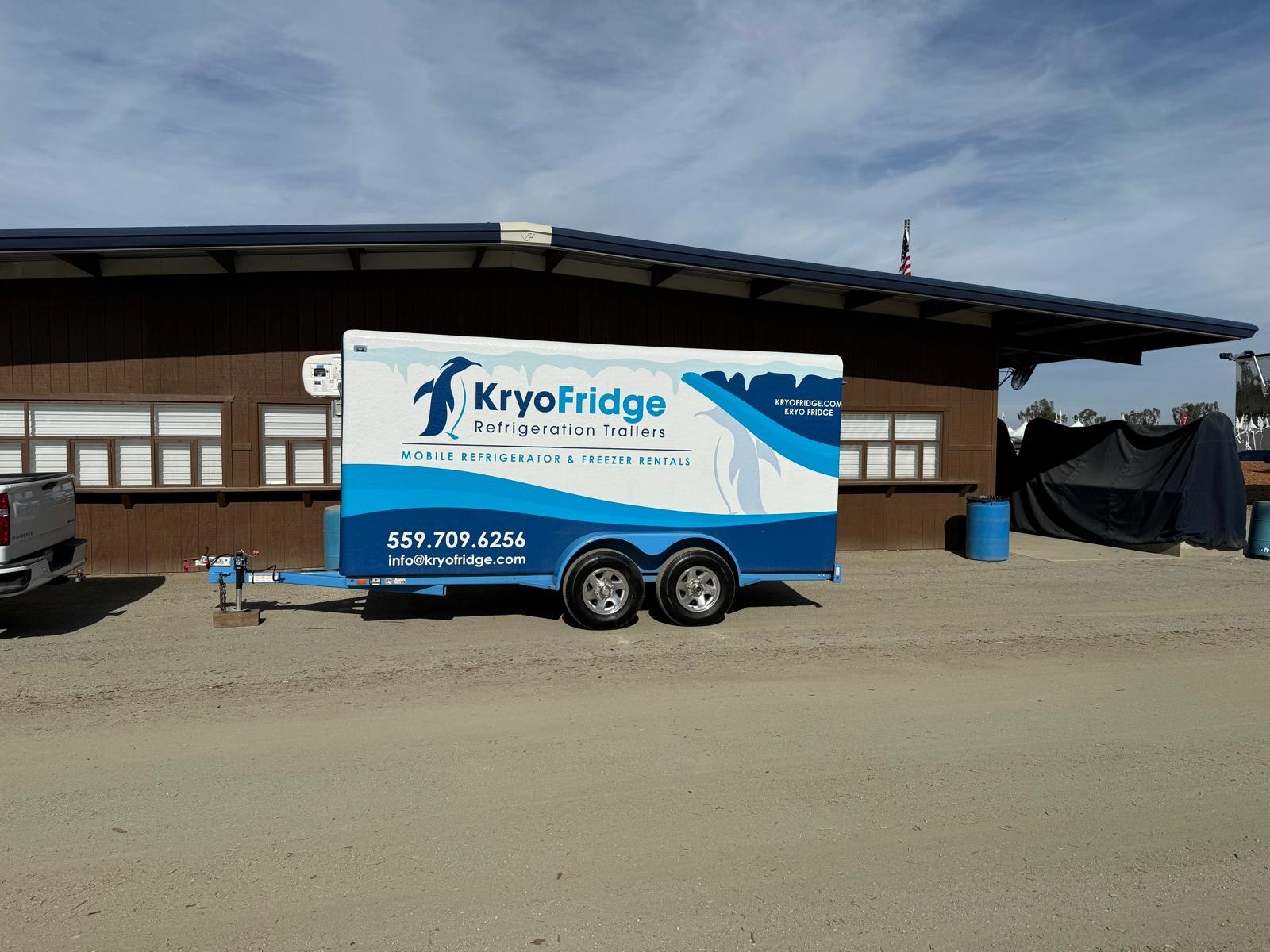
It helps to be clear about what the trailer does and does not do. KryoFridge does not run a temperature monitoring service, so for anything with a strict label range, bring your own temperature recorder and have your pharmacist check it on a set schedule. Vaccines have their own storage rules that call for purpose-built medical units, and those rules come before any rental.
Most pharmacy holds are short and small, so the 6x8 is the common pick. It fits in a couple of parking spaces behind a store and can sit close to the back door, so staff are not carrying product across the lot. A clinic or a senior living kitchen that also holds food trays may step up to the 6x12 so medical and dietary stock are not stacked on the same shelf.
"Cold" is not one number. Different product stays safe inside different temperature windows, which is the entire reason a precise digital set-point matters, and in the middle of a heat wave in Arvada, a load that slips out of its window is a load you write off. Use the chart below as the reference our customers lean on when they size a rental.
| Product | Target holding band | Trailer mode |
|---|---|---|
| Ice cream and frozen desserts | -10°F to 0°F | Deep freeze |
| Frozen proteins, seafood, prepared meals | 0°F or below | Freezer |
| Fresh meat and poultry (short hold) | 28°F to 32°F | Refrigerated |
| Dairy, deli, packaged produce | 34°F to 38°F | Refrigerated |
| Beverages, florals, catering trays | 38°F to 45°F | Refrigerated |
One figure matters more than everything in that chart, and it is not listed there: 40°F. Food-safety guidance treats the band between 40°F and 140°F as the zone where bacteria thrive, and the clock on perishable product starts ticking the moment it crosses 40 on the way up. Roughly four cumulative hours above that line and most refrigerated inventory is no longer safe to serve. Picture that countdown running on a 100-degree afternoon in Arvada with the walk-in dark, and the urgency of a quick trailer drop stops being abstract.
Tell us the single coldest item you are holding when you call, and we dial the trailer to that. One unit carries a straight freezer load with no fuss. But when your list mixes deep-freeze desserts with fresh-cold produce for the same remodel or event, we will usually point you toward a split setup or a second box so neither side of the load has to settle for the wrong temperature.
Powering one of our trailers is refreshingly simple, and there are precisely two ways to do it. Either you have a dedicated 120-volt, 20-amp circuit reachable within roughly 100 feet of the parking spot, or we bring a generator. What the units will not accept is standard 208 to 240V building service, so a quick question about your outlet before dispatch heads off any surprise on delivery day.
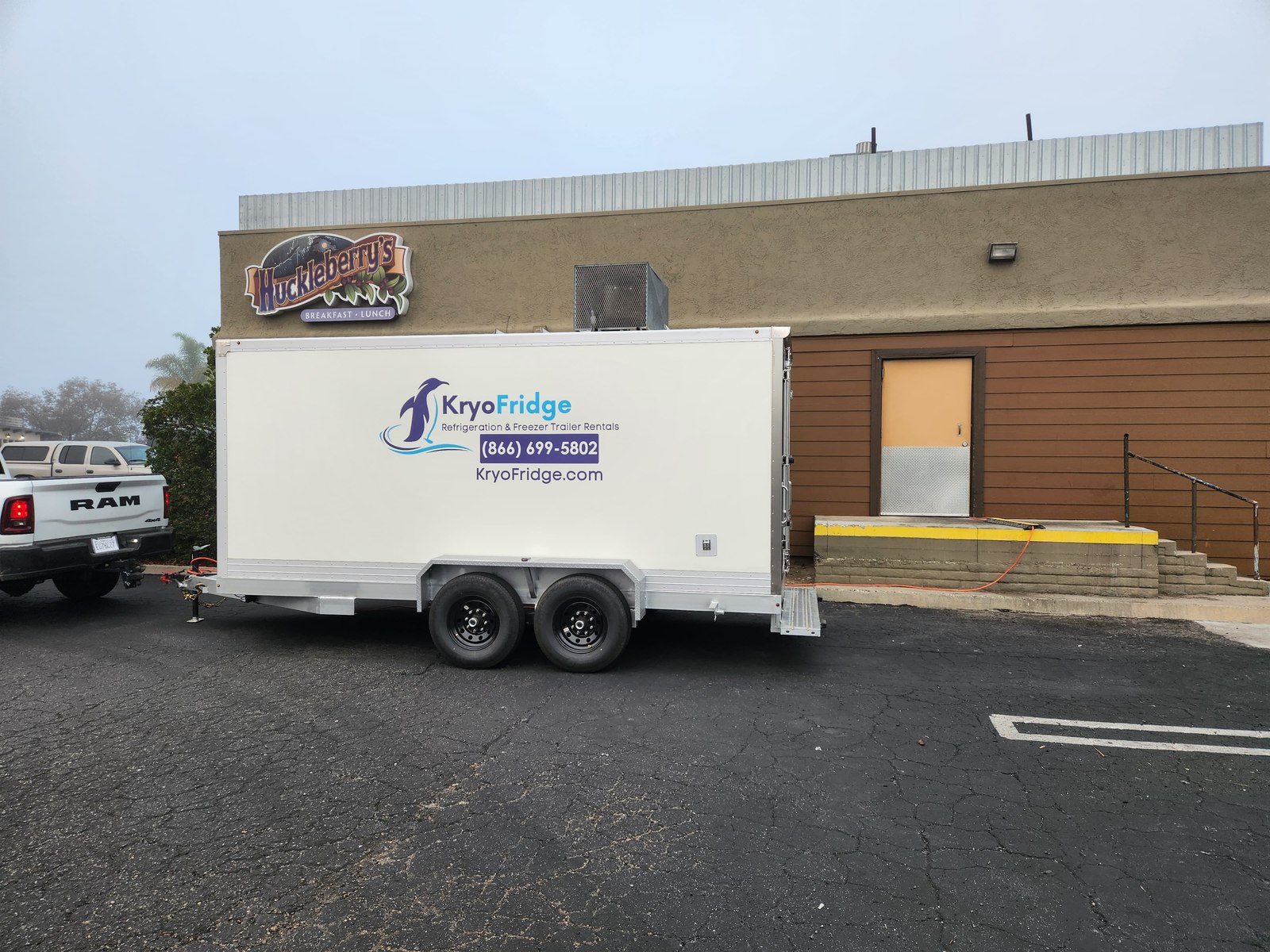
On placement, all the unit really asks for is a fairly flat patch with enough room for the delivery truck to maneuver it in and set it straight, plus either a power source in reach or space for a generator. We lock down the exact drop point before dispatch, and our drivers know the Arvada layout cold, so the delivery is one clean trip instead of a guessing game on the property.
A typical setup for a caterer working a concert night at the Arvada Center looks like this: a 6x12 trailer running in cooler mode goes into the back lot on the morning of the show. Trays, salads and drinks move in as they are prepped, and staff pull from the side door through intermission. The trailer stays plugged into a dedicated outlet or a generator until the last load is out, and pickup happens the next morning.
A typical setup for a neighborhood grocer during a winter power outage looks like this: a 16-foot trailer on a generator is set to a hard freeze and parked at the back door. Staff move ice cream and frozen meat first, since those lose quality fastest. If the store also needs dairy space, a second unit set as a cooler sits beside the first. Once power is back and the store's own cases are cold again, product moves back inside and the trailers leave.
A typical setup for a food pantry's holiday drive looks like this: a 6x16 trailer arrives in early November set to about 0°F and stays through the end of December. Volunteers log donated turkeys and frozen goods as they come in, and the side door keeps the cold in while they add boxes one at a time. On distribution days the rear doors open for a quick load-out to cars in the lot.
Early drops for Olde Town event nights. Main Street and the blocks around the Olde Town G Line station fill up fast on event nights. We schedule drops for early morning and pick a spot that keeps the trailer clear of busy sidewalks.
On a bad day, booking should be the part that does not add stress. Four steps, an upfront number, and a single person who owns the whole thing.
Tell us whether it is freezer or fridge product, a ballpark volume, and your rough window. That is enough for us to call the right size.
We pair you with a unit, confirm whether you have a dedicated circuit or need a generator, and pin the exact drop point so the truck makes one trip.
We arrive on your schedule, about 45 minutes for a true emergency, set the trailer, energize it, and let it drive down to your number.
It holds the set-point for your entire term while our line stays live the whole way through. Wrap up, and we swing back for the pickup.
Most of Arvada falls under Jefferson County Public Health for food safety, while the eastern slice of the city that sits in Adams County falls under the Adams County Health Department. Both enforce Colorado's retail food rules, and both expect cold food held at 41°F or colder. A rented trailer is treated as part of your cold storage, so it gets the same look as your walk-in during an inspection.
Food vendors at a temporary event, such as a city festival or an Apex Park and Recreation District event, usually need a temporary food permit from the county on top of the event's own vendor approval. Check the timing with the county early, since permits for a weekend event are often due weeks ahead. A trailer with NSF-approved surfaces and a digital set-point makes that part of the inspection straightforward.
The City of Arvada requires a business license for commercial work inside city limits, and a trailer placed on a street, sidewalk or public parking area may need a right-of-way permit. A trailer that stays on your own private lot usually needs nothing extra from the city. If you are unsure, the city offices on Ralston Road can confirm before delivery day, and we are glad to share trailer dimensions for the application.
One caveat we always state plainly: we supply the food-safe, temperature-holding hardware itself, but we are not a temperature-logging or alarm-monitoring service. If your program requires continuous written records, line that vendor up on your own.
Our signature 16 foot Utility series leads the fleet. It is the trailer we send on most jobs, and crews like it for the side utility access door. We build three footprints in all, so a single kitchen holding overflow stock has a fit and so does a distribution floor in a disaster. Every unit is dual purpose by design: one adjustable system swings between freezer and refrigerator on a digital set point. Each trailer runs on a dedicated circuit or on a generator.
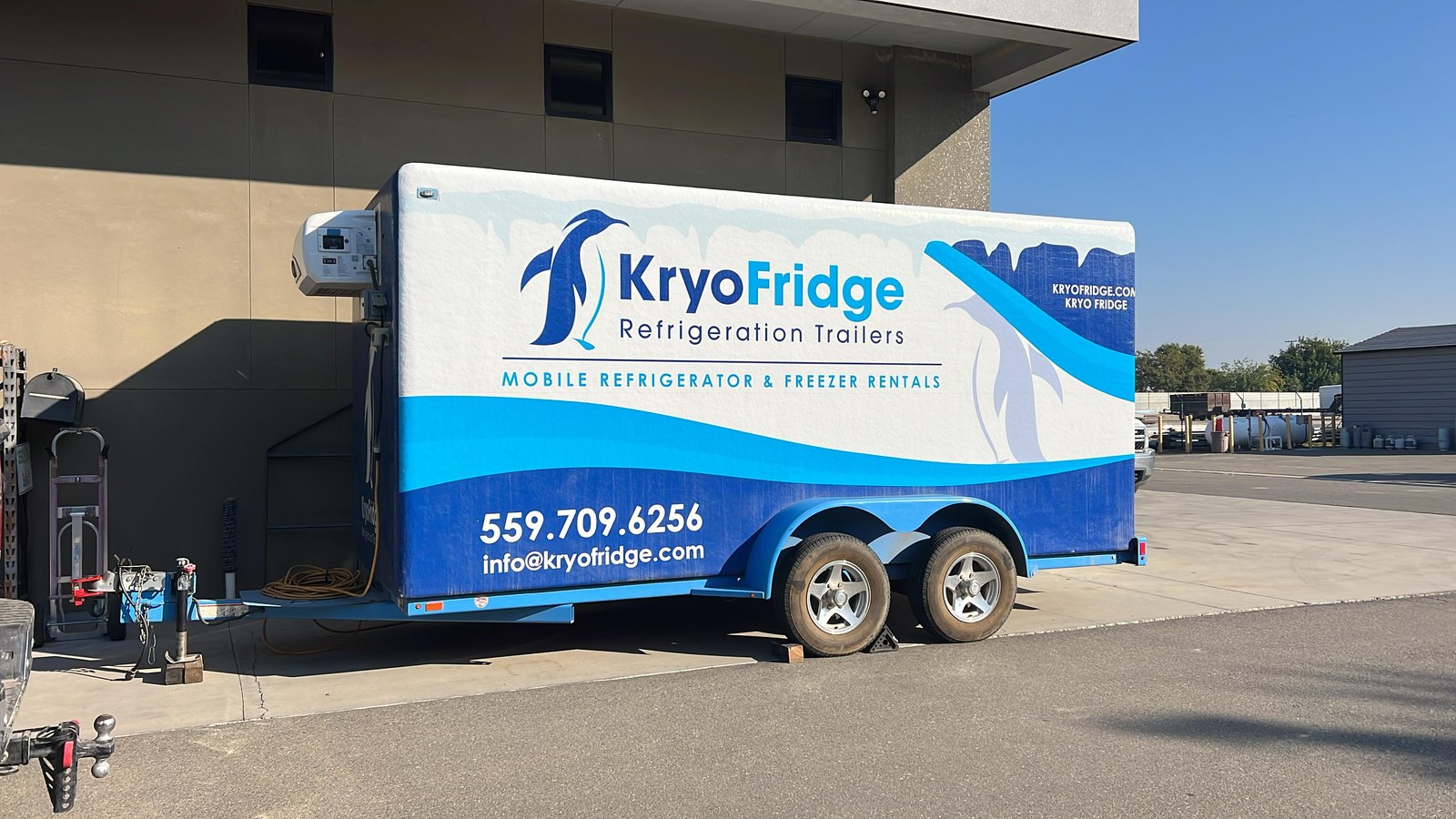
| Trailer | Best for | Temp range |
|---|---|---|
| 6x16 Utility ⭐ | Our signature series: distribution, large events, disaster response, side utility door | Heavy-duty reefer |
| 6x12 | Grocers, caterers, mid-size events | Deep-freeze capable |
| 6x8 | Tight lots, small kitchens, short overflow | -10°F to 50°F |
All three sizes switch between freezer and cooler mode, so the choice comes down to footprint and how much product you need to hold.
It's the unit to grab when square footage is the whole problem. It slips into the pinched service yards and cramped back-of-house corners that a larger box cannot even swing into. One cafe or small-market walk-in goes down, and this is almost always enough cold to cover it, plus the simplest unit to set in a small space.
Deep-freeze rated, and far and away the size people ask for most. It lands right in the middle: roomy enough for a multi-day catering job or a restaurant that needs true walk-in-equivalent room while the kitchen is torn up. Roomy enough that nobody is playing Tetris with shelves, yet still small enough to set in most commercial back lots without a site survey.
Our biggest footprint, paired with a heavy-duty reefer plant engineered to keep deep-freeze locked in even when the ambient air is merciless. Reach for it when a warehouse bay drops, when a large festival needs an anchor, or when a relief operation is carrying its own cold chain.
Not sure which size fits? Most customers land on the 16 foot Utility, and we will tell you honestly if a smaller footprint covers your job. Tell us roughly what you are storing and for how long, and we will spec it for you.
The questions that surface once the basics are settled. Tap any topic to open it.
The pop-up walk-in cooler. Cheap to rent and easy to set up, but it chills, it does not freeze, and it draws every watt it needs from your building while depending on a calm ambient temperature around it. The second your building loses power, your cooler loses it too.
The refrigerated box truck. Designed to haul product on the interstate, not to sit in a lot and babysit it. Parked, it burns fuel all day, broadcasts compressor noise across a storefront or an event lawn, and pins down a tractor plus a driver you probably do not need.
The freezer trailer we deliver. Built from the ground up to be dropped on a pad and to defend a temperature for as long as the job runs. It freezes deep, carries NSF approval, locks, stays quiet near guests, and lives on nothing more than one dedicated circuit or a generator.
Even a rented box has to satisfy the county environmental health office that licenses and inspects every food facility. Show an inspector a unit that cannot document its temperature or was not built for food contact, and they have the authority to halt service immediately.
That is a bar each of our trailers clears: NSF-approved throughout, food-safe interior surfaces, proper drainage, and a digital controller that puts the set-point in plain view. We supply the food-safe, temperature-holding hardware itself, but we are not a temperature-logging or alarm-monitoring service.
For a typical kitchen or market, one box does the job. Distribution floors, big fairs, and full-scale disaster response routinely need more, and because the fleet is ours, we can cluster several units and bring them online in waves as the work expands. Match the cold capacity to the operation rather than make the operation squeeze itself into one box.
The clock is yours to set. Some jobs are a handful of days for an emergency or a single event. Others stretch across weeks or months for a remodel or a seasonal swell, and a few become standing contracts for businesses that want capacity parked on standby. Name your window and you will get a clean quote, no penalty for an honest "not sure yet."
Building permanent cold storage is a capital project in every sense: you hire a refrigeration contractor, schedule the electrical, pull a building permit, and wait weeks before a single pallet goes inside. A rental turns that equation on its head. You bring in precisely the cold you need, for precisely the stretch you need it, and the trailer is holding temperature within days, not months, with the commitment ending the moment your need is over.
Three engineered elements carry the load. Thick insulated panels and tightly gasketed doors lock the sun outside and the cold inside. A self-contained reefer condensing system specified with surplus capacity keeps stripping heat out of the box even when the air outside is brutal. And a digital thermostat locks onto your chosen number and cycles the compressor to hold the line. Run those three together and a trailer baking on open asphalt behaves like one tucked in a cool warehouse. That is also why power is the first thing we ask about: the design delivers its safety margin only on steady, uninterrupted power.
"Peach season hits us all at once. Having a cold trailer at the dock meant we could take the full load instead of turning half of it away."
"The walk-in quit on a Tuesday morning before lunch prep. Dispatch picked up on the second ring, and the trailer was plugged in behind the building before we opened. Our repair guy took his time and nobody panicked."
"Our kitchen cooler went down during a heat wave, which is the worst possible time with our residents. The team was straight with us about sizing and had a trailer on site fast. Meals went out on time the whole week."
"Hunting season fills my walk-in in the first ten days. A 16-foot freezer trailer out back gave me room for the whole rush, and I will book it again next fall."
"Lent Fridays used to be a scramble for cooler space. The trailer held our fish orders cold, and a second unit kept the frozen shrimp separate."
"When two of our dairy cases went down for repair, they put a trailer at the back dock and we kept the milk and yogurt cold the whole time. The quote was clear and the pickup date held."
"We had a cooler fail on a Monday with the week's food order already in. The trailer sat by the loading door and the lunch line never slowed down."
"Holiday pie orders are too big for our freezer every November. The 6x8 fits in two parking spots and plugs into the dedicated outlet by our back door."
"They were honest that the trailer was not the place for our vaccines, which I appreciated. It held our other refrigerated supplies during our move, and the whole thing went smoothly."
The biggest factors are the trailer size, how long you keep it, and whether it needs a generator or can plug into your building. A 6x8 behind a restaurant for a weekend prices very differently from a 16-foot unit at a dock for a season. After-hours emergency drops and trips well outside the metro also change the number. Call or send a quote request with your dates and address, and we will give you a firm quote instead of a guess.
Yes. Many rentals run a few days, but you can keep a trailer through a full hunting season or a long kitchen repair. Longer terms are common for grocers and processors who need steady overflow space. You can extend with a phone call, and we handle upkeep on the unit for as long as it sits on your lot.
The unit holds any set-point from about -10°F up to about 50°F, and it shows up already cold. How fast it recovers after loading depends mostly on what you put in it. Product that goes in already cold barely moves the number, while a load of warm cases makes the unit work harder for a while. Keep the rear doors shut as much as you can and use the side door for quick grabs.
The doors close tight, and you can secure them with your own lock so only your staff can get in. We help you pick a spot that is well lit and in view of your building or the street. On a shared lot, backing the rear doors toward a wall or a fence makes them hard to reach. Tell us about any past break-ins on your lot so we can plan around it.
Call the dispatch line at any hour and tell us what the display shows. Because we own and maintain our own fleet, the person you talk to can send a tech or line up a replacement trailer right away. If a swap is needed, the new unit arrives cold so you can move product straight across. Keep an eye on your product temperature in the meantime and keep the doors closed.
Treat the trailer like your walk-in. Keep a thermometer inside, store raw meat below ready-to-eat food, and keep product off the floor on racks or pallets. The interior surfaces are NSF-approved for food contact, which covers the equipment side. If you are working a temporary event, have your county permit handy, since the inspector may ask for it at the trailer.
It depends on how you load. Rear double doors on the 16-foot trailer line up well with a dock for pallet jacks, while smaller jobs usually load by hand or with a cart through the side door. Many kitchens roll in their own speed racks or bring wire shelving so product stays off the floor. Ask about ramp and shelving options when you book, since what we can add depends on the unit going out.
A regular outlet works only if it is on a dedicated 120-volt, 20-amp circuit within about 100 feet of the trailer. Older buildings in Olde Town often have outlets shared with other equipment, and those tend to trip the breaker. If there is no dedicated circuit in reach, we bring a generator instead. Send us a photo of your panel or outlet and we will tell you which way to go.
The 6x8 is the usual answer for Main Street and the alleys around it. It needs little room to turn and can often sit in a single parking spot plus the hitch. The 6x12 works if you have a wider lot or a bigger event weekend. We look at your space on a map or in photos before we commit to a size.
Yes. Most of Arvada is served by Jefferson County Public Health, while the eastern portion inside Adams County falls under the Adams County Health Department. The food safety rules are the same state rules, but permits and inspections go through whichever county your business sits in. Check your address with the county before you apply for an event permit.
Yes, if you can. Holiday banquets, pie orders and food drives all land in the same few weeks, and trailers go out quickly. Booking two to three weeks early gives you the size you want on the day you want it. We still keep units ready for emergency calls, but planned holds are easier to schedule early.
Deeper reading for local businesses, from the failure-hour playbook to compliance and seasonal planning. Tap any guide to open it.
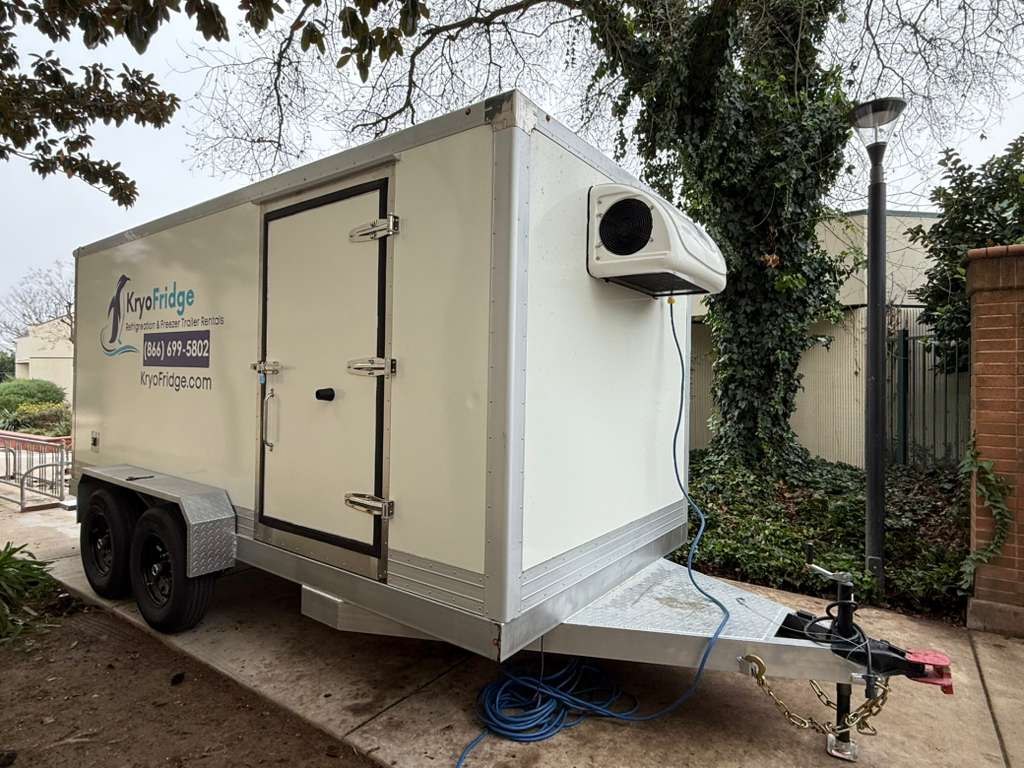
A walk-in rarely fails at a good time. It goes during a Saturday dinner push, overnight after a wind storm, or on the first hot day of June when the compressor has been working all afternoon. What you do in the first two hours decides whether you lose a few cases or the whole room.
Start with a thermometer instead of a guess, and check the air temperature and then check a real product, like a container of milk or a tray of raw chicken near the door. The air can swing fast when a door opens, while the product tells you how much time you actually have. Write the time and the reading down, because a health inspector or your insurance company may ask for it later.
Further reading: Ready.gov power outage guide.
Most people size a rental by guessing, and they usually guess small. The better way is to count what you actually need to hold at the busiest point of the rental, then add room to move around inside. A trailer packed wall to wall is hard to work in and hard to keep cold.
Start by thinking in cases or pallets, not square feet. A restaurant emptying a failed walk-in can count its shelves and estimate how many cases each one held. A grocer or distributor usually knows how many pallets are coming on a truck. Either number gives you a better starting point than the size of the room you are replacing.
A smooth delivery starts before the truck leaves the yard. Most delivery problems come from a few simple things nobody checked, such as a parked car in the way or an outlet that turns out to be shared with other equipment.
Pick the spot first, keeping in mind that the trailer should sit as close to your door as possible so staff are not carrying product across a hot lot or through the snow. Look for firm ground, whether that is asphalt, concrete or packed gravel. Grass and dirt can turn soft after a storm, which makes both delivery and pickup harder.
Further reading: City of Arvada.
When a walk-in fails, the first question is usually how fast it can be fixed. The better question is what happens to your food and your business while you wait. Sometimes the answer is a quick repair and no rental at all. Other times a trailer is the only thing that keeps the doors open.
Start with the repair estimate, since a tripped breaker or a bad fan motor can often be fixed the same day. A failed compressor or a part that has to be shipped can stretch into several days or longer. Ask your repair company for an honest timeline, including how long parts usually take to reach the Denver area.
Not every cold storage rental works the same way, and the differences usually show up at the worst time. A few questions before you book will tell you whether a company can handle your job or whether you will be the one fixing problems at midnight.
Ask who owns the trailer, because some companies are brokers that rent equipment from someone else and add a fee. If something goes wrong, you are stuck waiting while they call the real owner. A company that owns and maintains its own trailers can answer your questions and send help directly.
Further reading: FDA Food Code.
Tell us what you need to keep cold and where the trailer will sit, and we will match the size and set the delivery window. Call now or request a free quote, and we will get back to you with dates.