
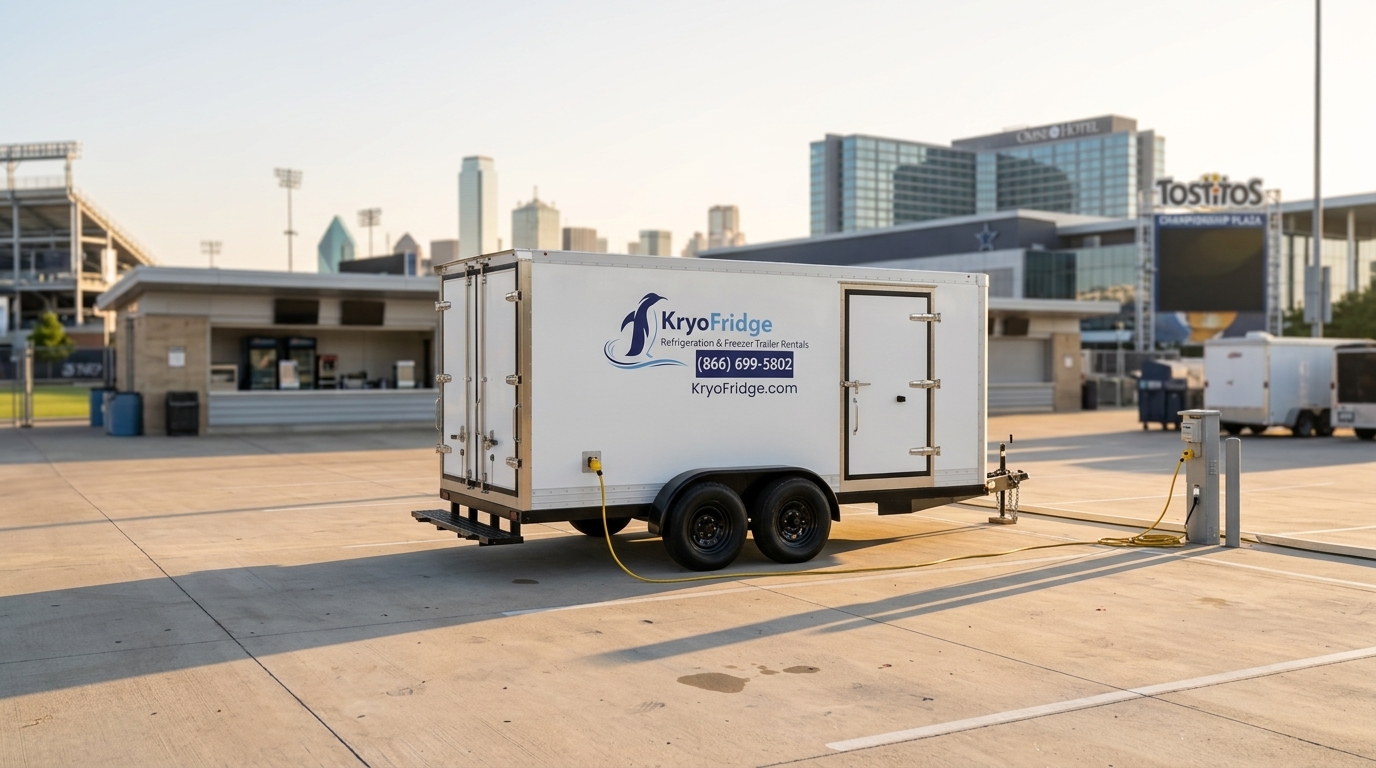
KryoFridge is the crew Frisco kitchens and grocers call when cold storage cannot wait. We bring it clean and already set to your temperature. Ready to load the hour it lands. A receiving dock off Preston Road gets the same handling as a concession lot at Riders Field. Call us now or request a free quote and we will hold a delivery window for you today.
Anybody can hand you a cold box. The real test is your worst hour, when the door swings open every ninety seconds and a crew is still pulling pallets out of it. Ours hold the number you set while that is happening. We size the refrigeration for a working door, not a sealed one. More than 30 years in the rental business taught us where that line sits, and we own every unit we send, so nobody is guessing about the condition of what shows up. The same checklist behind our Tulare cold storage trailer rentals in California travels with every drop we make here, and we are licensed and insured with the paperwork big accounts ask for already on file. Call now or request a free quote and we will walk through your product, your set point and your power before you book anything.
You are not locked into a fixed temperature crate. The same unit runs cooler or freezer on one dial, so a booking that started as produce overflow can flip to hard frozen without a second delivery fee or a second truck.
We bought these trailers, we service them, and our own people deliver them. Ask what condition the specific unit is in and you will get an answer from somebody who saw it last week, not a line read off a listing.
This family has been renting equipment for more than three decades. Long enough to know where jobs go wrong. It is the placement and the power, almost never the box itself.
Your temperature goes in at our yard, not in your parking lot. The unit arrives at the number you asked for, which means product moves over in one pass instead of waiting on a pull down.
Licensed and insured, with certificates and vendor documents already assembled. School districts and stadium groups ask for that packet before a purchase order clears, and slow paperwork has killed more bookings around here than availability ever has.
We keep North Texas stock near the tollway rather than trucking units in after your call. That is the whole reason a same day drop in Frisco is a real answer and not a maybe.
If the nation's largest chains trust us to protect their inventory, your kitchen is in good hands. These are brands that vet a cold-storage partner the same careful way they vet a food supplier, and they keep calling us back.
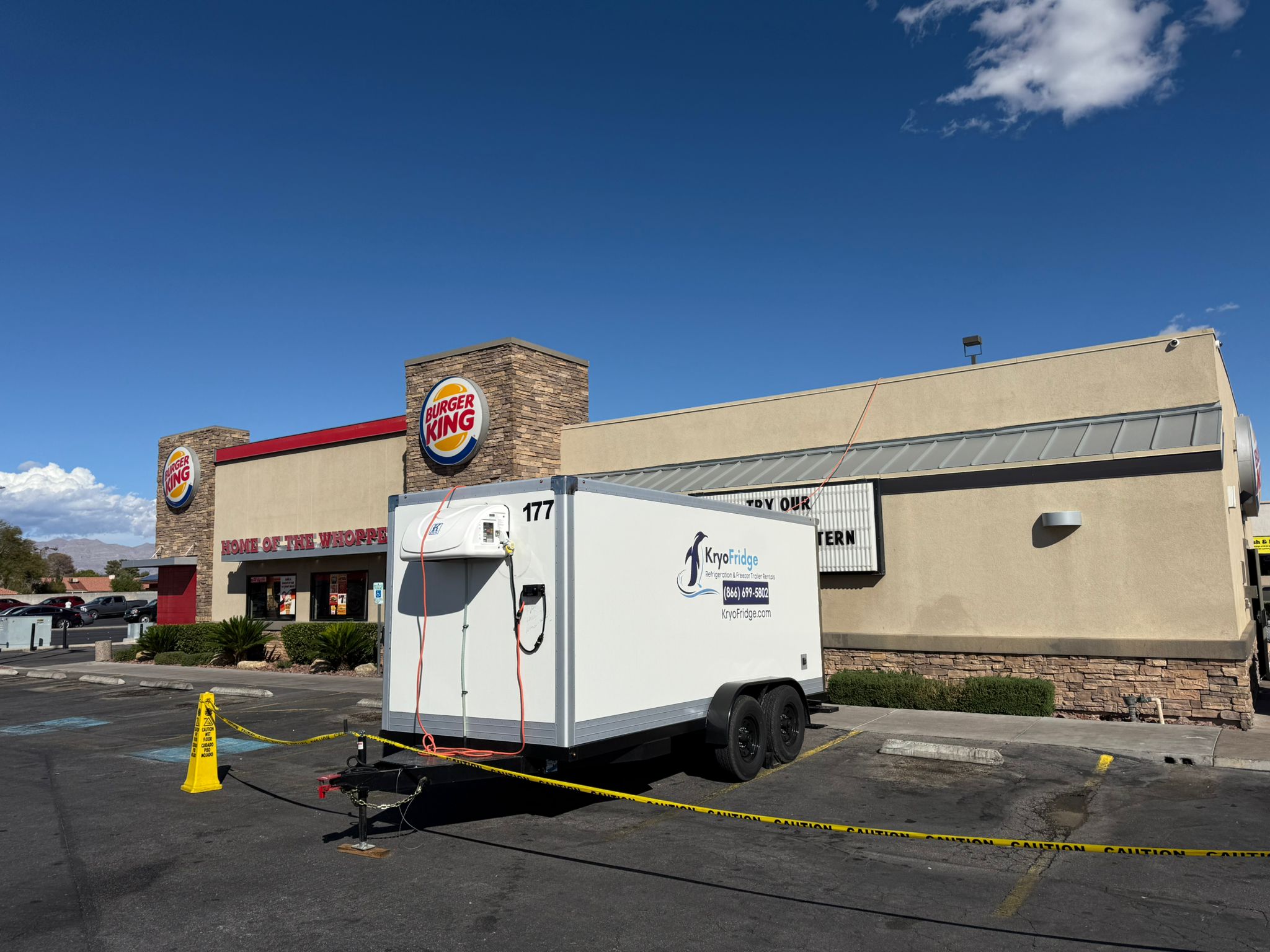 Burger King
Frozen stock held at spec through a compressor replacement so the location never dropped a menu item.
same-day swap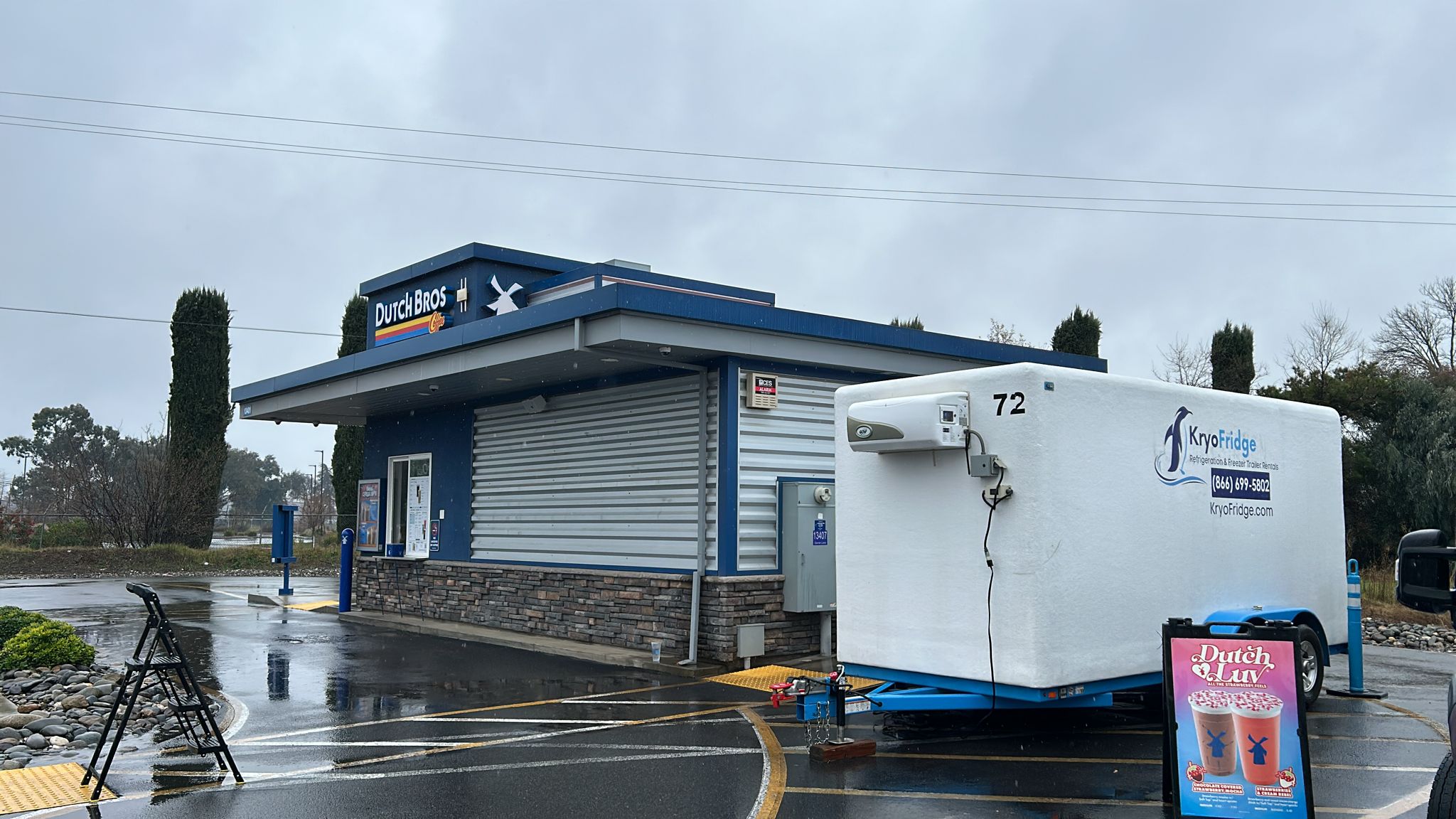 Dutch Bros
Overflow cold storage for dairy and blend stock behind high-volume drive-thru stands.
multi-site account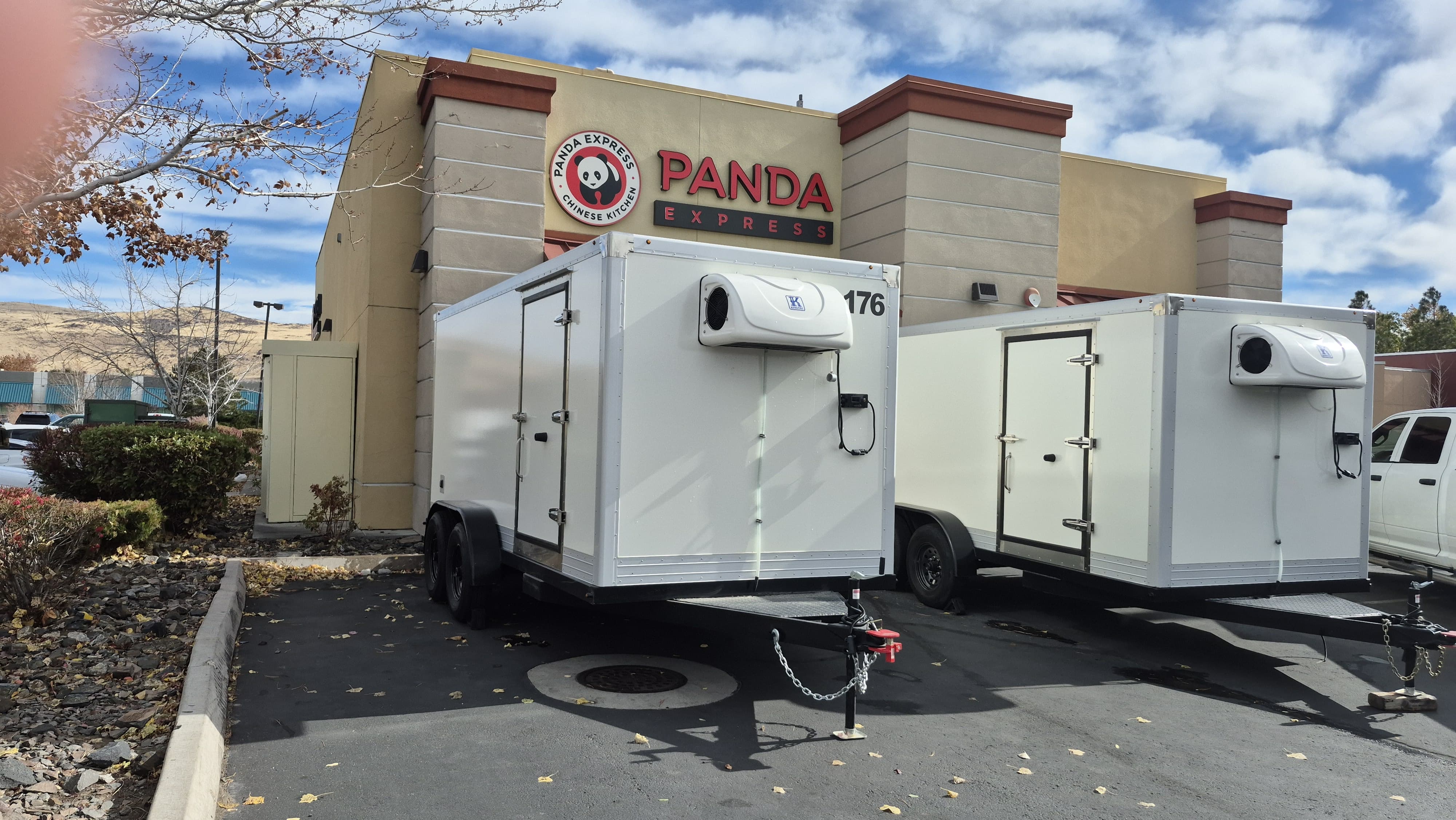 Panda Express
Trailer cold storage during equipment service so frozen prep stock stayed within reach of the wok line.
bulk overflow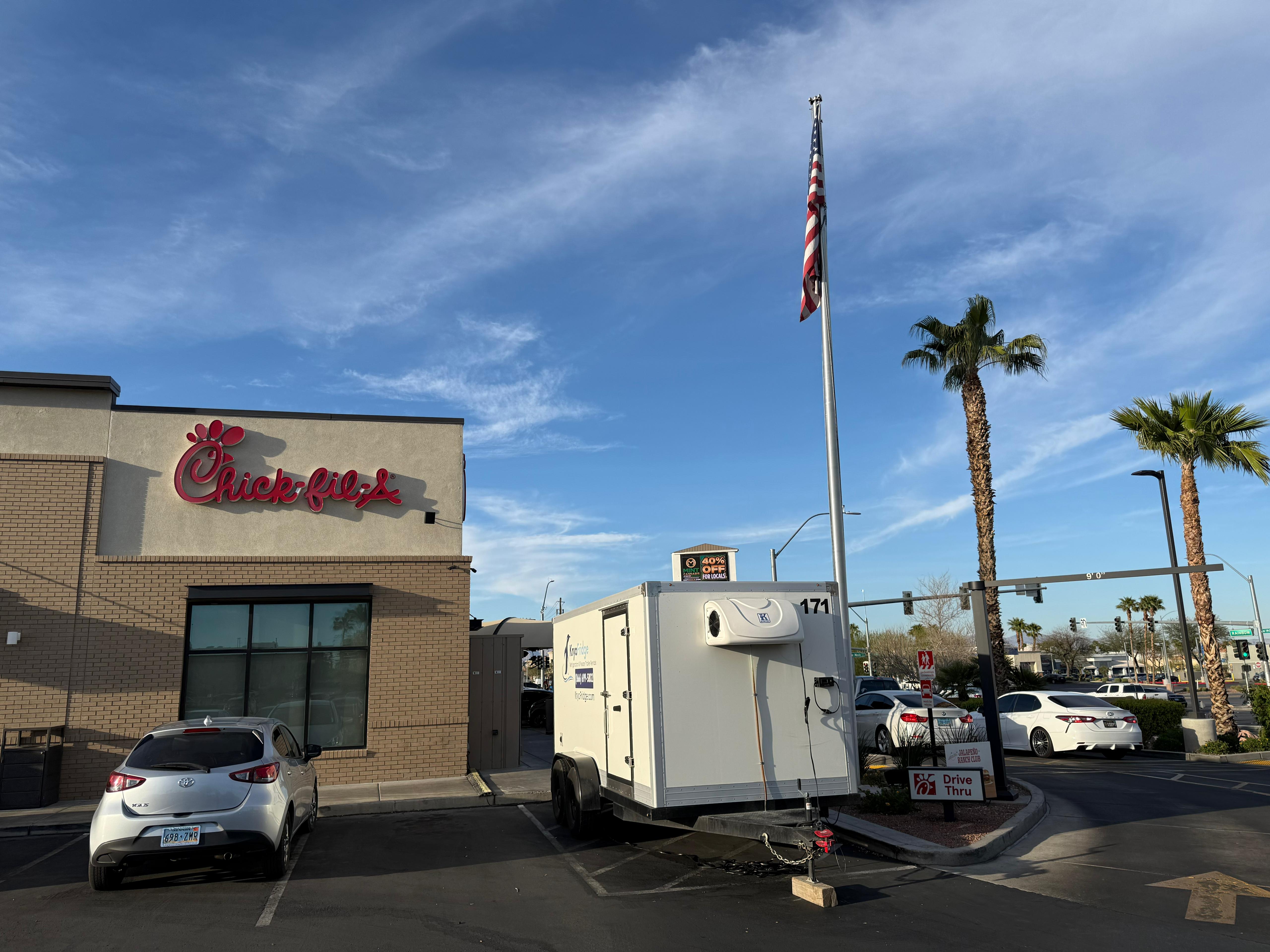 Chick-fil-A
Trailer cold storage through store remodels so frozen prep stock stayed at temperature from teardown to reopening.
zero thaw loss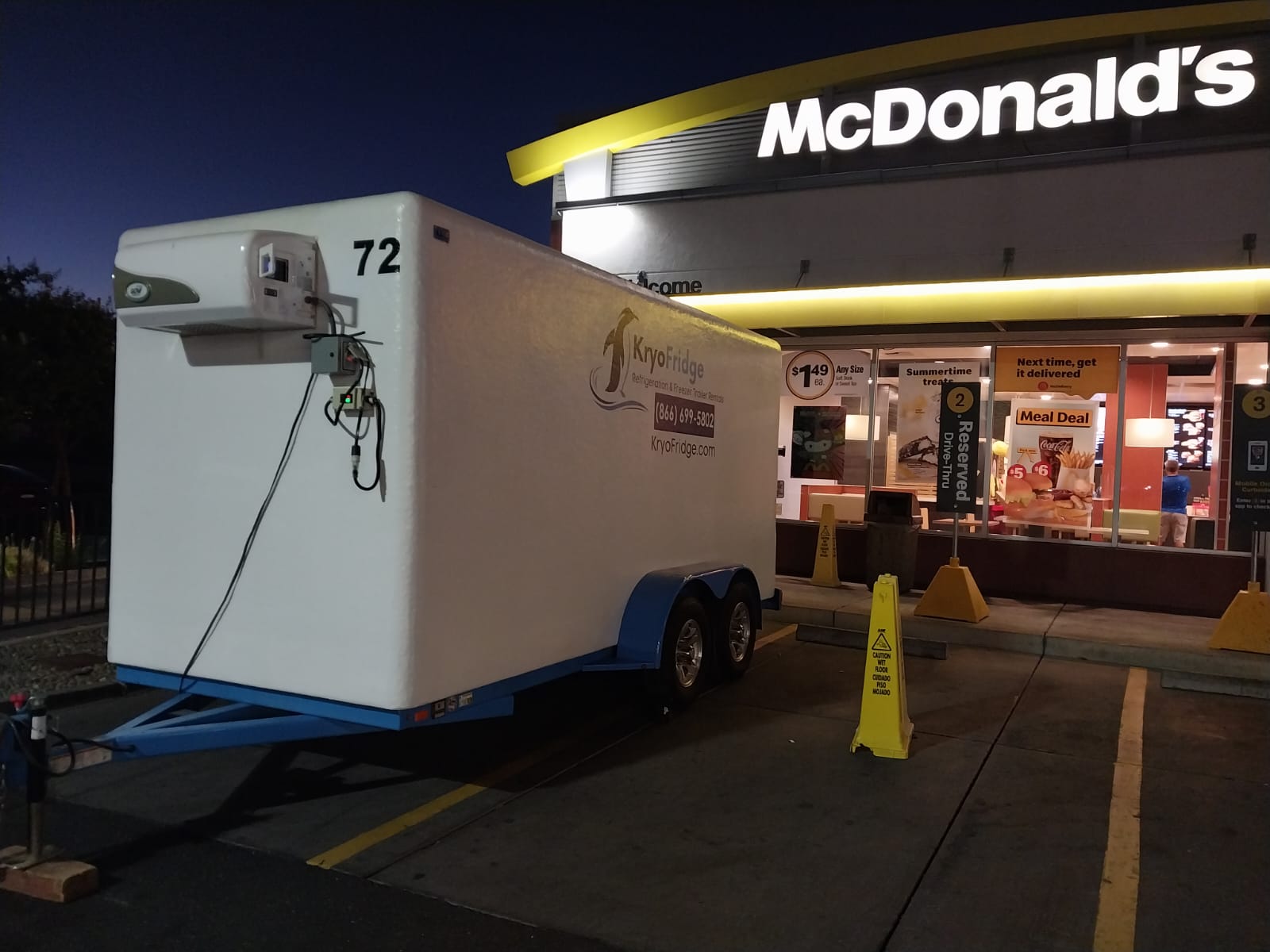 McDonald's
Freezer capacity staged on site through kitchen refits, keeping frozen stock at spec while the walk-in was down.
national account"Our cooler quit on a Thursday with a full seafood case. They had a unit in the lot that afternoon and we moved everything in one go. Not a pound lost."
"Our new kitchen opened before the freezer did. They dropped a unit behind the loading door the week before school started and it sat there until the permanent equipment was signed off. Staff barely noticed the difference."
"Holiday weekend, double the usual crowd, and our cold room was full by Wednesday. The long unit gave us the room we needed and it was set to temperature when it landed."
North Texas will cook a tired compressor in August and split a water line in February. So we set your temperature in our yard, then check it again once the unit is spotted and level on your Frisco lot.
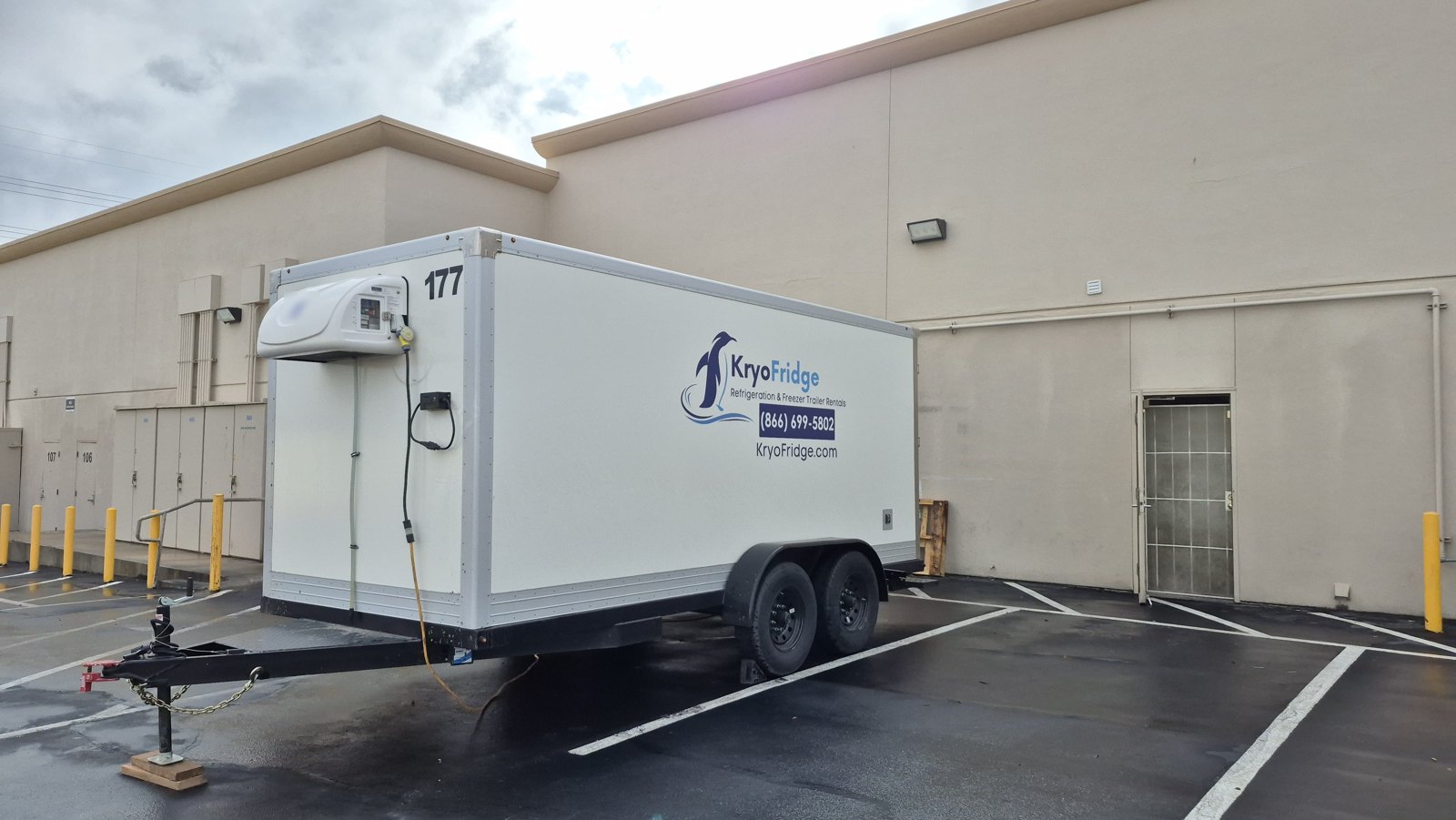
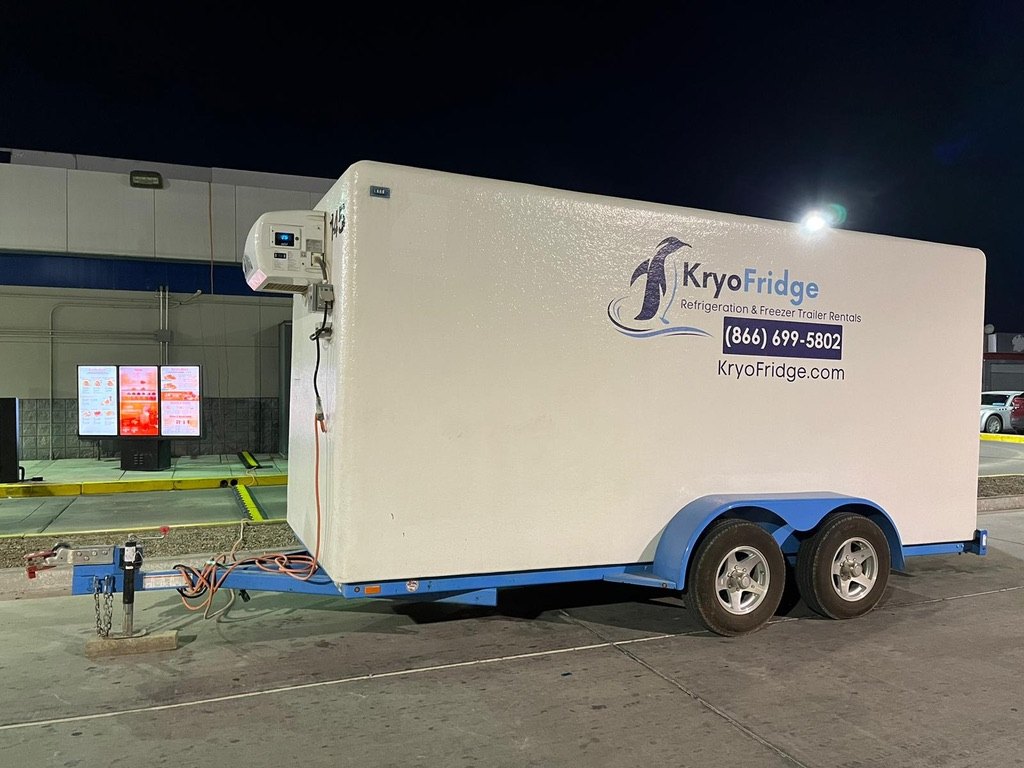
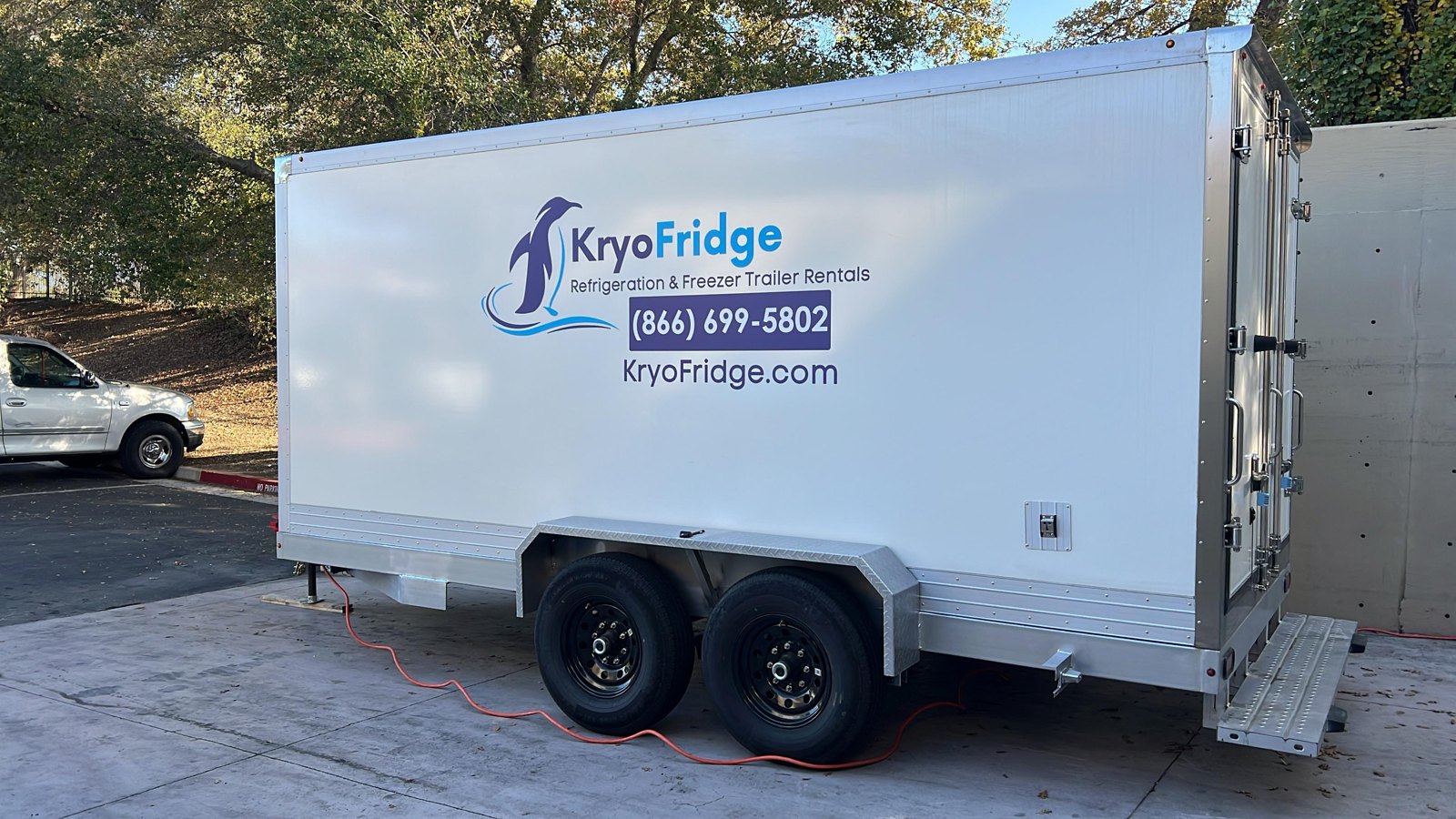
When the stakes are real, the 16' Utility is what we send. Sixteen feet of insulated, NSF-approved box on a tandem axle, running one precise digital set-point that covers deep freeze at -10°F all the way up to a 50°F cooler. The rear double doors handle pallet work off a dock, and the side utility door means a cook can pull one tray without letting the heat in.
The trailer that shows up is one of ours, prepped in our own shop, fueled and pre-cooled before it leaves the yard. It takes a dedicated 120V, 20-amp circuit or the generator we provide, and it will hold that set-point through a triple-digit stretch without drama.
| Spec | What you get |
|---|---|
| Temperature range | Roughly -10°F deep-freeze up to about 50°F fresh-cold |
| Mode | Dual-purpose: freezer or refrigerator on one precise digital set-point |
| Power | A dedicated 120V, 20-amp circuit within about 100 feet, or a generator we supply |
| Food safety | NSF-approved for direct food contact, food-safe surfaces, proper drainage |
| Footprints | 6x8, 6x12, and 6x16, from a tight retail lot to distribution scale |
| Backing | Owned in-house, fully licensed and insured, with 24/7 emergency dispatch |
Each unit holds a precise digital set-point and runs on a dedicated 120V/20A circuit or a generator. The trailers are not wired for 208 to 240V building service, so we confirm your hookup before the truck rolls.
Frisco covers about 69 square miles across two counties, and it sits roughly 25 miles from both Dallas Fort Worth International and Dallas Love Field. We stage North Texas stock near the tollway, which is why a north side drop at PGA Frisco and a south side drop near Fields Parkway get the same delivery window instead of one of them waiting until tomorrow.
Neighborhoods and towns we cover include Frisco Square, The Star, Stonebriar Centre, PGA Frisco, Fields West, Riders Field, Toyota Stadium, Comerica Center, Preston Road, Dallas North Tollway, Sam Rayburn Tollway, US-380 corridor, Legacy Drive, Main Street, Eldorado Parkway, Lebanon Road, Warren Parkway, Gaylord Parkway, Dallas Parkway, Fields Parkway, McKinney, Plano, The Colony, Lewisville.
Each community around Frisco has its own venues, its own events, and its own cold storage headaches. We work all of them.
The 91 acre Dallas Cowboys headquarters campus includes the 510,000 square foot Ford Center, and Frisco ISD plays football there and holds commencement there too. Deliveries run through event load in schedules and compete with other vendors for dock time, so we book a window rather than showing up and hoping.
Fields Ranch East and West are set to host 26 championships over 12 years, including the PGA Championship in 2027 and again in 2034. A drop on that campus means routing around guest traffic and two championship courses, with placement near a banquet kitchen service entrance instead of anywhere a guest would see it.
A 165 store mall packs a lot of restaurant tenants into a small footprint. When a cooler quits in there it is an inside job, so we position the unit at the exterior service corridor and the tenant carts product out.
Phase one here carries 350,000 square feet of retail, 325,000 square feet of office, 1,140 apartments and eight parking garages. Until it opens it is an active construction address, which means coordinating with a general contractor's site plan rather than pulling up to a street number.
The RoughRiders play a long Double-A home schedule and the ballpark anchors part of the Freedom Fest programming every July. Concession cold space there fills fast on holiday weekends, and the service lot has room for a long unit if we set it before gates open.
Seventy seven campuses are spread across every part of town rather than clustered in one district. A school delivery means working a bell schedule and a drop off traffic pattern, not a 24 hour commercial site, so we aim for mid morning.
One call sizes the trailer, sets the delivery window, and locks your quote for Frisco. Call now, or send the quick quote request and we will call you.
Units land here for all kinds of reasons. But three of them fill most of our Collin and Denton county calendar, and each one carries its own local shape.
A park standing up food service for a July opening needs somewhere to hold product while its permanent equipment is tested and signed off. We have done pre opening holds before. They start small and grow every week until the doors open.
With east side seating, concourses and concessions closed through the first half of 2026, food service is funneled through the west, southwest and northwest gates. That squeezes cold space on the side that is still open, and a unit in the service lot takes the pressure off.
Frisco ISD runs commencement across 12 high schools in a matter of weeks, with receptions and catered events stacked around each one. A single campus kitchen was never sized for that, so the overflow goes into a unit parked behind the gym.
A 510 room resort with championship golf attached swings from a slow midweek to a full hospitality build in a day. Banquet kitchens there ask us for cooler space more often than freezer, and usually want it near a service entrance and out of guest sightlines.
The venue at the tollway and Gaylord Parkway runs more than 120 sporting events, concerts, family shows and conventions in a year. Trade shows with food vendors are the ones that call us, because house cold storage is sized for hockey nights.
An active build site with hundreds of workers has to keep crew food safe through a North Texas afternoon. A small unit at the trailer compound handles it without anyone running to a store at lunch.
What ties these together is the clock. Nobody budgets a freezer trailer into next quarter. They reach for one the hour a compressor quits, or the evening before a party when the stack of rented ice chests suddenly looks laughably undersized. Since our units sit staged around Frisco instead of a couple counties down the freeway, "can I get it today" is an ordinary ask here, not a stretch.
Add it up the way an owner in Frisco has to. One restaurant walk-in routinely sits on a small fortune in proteins, dairy, and prepped product. Scale that to a grocery rack or a warehouse freezer bay and the exposure balloons. Now knock the power or the compressor out on a triple-digit afternoon, and that whole inventory is in jeopardy inside a few hours. Then stack on the sales you lose while the line sits dark and the wages you burn paying staff to triage what can still be saved.
Hold a pre-staged trailer up against that risk and it reads like cheap insurance, a fixed, predictable expense parked in front of a loss with no ceiling. That is exactly why the businesses that got stung once tape our number by the phone. There is never a second scramble, because the next time they dial before the product has a chance to warm. Owning every trailer ourselves means we can scale the answer to fit. A single compact box suits a corner cafe. A clustered setup covers a warehouse floor. Either turns around the same day.
The climate here is humid subtropical, with about 39 inches of rain a year and roughly 230 sunny days. July highs average near 96 degrees. January lows average near 33. That summer number is the one that matters for cold storage, because ambient heat cuts short the safe window for anything sitting outside a cold room and it stacks load onto compressors that were already working.
A walk in that was marginal in April is the one that quits in August. Same pattern every year. The call comes in the back half of a heat run, not the first day of it, because a struggling unit will limp along for weeks before it gives up. If your cold room has been cycling longer than it used to, that is the signal. Plan the backup then. Not after.
Wind is the other half of it. Frisco sits inside Tornado Alley, and the most recent confirmed tornado in the city was an EF-0 near the University of North Texas at Frisco campus in 2024. Severe weather does not have to flatten a building to kill cold storage. A roof unit knocked loose or a service drop pulled down will do it, and the repair queue after a regional storm is long. That is the week a walk-in freezer trailer keeps a business open instead of closed.
A grocery cold room is sized for an ordinary week. There has not been an ordinary week around here in thirty years. The city counted 6,138 residents in 1990 and 200,509 in 2020, and current estimates land between about 245,000 and 249,000, with the city expected to top out near 330,000. That is 87,651 households buying groceries inside 69 square miles. Stores that opened when the area they serve was half this size are now stuffing the same back room with double the order.
So the pallets end up somewhere they should not be. We see it two ways. One is a holiday buy that lands early and takes the receiving bay hostage for a week. The other is a dead case. Stonebriar Centre alone runs 165 stores with a dense food court, and a single failed cooler in one tenant space is a same day call, not a project. We stage a unit close enough to the growth corridor that a Preston Road store and a US-380 store get the same delivery window.
New store openings are the other half of it. Retail keeps filling in along Dallas Parkway, US-380 and the FM 423 corridor down toward The Colony, and permanent walk in equipment does not always clear inspection on the same day the shelves are ready. That gap is where a rental earns its keep. We have bridged openings that were supposed to run two weeks and ran ten. Nobody plans for that. You just want a unit that holds while it happens.
Here is how we place one at a market. We ask what is going inside before we pick the unit. Ice cream and cut produce are not the same job. We back it as close to the receiving door as the fire lane allows, level it, and set the ramp so a pallet jack rolls straight in. Then we confirm the power. A dedicated 120 volt, 20 amp circuit within 100 feet, or our generator. After years of drops in this corridor, the thing we plan around first is not the unit at all. It is where the delivery trucks swing at six in the morning.
Every unit we rent swings from about 50 degrees down to negative 10 on one digital control. The same box that holds a produce order at 38 this week can run hard frozen for a caterer next month. It is a self contained system. The refrigeration and the insulated floor are built into the trailer itself, so it does not lean on your building for anything but power. The floor takes a pallet jack. The interior is built for food contact, and we clean and stage each one before it ever heads out.
We run three sizes, roughly six by eight, six by twelve and six by sixteen feet. The small one tucks into a tight service drive behind a restaurant row. The middle size is the workhorse for a grocery overflow or a school kitchen bridge. The long one carries a real pallet load. Think production run or a multi day event. Crews behind our Tempe portable freezer trailer rentals in Arizona work from the same fleet standard, because we are one company across every market and not a network of middlemen.
Power stays simple on purpose. Either a generator that we bring and fuel, or a dedicated 120 volt, 20 amp circuit within 100 feet of the unit. Not 208 to 240 volt service. If your lot only has that, plan on the generator and we will size it before delivery day. We walk the spot with you first. Nobody should be dragging a cord across a loading aisle at five in the morning while a delivery truck backs in.
Frisco makes and moves more food than people expect from a suburb. Keurig Dr Pepper runs its Texas headquarters here, and the corporate campuses along the Dallas North Tollway keep dining halls and executive dining running five days a week. Production work has its own rhythm. A line does not stop because the cold room filled up, so the overflow has to be waiting before the run starts, not ordered after it stalls.
School nutrition is the biggest version of this in the city. Frisco ISD enrolled 67,226 students as of October 31, 2025 across 77 campuses, and the district has added 71 schools since 1995, usually opening one to four in a year. New kitchens do not always have their walk in equipment commissioned by the first bell. We have covered that gap for districts more than once. It is quiet work. A unit sits at the back of a service drive for six weeks. Nobody but the nutrition staff knows it is there.
Two build outs are driving production side demand right now. Universal Kids Resort opens July 1, 2026 on a 20 acre site with seven themed lands and a 300 room hotel, and a park that size stands up its food service well before the gates open. Fields West is the other, 55 acres south of Fields Parkway with 350,000 square feet of retail and named restaurant tenants including Culinary Dropout and North Italia, with the northern portion expected around fall 2027. New restaurant kitchens almost always need somewhere to hold product while inspection catches up.
What we have learned on production jobs is that placement beats size. A commissary wants the unit where the cart path already goes, not where there happens to be an open parking space. We look at the door swing, the wash down area and the trash route before we pick a spot. And we ask about run length up front. A six week hold and a three day hold get different service plans from us.
February 2021 is still the benchmark around here. The storm ran from February 10 to 27 and left more than 4.5 million Texas homes and businesses without power at its worst point, with more than 11 million Texans losing power at least once. Dallas Fort Worth bottomed out at 2 below zero, the coldest reading in North Texas in 72 years. Burst pipes knocked water service out for more than 12 million people statewide, and over 200,000 residents were left on water systems that had stopped working entirely.
For a grocer or a kitchen, that combination is the worst case. No grid, no water, and a walk in full of product with a clock on it. A generator behind the unit is the whole difference. You either hold that inventory or you haul it off. We keep generator capable stock staged for exactly this, which is the same posture behind our Honolulu mobile refrigeration rentals, where grid trouble is also a planning assumption rather than a surprise.
Recalls are the quieter version. A supplier notice comes down and suddenly you need suspect lots off the sales floor and out of the walk in, held and separated, without giving up the cold space your regular product needs. That is a separation problem, not a temperature problem. We drop a second unit, set it to the holding temperature you need, and it sits until the supplier sorts out the disposition. Some of those holds run three weeks.
When the phone rings during an outage, the first thing we ask is not what size you want. It is whether you have fuel access and a spot a truck can reach. Blocked lots and iced service drives are the real slow point, not availability. So we plan the approach first, then the unit. Call us before the storm window if you can. During one, we are working through a queue and the sites we already have staging notes for move first.
"Cold" is not one number. Different product stays safe inside different temperature windows, which is the entire reason a precise digital set-point matters, and in the middle of a heat wave in Frisco, a load that slips out of its window is a load you write off. Use the chart below as the reference our customers lean on when they size a rental.
| Product | Target holding band | Trailer mode |
|---|---|---|
| Ice cream and frozen desserts | -10°F to 0°F | Deep freeze |
| Frozen proteins, seafood, prepared meals | 0°F or below | Freezer |
| Fresh meat and poultry (short hold) | 28°F to 32°F | Refrigerated |
| Dairy, deli, packaged produce | 34°F to 38°F | Refrigerated |
| Beverages, florals, catering trays | 38°F to 45°F | Refrigerated |
One figure matters more than everything in that chart, and it is not listed there: 40°F. Food-safety guidance treats the band between 40°F and 140°F as the zone where bacteria thrive, and the clock on perishable product starts ticking the moment it crosses 40 on the way up. Roughly four cumulative hours above that line and most refrigerated inventory is no longer safe to serve. Picture that countdown running on a 100-degree afternoon in Frisco with the walk-in dark, and the urgency of a quick trailer drop stops being abstract.
Tell us the single coldest item you are holding when you call, and we dial the trailer to that. One unit carries a straight freezer load with no fuss. But when your list mixes deep-freeze desserts with fresh-cold produce for the same remodel or event, we will usually point you toward a split setup or a second box so neither side of the load has to settle for the wrong temperature.
Powering one of our trailers is refreshingly simple, and there are precisely two ways to do it. Either you have a dedicated 120-volt, 20-amp circuit reachable within roughly 100 feet of the parking spot, or we bring a generator. What the units will not accept is standard 208 to 240V building service, so a quick question about your outlet before dispatch heads off any surprise on delivery day.
On placement, all the unit really asks for is a fairly flat patch with enough room for the delivery truck to maneuver it in and set it straight, plus either a power source in reach or space for a generator. We lock down the exact drop point before dispatch, and our drivers know the Frisco layout cold, so the delivery is one clean trip instead of a guessing game on the property.
A new school opened on schedule but its walk in freezer was stuck in a parts backorder. We spotted a mid size unit behind the kitchen loading door the week before the first bell and left it seven weeks. Staff loaded straight off the delivery truck into it. Nothing moved twice.
A Saturday sellout stacked on top of a Sunday tournament and the house cold room was full by Thursday. We dropped a long unit in the service lot Thursday afternoon and pulled it the following Tuesday. They ran both days without a single emergency run to a restaurant supply store.
A compressor failed at the second location on a Wednesday morning with a private party booked for that night. We had a unit on their lot before the afternoon prep block started and the party went off on time. It stayed three weeks while the repair got sorted, then we took it back.
Sized for a city that is still filling in. The Frisco Economic Development Corporation counted more than 10,000 new jobs created in 2024, and ten master planned mixed use developments are in progress or planned that are projected to add at least 10 million square feet of office space over the next 15 years. Every one of those brings more kitchens and more catering behind it, and the cold storage demand follows. We stocked our North Texas fleet for the city that is coming, not the one that was here five years ago.
On a bad day, booking should be the part that does not add stress. Four steps, an upfront number, and a single person who owns the whole thing.
Tell us whether it is freezer or fridge product, a ballpark volume, and your rough window. That is enough for us to call the right size.
We pair you with a unit, confirm whether you have a dedicated circuit or need a generator, and pin the exact drop point so the truck makes one trip.
We arrive on your schedule, about 45 minutes for a true emergency, set the trailer, energize it, and let it drive down to your number.
It holds the set-point for your entire term while our line stays live the whole way through. Wrap up, and we swing back for the pickup.
Food service in this part of the state runs under the Texas Food Establishment Rules, codified at Chapter 228 of the Texas Health and Safety Code. For short run events, the Texas Department of State Health Services defines a temporary food establishment as one operating no more than 14 consecutive days in connection with a single event, and it offers both a single event permit and a multiple event permit that covers a booth across events over two years. DSHS generally asks that applications arrive at least 30 days before the event. Plan on that lead time even when a local authority moves faster.
The wrinkle here is the county line. Frisco sits across both Collin and Denton counties, and the two handle temporary food permitting on different clocks. Collin County's Development Services issues short term event food permits good for up to 14 days at one location, and its online application has to be received at least five business days before the first day of operation or the request is denied. Collin County's own permitting only covers unincorporated areas and a short list of cities, so a Frisco address goes through the City of Frisco directly. On the Denton County side, the City of Denton requires a temporary or special event food permit for anything sold at a fixed location tied to a festival or fair, wants the application at least two business days out, and states plainly that perishable product has to stay under proper temperature control.
So the practical advice is boring. It also matters. Confirm which authority governs your specific address before you plan the timeline, because the gap between a two business day process and a five business day process will catch you on a short fuse event. Permitting looks different in every market we work in. The checklist behind our Santa Clarita refrigerated trailer rentals in California reads nothing like a Collin County application. What does not change is the inspector's expectation that your cold product stays at a safe holding temperature for the whole event, and a rented unit that was set and verified before delivery is the easiest way to show it.
One caveat we always state plainly: we supply the food-safe, temperature-holding hardware itself, but we are not a temperature-logging or alarm-monitoring service. If your program requires continuous written records, line that vendor up on your own.
Our signature 16 foot Utility series leads the fleet. It is the trailer we send on most jobs, and crews like it for the side utility access door. We build three footprints in all, so a single kitchen holding overflow stock has a fit and so does a distribution floor in a disaster. Every unit is dual purpose by design: one adjustable system swings between freezer and refrigerator on a digital set point. Each trailer runs on a dedicated circuit or on a generator.
| Trailer | Best for | Temp range |
|---|---|---|
| 6x16 Utility ⭐ | Our signature series: distribution, large events, disaster response, side utility door | Heavy-duty reefer |
| 6x12 | Grocers, caterers, mid-size events | Deep-freeze capable |
| 6x8 | Tight lots, small kitchens, short overflow | -10°F to 50°F |
Each unit holds a precise digital set-point and runs on a dedicated 120V/20A circuit or a generator.
Think eight or so pallet spots, and the unit to grab when square footage is the whole problem. It slips into the pinched service yards and cramped back-of-house corners that a larger box cannot even swing into. One cafe or small-market walk-in goes down, and this is almost always enough cold to cover it, plus the simplest unit to set in a small space.
Call it fourteen pallet spots, deep-freeze rated, and far and away the size people ask for most. It lands right in the middle: roomy enough for a multi-day catering job or a restaurant that needs true walk-in-equivalent room while the kitchen is torn up. Roomy enough that nobody is playing Tetris with shelves, yet still small enough to set in most commercial back lots without a site survey.
Roughly twenty pallet spots paired with a heavy-duty reefer plant engineered to keep deep-freeze locked in even when the ambient air is merciless. Reach for it when a warehouse bay drops, when a large festival needs an anchor, or when a relief operation is carrying its own cold chain.
Not sure which size fits? Most customers land on the 16 foot Utility, and we will tell you honestly if a smaller footprint covers your job. Tell us roughly what you are storing and for how long, and we will spec it for you.
The questions that surface once the basics are settled. Tap any topic to open it.
The pop-up walk-in cooler. Cheap to rent and easy to set up, but it chills, it does not freeze, and it draws every watt it needs from your building while depending on a calm ambient temperature around it. The second your building loses power, your cooler loses it too.
The refrigerated box truck. Designed to haul product on the interstate, not to sit in a lot and babysit it. Parked, it burns fuel all day, broadcasts compressor noise across a storefront or an event lawn, and pins down a tractor plus a driver you probably do not need.
The freezer trailer we deliver. Built from the ground up to be dropped on a pad and to defend a temperature for as long as the job runs. It freezes deep, carries NSF approval, locks, stays quiet near guests, and lives on nothing more than one dedicated circuit or a generator.
Even a rented box has to satisfy the county environmental health office that licenses and inspects every food facility. Show an inspector a unit that cannot document its temperature or was not built for food contact, and they have the authority to halt service immediately.
That is a bar each of our trailers clears: NSF-approved throughout, food-safe interior surfaces, proper drainage, and a digital controller that puts the set-point in plain view. We supply the food-safe, temperature-holding hardware itself, but we are not a temperature-logging or alarm-monitoring service.
For a typical kitchen or market, one box does the job. Distribution floors, big fairs, and full-scale disaster response routinely need more, and because the fleet is ours, we can cluster several units and bring them online in waves as the work expands. Match the cold capacity to the operation rather than make the operation squeeze itself into one box.
The clock is yours to set. Some jobs are a handful of days for an emergency or a single event. Others stretch across weeks or months for a remodel or a seasonal swell, and a few become standing contracts for businesses that want capacity parked on standby. Name your window and you will get a clean quote, no penalty for an honest "not sure yet."
Building permanent cold storage is a capital project in every sense: you hire a refrigeration contractor, schedule the electrical, pull a building permit, and wait weeks before a single pallet goes inside. A rental turns that equation on its head. You bring in precisely the cold you need, for precisely the stretch you need it, and the trailer is holding temperature that same week, frequently that same day, with the commitment ending the moment your need is over.
Three engineered elements carry the load. Thick insulated panels and tightly gasketed doors lock the sun outside and the cold inside. A self-contained reefer condensing system specified with surplus capacity keeps stripping heat out of the box even when the air outside is brutal. And a digital thermostat locks onto your chosen number and cycles the compressor to hold the line. Run those three together and a trailer baking on open asphalt behaves like one tucked in a cool warehouse. That is also why power is the first thing we ask about: the design delivers its safety margin only on steady, uninterrupted power.
"Procurement wanted insurance certificates and vendor documents before we could cut a purchase order. They sent the whole packet back the same morning. That never happens."
"I book them two or three times a year for banquet weeks. Same crew, same trucks, no surprises."
"Compressor died on a Wednesday with a private party on the books for that night. Unit showed up before the afternoon prep block. We did not cancel a thing and it stayed three weeks while the repair dragged."
"Came pre chilled and already where we needed it. We were not standing there watching a thermometer climb while somebody figured out the power."
"Ours arrived in the middle of an early morning delivery block and the driver still got it placed without blocking the trucks. Small thing. It made our whole day easier."
"We keep crew food on site and a Texas afternoon does not care about a cooler full of ice. The small unit solved it for the whole job."
"They walked the lot with me two days before the event and told me where the generator would sit. Nobody has ever done that. Everything went where they said it would."
"Cooler mode one week, hard frozen the next, and I did not have to swap units to do it. That alone saved me a delivery."
"We had a supplier recall and needed suspect lots separated and held without giving up our walk in. They dropped a second unit the next morning and it sat until the supplier sorted it out."
There are exactly two ways to power one of our units. Either a dedicated 120 volt, 20 amp circuit within 100 feet of where the trailer sits, or a generator that we bring and fuel. It is not 208 to 240 volt service, so do not plan around a dryer style outlet. Most strip center and mall service corridors around Preston Road have a usable exterior circuit, but plenty of construction addresses and event lots do not. Tell us the address when you call and we will settle the power question before delivery day.
Yes. The doors lock, and you hold the keys for the length of the rental. We place units against a building line or inside a fenced service area when the site allows it, because a trailer tucked beside a dock is a harder target than one sitting alone in the middle of a parking field. On event lots around Toyota Stadium and Riders Field we coordinate placement with venue security so it sits inside their perimeter. If your lot is wide open and unlit, say so when you book and we will suggest a better spot.
In two units. One trailer holds one temperature at a time, since it is a single box with a single control. So if you need ice cream at zero and produce at 38 on the same week, we send two and set each one before it leaves. That comes up constantly with grocery overflow and with banquet kitchens on the north side. It is cheaper than people expect to add the second unit, and far cheaper than losing a category of product because everything got split into one compromise temperature.
You call the 24/7 line and we come. We keep spare stock in the North Texas rotation specifically so a swap is a dispatch and not a special order. The crew brings a replacement already set to your temperature, backs it into position beside the first one, and product transfers straight across. We service our own fleet, so there is no third party in the middle slowing down the decision. This is part of why we do not use brokers. A broker cannot swap a unit they do not own.
Before the forecast, not during it. July highs here average near 96 degrees and the calls stack up in the back half of a long heat run, when marginal walk in units finally give out. Winter is the same pattern with a shorter fuse, and February 2021 showed how fast regional demand can outrun any fleet in the state. If your cold room has been cycling more than it used to, get on the schedule while there is still slack. Emergency dispatch runs around the clock, but the sites we already have staging notes for move first.
Size and how long you need it. Then the temperature you are holding and how we power it. A short event hold and a three month bridge are different products even in the same box. Generator jobs cost more than a site with a usable dedicated circuit, because the machine and its fuel come with it. Delivery distance matters less around Frisco than it does in a lot of markets, since we stage close to the corridor. Call with the address, the product and the dates and you will get a real number instead of a range.
The site needs firm, reasonably level ground and a clear approach for a truck and trailer. Gravel is fine. Soft turf after a week of rain is not. Keep the fire lane clear and know where your power is coming from. Same day delivery is realistic in Frisco when we have a unit close, and emergency dispatch runs 24/7. Scheduled jobs are easier on everyone, especially at addresses like the Fields West build or a school campus where we have to work around a site plan or a bell schedule.
Every trailer is cleaned and staged before it leaves our yard, and the interior is built for food contact with a floor that takes a pallet jack. No leftover smell from the last job. If you are holding raw protein and prepped product together, tell us and we will talk through shelving and separation so you can show an inspector how it is organized. Day to day sanitation during the rental is yours, the same as any cold room you own, and it is a lot easier when the surfaces are already right.
Yes, and we plan those differently than a lot drop. Venue campuses run load in and load out windows, and dock space is shared with every other vendor working that week. We book a window with the venue first, then route to a service entrance rather than a guest facing spot. On the golf side that usually means a placement near the banquet kitchen and out of sight of play. Give us a few days notice for event weeks and it goes smoothly.
That is one of our steadiest jobs around here. New restaurant kitchens along Dallas Parkway and US-380 regularly open before their permanent walk in equipment clears inspection, and school kitchens do the same thing. We rent by the month for those, keep the unit serviced, and pull it when your own equipment is signed off. Some of these run two or three months longer than the original plan. Nobody has to re book anything when that happens.
We own the fleet. We service it, our own crews deliver it, and the company is part of a family that has been renting equipment for more than 30 years. That matters most on the bad day, when you want somebody who can make a decision about a specific trailer rather than relay a message. We are licensed and insured, and the vendor paperwork that school districts and stadium groups ask for is already assembled.
We run more than one kind of trailer out of North Texas, so take a look at the rest of the fleet if this one is not the right fit for your job.
Most people size a cold storage rental by guessing at a footprint. Start with the load instead. Count what is actually going inside, in pallets or in cases, and then count how many times a day somebody will open the door. Those two numbers decide the unit. Square footage barely enters into it.
We run three sizes, roughly six by eight, six by twelve and six by sixteen feet. The six by eight fits a tight service drive behind a restaurant row and handles a couple of pallets plus hand stacked cases. The six by twelve is the size most grocery overflow and school kitchen jobs end up using. The six by sixteen handles real pallet volume. Crews also use it for a full production run or a multi day event restocking concession stands from one central point.
Cold storage rental is one of those purchases where the quote and the job delivered can be very different things. The questions below are the ones that separate them. Ask every one of them, of us and of anybody else you are calling.
Start with ownership. Ask whether the company owns the trailer it is about to send you. Plenty of listings belong to brokers who will place your order with whoever has stock, which means nobody on the phone has seen the unit. On an emergency job that matters enormously, because a broker cannot swap a failing trailer they do not own.
Further reading: Texas DSHS retail food permitting information.
Availability here is seasonal. That catches people out. If you know the calendar, you can book at the easy times and avoid paying in stress at the hard ones. This is what our year actually looks like around Frisco.
February and the winter window come first. Hard freezes in North Texas do not arrive often, but when they do, demand for generator capable units goes vertical across the whole metroplex within hours. Nobody is getting a same day trailer in the middle of a regional freeze event. The customers who stay open are the ones who put a contingency plan on paper in November.
Further reading: the Toyota Stadium event calendar.
Nobody likes a quote that arrives without an explanation. So here is the honest breakdown of what moves the number on a cold storage rental in this market, in rough order of how much each one matters. No figures here, just the levers.
Duration is the biggest one and it does not scale the way people assume. A three day event hold and a three month construction bridge are different products. Short jobs carry the full cost of delivery, placement and pickup across a handful of days. Longer holds spread that same work across months, which is why a monthly rate feels dramatically better than a weekend one.
When cold storage fails or runs short, there are really three options on the table. Repair the walk in and wait. Park a refrigerated truck. Or rent a trailer. Each one is the right call in specific circumstances and the wrong call in others, so here is how we think about it.
Repair first, if the part exists. A working walk in is always better than a rental because it is already inside your building and already part of your workflow. The catch is the parts queue. Compressor and control components have run long on backorder in recent years, and a repair that was quoted at four days turning into five weeks is a story we hear constantly. Ask for a realistic parts date. Then decide whether waiting is smart.
Further reading: Collin County food service and health.
Call now or send a quote request and we will confirm size, power and a delivery window before a truck leaves our yard. Tell us what you are holding and it arrives at your temperature, ready to load.